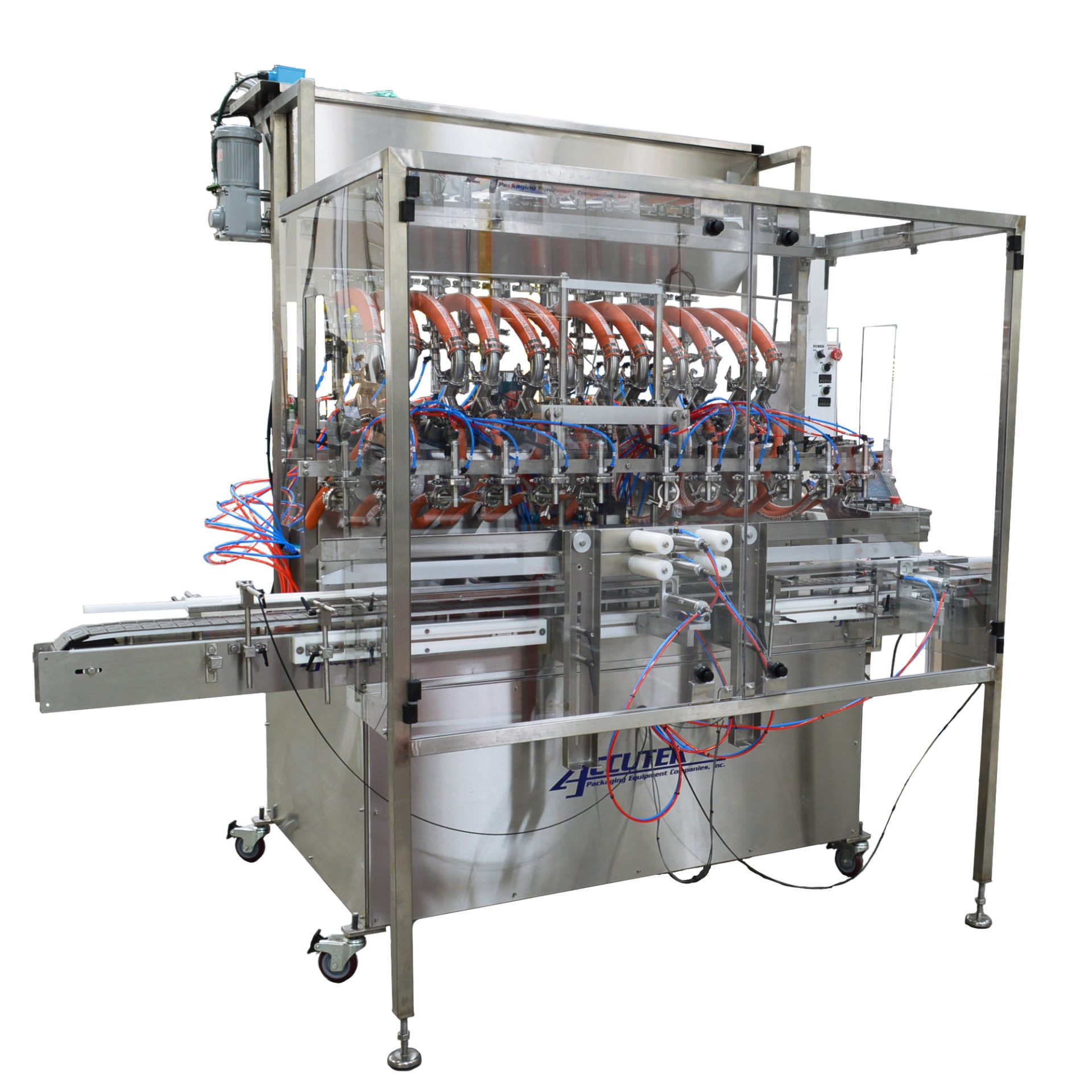
Accutek Packaging Equipment Companies, Inc. has established itself as a cornerstone of the liquid packaging industry, celebrating a 37-year legacy of innovation in 2026. Since its founding in 1989, the company has transitioned from a specialized manufacturer of filling machines into a global provider of comprehensive, automated turnkey packaging solutions.
The Evolution of a Packaging Powerhouse (1989–2026)
The journey of Accutek Packaging began in 1989 with a focused mission: to provide reliable, cost-effective liquid filling solutions for small to medium-sized enterprises. At that time, the packaging landscape was bifurcated between manual labor-intensive processes and prohibitively expensive high-speed European imports. Accutek filled this vacuum by engineering modular equipment that could grow alongside a business.
Over nearly four decades, the company has expanded through both organic innovation and strategic acquisitions. By integrating legacy brands such as Biner Ellison—a name with a history dating back to the mid-20th century—Accutek synthesized traditional mechanical robustness with modern digital control. In 2026, this 37-year trajectory represents more than just longevity; it signifies a deep institutional knowledge of fluid dynamics, container handling, and the rigorous demands of global supply chains.
The growth of Accutek mirrors the broader shifts in manufacturing. In the early 1990s, the focus was on basic semi-automatic machines. By the 2010s, the shift moved toward servo-driven precision. Today, in 2026, the legacy is defined by "Smart Packaging" systems—machines equipped with predictive maintenance sensors, remote diagnostic capabilities, and seamless integration into factory-wide Enterprise Resource Planning (ERP) systems.
Core Technologies in Automated Filling
Automated filling is the heart of the Accutek legacy. To understand why the company has remained a leader for 37 years, one must analyze the specific filling technologies they have refined. Filling is not a "one size fits all" process; the physical properties of the liquid—viscosity, surface tension, particulate content, and chemical stability—dictate the hardware required.
Pressure and Gravity Filling Systems
For thin, free-flowing liquids like water, alcohol, or specialty chemicals, Accutek’s pressure and gravity fillers remain industry standards. These machines operate on a timed-flow principle. In a gravity system, the product tank is located above the filling valves, and gravity handles the movement. In a pressure system, a pump moves the product.
The sophisticated nature of these machines in 2026 lies in their electronic timing. Rather than simple mechanical valves, these fillers use high-speed solenoids controlled by Programmable Logic Controllers (PLCs), allowing for millisecond adjustments to ensure volume accuracy without the waste associated with older, manual systems.
Piston Fillers for High Viscosity
A significant portion of Accutek’s 37-year history has involved solving the "thick product" problem. Products like peanut butter, heavy creams, and industrial adhesives cannot be moved via gravity. Accutek’s automated piston fillers use a volumetric displacement method. A piston retracts to draw a precise volume of product into a cylinder and then strokes forward to dispense it into the container. This method is incredibly accurate and can handle "chunky" products with particulates up to a certain size without damaging the product or the machine.
Overflow Fillers: The Cosmetic Standard
In industries like bottled water or clear shampoos, consumers expect every bottle on a retail shelf to look identical. However, glass and plastic bottles often have slight variations in internal volume. Accutek’s overflow fillers solve this by filling to a specific height on the bottle rather than a specific volume. Any "extra" liquid is returned to the source tank through an overflow port. This ensures a perfectly uniform "cosmetic fill" across the entire production run.
Advancing Toward Fully Automated Turnkey Lines
The true legacy of Accutek is the move from standalone machines to fully integrated production lines. A filling machine is only as efficient as the equipment surrounding it. In 2026, Accutek's engineering focus emphasizes the "Total Line" approach, where every component communicates via a centralized control system.
Automated Capping and Sealing
After the filling process, containers must be secured. Accutek’s range of capping equipment includes:
- Spindle Cappers: Use sets of spinning disks to tighten screw-on caps as the bottles pass through on a conveyor.
- Chuck Cappers: Use a pneumatic head to grip a cap and apply it with precise torque.
- Snap Cappers: Designed for press-on lids common in the food and chemical sectors.
The integration of these units ensures that there is no bottleneck in the production flow. If a capper experiences a jam, the filling machine upstream can automatically slow down or pause, preventing a massive spill or "downstream" pile-up.
Precision Labeling Systems
The final stage of the primary packaging process is labeling. Accutek’s Accutrace and Acculabel series have evolved to handle diverse container geometries, from flat flasks to tapered cylinders. Modern labeling units in 2026 utilize stepper motors and optical sensors to ensure labels are applied within tolerances of less than a millimeter, even at high speeds exceeding 100 containers per minute.
Comparing Filling Technologies for Professional Selection
Choosing the correct equipment is a capital-intensive decision. The following table outlines the primary considerations for modern automated filling based on Accutek’s standard offerings.
| Filler Type | Ideal Viscosity | Primary Benefit | Common Application |
|---|---|---|---|
| Gravity | Low (Water-like) | Lowest cost, simple maintenance | Bottled water, spirits, thin oils |
| Pressure | Low to Medium | Higher speed than gravity | Household cleaners, juices |
| Piston | High (Pastes/Creams) | High volumetric accuracy | Sauces, cosmetics, caulks |
| Overflow | Low to Medium | Uniform fill levels (Cosmetic) | Shampoos, clear glass bottles |
| Pump Filler | Medium to High | Versatility for various products | Liquid soaps, thick syrups |
| Vacuum | Low to Medium | Drip-free, ideal for glass | Fragrances, expensive small-dose meds |
Industry-Specific Solutions and Compliance
A 37-year legacy is built on the ability to navigate the complex regulatory environments of different sectors. Accutek does not simply build machines; they build "compliance-ready" systems.
Pharmaceutical and Biotech
In the pharmaceutical world, the risk of cross-contamination is a primary concern. Accutek addresses this with 316L stainless steel construction and sanitary tri-clamp fittings. Their machines are designed for "Clean-in-Place" (CIP) and "Steam-in-Place" (SIP) protocols, allowing operators to sterilize the fluid path without disassembling the entire machine. In 2026, these systems are often paired with data-logging software that helps manufacturers meet FDA 21 CFR Part 11 requirements for electronic records.
Chemical and Industrial
For caustic chemicals, acids, or flammable solvents, standard materials will fail. Accutek utilizes specialized plastics like HDPE (High-Density Polyethylene) for the fluid path and offers explosion-proof (XP) motor configurations. This ensures that the automated filling line remains operational in hazardous environments without posing a safety risk to the facility.
Food and Beverage
The food industry requires precision in "fill weight" to meet labeling laws and prevent product giveaway. Accutek’s automated systems often incorporate "check-weighers" at the end of the line. If a bottle is under-filled, the system automatically rejects it and sends a signal to the filler to adjust the timing of the next cycle.
Maintenance, Support, and the "Legacy" Advantage
The biggest risk in purchasing automated packaging equipment is the "orphan machine" scenario—where a manufacturer goes out of business, leaving the buyer without parts or tech support. Accutek’s 37-year presence in the market mitigates this risk.
A machine purchased from Accutek in the late 1990s often still has a path for service or modernization today. This longevity is supported by:
- In-House Manufacturing: By controlling the fabrication of most components, Accutek ensures that spare parts remain available even decades after a model is discontinued.
- Modular Upgrades: Rather than replacing a whole machine, Accutek provides upgrade kits for PLCs and sensors, allowing older mechanical frames to benefit from modern digital precision.
- Extensive Documentation: Decades of engineering drawings and manuals are maintained, providing a historical record that helps technicians troubleshoot legacy equipment in 2026.
The Future of Automated Filling: Innovation Beyond 2026
As Accutek moves past its 37th year, the focus is shifting toward sustainability and artificial intelligence. The packaging industry is under pressure to move away from single-use plastics and toward biodegradable or refillable containers. Automated filling lines must become more flexible to handle these new, often more fragile, materials.
We are also seeing the rise of "Self-Correcting" fillers. Using AI-driven sensors, these machines can detect changes in liquid viscosity due to temperature fluctuations in the factory and automatically adjust the piston stroke or valve timing in real-time. This reduces the need for human intervention and minimizes downtime during product changeovers.
Frequently Asked Questions
What does "turnkey" mean in the context of Accutek Packaging?
A turnkey system is a complete, ready-to-operate production line that includes every necessary component—from container unscrambling and cleaning to filling, capping, labeling, and palletizing. Accutek designs these systems so the customer only needs to "turn the key" to begin production, ensuring all components are synchronized and compatible from day one.
Can Accutek machines handle both glass and plastic containers?
Yes. Most Accutek automated filling and capping systems are designed with adjustable "change parts" or tool-less adjustment points. This allows a single line to run various bottle shapes and materials, such as PET plastic, HDPE, glass, and even metal cans, with minimal downtime for changeover.
How does Accutek ensure the accuracy of its filling volumes?
Accuracy is achieved through different methods depending on the filler type. Piston fillers use a mechanical stroke adjustment, while timed-flow fillers use high-speed PLC controllers that regulate the valve opening times to within milliseconds. In 2026, many lines also integrate load cells that weigh the bottle during the fill process for maximum precision.
Is training provided for the operation of these automated systems?
Yes. Given the technical complexity of fully automated lines, Accutek provides comprehensive on-site or factory-based training. This covers basic operation, routine maintenance, safety protocols, and troubleshooting the HMI (Human Machine Interface) software.
What is the typical lifespan of an Accutek filling machine?
With proper maintenance, Accutek machines are designed to last 20 years or more. The 37-year legacy of the company is populated with stories of "legacy machines" that have been refurbished or upgraded multiple times to keep pace with modern production speeds.
Strategic Recommendation for Manufacturers
When investing in automated filling technology in 2026, the primary objective should be scalability. Businesses often make the mistake of buying equipment that only meets their current needs, only to find it obsolete when production demands double.
Accutek’s legacy teaches us that a modular approach is superior. Start with an automated filling core that allows for the addition of more nozzles in the future. Ensure the conveyor system is long enough to accommodate a future labeling or capping station. By partnering with a company that has nearly four decades of stability, you are not just buying a machine; you are securing a long-term service and parts pipeline that protects your capital investment for the next 20 years.