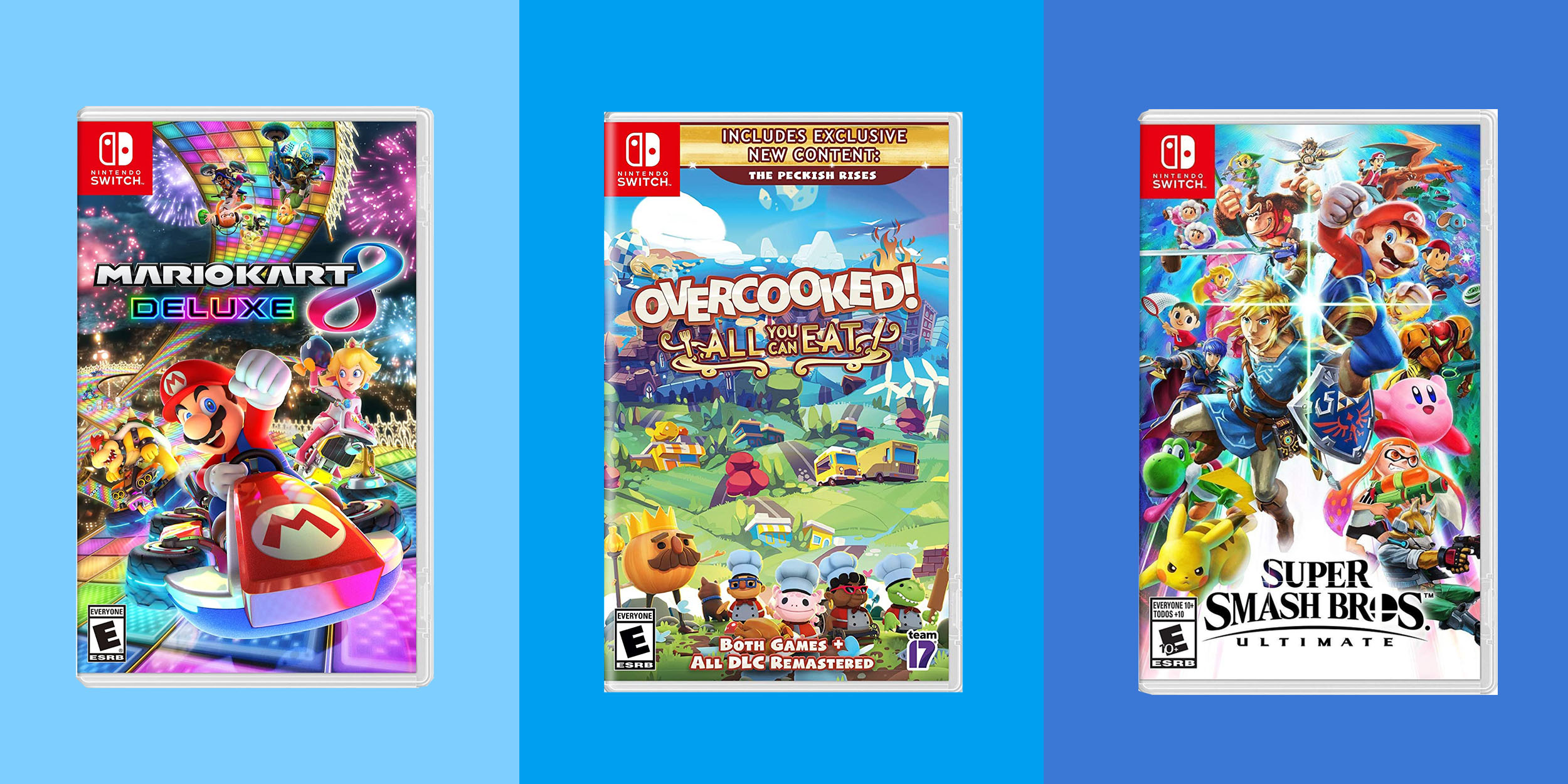
To ignite a competitive spark on the Nintendo Switch in 2026, players should prioritize titles with high skill ceilings, precise mechanics, and robust head-to-head modes. The most effective games for this purpose include Super Smash Bros. Ultimate, Mario Kart 8 Deluxe, Mario Strikers: Battle League, Puyo Puyo Tetris 2, Pokkén Tournament DX, Nintendo Switch Sports, and Mortal Kombat 1. These titles offer a blend of accessible entry points and deep technical mastery, ensuring that every match feels earned and every victory satisfying.
The Evolution of Competitive Play on Nintendo Switch
By 2026, the Nintendo Switch has cemented its legacy as one of the most versatile platforms for local and online multiplayer. The hardware's unique ability to transition from a handheld device to a home console has fostered a "couch competition" culture that was once the exclusive domain of older generations. The library has matured significantly, offering everything from frame-perfect fighting games to chaotic sports simulations that rely on physics and timing.
Competitive gaming on the Switch is not just about button mashing; it is about understanding systems. Whether it is managing "boost" in a racer or mastering "frame data" in a fighter, the competitive edge comes from a combination of muscle memory and strategic foresight. In a two-player setting, the psychological aspect of gaming—reading your opponent’s movements and baiting their mistakes—becomes just as important as the digital inputs themselves.
1. Super Smash Bros. Ultimate: The Pinnacle of Platform Fighters
Super Smash Bros. Ultimate remains the gold standard for competitive play on the Switch. With a roster of over 80 characters, it offers a level of variety that is unmatched in the fighting game genre. The game’s brilliance lies in its "easy to learn, hard to master" philosophy. Beginners can enjoy the spectacle of throwing items and using Final Smashes, but the competitive core is found in "No Items, Battlefield/Omega Stages" play.
In a 2-player competitive environment, Smash Ultimate forces players to master the art of "spacing" and "recovery." You aren't just trying to deplete a health bar; you are trying to manipulate the opponent’s position to knock them off the stage. By 2026, the meta-game has evolved to a point where even mid-tier characters have sophisticated combo strings and "kill-confirms" that require frame-perfect execution.
For those looking to spark competition, the "Stock" match format is the preferred method. Setting a 3-stock, 7-minute timer creates a high-stakes environment where every percentage point of damage increases the tension. The introduction of the "Small Battlefield" stage has also streamlined the 1v1 experience, focusing the action and rewarding players who can control the center of the arena.
2. Mario Kart 8 Deluxe: Mastering the Drift and the Draft
Mario Kart 8 Deluxe has enjoyed an unprecedented lifespan, bolstered by the 48 additional tracks from the Booster Course Pass that are now considered standard play. While often viewed as a "party game," at high levels of competition, Mario Kart is a brutal exercise in probability management and driving precision.
True competition in Mario Kart 8 Deluxe surfaces in the 200cc mode. At this speed, the game transforms from a casual racer into a high-octane test of "brake-drifting." Players must learn the optimal racing lines and understand the hidden "traction" and "acceleration" stats of different kart combinations. Competitive duels often hinge on "holding" items for defense rather than firing them immediately, creating a strategic stalemate that only breaks in the final lap.
To maximize competition between two players, use the "VS Race" mode with "Hard COM" or no COM players at all. This forces a direct confrontation where "snaking" (using mini-turbo boosts effectively) and "drafting" (staying in the opponent's slipstream) determine the winner. The technical depth of coin collection—which slightly increases your top speed—adds another layer of micro-management that can make the difference between first and second place.
3. Mario Strikers: Battle League: High-Octane Tactical Soccer
Mario Strikers: Battle League is perhaps the most aggressive sports game on the Switch. Unlike traditional soccer simulations, Strikers encourages violence and tactical gear customization. In a 2-player competitive setting, the game becomes a battle of positioning and "Perfect" moves.
The depth of Battle League comes from its gear system, which allows players to modify stats like Strength, Speed, Shooting, Passing, and Technique. A competitive 1v1 match often starts before the whistle blows, as players counter-pick characters to balance their team's attributes. During play, the "Team Tackle" mechanic—where you shove your own teammate into an opponent to knock them down—adds a layer of chaotic strategy that rewards quick thinking.
The most competitive element is the Hyper Strike. Successfully timing a Hyper Strike can grant two goals, but the long animation leaves you vulnerable. In 2026, competitive players have mastered the art of "interception," using the right analog stick to manually position defenders. This creates a high-pressure environment where one mistake in passing can lead to an immediate counter-attack.
4. Puyo Puyo Tetris 2: The Ultimate Puzzle Showdown
Puyo Puyo Tetris 2 brings together two of the most iconic puzzle franchises for a head-to-head experience that is mentally taxing and incredibly rewarding. Competition here is built on the "Garbage" system. When you clear lines in Tetris or pop Puyos in a chain, you send "garbage" blocks to your opponent’s screen, obstructing their progress.
The competition is sparked by the clash of styles. Tetris players focus on speed and "T-Spin" setups for maximum efficiency, while Puyo Puyo players focus on building massive "chains" that can deliver a knockout blow in a single move. In the "Swap" mode, where the game toggles between Tetris and Puyo Puyo every 25 seconds, the competitive tension reaches its peak as players must manage two different boards simultaneously.
For 1v1 duels, the "Big Bang" mode offers a simplified, speed-based challenge, but the "Versus" mode remains the definitive competitive experience. It requires a high degree of spatial awareness and the ability to "screen-watch" to see when your opponent is about to drop a massive combo, allowing you to time your counter-moves perfectly.
5. Pokkén Tournament DX: Fighting with Technical Precision
Pokkén Tournament DX is a unique hybrid that blends traditional 2D fighting mechanics with 3D movement. Developed in collaboration with the Tekken team, it offers a sophisticated "Phase Shift" system that changes the gameplay from "Field Phase" (3D movement) to "Duel Phase" (traditional 2D fighting) based on the attacks landed.
Competition in Pokkén is driven by the "Attack Triangle": Attacks beat Grabs, Grabs beat Counters, and Counters beat Attacks. This "rock-paper-scissors" foundation ensures that no single strategy is invincible. Players must learn the specific reach and frame data of their chosen Pokémon, such as Lucario’s balanced approach or Gengar’s tricky, high-mobility playstyle.
In a 2-player local setting, the game shines because of its visual clarity and the "Support Pokémon" system. Choosing the right support set can compensate for a character's weaknesses or extend their combos. By 2026, the community has mapped out every interaction, making Pokkén a game of pure skill where "reading" the opponent's Phase Shift timing is the key to victory.
6. Nintendo Switch Sports: Motion-Controlled Rivalry
While it may seem casual, Nintendo Switch Sports—specifically Pro League play—offers a surprisingly deep competitive experience. The game’s use of refined motion controls allows for nuanced gameplay that rewards physical timing and precision.
- Chambara (Swordplay): This is a psychological duel. You must read your opponent's guard and strike at the opposite angle. Competitive matches often become a tense stalemate of feints and parries.
- Tennis and Badminton: These modes rely on "timing shots." Hitting the ball or shuttlecock at the peak of its arc results in a faster, more difficult-to-return shot.
- Bowling: In the "Survival" or "Special" lanes, competition is fueled by consistency. Even a single frame without a strike can lead to a loss.
In 2026, the competition is bolstered by the "Ranked" system. Two players can compete to reach "A-Rank" or higher, with the game tracking win/loss ratios. The "Leg Strap" accessory for soccer also adds a physical layer of competition, requiring actual kicking motions that test the player's coordination under pressure.
7. Mortal Kombat 1: Brutal Technicality
Mortal Kombat 1 (the 2023 release, fully patched and optimized by 2026) represents the most "traditional" competitive fighter on this list. It introduced the Kameo Fighter system, which allows players to call in a secondary character for assists, combo extensions, or defensive breakers.
Competition in Mortal Kombat 1 is defined by "Kombos" and "Fatal Blows." For two players sitting on a couch, the game is a high-stakes chess match of blocking and punishing. Understanding "high/low" mix-ups is essential; if you block high when the opponent strikes low, you will be launched into a juggle combo that can take 30-40% of your health bar.
The Switch version, despite its graphical concessions compared to other platforms, maintains the 60fps (frames per second) required for competitive integrity. The game’s "Invasions" mode and "Kombat League" provide plenty of practice, but the true competition is found in Local Versus, where the lack of online latency allows for the most precise execution of "Flawless Blocks" and "Kounters."
Technical Comparison of Competitive Features
| Game | Primary Genre | Competitive Depth | Controller Recommendation | Online Ranking |
|---|---|---|---|---|
| Super Smash Bros. Ultimate | Platform Fighter | Extreme | GameCube Controller | GSP (Global Smash Power) |
| Mario Kart 8 Deluxe | Racing | High | Nintendo Switch Pro Controller | VR (Versus Rating) |
| Mario Strikers: Battle League | Sports/Combat | Medium-High | Dual Joy-Cons/Pro Controller | Strikers Club Ranks |
| Puyo Puyo Tetris 2 | Puzzle | Extreme | Joy-Con (D-Pad focus) | World Puzzle League |
| Pokkén Tournament DX | Fighting | High | Pokkén Pro Pad/Pro Controller | Point-based Ranking |
| Nintendo Switch Sports | Sports Sim | Medium | Single Joy-Con (Motion) | Pro League (E to S Rank) |
| Mortal Kombat 1 | Fighting | Extreme | Pro Controller | Kombat League |
Hardware and Setup for Competitive Play
To ensure that competition is fair and free of technical frustrations, players should consider the following prerequisites:
- Pro Controllers: While Joy-Cons are functional, they often suffer from "drift" and lack the precision of the Nintendo Switch Pro Controller's larger analog sticks and tactile buttons. For fighting games like Smash or Mortal Kombat, a Pro Controller is almost mandatory for high-level execution.
- Ethernet Adapter: If competing online, a wired connection is vital. The Switch’s internal Wi-Fi chip can be inconsistent. An Oled-model dock has a built-in LAN port, but older models require a USB-to-Ethernet adapter to minimize "ping" and "jitter" during matches.
- Monitor Latency: For games requiring frame-perfect inputs (Smash, Pokkén, MK1), playing on a dedicated gaming monitor with a low response time (1ms to 5ms) is preferable over a standard television with "Post-Processing" lag.
- Audio Cues: Many competitive players use headsets. Audio cues in games like Splatoon (though primarily 1-player per console) or Smash can signal an opponent's move before the visual animation is fully recognized.
Frequently Asked Questions
Which Switch game has the highest skill ceiling?
Super Smash Bros. Ultimate generally holds this title. The complexity of its movement (including "teching," "DI-ing," and "Ledge Trumping") means that a professional player will almost always defeat a casual player 100% of the time. The sheer volume of character match-ups to learn adds hundreds of hours to the mastery curve.
Can I play these games competitively on a Nintendo Switch Lite?
Yes, but with limitations. The Switch Lite does not support "TV Mode," meaning you are confined to the 5.5-inch screen. For 2-player competition, you would need to connect external controllers (like Pro Controllers) via Bluetooth and prop the console up, which is less than ideal for a high-intensity match.
Is Nintendo Switch Online (NSO) required for local 2-player competition?
No. All the games listed support "Local Wireless" or "Same-Screen" multiplayer without an active NSO subscription. NSO is only required if you wish to compete against your friend from different locations or participate in global ranked leaderboards.
Do I need to buy DLC to be competitive in Smash or Mario Kart?
While not strictly "required," the DLC in Super Smash Bros. Ultimate (Fighters Pass 1 & 2) includes several top-tier characters like Steve, Kazuya, and Joker. In Mario Kart 8 Deluxe, the Booster Course Pass adds 48 tracks, many of which are frequently chosen in competitive rotations. To have the most "complete" competitive environment, the DLC is highly recommended.
How do I handle "Joy-Con Drift" in competitive matches?
Joy-Con drift can ruin a competitive match by causing unintended movement. If you experience this, the best solution is to use a Pro Controller or send the Joy-Cons to Nintendo for repair. In 2026, various third-party "Hall Effect" joysticks are also available, which use magnets to eliminate the physical wear that causes drift.
Practical Recommendation
If you are looking for the fastest way to spark competition, start with Mario Kart 8 Deluxe on 200cc. It provides an immediate rush of adrenaline and is accessible enough for most players to understand the stakes quickly. For those who want a deeper, more long-term rivalry, Super Smash Bros. Ultimate is the ultimate investment.
To take the next step, set up a "Best of 5" tournament format with your opponent. Tracking wins over a long period—using a physical scoreboard or a digital app—adds a layer of "prestige" to your matches, transforming casual play into a dedicated competitive season.