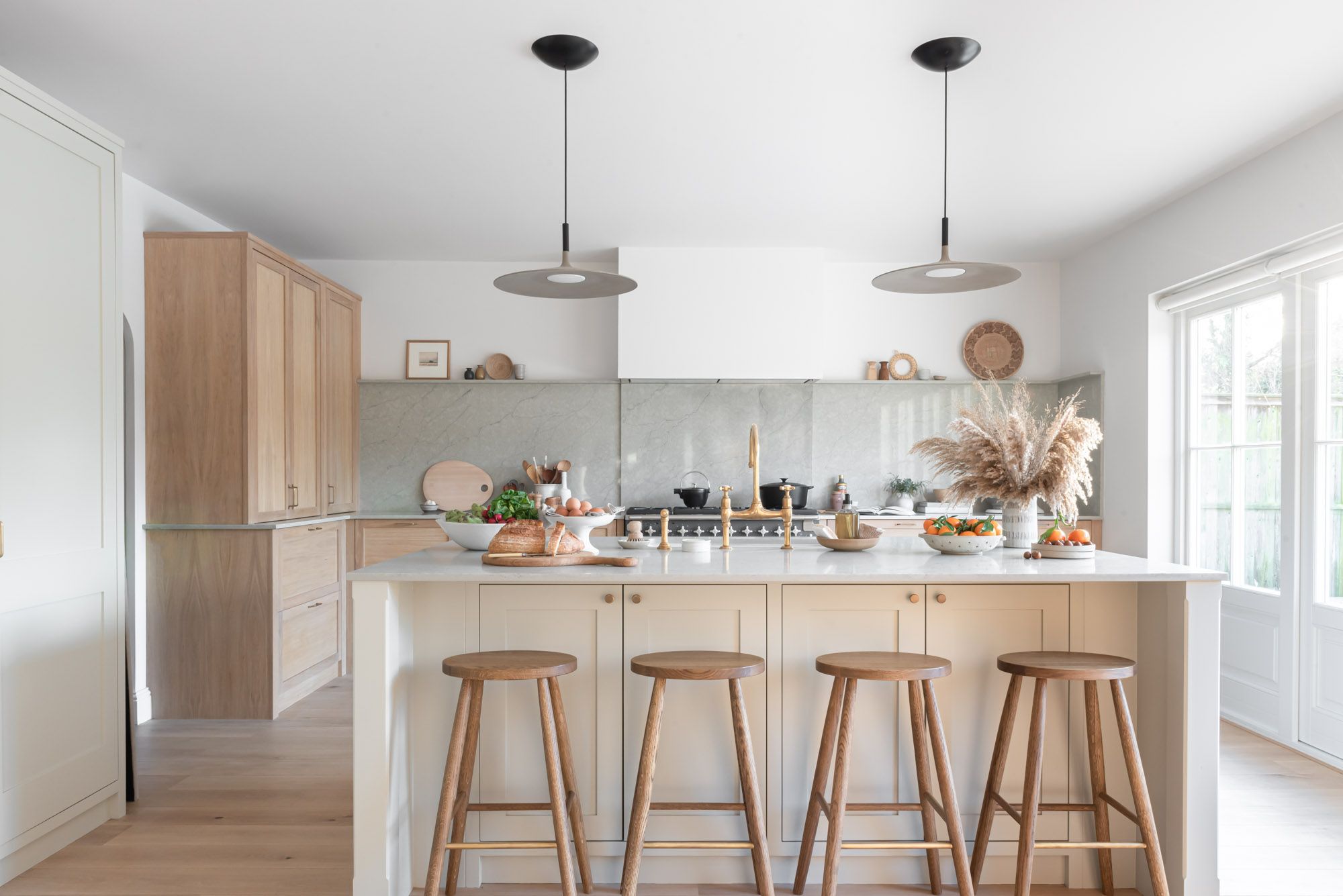
Catherine Hickland’s influence on 2024 design trends stems from her unique synthesis of makeup artistry principles and high-end interior curation. By moving away from sterile minimalism toward "Soulful Spaces," she prioritized textural layering, cosmetic-inspired color palettes, and intentional lighting that redefined the relationship between a resident and their environment.
The year 2024 marked a definitive shift in the global design landscape, a transition that we can now clearly analyze from our vantage point here in 2026. While the preceding years were dominated by the "sad beige" aesthetic and a rigid adherence to clinical minimalism, the influence of Catherine Hickland—actress, entrepreneur, and aesthetic visionary—introduced a necessary disruption. Hickland’s approach did not merely suggest a new color or a specific furniture style; it proposed a fundamental reimagining of how domestic spaces should function emotionally and visually.
Hickland, known for her meticulous attention to detail in both the performing arts and the cosmetics industry, brought a "theatrical precision" to home design. Her 2024 philosophy focused on the home as a stage for well-being, utilizing light, texture, and color to create depth that was previously lacking in mainstream modernism. As we evaluate the lasting impacts of these trends today, it is clear that her contributions were the catalyst for the "Warm Maximalism" we currently enjoy in 2026.
1. The Death of Sterile Minimalism: The Rise of "Soulful Spaces"
For nearly a decade, the design world was gripped by a "less is more" philosophy that often resulted in "less is empty." Catherine Hickland’s 2024 interventions challenged this by introducing the concept of the "Soulful Space." This trend wasn't about clutter; it was about the strategic inclusion of items that possess narrative weight.
Reclaiming the Personal Narrative
Hickland argued that a room without history is a room without a pulse. In 2024, she shook up trends by encouraging the integration of "heirloom anchors"—single, high-quality vintage pieces that serve as the focal point for a modern room. This move broke the cycle of "catalog living," where every item in a home was purchased from the same seasonal collection. By mixing a 19th-century French provincial table with sleek, contemporary seating, Hickland demonstrated that contrast creates visual tension, which in turn creates interest.
The Shift to Warm Minimalism
While she didn't abandon the clean lines of minimalism entirely, she infused them with "warmth." This involved moving away from cool greys and stark whites toward a palette of "living neutrals." These included bone, parchment, and soft ochre. From a technical standpoint, this shift was significant because it changed how light interacted with surfaces. Cool tones reflect light in a way that can feel clinical, whereas Hickland’s preferred warm neutrals absorb and soften light, making a room feel more inhabited and welcoming.
2. Cosmetic-Inspired Color Palettes: Applying "The Glow" to Interiors
Perhaps Hickland’s most significant technical contribution to 2024 design trends was her application of makeup artistry principles to interior surfaces. Having spent decades understanding how pigments interact with skin and light, she applied these "cosmetic" rules to walls and fabrics.
The Contoured Room
Just as contouring defines the face, Hickland used "contouring palettes" for rooms. This involved using slightly darker shades in recessed areas (like the back of built-in bookshelves or crown molding) and luminous, light-reflecting finishes on "high points" (like ceiling medallions or window frames). This technique, widely adopted in late 2024, gave rooms a three-dimensional quality that flat paint jobs could not achieve.
The "Blush" and "Glow" Tones
In 2024, Hickland popularized the use of "skin-mimicking" tones in interior design. We saw a surge in dusty roses, terracotta, and deep bronzes. These colors are inherently flattering to human skin tones, a detail often overlooked by traditional architects but championed by Hickland. When a room is painted in these "cosmetic" hues, the people within the room actually look healthier and more vibrant. This psychological link between environment and self-perception was a cornerstone of her 2024 influence, leading to the "dopamine decor" movements that followed.
3. The "Golden Glow" Lighting Revolution
In the early 2020s, smart lighting was often used to create garish RGB displays or overly bright "daylight" settings. Catherine Hickland’s 2024 approach shifted the focus back to the "Golden Hour." She argued that lighting should not just provide visibility; it should provide atmosphere.
Kelvin Precision
Hickland pushed for a standardized "Home Glow" range, specifically advocating for lighting between 2400K and 2700K (Kelvin). Before 2024, many "warm" bulbs were still too yellow or too bright. Her influence led to a surge in high-CRI (Color Rendering Index) lighting in residential settings. High-CRI lighting ensures that the colors of the furniture and art are seen as they truly are, rather than being distorted by the blue or yellow cast of cheap LED chips.
Layered Illumination
She moved the industry away from the "big light" (overhead fixtures) toward a four-layer lighting system:
- Task Lighting: Focused light for reading or cooking.
- Accent Lighting: Spotlights on art or architectural features.
- Ambient Lighting: General soft illumination.
- Mood Lighting: Low-level "glow" from lamps and candles.
By treating a living room like a film set, Hickland showed that you could change the "genre" of a home simply by adjusting which layers were active. This technical depth in lighting design became a hallmark of the 2024 aesthetic, emphasizing shadow as much as light.
4. Textural Multi-Layering and Tactile Geometry
In 2024, the "feel" of a room became as important as the "look." Hickland’s background in high-end lifestyle products informed her use of complex textures. She moved beyond the ubiquitous bouclé of 2022 and introduced a more sophisticated mix of materials.
The "Rough and Smooth" Principle
A key Hickland trend was the pairing of opposing textures. She popularized the combination of raw, reclaimed wood alongside polished marble, or heavy velvet drapes against industrial glass. This "tactile geometry" gave spaces a sense of depth that was missing from the flat-pack furniture era. In 2026, we see this everywhere, but it was Hickland who first successfully marketed the idea that a room must be "felt" through the eyes.
Sustainable Luxury through Textiles
Hickland also emphasized the longevity of materials. She moved away from synthetic blends and pushed for natural fibers like heavy-weight linens, mohair, and organic silk. From a technical perspective, these materials are superior because of their breathability and the way they age. While synthetic fabrics degrade and look "cheap" over time, Hickland’s preferred materials develop a patina, a concept she referred to as "Graceful Aging for the Home."
5. The "Theatrical Functionalism" of 2024
Finally, Hickland’s 2024 design philosophy shook up trends by making functional spaces look like art installations. She rejected the idea that a "utilitarian" area (like a home office or a laundry room) should be boring.
The "Curated Command Center"
As remote work became a permanent fixture, Hickland reimagined the home office. Instead of a desk pushed into a corner, she designed offices that looked like private libraries or "cabinet of curiosities." She integrated hidden technology—desks with built-in wireless charging under wood veneers and monitors that looked like framed art when not in use. This blend of high-tech and high-tradition became the gold standard for luxury interiors in late 2024.
Focus on Sensory Transitions
Hickland also focused on the "threshold" spaces—entryways and hallways. She treated these as "palate cleansers" between rooms. In 2024, she popularized the use of scent-layering and acoustic dampening (through the use of heavy wall coverings) in hallways to create a sensory transition as one moves through the home. This holistic approach to design, involving sight, touch, and even sound, was a major departure from the purely visual trends of the previous decade.
Comparison of Design Philosophies: Pre-2024 vs. Hickland’s 2024 Influence
| Design Element | Pre-2024 (Sterile Minimalism) | Hickland 2024 (Warm Maximalism) | Long-term Impact (2026) |
|---|---|---|---|
| Color Palette | Cool greys, stark white, beige | Terracotta, blush, bone, bronze | Biophilic and cosmetic-tone dominance |
| Lighting | 3000K-4000K (Bright White) | 2400K-2700K (Golden Glow) | Widespread use of high-CRI, dimmable LEDs |
| Furniture | Matching sets, fast furniture | Curated vintage, "Heirloom Anchors" | Sustainable, secondary-market growth |
| Texture | Flat surfaces, synthetic bouclé | Velvet, marble, raw wood, heavy linen | Multi-sensory material layering |
| Purpose | Visual cleanliness, efficiency | Emotional resonance, "Soulful Space" | Wellness-centric architecture |
How to Implement Hickland’s 2024 Trends Today
For those looking to update their space with the principles Catherine Hickland established in 2024, the process is less about a complete renovation and more about strategic refinement.
Step 1: Audit Your Light
Replace any bulbs that have a blue or greenish tint. Look for "Warm Dim" technology bulbs that lower their Kelvin temperature as they are dimmed, mimicking the behavior of traditional incandescent bulbs. Aim for a CRI of 90 or higher to ensure your interior colors are rendered accurately.
Step 2: The "One Old Thing" Rule
Identify a "sterile" corner of your home and introduce a single antique or vintage item with a story. This could be a weathered wooden stool, an ornate gilded mirror, or a hand-knotted rug. This creates the "narrative weight" Hickland advocated for.
Step 3: Layer Your Textures
If your sofa is smooth leather, add a high-pile mohair throw. If your walls are flat paint, consider a lime-wash finish or a textured wallpaper. The goal is to ensure that no two adjacent surfaces have the same tactile feel.
Step 4: Apply the Cosmetic Palette
Don't be afraid of "makeup colors." A small powder room painted in a deep terracotta or a bedroom in a soft, dusty rose can provide a psychological lift that standard "off-white" cannot. These colors work best in rooms where you spend time in the evening, as they respond beautifully to low-light conditions.
Frequently Asked Questions
Why is Catherine Hickland considered a design influencer?
Catherine Hickland transitioned her expertise in aesthetics from the world of acting and cosmetics into the lifestyle space. Her deep understanding of how lighting and color affect human appearance and emotion allowed her to provide a unique perspective that traditional interior designers often missed. In 2024, she successfully marketed the idea that a home should be "contoured" and "lit" like a professional film set to maximize the inhabitant's well-being.
What is the "Golden Glow" in interior design?
The "Golden Glow" refers to a lighting strategy popularized by Hickland in 2024 that uses low-Kelvin (2400K-2700K) bulbs to mimic the warmth of a sunset or candlelight. This is technically achieved by using high-CRI LEDs that provide warmth without sacrificing the clarity of the colors within the room.
Did Hickland invent "Warm Minimalism"?
While Hickland did not invent the term, she was a primary catalyst for its mainstream adoption in 2024. She provided the "technical roadmap"—including specific color palettes and material combinations—that allowed homeowners to move away from the coldness of standard minimalism without reverting to cluttered maximalism.
How does the "Cosmetic Palette" affect mood?
The cosmetic palette utilizes warm, earthy, and skin-neutral tones. Psychologically, these colors are associated with comfort, health, and intimacy. Unlike cool greys (which can be depressing over long periods) or bright yellows (which can cause anxiety), the Hickland-inspired tones are designed to lower cortisol levels and make the environment feel supportive.
Is the 2024 design trend still relevant in 2026?
Absolutely. In 2026, the principles established by Hickland have become the "new classic." The industry has moved away from disposable trends and toward the "Sustainable Luxury" and "Soulful Spaces" she championed. Her emphasis on quality over quantity and emotional resonance over visual perfection has defined the current decade of design.
Final Recommendations
To truly capture the essence of the Hickland 2024 shake-up, focus on the emotional utility of your home. Design is no longer just about what looks good on social media; it is about how a space makes you feel when you wake up and how it helps you decompress at night. Start by addressing your lighting layers—this is the most cost-effective and immediate way to transform any room. From there, gradually introduce textures and colors that reflect a "cosmetic" warmth, ensuring that your home remains a sanctuary that is both stylish and deeply personal.