In New Jersey, a workers' compensation settlement is a negotiated agreement between an injured employee and their employer’s insurance carrier to resolve a claim for workplace injuries. While there is no "average" payout due to the wide variance in medical necessity, disability ratings, and wage history, these settlements typically involve a lump-sum payment or structured payout intended to compensate for permanent impairment and future medical needs.
The Mechanism of Workers' Compensation in New Jersey
The New Jersey Division of Workers’ Compensation governs how workplace injuries are managed. Unlike a personal injury lawsuit, which is fault-based, workers’ compensation is a no-fault system. This means an employee is entitled to benefits regardless of who caused the accident, provided the injury arose out of and in the course of employment.
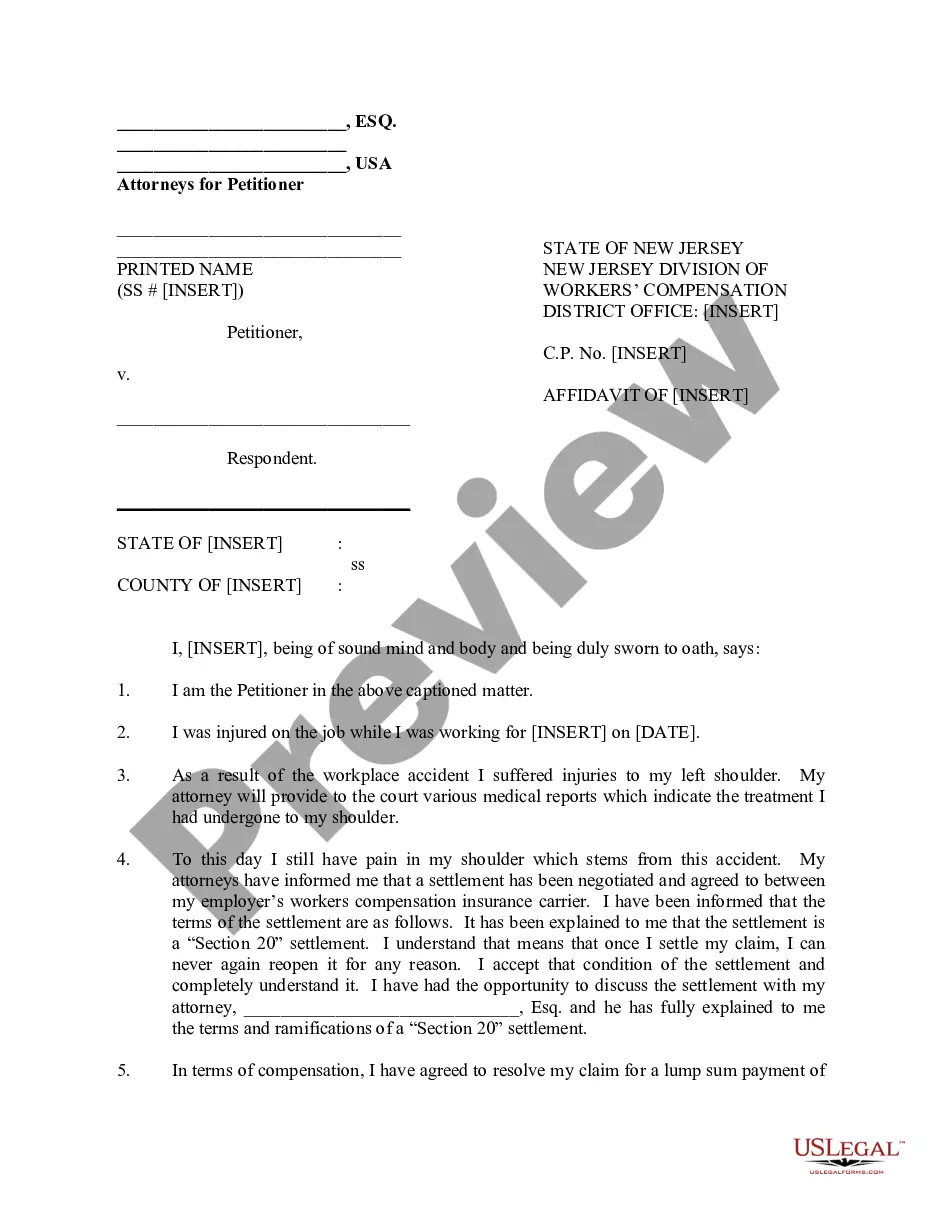
Settlements generally fall into two categories: "Section 20" settlements and "Formal" settlements. A Section 20 settlement is a full and final closure of a claim where the parties disagree on the extent of the disability or the compensability of the injury; it essentially trades the right to future medical care for a cash payout. A Formal settlement is based on an assessment of permanent partial disability (PPD) and usually allows for the possibility of reopening the case if the injury worsens significantly within two years of the last payment.
Why "25 Examples" Cannot Be Predicted
When individuals search for "25 examples of workers compensation settlements in NJ," they are often seeking a benchmark to estimate their own case value. However, the legal reality is that settlement amounts are highly idiosyncratic. Two individuals with similar injuries—for example, a torn rotator cuff—may receive vastly different outcomes based on their age, occupation, pre-existing conditions, post-injury earning capacity, and the specific physician’s disability rating.
Rather than looking for a specific dollar figure from an anonymous source, claimants should focus on the variables that drive valuation. Settlement amounts are calculated by multiplying a disability percentage by a statutory rate established by the New Jersey legislature, which is adjusted annually.
Key Factors Influencing Settlement Value
To understand why settlements vary, one must analyze the primary drivers used by the Division of Workers’ Compensation.
1. Nature and Extent of the Injury
The severity of the injury is the foundational element. An injury that results in surgery—such as a spinal fusion or a knee replacement—inherently carries a higher disability rating than a soft-tissue injury that resolves with physical therapy. The "Permanent Partial Disability" (PPD) rating is expressed as a percentage of the body as a whole, or of a specific limb, as defined by the New Jersey statutory schedule.
2. Wage History and Compensation Rates
The claimant’s average weekly wage (AWW) is a critical component. New Jersey law sets minimum and maximum weekly benefit rates. If a worker earned a high salary, their benefit rates for temporary disability and permanent disability are typically higher, leading to larger potential settlements.
3. The "Ability to Return to Work"
If an injury results in a permanent work restriction—such as a lifting limitation that prevents a construction worker from returning to their previous role—the vocational impact becomes a factor. This may lead to an analysis of the worker’s future earning capacity, which can increase the settlement valuation.
4. Pre-existing Conditions
Insurance carriers often investigate medical history to determine if a portion of the disability is "pre-existing." If a worker has a history of back pain, the carrier may argue that only a percentage of the current injury is related to the specific workplace accident.
Comparing Settlement Structures
The following table outlines the fundamental differences between the two most common settlement types in New Jersey.
| Feature | Section 20 Settlement | Formal Settlement (PPD) |
|---|---|---|
| Finality | Full and final; case closed | Can often be reopened within 2 years |
| Medical Rights | Usually waives all future medical rights | Allows for future medical treatment |
| Typical Usage | Disputed claims or complex liability | Accepted claims with permanent injury |
| Payment Method | One-time lump sum | Lump sum or approved structured plan |
| Legal Status | Requires judicial approval | Requires judicial approval |
The Role of Medical Examinations
Before a settlement can be reached, the claimant and the insurance carrier will likely engage in independent medical examinations (IMEs). The worker’s physician and the employer’s physician will provide conflicting reports on the disability percentage. A settlement is frequently a compromise between these two expert opinions. If the parties cannot agree, the case moves to a trial before a Judge of Compensation, who will then issue a ruling based on the testimony and evidence provided.
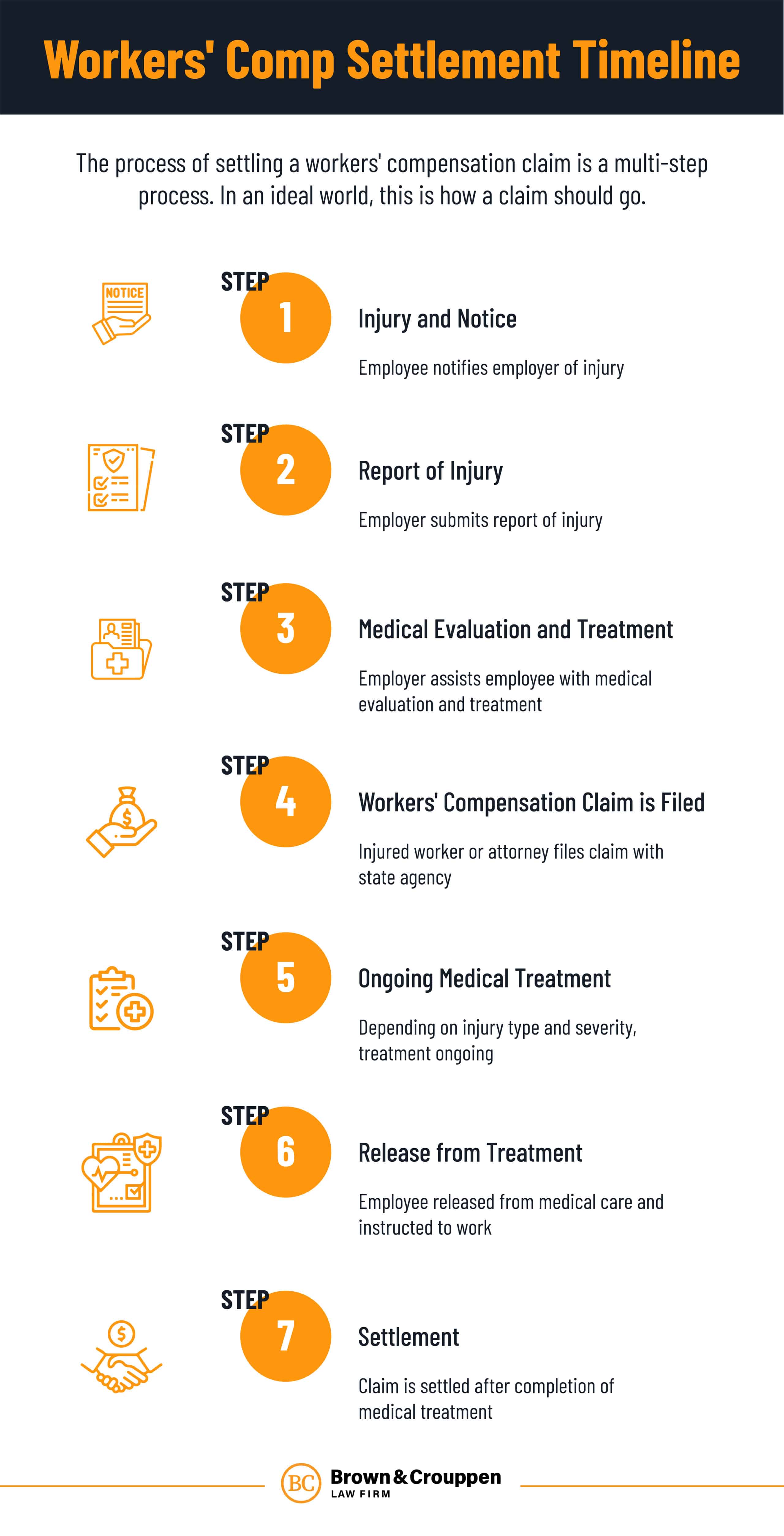
Navigating the Timeline
The time it takes to reach a settlement is rarely linear. It depends on:
- Maximum Medical Improvement (MMI): You cannot settle a case until you have reached MMI, the point at which your condition has stabilized and no further significant improvement is expected from treatment.
- Negotiation Delays: Insurance companies often delay the process to assess long-term recovery.
- Court Scheduling: If the case is disputed, the wait times for hearings in the New Jersey Division of Workers’ Compensation can vary by county.
Frequently Asked Questions
1. Can I reopen my workers' compensation case after it settles? It depends on the type of settlement. In a Formal settlement, you may be able to file for a modification if your condition worsens within two years of the last payment. However, if you accepted a "Section 20" settlement, the case is closed permanently, and you generally cannot reopen it regardless of a worsening condition.
2. Are workers' compensation settlements taxed in New Jersey? Generally, workers' compensation benefits are not taxable at the federal or state level. However, you should consult with a tax professional regarding your specific situation, as there are rare exceptions if the benefits interact with Social Security Disability Insurance (SSDI).
3. Does the insurance company have to pay for my future medical needs? Under a standard Formal settlement, the employer is responsible for reasonable and necessary medical treatment related to the injury. Under a Section 20 settlement, you typically waive the right to future employer-paid medical care in exchange for a higher cash payout.
4. What happens if I settle and then find out I need another surgery? If you have a Formal settlement, you may seek to reopen the claim for additional medical benefits. If you have a Section 20 settlement, you become responsible for your own medical expenses, which is why the initial settlement amount in Section 20 cases is often higher to account for these risks.
5. Do I need an attorney to settle my workers' compensation claim? While you are not legally required to have an attorney, the complexity of New Jersey's PPD tables and the risk of waiving future rights make legal representation common. Attorneys in this field operate under a fee structure approved by the court, typically limited to a percentage of the awarded compensation.
Strategic Considerations for Claimants
When considering a settlement, evaluate your long-term medical needs against the desire for a lump-sum payment. A quick payout may seem attractive, but if you have a degenerative condition that will require expensive care in five or ten years, a lump sum that does not account for those costs may leave you with a financial burden. Always request a detailed breakdown from your legal counsel or the claims administrator to understand exactly what the settlement covers.
The best course of action is to ensure your medical records are complete and that your physician has clearly documented the limitations caused by your work injury. In New Jersey, documentation is the currency of the workers' compensation system; without clear medical evidence, it is difficult to negotiate a fair settlement that reflects the true nature of your disability.