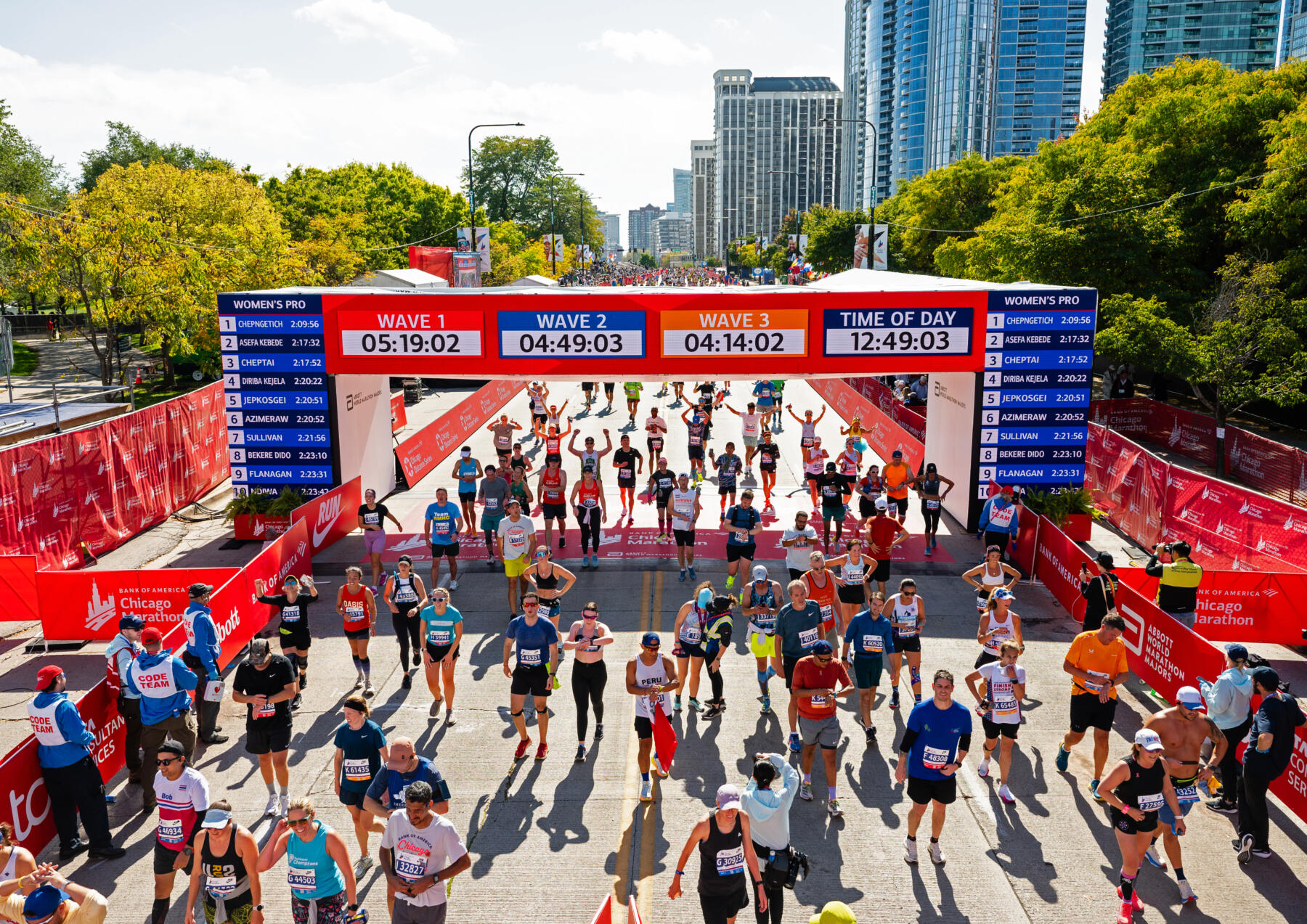
The 2025 Bank of America Chicago Marathon took place on Sunday, October 12, 2025, welcoming more than 50,000 participants from across the globe to Grant Park. As one of the world's premier World Marathon Majors, the race delivered world-class elite competition, tens of thousands of personal records, and unmatched crowd support across 29 distinct Chicago neighborhoods.
The 47th Running: Scope, Atmosphere, and Field Dynamics
Held on its traditional second Sunday of October, the 47th running of the Chicago Marathon cemented its standing as a cornerstone of international distance running. As an Abbott World Marathon Major, Chicago attracts an exceptionally diverse field, balancing Olympic-caliber elites at the front of the pack with dedicated age-group runners, charity fundraisers, and debut marathoners.
The 2025 edition marked another high-water mark for participant volume. Field sizes exceeded 50,000 finishers, supported by roughly 12,000 race-day volunteers and an estimated 1.7 million spectators lining the course from start to finish. Grant Park served once again as the central nervous system of the event, hosting athlete staging, gear check, elite hospitality, and the post-race celebration.
Weather conditions in mid-October in Chicago are notoriously variable, historically ranging from unseasonable warmth to freezing rain. The 2025 race day presented typical autumn running conditions: crisp morning temperatures in the low-to-mid 50s Fahrenheit at the initial 7:30 a.m. start, rising into the mid-60s by early afternoon. Moderate Lake Michigan humidity and light morning winds provided an advantageous operational window for fast times, particularly during the first three hours of competition.
Course Profile and Neighborhood Breakdown
The Chicago Marathon course is internationally renowned for its flat, fast, and spectator-dense topography. Across the entire 26.2-mile loop, the course experiences an elevation variance of barely 30 feet, making it the flattest major marathon course in the world. However, executing a successful race requires understanding how the course breaks down geographically across the city’s three primary sectors: the North Side, the West Side, and the South Side.
[ North Side: Miles 4–12 ] (Lincoln Park, Lakeview, Old Town) | [ West Side: Miles 13–18 ] --- [ The Loop / Grant Park ] --- [ South Side: Miles 19–25 ] (West Loop, Little Italy) (Start / Finish) (Pilsen, Chinatown, Bronzeville) | [ Mile 26: Mount Roosevelt ]
1. The Loop and the North Side (Miles 1 to 12)
The race begins on Columbus Drive in Grant Park, firing runners northward through the towering architecture of downtown Chicago. Within the first two miles, runners cross the Chicago River and encounter immediate logistical realities: GPS signals frequently scatter or disconnect entirely beneath the urban canyons and lower-level bridge overpasses. Experienced runners rely strictly on marked mile clocks and manual lap pacing through Grand Avenue, State Street, and LaSalle Street.
As the route transitions through Lincoln Park (Miles 5 to 7), tree-lined streets mute the wind, and crowd noise swells. Runners head north into Lakeview East and Boystown along Broadway before turning south near Addison Street. The return southward through Old Town along Wells Street (Miles 10 to 11) features intense spectator density, narrow corridors, and energetic community cheer zones. This section requires discipline; the smooth pavement and downhill visual perspective frequently trick runners into running faster than goal pace far too early.
2. The West Side Corridor (Miles 13 to 18)
Passing back through downtown, runners cross the halfway timing mat at Mile 13.1 on the Monroe Street bridge before heading straight west. The West Side features broader roadways and industrial architecture through the West Loop and Near West Side. Spectator crowds thin slightly compared to the downtown corridor, offering athletes mental space to settle into a sustainable rhythm.
The route passes the United Center before winding through Greek Town and the University of Illinois Chicago campus along Halsted and Taylor Streets (Miles 16 to 17). The surface conditions along this segment are consistently flat, but the course is exposed to crosswinds if west-southwest winds pick up during late morning. Hydration discipline becomes critical through this section as cumulative glycogen depletion begins to manifest.
3. The Cultural South and the Final Stretch (Miles 19 to 26.2)
The southern third of the Chicago Marathon is where races are made or broken. Mile 19 leads runners across the 18th Street bridge into Pilsen, one of the most vibrant cultural stretches on the route. Vibrant murals, live traditional Mexican music, and massive community turnouts supply a powerful emotional lift right as physical fatigue sets in.
Leaving Pilsen, the course moves southeast through East Pilsen and into Chinatown (Miles 21.5 to 22), where runners pass under the ceremonial Dragon Gate along Wentworth Avenue. From Mile 22 through Mile 25, the course follows Michigan Avenue through Bronzeville. This long, dead-flat, wide boulevard tests psychological endurance. Spectators line the curbs, but the visual horizon stretches endlessly forward.
At Mile 26, runners make a short, sharp right turn onto Roosevelt Road. This initiates the course's only notable incline: an overpass known colloquially as "Mount Roosevelt." While the incline rises only about 15 vertical feet over a quarter-mile, it hits legs that have absorbed 26 miles of pounding. Cresting the bridge, runners make a final left turn back onto Columbus Drive, with the finish line gantry visible 200 meters ahead in Grant Park.
2025 Chicago Marathon Time Qualifying Standards
Securing entry into the Chicago Marathon requires navigating a competitive selection process. Chicago offers several guaranteed entry mechanisms alongside an open non-guaranteed application lottery. The most prominent guaranteed method is the time qualification standard, which must be achieved on a certified marathon course within an established qualifying window.
Below are the official qualifying standards utilized for time-qualifier entry into the 2025 field:
| Age Division | Men's Standard (hh:mm:ss) | Women's Standard (hh:mm:ss) | Non-Binary Standard (hh:mm:ss) |
|---|---|---|---|
| 16–29 | 3:05:00 | 3:35:00 | 3:35:00 |
| 30–39 | 3:10:00 | 3:40:00 | 3:40:00 |
| 40–49 | 3:20:00 | 3:50:00 | 3:50:00 |
| 50–59 | 3:35:00 | 4:20:00 | 4:20:00 |
| 60–69 | 4:00:00 | 5:00:00 | 5:00:00 |
| 70–79 | 4:30:00 | 5:55:00 | 5:55:00 |
| 80+ | 5:25:00 | 6:10:00 | 6:10:00 |
Note: Achieving a qualifying standard guarantees acceptance into the Chicago Marathon, provided the runner applies within the designated application window and the performance occurred on an accredited USATF, World Athletics, or equivalent certified course.
Entry Pathways and Registration Dynamics
Entry into the 2025 event was distributed across several structured categories. Demand for major marathon bibs reached historic peaks leading into 2025, driven by surging participation in endurance sports and global interest in the World Marathon Majors series.
1. Guaranteed Entry Categories
- Time Qualifiers: Athletes who ran an official qualifying time during the designated performance window (typically January 1 of the prior calendar year through the close of the registration window).
- Legacy Finishers: Runners who have successfully completed the Chicago Marathon five or more times within the previous 10 years receive guaranteed access.
- Chicago Distance Series Finishers: Athletes who completed all three events in the local series—the Shamrock Shuffle 8K, the Chicago 13.1, and the previous year's marathon—secured priority entry.
- International Tour Operators: International runners purchasing packaged travel, lodging, and bib packages via accredited sports tour partners.
2. Official Charity Program
Runners who do not meet time standards or who miss the open lottery frequently participate through the Bank of America Chicago Marathon Charity Program. For the 2025 event, participants pledged a minimum fundraising target—typically $1,250 if secured during the application window, or $1,750 if joined after lottery results were finalized. The program raises tens of millions of dollars annually for hundreds of local, national, and global non-profit organizations.
3. Non-Guaranteed Open Drawing
Runners outside the guaranteed criteria entered the free, open non-guaranteed lottery during late autumn of 2024. Selection is entirely randomized by algorithm. Due to unprecedented applicant volumes, acceptance percentages for the non-guaranteed pool have narrowed substantially, making alternative pathways like charities and local qualification series increasingly vital.
Race-Day Execution and Course Support Infrastructure
Managing an event with more than 50,000 runners requires vast operational infrastructure. The race organizers use a staggered, three-wave start system designed to ease course congestion and ensure equal access to on-course aid.
Wave 1 (Start: 7:30 a.m.) -> Corrals A through E (Elites & Sub-3:15 to Sub-3:45 runners) Wave 2 (Start: 8:00 a.m.) -> Corrals F through H (Mid-pack runners, ~3:45 to 4:30) Wave 3 (Start: 8:35 a.m.) -> Corrals J through N (Runners pacing 4:30 to 6:30 course limit)
Aid Station Density and Logistics
The course features 20 comprehensive aid stations spaced approximately one to two miles apart, beginning at Mile 2 and repeating through Mile 25. Every aid station follows a uniform layout to minimize runner collisions:
- Medical Tent: Positioned at the beginning of the aid station station perimeter.
- Gatorade Endurance Formula: Distributed in green cups containing the Lemon-Lime endurance blend (providing sodium, potassium, and carbohydrates).
- Water: Distributed in white cups following the electrolyte tables.
- Energy Gels: Maurten Gel 100 stations were positioned along the second half of the course (typically near Mile 13.6 and Mile 19.2), offering unflavored hydrogel energy nutrition.
- Restrooms: Portable sanitation units positioned directly after each aid station footprint.
The strict organization of these stations ensures runners can target their nutrition without stopping. A key operational strategy for the Chicago course is running along the blue "tangent line"—a painted line marking the mathematically shortest 26.2-mile distance. Runners who deviate wide around aid stations or weave through congestion frequently log 26.5 to 26.7 miles on their GPS watches by the time they reach the finish line.
Technical Pacing Challenges and Urban Navigation
While the profile of Chicago is virtually flat, the urban terrain presents specific technical challenges that trip up inexperienced racers. Proper pacing execution requires proactive tactical adjustments.
Managing the Downtown Signal Blackout
Within the first three miles, runners cross beneath the steel framework of the Chicago River bridges and travel between high-rise glass structures. Satellite signals refract off skyscraper glass, causing GPS watches to report paces wildly faster or slower than actual movement—sometimes registering instantaneous paces under 4:00 per mile or jumping drastically.
Runners who pace based on watch algorithms frequently panic and slow down or surge aggressively. The solution is switching the watch display to lap time and reading the physical mile split clocks placed at every single mile marker.
Road Surface Variations and Bridges
Chicago’s course crosses multiple river bridges. Most bridge crossings are paved or carpeted for athlete safety, but some expose underlying steel grate mechanics or wood planks. Athletes must maintain balanced foot strikes over these transitions, avoiding sudden accelerations or erratic maneuvers, particularly if morning moisture has accumulated on the bridge carpeting.
The Turn-by-Turn Impact
The course incorporates more than 30 turns across its 26.2 miles. While none are sharp hairpin corners, constant cornering disrupts cadence if taken poorly. Hugging the inside of corners while observing athlete spacing saves significant physical energy over 42 kilometers.
2025 Elite Competition and Record Context
The Chicago Marathon is a proven launchpad for historic performances. Chicago’s flat course has yielded numerous World Records, including Kelvin Kiptum's 2:00:35 clocking in 2023 and Ruth Chepngetich's 2:09:56 in 2024.
The 2025 professional field maintained this aggressive standard, featuring stacked rosters across the Men’s Open, Women’s Open, and Wheelchair divisions:
- Men’s Open Division: The elite men's race adopted a disciplined tactical posture in the opening 10 kilometers before breaking apart along the West Side corridor. Front-running packs maintained sub-4:40 mile splits through 30 kilometers, with late-race attacks through Chinatown and Bronzeville determining the podium places.
- Women’s Open Division: The women's field demonstrated the deep international depth currently defining professional distance running. Paced by dedicated male pacemakers through the half-marathon mark, the leading pack pushed intermediate splits, resulting in multiple sub-2:18 performances.
- Wheelchair Division: Chicago hosts one of the most competitive wheelchair marathon divisions in the world. Competing on broad, flat boulevards, elite wheelchair athletes achieved average speeds exceeding 20 miles per hour, with strategic drafting along the open straightaways of Michigan Avenue deciding the final sprint to the Roosevelt overpass.
Frequently Asked Questions
What was the official date of the 2025 Chicago Marathon?
The 2025 Bank of America Chicago Marathon took place on Sunday, October 12, 2025. The race always occurs on the Sunday of Columbus Day / Indigenous Peoples' Day weekend, allowing participants and spectators to navigate travel logistics over a holiday weekend.
What is the time limit to complete the Chicago Marathon?
The event enforces an official time limit of 6 hours and 30 minutes (6:30:00). The timing clock begins when the final participant in the last corral of Wave 3 crosses the starting line. Runners must maintain an approximate 15-minute-per-mile pace to avoid being directed onto sidewalks by course marshals as streets reopen to vehicular traffic.
Why do GPS running watches fail during the Chicago Marathon?
GPS watches malfunction during early miles due to the urban canyon effect caused by downtown skyscrapers, along with travel across lower-level streets and bridges. Tall buildings block or reflect satellite signals, causing erratic pacing and inaccurate distance calculations. Runners should practice manual lap timing and use course mile markers to measure splits.
Does running a qualifying time guarantee entry into Chicago?
Yes. Unlike the Boston Marathon, which uses a rolling cutoff that rejects slower qualifiers when applications exceed capacity, the Bank of America Chicago Marathon guarantees entry to all eligible runners who submit a verified qualifying performance during the official application window.
Where is the best location for spectators to watch the race?
The most accessible and energetic spectator viewing locations are in Lincoln Park near Mile 8, along Wells Street in Old Town at Mile 11, in the heart of Pilsen at Mile 19, and through Chinatown at Mile 21.5. Due to security closures, the start and finish lines inside Grant Park are restricted to ticketed grandstand holders and participants.
Next Steps for Prospective Runners
Whether you completed the 2025 race or are preparing for future editions, systematic planning is essential to secure entry and run your best race.
- Audit Your Qualifying Window: If you are targeting a guaranteed time entry, ensure your qualifying race is run on an officially certified course (USATF, World Athletics, or national equivalent). Keep official results links and bib details organized for verification.
- Plan Around Registration Deadlines: Open lottery and guaranteed entry windows typically run for three to four weeks starting in late October through mid-November of the preceding year. Mark these dates to avoid missing the registration cycle.
- Incorporate Tangent Training: To avoid adding hundreds of meters on race day, practice running straight lines through wide corners and practice manual split calculation during your weekly long runs.
- Explore Charity Programs Early: Popular non-profit charity partners often fill their guaranteed bib allotments before the open lottery results are even announced. Reach out to causes you care about well in advance to secure a spot.