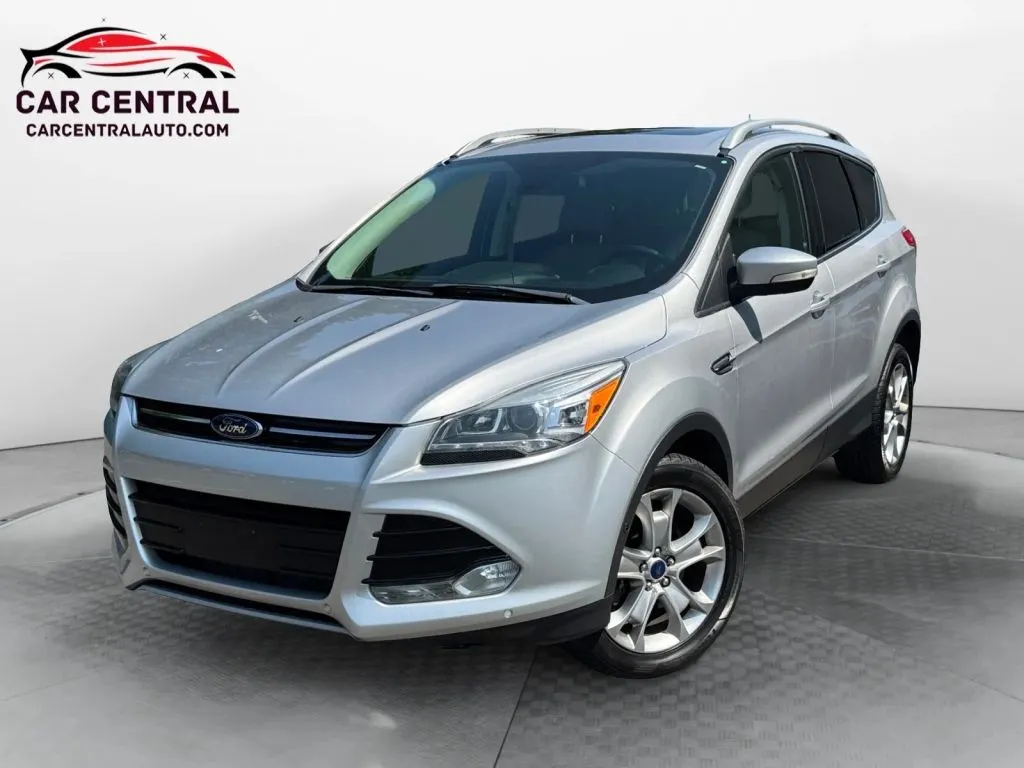
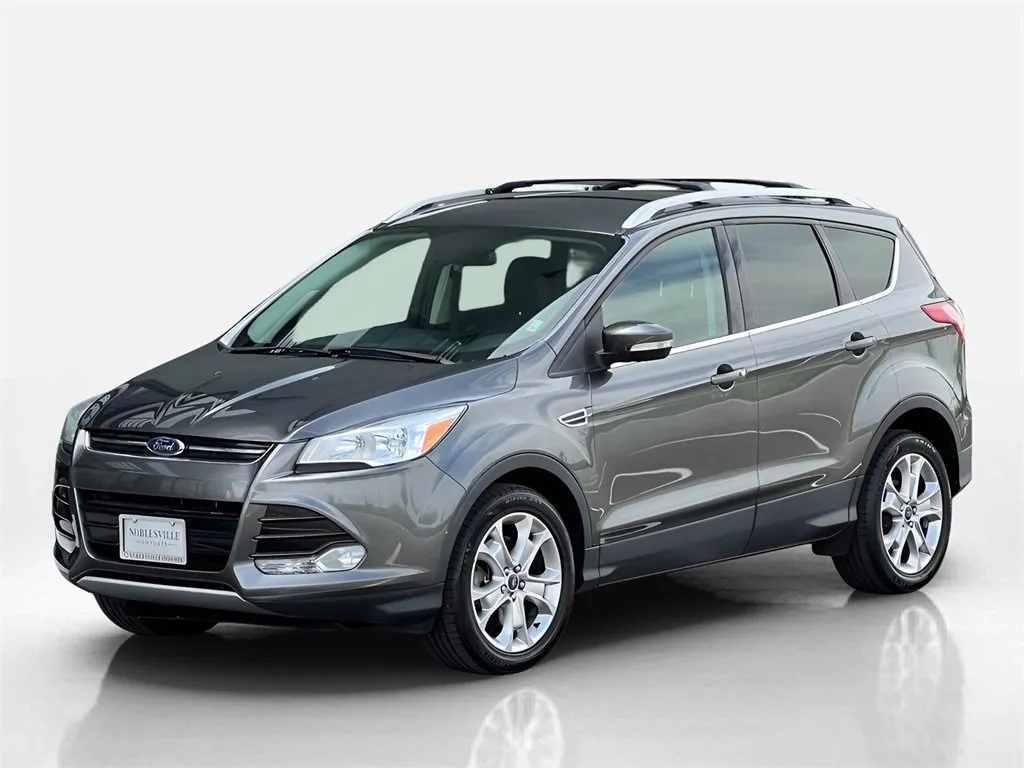
The 2016 Ford Escape Titanium delivers an EPA-estimated fuel economy ranging from 21 mpg city to 32 mpg highway, depending on the specific engine and drivetrain configuration. Most Titanium models equipped with the 2.0L EcoBoost and Four-Wheel Drive (4WD) average approximately 23 mpg combined, while Front-Wheel Drive (FWD) variants with the 1.6L engine offer the highest efficiency at 26 mpg combined.
The 2016 Ford Escape remains a popular choice in the used compact SUV market as of 2026. For those considering the high-end Titanium trim, understanding the nuances of its fuel consumption is critical. The Titanium was designed to bridge the gap between a mainstream crossover and a luxury vehicle, packing in premium features that, while desirable, also influence the vehicle's overall weight and subsequent fuel efficiency.
Understanding the Engine Options in the Titanium Trim
In 2016, Ford offered the Titanium trim with two primary turbocharged "EcoBoost" engines. Unlike the base S trim, which utilized a naturally aspirated 2.5L engine, the Titanium focused on forced induction to provide a balance of power and efficiency.
The 1.6L EcoBoost Four-Cylinder
Standard on many Titanium configurations for the 2016 model year, the 1.6L EcoBoost was designed for the efficiency-minded driver. It produced 178 horsepower and 184 lb-ft of torque. While it offered the highest highway ratings for the Escape line, it often worked harder to move the heavy Titanium-trim chassis, especially when loaded with passengers or cargo. This "engine strain" can sometimes lead to real-world figures that fall slightly below EPA estimates during spirited driving.
The 2.0L EcoBoost Four-Cylinder
The 2.0L EcoBoost was the premium engine choice for the Titanium trim, producing a robust 240 horsepower and 270 lb-ft of torque. This engine is highly sought after by drivers who prioritize passing power and towing capability (up to 3,500 lbs when properly equipped). Because this engine does not have to work as hard to move the vehicle’s mass, many owners find that its real-world fuel economy is surprisingly close to the smaller 1.6L engine, despite having lower official EPA ratings.
EPA Fuel Economy Ratings Breakdown
Fuel efficiency for the 2016 Ford Escape Titanium varies significantly based on whether the vehicle is equipped with Front-Wheel Drive (FWD) or the Intelligent 4WD system. The 4WD system adds weight and mechanical drag, which typically reduces fuel economy by 1 to 2 miles per gallon across all categories.
| Engine & Drivetrain | City MPG | Highway MPG | Combined MPG |
|---|---|---|---|
| 1.6L EcoBoost (FWD) | 23 | 32 | 26 |
| 1.6L EcoBoost (4WD) | 22 | 29 | 25 |
| 2.0L EcoBoost (FWD) | 22 | 30 | 25 |
| 2.0L EcoBoost (4WD) | 21 | 28 | 23 |
Real-World MPG vs. EPA Estimates
While EPA testing provides a standardized baseline, real-world performance often deviates based on driving conditions, maintenance history, and fuel quality. For the 2016 Escape Titanium, the "EcoBoost" branding is a portmanteau of "Eco" (efficiency) and "Boost" (turbocharging). However, drivers frequently note that they can have one or the other, but rarely both simultaneously.
In stop-and-go urban environments, the turbocharger engages frequently to get the vehicle up to speed, which can cause the city MPG to dip into the high teens, particularly for 4WD models. Conversely, on long highway stretches at steady speeds (65 mph or below), many drivers report exceeding the 30 mpg mark with the FWD configurations.
As these vehicles have aged into 2026, factors such as carbon buildup on intake valves—a common trait in older direct-injection engines—can further impact efficiency. Regular maintenance of the high-pressure fuel system and the use of Top Tier gasoline are essential to maintaining the original efficiency levels.
Technical Factors Influencing Titanium Trim Efficiency
The Titanium trim is the heaviest version of the 2016 Escape. This weight difference is a primary reason why it may feel less efficient than a base S or SE model. Several technical factors contribute to the Titanium’s specific fuel profile:
Curb Weight and Features
The Titanium trim includes luxury features such as leather-trimmed heated seats, a panoramic Vista Roof, a hands-free power liftgate, and additional sound-dampening materials. These additions increase the curb weight to approximately 3,600–3,800 pounds. Moving this additional mass requires more energy, especially during acceleration.
Intelligent 4WD System
Ford’s Intelligent 4WD system monitors traction hundreds of times per second. While it primarily operates in front-wheel drive to save fuel, it can instantly transfer torque to the rear wheels when slip is detected. The mechanical components required for this—including the transfer case, rear differential, and drive shafts—create "parasitic loss," where energy from the engine is lost to friction before it reaches the road.
Aerodynamics and Active Grille Shutters
To combat the boxy nature of an SUV, Ford equipped the 2016 Escape with Active Grille Shutters. These shutters automatically close at highway speeds to reduce aerodynamic drag, forcing air around the vehicle rather than through the engine bay. This technology is a significant contributor to the Titanium's ability to achieve 30+ mpg on the highway despite its weight.
Fuel Type and Performance: Regular vs. Premium
A common question among 2016 Ford Escape Titanium owners is whether to use 87-octane (Regular) or 91/93-octane (Premium) gasoline. Ford’s official documentation states that the EcoBoost engines are designed to run on regular unleaded fuel. However, for maximum performance—especially in hot weather or when towing—premium fuel is recommended.
From a fuel economy perspective, using premium fuel in a turbocharged engine can occasionally result in a slight increase in MPG. This is because the engine's computer can advance the spark timing further without the risk of "knock," allowing the engine to operate at peak efficiency. However, in 2026 fuel markets, the price premium for 93-octane often outweighs the marginal gains in miles per gallon.
Maintenance Requirements for Optimal MPG
By 2026, a 2016 Ford Escape Titanium is likely a high-mileage vehicle. To ensure it continues to meet its fuel economy potential, several specific maintenance areas must be addressed:
- Spark Plug Intervals: Turbocharged engines are harder on spark plugs than naturally aspirated ones. Replacing plugs every 60,000 miles is recommended to ensure complete combustion and prevent misfires that tank fuel economy.
- Tire Pressure and Type: The Titanium trim often came with 18-inch or optional 19-inch wheels. Low-profile tires are sensitive to pressure changes. Even a 5 PSI drop can reduce fuel efficiency by 2-3%. Furthermore, replacing original low-rolling-resistance tires with aggressive all-terrain tires will significantly decrease highway MPG.
- Air Filter Maintenance: A clogged air filter restricts the "breathability" of the turbocharger, forcing the engine to work harder to maintain the correct air-fuel ratio.
- Transmission Fluid: The 6F35 6-speed automatic transmission in the Escape benefits from regular fluid changes. Clean fluid reduces internal friction and ensures smooth shifting, which keeps the engine in its most efficient power band.
Comparing the 2016 Escape Titanium to Competitors
When the 2016 Escape Titanium was released, it competed directly with the Honda CR-V, Toyota RAV4, and Mazda CX-5. Understanding how its MPG compared then provides context for its value today.
- Honda CR-V (2016): Equipped with a CVT (Continuously Variable Transmission), the CR-V typically achieved higher city ratings (26 mpg) but lacked the towing capacity and "punchy" feel of the Escape’s 2.0L EcoBoost.
- Toyota RAV4 (2016): The RAV4 offered a very consistent 24-25 mpg combined but did not offer a high-performance turbocharged engine option similar to the Escape Titanium.
- Mazda CX-5 (2016): The CX-5 was the Escape's closest rival in terms of driving dynamics, offering roughly 26-29 mpg combined with its SkyActiv technology.
The Escape Titanium’s niche was offering "near-luxury" power and features. While it may not have been the absolute leader in fuel economy, it offered a much higher power-to-weight ratio than most of its peers, making its 23-26 combined MPG rating respectable for the performance provided.
Frequently Asked Questions
Does the 2016 Ford Escape Titanium have a "Fuel Saver" mode?
The 2016 Escape does not have a dedicated "Eco Mode" button like many modern vehicles in 2026. Instead, it relies on the SelectShift transmission programming and the driver's input. To maximize fuel economy, drivers should utilize the "Information Display" on the instrument cluster to monitor real-time fuel consumption and adjust their throttle usage accordingly.
How big is the fuel tank in a 2016 Ford Escape Titanium?
All 2016 Ford Escape models, including the Titanium, are equipped with a 15.1-gallon fuel tank. Based on the combined MPG ratings, this provides a cruising range of approximately 345 to 390 miles per tank, depending on the drivetrain.
Why is my 2016 Ford Escape Titanium getting poor gas mileage?
Common culprits for a sudden drop in MPG include a failing oxygen (O2) sensor, a stuck-open thermostat (which prevents the engine from reaching efficient operating temperatures), or dragging brake calipers. If the "Check Engine" light is on, the vehicle may be running in a "limp mode" that ignores fuel efficiency sensors to protect the engine.
Is the 2016 Escape Titanium expensive to fuel in 2026?
Compared to modern 2026 hybrid SUVs, the 2016 Escape is more expensive to operate. While a 2026 Escape Hybrid might achieve 40+ mpg, the 2016 Titanium's 23-25 mpg is still better than many full-sized SUVs and older V6 crossovers. It remains a middle-of-the-road option for fuel costs.
Does the Titanium trim use more gas than the SE trim?
If both trims have the same engine (e.g., the 2.0L EcoBoost), the Titanium will typically use slightly more fuel due to its increased weight from premium features and larger wheels. The difference is usually negligible (less than 1 mpg), but it is a factor for those hyper-focused on efficiency.
Final Recommendations for Buyers and Owners
If you are looking to purchase or currently own a 2016 Ford Escape Titanium, the best way to optimize your MPG is to focus on the "Boost" side of the EcoBoost engine. Turbochargers are highly sensitive to throttle input; keeping the RPMs low and avoiding rapid acceleration will allow the engine to stay in its "Eco" state.
For those buying one in 2026, prioritize vehicles with a documented history of transmission services and spark plug replacements. A well-maintained 2.0L 4WD Titanium is a versatile, powerful vehicle, but you should budget for an average of 22-23 mpg in mixed driving conditions. If efficiency is your absolute priority, seek out a FWD model with the 1.6L engine, which consistently pushes toward the 26-27 mpg mark in combined cycles.