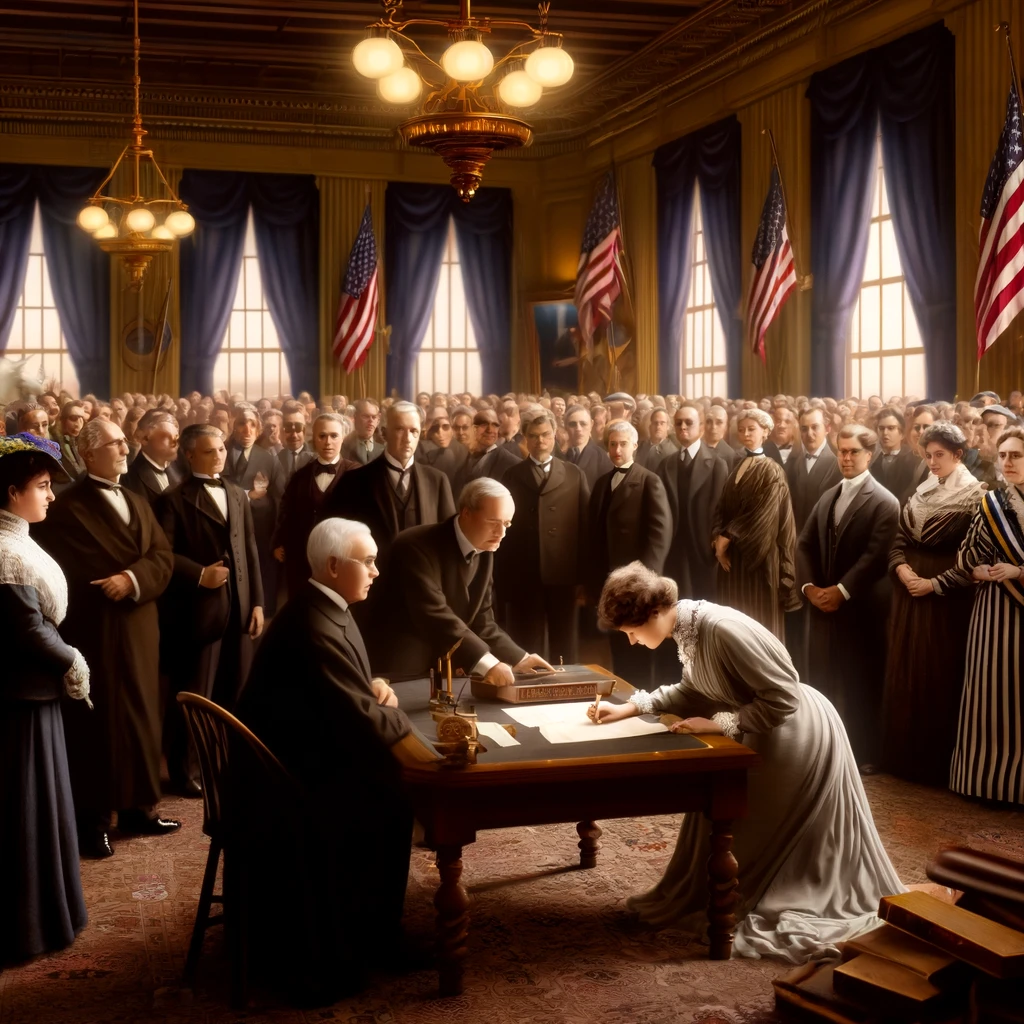
The 19th Amendment significantly altered the American political and social landscape by legally prohibiting the denial of the right to vote based on sex. Ratified in 1920, its impact includes a dramatic expansion of the electorate, the prioritization of maternal and child health in federal policy, increased female representation in government, and long-term socio-economic shifts, though full inclusion for many women of color was delayed until the mid-20th century.
The Constitutional Shift: Redefining American Citizenship
The ratification of the 19th Amendment on August 18, 1920, represented the culmination of a 72-year organized struggle that began at the Seneca Falls Convention in 1848. Legally, the amendment did not "grant" women the right to vote; rather, it prohibited the federal government and the states from using sex as a qualification for voting. This distinction is critical because it mirrored the language of the 15th Amendment, which prohibited disenfranchisement based on race.
Prior to 1920, the United States was a patchwork of suffrage. Several Western states, including Wyoming, Colorado, and Idaho, had already recognized women’s right to vote. However, in the South and East, resistance remained firm. The 19th Amendment standardized the right to vote nationwide, effectively enfranchising 26 million women in time for the 1920 presidential election. This was the single largest expansion of the democratic electorate in U.S. history, fundamentally changing the relationship between the female citizen and the state.
The impact of this legal change cannot be overstated. By removing sex as a barrier, the amendment redefined "the people" in the preamble of the Constitution. It moved the United States closer to its founding ideals of "consent of the governed," though, as explored later, the reality of implementation remained uneven for decades.
Immediate Political Consequences and the "Women’s Vote"
In the immediate years following ratification, politicians and political parties were uncertain about how the new female electorate would behave. There was a prevailing fear among party bosses that women would vote as a monolithic "bloc" to overhaul the political system. This prompted the Republican and Democratic parties to establish women’s divisions and cater to issues perceived as female-centric, such as prohibition, child labor laws, and education.
However, the 1920 election revealed that women did not vote as a single unit. Instead, their voting patterns largely mirrored those of the men in their respective communities, influenced by class, race, religion, and geographic location. While the "woman bloc" did not materialize in the way many had predicted, the threat of it led to significant legislative victories in the early 1920s.
One of the most profound immediate impacts was the passage of the Sheppard-Towner Act of 1921. This was the first major federal social welfare program in the U.S., providing federal funding for maternity and child care. It was passed largely because congressmen feared that failing to support such a measure would result in a backlash at the polls from newly enfranchised women. This era marked the beginning of a shift where "maternalist" politics gained a foothold in Washington, D.C., leading to broader social safety nets that would eventually expand during the New Deal.
Longitudinal Impacts on Public Policy and Spending
Research by economists and historians has shown that the 19th Amendment had a measurable impact on government spending and public health outcomes over the long term. As women gained political power, state and local governments began to shift their budget priorities.
Studies focusing on the period between 1920 and 1940 indicate that in states where women were enfranchised, there was a significant increase in local government spending on public health and education. This shift in spending had tangible results:
- Reduced Child Mortality: Increased funding for sanitation and hygiene programs led to a decline in child mortality rates by approximately 8% to 15%.
- Educational Investment: Suffrage was correlated with a rise in per-pupil spending and longer school terms, as women voters prioritized the future of the youth.
- Legal Rights for Women: Following suffrage, states were more likely to pass laws that protected women’s property rights and revised divorce laws to be more equitable.
The 19th Amendment essentially acted as a catalyst for the "socializing" of the American government. It forced a transition from a government focused primarily on infrastructure and defense to one that considered the health and welfare of its individual citizens as a primary responsibility.
The Gap Between Legal Right and Practical Access
While the 19th Amendment was a landmark achievement, its impact was not felt equally by all women. This is one of the most complex aspects of the amendment's history. In 1920, many women of color remained disenfranchised due to state-level barriers that bypassed the 19th Amendment’s sex-based protection.
| Group of Women | Primary Barriers Post-1920 | Year of Broader Enfranchisement |
|---|---|---|
| Black Women | Poll taxes, literacy tests, and physical intimidation in the South. | 1965 (Voting Rights Act) |
| Native American Women | Many were not considered citizens until the Indian Citizenship Act of 1924. | 1924–1962 (Depending on state laws) |
| Asian American Women | Naturalization laws restricted citizenship based on race. | 1943 (Magnuson Act) / 1952 (McCarran-Walter Act) |
| Puerto Rican Women | Literacy requirements remained in place for those in the territory. | 1935 |
For Black women in the Jim Crow South, the 19th Amendment provided a legal tool, but state laws designed to disenfranchise Black men were applied with equal vigor to Black women. It took another 45 years of civil rights activism to realize the promise of the 19th Amendment through the Voting Rights Act of 1965. Consequently, the "impact" of the 19th Amendment must be viewed as a multi-stage process rather than a single event that occurred in 1920.
Economic Impact and the Labor Force
The right to vote also influenced women's economic standing. Suffrage gave women the political leverage to advocate for better working conditions and fairer wages. While the "Equal Pay Act" would not arrive until 1963, the decades following the 19th Amendment saw a slow but steady increase in women’s labor force participation.
Political empowerment led to the dismantling of "marriage bars"—rules that prevented married women from working in certain professions, like teaching or clerical work. As women became recognized as full citizens, the cultural perception of their "proper place" began to shift from the purely domestic sphere to the professional world. By 1926, and certainly as we look back from 2026, the correlation between political voice and economic agency is clear. Women who could vote were more likely to seek higher education and delay marriage, leading to higher lifetime earnings and greater economic independence.
Women in Elected Office: From Voters to Leaders
The 19th Amendment changed the face of the American government literally. While Jeannette Rankin of Montana was the first woman elected to the House of Representatives in 1916 (using state-level suffrage), the 19th Amendment opened the doors for a steady increase in female representation.
The progress was initially slow. In the 1920s and 30s, women often entered Congress to fill the seats of deceased husbands (the "widow's mandate"). However, by the mid-20th century, women began running on their own merits and building long-term political careers.
As of 2026, the impact of the 19th Amendment is visible in the record-breaking numbers of women serving in the 119th Congress and in state legislatures across the country. Women now lead major committees and hold significant executive roles, including the Vice Presidency. This representation ensures that policy discussions on everything from national security to healthcare include the perspectives of more than half the population.
Comparison of Voting Rights Milestones
To understand the 19th Amendment's place in history, it is helpful to compare it to other major expansions of voting rights in the United States.
| Event/Amendment | Date | Targeted Group | Core Impact |
|---|---|---|---|
| 15th Amendment | 1870 | Men of all races | Prohibited race-based voting restrictions. |
| 19th Amendment | 1920 | Women | Prohibited sex-based voting restrictions. |
| Snyder Act | 1924 | Native Americans | Granted full U.S. citizenship to indigenous peoples. |
| 24th Amendment | 1964 | All citizens | Abolished poll taxes in federal elections. |
| Voting Rights Act | 1965 | Racial minorities | Provided federal oversight to prevent discriminatory local voting laws. |
| 26th Amendment | 1971 | 18–20 year olds | Lowered the voting age from 21 to 18. |
The Ongoing Legacy in 2026
In 2026, the 19th Amendment continues to be a cornerstone of modern democracy. It serves as the legal foundation for ensuring that gender-based discrimination does not return to the polling booth. Beyond the act of voting, the amendment’s legacy is found in the "Gender Gap" in voting—the trend since the 1980s where women tend to vote at higher rates than men and often favor different candidates and policies.
The amendment also fostered a culture of civic engagement. Organizations like the League of Women Voters, founded just six months before the 19th Amendment was ratified, remain vital in 2026 for voter education and advocacy. These groups transformed the energy of the suffrage movement into a permanent fixture of nonpartisan political participation.
Frequently Asked Questions
Did the 19th Amendment allow all women to vote immediately?
No. While it removed sex as a legal barrier, other factors like race, citizenship status, and state-level discriminatory practices (such as poll taxes and literacy tests) prevented many Black, Native American, and immigrant women from voting for several decades after 1920.
Who were the key leaders of the 19th Amendment movement?
Primary leaders included Elizabeth Cady Stanton and Susan B. Anthony, who drafted the initial amendment; Alice Paul, who led more militant protests and hunger strikes; and Ida B. Wells-Barnett, who was a crucial advocate for the inclusion of Black women in the movement.
How did the 19th Amendment change federal spending?
Following ratification, there was a notable increase in federal and state spending on social welfare, particularly in areas concerning public health, maternal care, and education. This was largely a response to the perceived interests of the new female electorate.
Did the amendment have an impact on the 1920 election?
Yes. Approximately 8 million women voted in the 1920 election. While this was lower than the turnout for men at the time, it was a massive increase in total ballots cast and forced candidates like Warren G. Harding to address "women's issues" during their campaigns.
Is the 19th Amendment still relevant in 2026?
Absolutely. It remains the constitutional guarantee that protects against any future attempts to restrict voting rights based on gender. It also continues to influence the ways in which political parties recruit candidates and target voters.
Next Steps for Research and Engagement
To fully grasp the complexities of the 19th Amendment's impact, readers should explore the primary sources held at the National Archives and the Library of Congress. Understanding the struggle for suffrage is a prerequisite for understanding the modern American political system.
For those looking to engage with this history in 2026, consider visiting local historical societies or participating in voter registration drives. Recognizing that the right to vote was hard-won by generations of activists is essential for maintaining a healthy, participatory democracy. Whether through academic study or civic participation, the impact of the 19th Amendment is a living history that continues to shape our collective future.