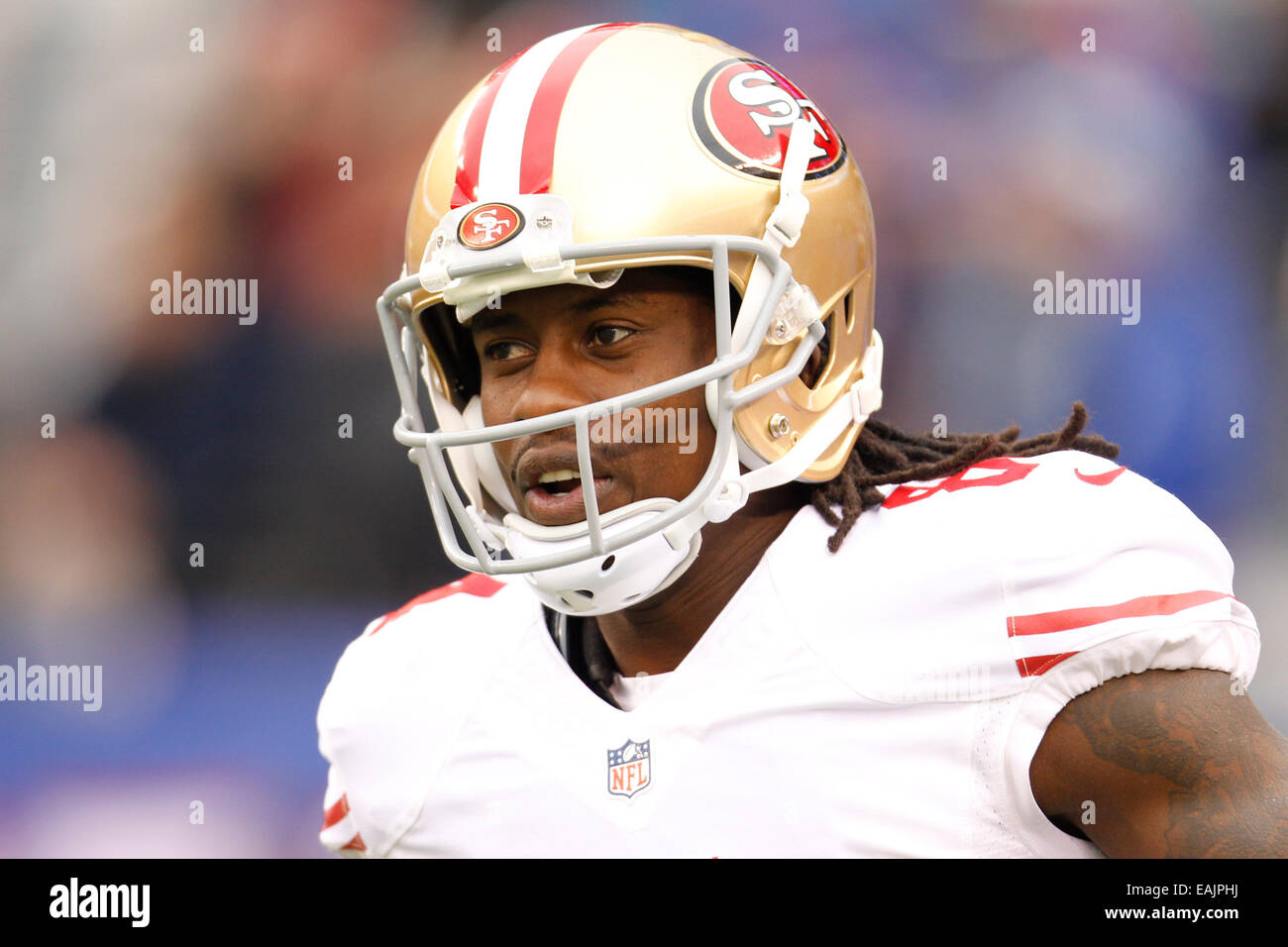
Brandon Lloyd’s tenure with the San Francisco 49ers, spanning two distinct eras (2003–2005 and 2014), is defined by his extraordinary ability to make acrobatic, "impossible" catches. Though he wore numbers 85 and 84 for the franchise, his identity as a premier boundary threat—often associated with his collegiate number 1 at Illinois—remains a significant chapter in 49ers history.
The Arrival: From the Fighting Illini to the Bay Area
When the San Francisco 49ers selected Brandon Lloyd in the fourth round (124th overall) of the 2003 NFL Draft, the franchise was entering a period of significant transition. The era of Jeff Garcia and Terrell Owens was drawing to a close, and the team was searching for new playmakers who could redefine the offense. Lloyd arrived in Santa Clara with a reputation for elite body control and a "basketball-style" approach to high-pointing the football, skills he perfected while wearing the number 1 jersey at the University of Illinois.
In 2026, sports analysts often look back at the 2003 draft class as a turning point for the 49ers’ scouting department. Lloyd was not the fastest receiver on the board, nor was he the most physically imposing, but his vertical leap and spatial awareness were considered "off the charts." During his early training camps at the 49ers' facility, he quickly earned the respect of veterans for his willingness to sacrifice his body to make catches along the sidelines and in the back of the end zone.
Lloyd’s first stint with the 49ers (2003–2005) saw him develop from a situational deep threat into a primary target. As the team struggled through coaching changes and quarterback carousels—moving from the West Coast philosophies of Steve Mariucci’s disciples to the more conservative approaches of Dennis Erickson and Mike Nolan—Lloyd remained a constant source of highlight-reel material.
The "Human Highlight Reel" Era (2003–2005)
The term "Human Highlight Reel" is often overused in sports, but for Brandon Lloyd’s first three seasons in San Francisco, it was an accurate job description. Lloyd specialized in what scouts call "contested catch efficiency." He possessed a unique neurological ability to track the ball in flight while simultaneously calculating his position relative to the boundary.
During the 2005 season, which was statistically his best during his first stint, Lloyd became the focal point of an offense that was otherwise struggling to find its identity. He recorded 48 receptions for 733 yards and five touchdowns. While these numbers might seem modest by 2026 standards, they were achieved in an era where the 49ers’ passing game was frequently ranked near the bottom of the league. Lloyd was often the only viable deep threat, facing double coverage and the opponent's best cornerbacks every Sunday.
His signature play style involved a "late hands" technique. Instead of reaching for the ball early and allowing defenders to play through his arms, Lloyd would wait until the last possible microsecond to extend, making it nearly impossible for defensive backs to break up the pass. This technique, combined with his background in dance and acrobatics, allowed him to make catches that appeared to defy the laws of physics.
Technical Analysis of Lloyd’s Receiving Mechanics
To understand why Lloyd was so effective for the 49ers, one must look at the technical mechanics of his play. Unlike many receivers who rely on pure "burner" speed to create separation, Lloyd used "blind spot" navigation. He was a master at sticking to a defender’s hip and then breaking into the defender's blind spot just as the ball was being released.
- Catch Radius: Lloyd’s functional catch radius was significantly larger than his 6'0" frame suggested. His 37-inch vertical leap and long arms allowed him to play like a receiver standing 6'4" or 6'5".
- Sideline Awareness: In the 2000s, the "toe-drag swag" was not yet a social media phenomenon, but Lloyd was its pioneer. His ability to keep two feet in bounds while falling out of play was a result of rigorous spatial training.
- Adjusting to Poor Ball Placement: Because the 49ers cycled through quarterbacks like Tim Rattay, Ken Dorsey, and a young Alex Smith, ball placement was often inconsistent. Lloyd thrived in this environment because he viewed every pass as a jump-ball opportunity rather than a structured route completion.
Statistical Breakdown of Lloyd’s 49ers Tenure
The following table outlines the production Brandon Lloyd provided to the San Francisco 49ers across his two stints. It highlights his role as a consistent yardage producer despite playing in several different offensive systems.
| Season | Games Played | Receptions | Receiving Yards | Average Per Catch | Touchdowns | Longest Catch |
|---|---|---|---|---|---|---|
| 2003 | 16 | 14 | 212 | 15.1 | 2 | 37 |
| 2004 | 13 | 43 | 565 | 13.1 | 6 | 48 |
| 2005 | 16 | 48 | 733 | 15.3 | 5 | 89 |
| 2014 | 14 | 14 | 294 | 21.0 | 1 | 80 |
| Total | 59 | 119 | 1,804 | 15.2 | 14 | 89 |
Note: Data sourced from official NFL Statistics and Pro Football Reference.
The Mid-Career Odyssey and the 2014 Reunion
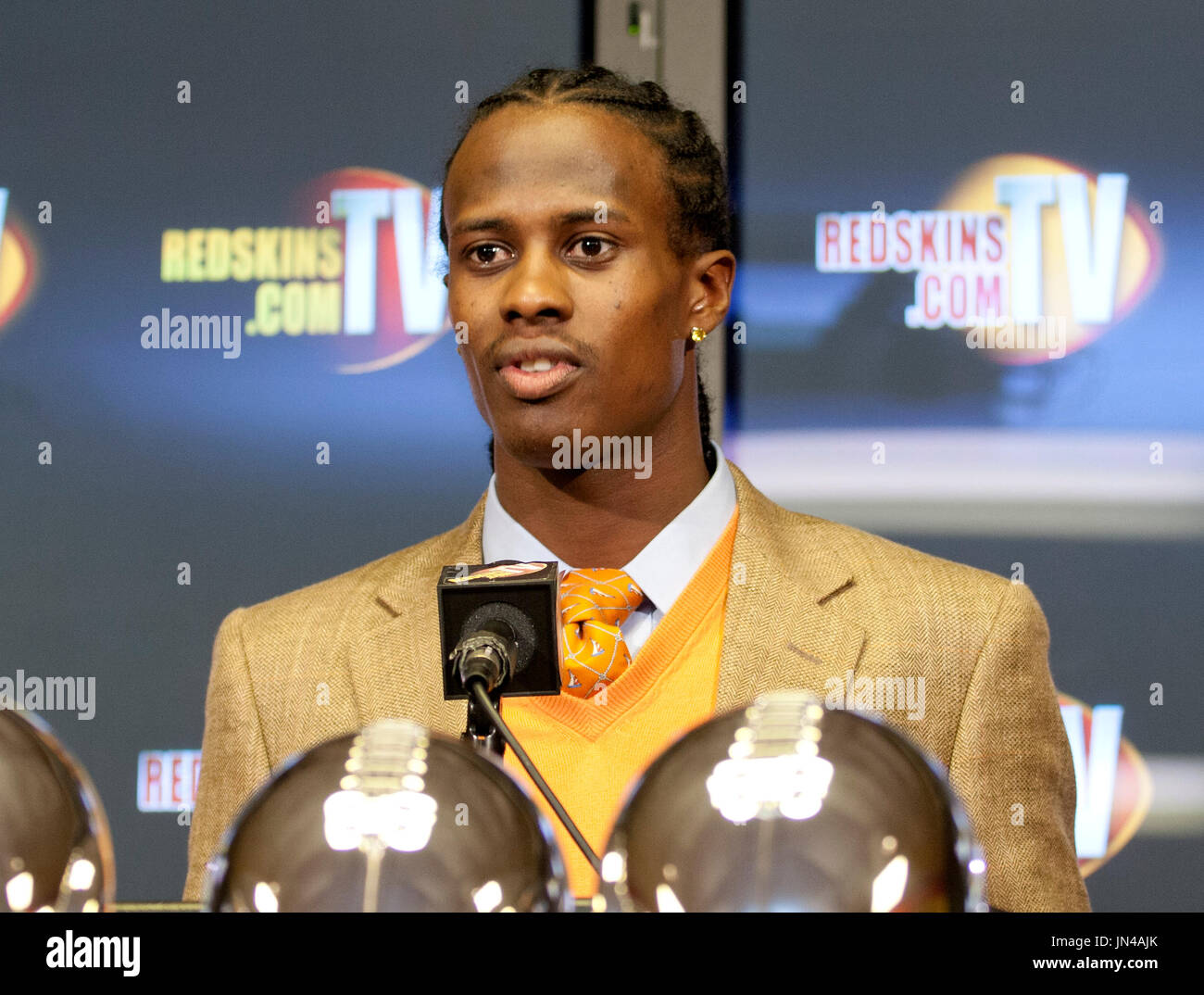
After the 2005 season, Lloyd moved on to the Washington Redskins, beginning a journey that would take him to Chicago, Denver, St. Louis, and New England. It was during his time with the Denver Broncos in 2010 that he led the NFL in receiving yards (1,448), proving that his "highlight-reel" style could translate into elite-level volume production when paired with the right system.
However, the story of Brandon Lloyd and the 49ers had a final, unexpected chapter. In 2014, under head coach Jim Harbaugh, the 49ers were looking for veteran depth to support a receiving corps that included Anquan Boldin and Michael Crabtree. Lloyd, then 33 years old, was signed to a one-year deal.
His return to Santa Clara was met with nostalgia from the fan base, but it was also a tactical move. Lloyd had spent his year away from football (2013) focusing on other ventures, but he returned in 2014 in peak physical condition. Although he was no longer the primary target, he served as a crucial "vertical stretcher" for quarterback Colin Kaepernick.
The highlight of his second stint was an 80-yard touchdown reception against the St. Louis Rams on Monday Night Football. This play was a vintage Lloyd moment: he used a subtle veteran move to beat the defender off the line, tracked a deep ball over his shoulder, and maintained his balance for a long sprint to the end zone. Even in the twilight of his career, Lloyd’s efficiency was remarkable, averaging a career-high 21.0 yards per reception during that 2014 campaign.
Influence on the 49ers’ Receiving Corps and Playbook
Brandon Lloyd’s impact on the 49ers went beyond the stat sheet. He represented a bridge between two very different eras of San Francisco football. In the mid-2000s, he was a bright spot in a rebuilding phase. In 2014, he was a respected veteran on a team that had recently appeared in three consecutive NFC Championship games and a Super Bowl.
Mentorship and Professionalism
During his second stint, Lloyd was often cited by younger players for his meticulous approach to film study and body maintenance. He taught younger receivers how to use their eyes to manipulate defensive backs—a skill that becomes vital as physical speed naturally declines with age.
Schematic Versatility
In the Greg Roman-led offense of 2014, Lloyd was used as a "Z" receiver, often sent on clear-out routes to open up the middle of the field for tight end Vernon Davis. His presence forced safeties to respect the deep ball, which helped keep the box from being overloaded against the 49ers’ run-heavy attack led by Frank Gore.
Comparing Brandon Lloyd to Other 2000s-Era 49ers Receivers
When discussing 49ers receivers of the 21st century, Lloyd occupies a unique space. He lacked the Hall of Fame longevity of Terrell Owens or the sheer physical dominance of Anquan Boldin, but he possessed a higher "degree of difficulty" on his catches than perhaps anyone in franchise history.
- vs. Arnaz Battle: Battle was the reliable, possession-style counterpart to Lloyd. While Battle moved the chains, Lloyd was the one providing the explosive plays.
- vs. Michael Crabtree: Crabtree was known for his "strong hands" and YAC (yards after catch) ability. Lloyd, by contrast, was a "pure catcher" who specialized in the vertical game.
- Legacy in 2026: Today, Lloyd is remembered as a cult favorite. In an era where 49ers fans had little to cheer for (the 2-14 and 4-12 seasons), Lloyd’s weekly acrobatic displays were often the primary reason to tune in.
Common Questions Regarding Brandon Lloyd’s 49ers Career
Why did Brandon Lloyd leave the 49ers the first time?
Lloyd was traded to the Washington Redskins in 2006 for a third-round and fourth-round draft pick. At the time, the 49ers were in a total rebuilding mode under Mike Nolan, and there were concerns about Lloyd’s consistency and his fit within the team's developing culture. The trade was seen as a way for San Francisco to gain draft capital while allowing Lloyd to test his skills in a different market.
Did Brandon Lloyd ever win a championship with the 49ers?
No. During his first stint (2003–2005), the 49ers were largely unsuccessful in the standings. During his second stint in 2014, the team finished 8-8 and missed the playoffs, marking the end of the Jim Harbaugh era. Despite his individual brilliance, his timing with the 49ers never aligned with the franchise's championship windows.
What jersey numbers did Brandon Lloyd wear for the 49ers?
During his first stint from 2003 to 2005, Lloyd wore #85. Upon his return in 2014, he wore #84, as Vernon Davis was the established owner of the #85 jersey. Many fans associate him with the number 1 because of his legendary career at the University of Illinois, but NFL rules at the time restricted wide receivers to numbers between 10-19 and 80-89.
How does Brandon Lloyd’s catch radius compare to modern players in 2026?
Even by 2026 standards, Lloyd’s catch radius is considered elite. While modern training has improved the average athleticism of NFL receivers, Lloyd’s specific ability to contort his body in mid-air remains a gold standard. Coaches today still use clips of Lloyd’s sideline catches to teach the "late hands" technique and "body-relative-to-ball" positioning.
What was Brandon Lloyd’s longest play as a 49er?
His longest career play with the 49ers was an 89-yard touchdown in 2005. He also had a memorable 80-yard score in 2014. These plays underscored his role as a premier deep threat across both of his tenures with the team.
Practical Recommendation for 49ers Historians and Fans
For those looking to truly appreciate the impact of Brandon Lloyd on the San Francisco 49ers, it is recommended to view archival footage from the 2005 season specifically. While the team’s record was poor, Lloyd’s individual performance that year remains one of the most underrated seasons by a 49ers wide receiver in the post-Jerry Rice era.
If you are a collector or a student of the game, seeking out the "2005 San Francisco 49ers Year in Review" or specialized highlight reels focusing on "contested catches" will provide the best technical insight into his playstyle. Additionally, those interested in the evolution of the wide receiver position should compare Lloyd's 2014 veteran role with his 2003 rookie season to see how a player can successfully adapt their game as physical traits evolve.