Apollo 13 newspaper front page coverage represents a pivotal moment in 20th-century journalism, documenting the transition from a "routine" lunar mission to a life-or-death global drama. Between April 11 and April 17, 1970, headlines shifted from technical indifference to visceral fear and, finally, to the relief of a successful recovery, creating a chronological archive that remains highly sought after by space historians and collectors in 2026.
The Evolution of a Crisis: From Routine to Rescue
When Apollo 13 launched on April 11, 1970, the American public was experiencing "moon fatigue." Following the historic success of Apollo 11 and the precision of Apollo 12, the third mission to the lunar surface was seen by many media outlets as almost commonplace. Early front-page coverage was often relegated to the lower half of the page or tucked away in secondary sections. However, the explosion of oxygen tank number two on April 13 changed the trajectory of media history.
The narrative arc of Apollo 13 news coverage is unique because it follows a classic three-act structure: the optimistic departure, the "successful failure" of the crisis, and the miraculous return. For researchers and collectors, understanding this timeline is essential for identifying the most significant editions.
The Initial Launch Coverage (April 11–12)
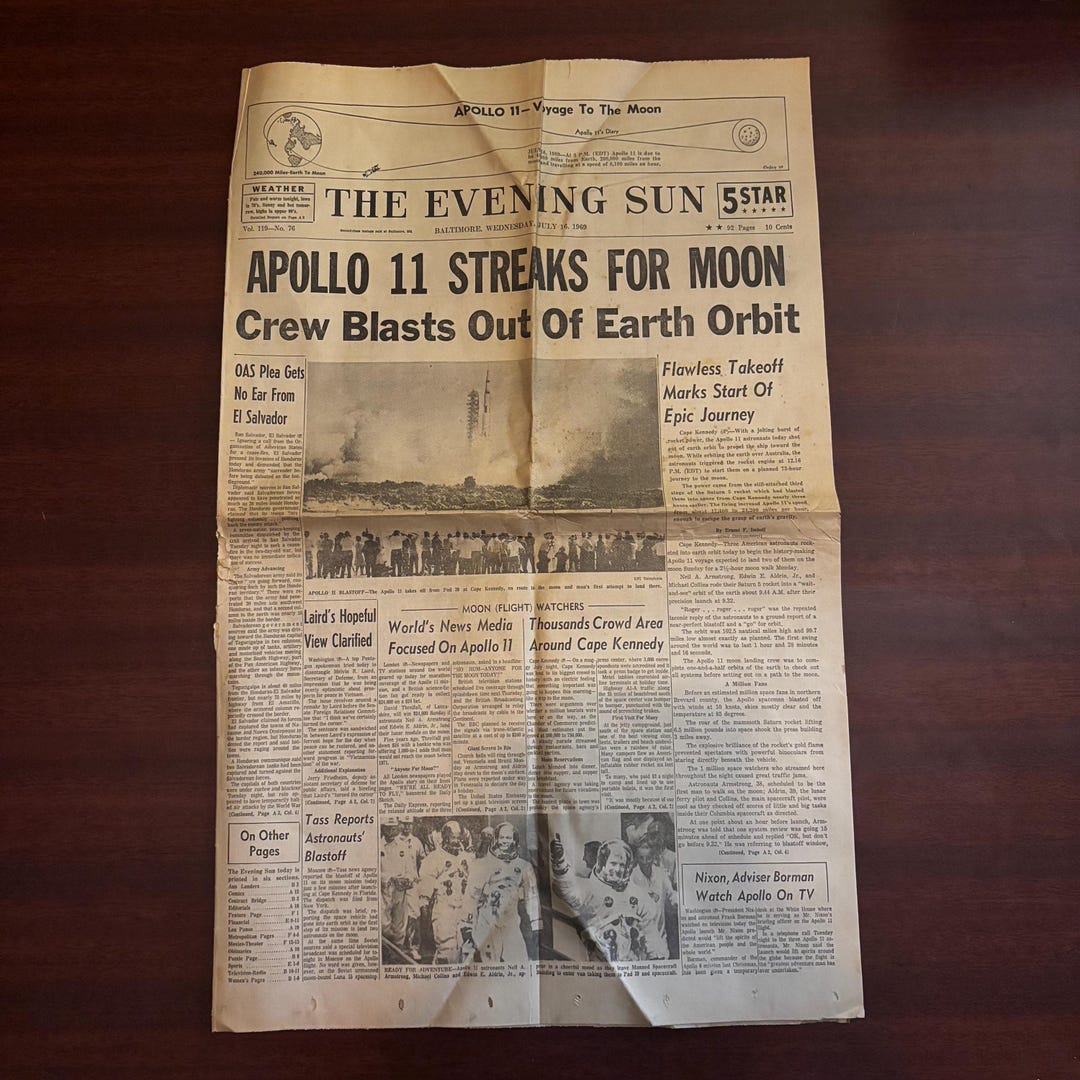
On the morning of April 12, most major newspapers featured photos of the Saturn V rocket clearing the launchpad at Kennedy Space Center. The tone was professional and procedural. Headlines like "Apollo 13 on Way to Moon" were standard. At this stage, the media focused on the geological goals of the Fra Mauro Highlands. There was little indication that this would become one of the most harrowing stories of the century.
The Crisis Breaks (April 14–15)
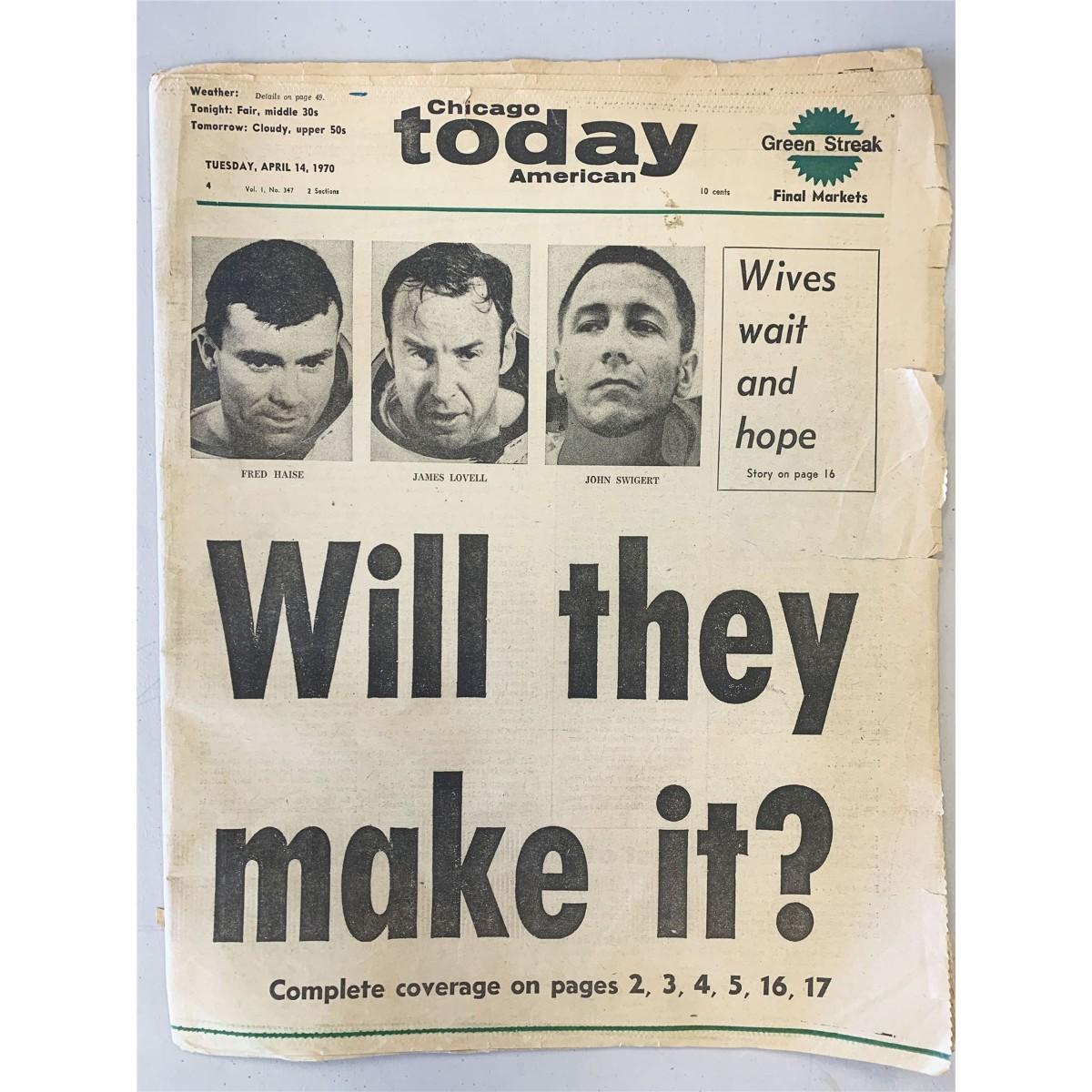
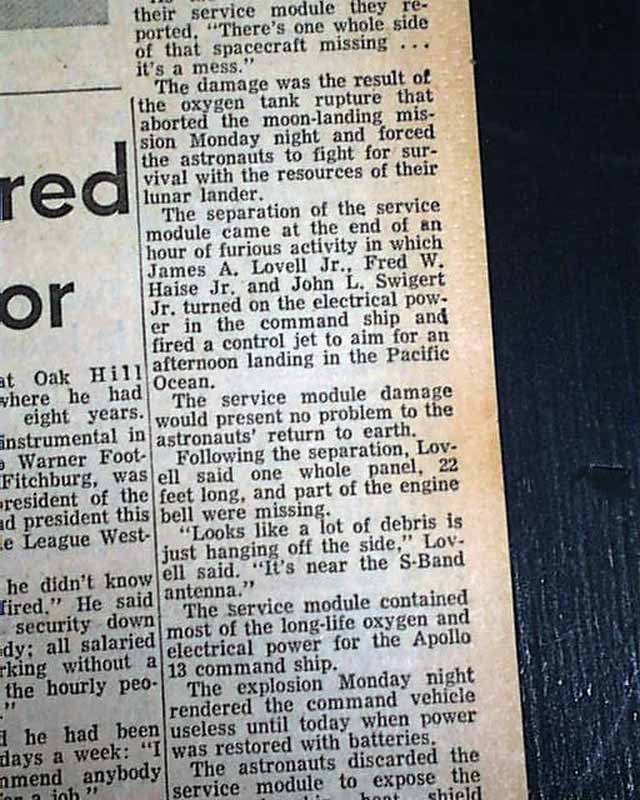
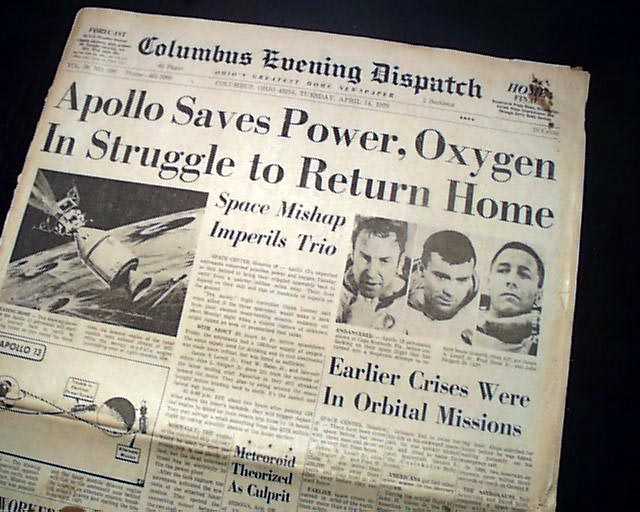
Because the explosion occurred at 9:08 PM CST on April 13, the news did not make the "Early Bird" or first editions of many morning newspapers. It was the afternoon editions and the April 14 morning papers that first carried the shocking news. This is where the visual language of the front pages changed. Large, bold, "Woodblock" style typefaces—reserved for declarations of war or presidential assassinations—began to appear.
The primary focus during these 48 hours was the "Lifeboat" maneuver. Newspapers had to explain complex orbital mechanics to a lay audience, using diagrams to show how the Lunar Module (LM) Aquarius would be used to sustain the crew. Front pages from this period are characterized by a sense of impending doom and technical uncertainty.
The Safe Return (April 17–18)
The "Splashdown" editions are perhaps the most iconic. On April 17, 1970, newspapers across the globe prepared two sets of headlines. When the parachutes were sighted over the South Pacific, the "Safe!" and "They're Back!" headlines were rushed to the presses. These editions often featured large photographs of the Command Module Odyssey bobbing in the water or the three astronauts—Jim Lovell, Jack Swigert, and Fred Haise—on the deck of the USS Iwo Jima.
Iconic Front Pages: Analyzing Major Publications
Different newspapers took different approaches to the Apollo 13 crisis based on their editorial standards and geographic location. Analyzing these variations provides insight into how the world perceived the "successful failure."
The New York Times: The Paper of Record
The New York Times (NYT) is prized by collectors for its sobriety and detail. Their April 14, 1970, headline—"MOON MISSION ABORTED AS AN OXYGEN TANK RUPTURES; ASTRONAUTS FIGHT TO RETURN"—is a masterclass in factual, high-stakes reporting. The NYT was one of the few papers that consistently included detailed diagrams on the front page, explaining the bypass of the Service Module and the powering down of the Command Module.
The Houston Chronicle: The Local Perspective
As the home of Mission Control (Manned Spacecraft Center), the Houston Chronicle provided a more intimate look at the crisis. Their coverage often focused on the families of the astronauts and the "Tiger Team" of flight controllers. For a collector, a Houston-based paper from this era carries a unique "hometown" significance, often including local human-interest stories that national syndicates ignored.
The Times (London): International Concern
The Apollo 13 crisis was not just an American story; it was a global event. The Times of London and other international broadsheets reflected the global prayers and offers of assistance (including from the Soviet Union). International front pages often used more evocative language, framing the event as a struggle of "Man vs. The Void," highlighting the shared humanity of the space race.
Technical Analysis of 1970 Journalism Styles
The year 1970 was a transitional period for newspaper production. The industry was moving from hot metal typesetting to offset printing, and this is reflected in the physical quality of Apollo 13 front pages.
- Typography: The use of "Screamer" headlines (extra-large point sizes) was prevalent during the three days of the crisis. Editors used bold, sans-serif fonts to convey urgency.
- Photography: While color photography existed, most front pages remained black and white due to the speed required for daily cycles. The "grainy" quality of the wire-service photos of the astronauts transmitted from the recovery ship added to the raw, emotional impact of the news.
- The "Extra" Edition: Apollo 13 was one of the last major events to see widespread "Extra" editions—special print runs produced outside the normal schedule to break news. These are exceptionally rare today and represent the pinnacle of Apollo 13 print memorabilia.
Summary of Major Apollo 13 Headline Trends
The following table categorizes the types of front-page coverage seen during the mission's critical week.
| Date (1970) | Phase of Mission | Common Headline Themes | Media Tone |
|---|---|---|---|
| April 12 | Post-Launch | "On the Way," "Third Moon Landing Near" | Routine, Scientific |
| April 14 | Post-Explosion | "Oxygen Tank Fails," "Moon Goal Lost," "Survival Fight" | Alarmed, Technical |
| April 15 | The Swing-By | "Rounding the Moon," "The Long Path Home" | Tense, Suspenseful |
| April 16 | The Return Trip | "Will Shields Hold?", "Power Shortage Peril" | Analytical, Apprehensive |
| April 17 | Splashdown | "SAFE!", "Astronauts Home," "A Miracle Return" | Jubilant, Heroic |
Collecting Apollo 13 Newspapers in 2026
As of 2026, the market for original Apollo 13 newspapers has stabilized into a niche but fervent segment of "space-ana." Unlike digital archives, physical newspapers from 1970 offer a tactile connection to the era’s anxiety and triumph.
Determining Value and Rarity
Not all Apollo 13 newspapers are created equal. The value of a front page in 2026 is determined by several factors:
- The Publication: A "Paper of Record" like the New York Times or a local paper like the Houston Post generally holds more value than obscure regional weeklies.
- The Edition: "Final" or "Late City" editions that contain the most up-to-date information at the time of printing are more desirable.
- The Date: The April 14 (Explosion) and April 17 (Splashdown) editions are the "bookends" of the collection and command the highest prices.
- Condition: Newspaper is printed on acidic pulp. Without proper deacidification and UV protection, these papers yellow and become brittle. A "White" or "Off-White" page from 1970 is significantly more valuable than a browned, crumbling one.
Verification and Authenticity
Collectors must be wary of reprints. In 1995, following the release of the Ron Howard film Apollo 13, many newspapers printed commemorative inserts or "replica" front pages. To verify an original 1970 newspaper, check for:
- The Halftone Pattern: Under a magnifying glass, original 1970 photos will have a distinct dot pattern characteristic of period presses.
- Paper Texture: Authentic newsprint from 1970 has a specific thickness and "tooth" that modern digital reprints cannot perfectly replicate.
- Full Issue vs. Front Page: A complete, multi-section newspaper is always more valuable than a clipped front page.
Preservation and Display Standards
For those who own or have recently acquired an Apollo 13 front page, preservation is the primary concern. Since we are now over 55 years removed from the event, the wood-pulp paper is reaching a critical state of decay.
- Deacidification: Professional collectors often use a deacidification spray (such as Archival Methods or similar pH-neutral buffers) to stop the "acid burn" that causes yellowing.
- UV Protection: If displaying the front page, use Museum Grade glass or acrylic that filters out 99% of UV rays. Direct sunlight will bleach the ink and destroy the paper fibers in a matter of months.
- L-Sleeves: For storage, use Mylar (polyester) L-sleeves. Avoid PVC-based plastics, as they release gases that can chemically alter the newspaper.
- Flat Storage: Never fold a historic newspaper. If it is already folded, do not attempt to "iron" it. Store it flat in an acid-free box to prevent further stress on the crease lines.
The Cultural Impact of the Coverage
The front-page coverage of Apollo 13 did more than just report facts; it reshaped the public's relationship with NASA. Before the accident, the space program was criticized for its high cost and perceived lack of utility. The harrowing headlines of April 1970 refocused the world on the human element of exploration.
The media's emphasis on the "Ingenuity of the Ground Crew" and the "Courage of the Astronauts" created a "Hero Myth" that sustained NASA's public image even as the Apollo program was being defunded. In 2026, looking back at these front pages, we see the blueprint for how modern crises are managed in the 24-hour news cycle—long before the internet existed.
Frequently Asked Questions
Which Apollo 13 newspaper is the most valuable to collectors?
Generally, the April 17, 1970, "Splashdown" edition of the New York Times or the Houston Chronicle is considered the most valuable due to the iconic nature of the "Safe" headlines. However, rare "Extra" editions printed on the night of April 13/14 can sometimes command higher prices due to their scarcity.
How can I tell if my Apollo 13 newspaper is an original or a reprint?
Originals will have the original "dot" halftone pattern in the photos and will show signs of age-appropriate oxidation (slight yellowing) unless professionally preserved. Reprints from the 1990s or 2000s often use higher-quality, whiter paper and may have "Commemorative Section" printed in the masthead or footer.
Why was there so little coverage of Apollo 13 before the accident?
By 1970, the "Space Race" was largely seen as won. The public and media had become accustomed to the spectacle of moon launches. It took the life-threatening crisis to bring the mission back to the front page of every major newspaper worldwide.
Are international newspapers from the Apollo 13 era worth anything?
Yes, particularly those from the United Kingdom, Japan, and Australia. These papers provide a unique cultural perspective on how the rest of the world viewed American technological vulnerability and the subsequent rescue.
Where can I find digitized versions of these front pages?
Most major newspapers, such as the New York Times, The Guardian, and the Chicago Tribune, maintain digital archives. Additionally, the NASA History Office and the Smithsonian National Air and Space Museum hold extensive collections of press clippings from the mission.
Practical Recommendation for Researchers
If you are researching Apollo 13 newspaper coverage for historical or academic purposes in 2026, do not rely solely on "Top 10" headline lists. Seek out the editorial pages and the letters to the editor in the days following the splashdown. While the front page provided the "what," these interior pages provide the "why," revealing the public’s shifting sentiment toward space exploration during the Vietnam War era. For collectors, prioritize completeness and provenance; a newspaper with a documented history of climate-controlled storage will always be a better investment than a "found" attic copy.