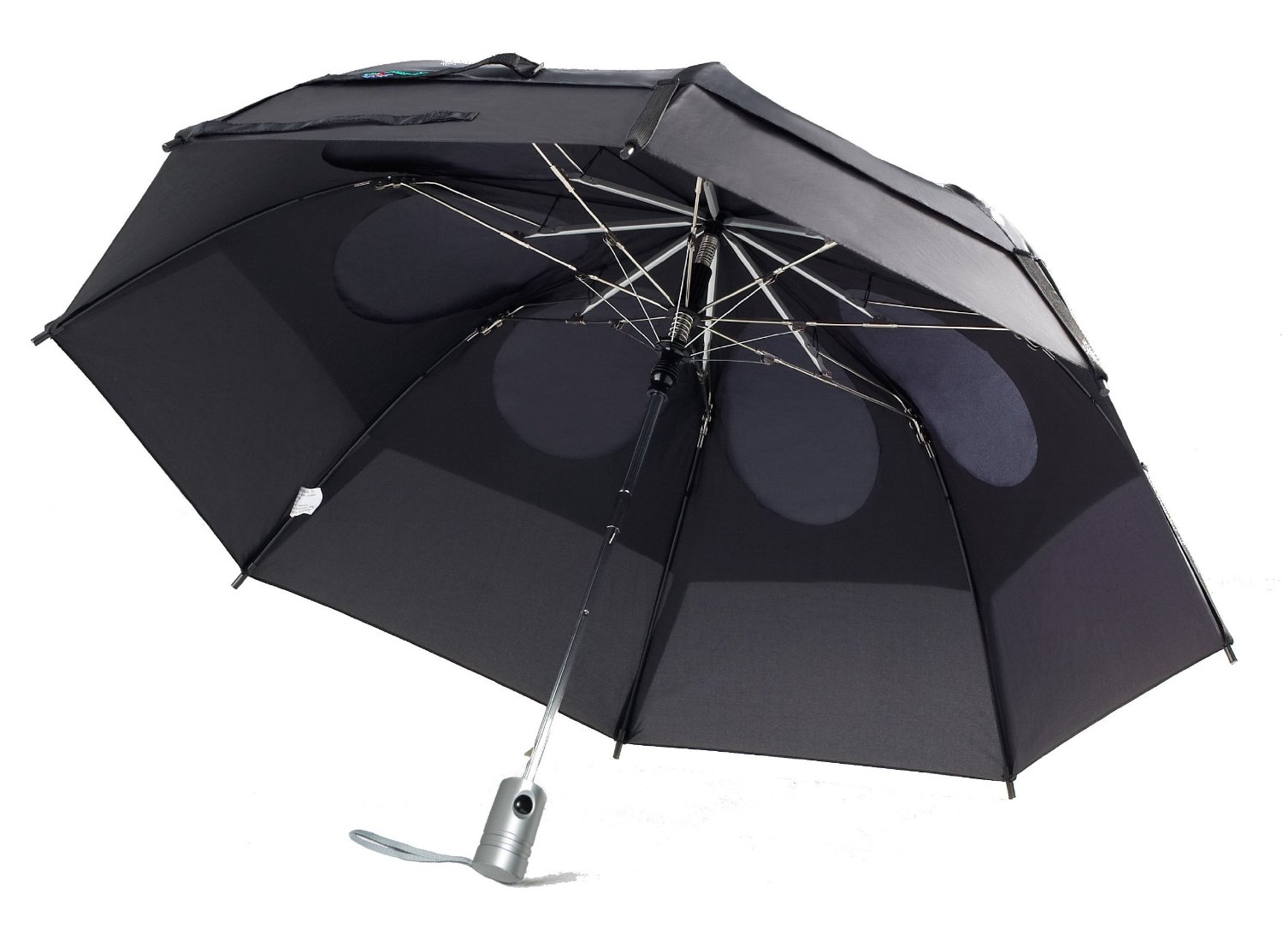
A sturdy umbrella keeps you dry in the wind by utilizing high-tension frames, flexible fiberglass ribs, and vented double-canopy designs to resist inversion. These engineering features allow wind to pass through or around the structure without collapsing it, ensuring the water-repellent fabric maintains its protective arc over the user.
Investing in a high-quality umbrella is often a reaction to the frustration of a "disposable" model failing during a storm. In high-wind conditions, the primary challenge is not just the rain, but the aerodynamic forces acting upon the canopy. As wind speeds increase, an umbrella acts like a sail, catching air and exerting massive pressure on the central shaft and the delicate ribs that support the fabric. Without proper engineering, this pressure causes the ribs to snap or the canopy to invert, leaving the user exposed to the elements. As of 2026, advancements in material science and structural design have refined the "sturdy" umbrella from a simple hand-held roof into a sophisticated piece of wind-resistant equipment.
The Anatomy of a Wind-Resistant Umbrella
To understand why a sturdy umbrella remains functional while others fail, one must examine its core components. A standard umbrella is a mechanical assembly that must balance weight, portability, and structural integrity.
The Central Shaft
The shaft is the backbone of the umbrella. In cheaper models, this is often made of thin, hollow aluminum or even plastic, which can bend or crimp under lateral wind pressure. A sturdy umbrella typically employs a reinforced steel, chrome-plated brass, or high-grade fiberglass shaft. By 2026, carbon fiber has become the preferred choice for premium models due to its incredible rigidity and low weight. The shaft must resist "shearing" forces—the kind of pressure that occurs when the wind hits the canopy from the side while you are holding the handle firmly.
The Ribs and Stretchers
The ribs are the most common point of failure. Traditional umbrellas use U-shaped steel ribs that are rigid but brittle. When the wind catches the canopy, these ribs are pushed past their elastic limit and snap. A sturdy umbrella utilizes flexible fiberglass or composite ribs. Fiberglass is advantageous because it can bend significantly without breaking. If a gust is strong enough to invert the umbrella, a fiberglass rib is designed to flex 180 degrees and "snap back" into its original shape without permanent damage.
The Joint and Rivet System
The points where the ribs connect to each other and to the shaft are known as joints. In wind-resistant designs, these joints are often reinforced with extra "stretchers" or dual-layered support systems. Instead of simple pins, high-quality umbrellas use solid rivets or molded joints that minimize friction and prevent the "play" or wobbling that leads to structural collapse.
The Physics of Wind Resistance: Aerodynamics and Venting
A sturdy umbrella does not just fight the wind; it manages it. The primary reason umbrellas fail is the pressure differential created between the underside of the canopy and the top. As wind hits the underside, it creates a high-pressure zone that seeks to lift the umbrella upward and outward.
The Double Canopy System
One of the most effective solutions to this problem is the vented or double-canopy design. This construction features two overlapping layers of fabric. The bottom layer has large vents that allow wind to pass through to the upper layer, which covers the vents like a flap.
This design serves a dual purpose:
- Pressure Relief: It allows high-pressure air trapped under the canopy to escape, significantly reducing the "lift" felt by the user.
- Rain Protection: Because the top layer overlaps the bottom layer, rain cannot fall through the vents. Gravity and surface tension keep the water on the outer surface, while the air moves freely between the layers.
Aerodynamic Shaping
Some modern sturdy umbrellas have moved away from the traditional circular shape. Asymmetrical designs, which are shorter in the front and longer in the back, are engineered to "cut" through the wind. By holding the umbrella at an angle, the user can orient the shorter, more aerodynamic edge into the wind, reducing the surface area that catches the gust. This prevents the umbrella from acting as a parachute and pulling the user off-balance.
Materials Science in 2026: Fabric and Coatings
While the frame provides the strength, the fabric (canopy) provides the protection. A sturdy umbrella must utilize material that is both tear-resistant and highly water-repellent.
High-Density Pongee Fabric
In 2026, the industry standard for high-end umbrellas is high-density Pongee. Unlike cheaper polyester or nylon, Pongee is a high-grade silk-like fabric made from synthetic fibers. It is preferred because it is lightweight, dries quickly, and has a tighter weave. The tightness of the weave is measured in "T" (thread count per square inch). A sturdy umbrella typically features 190T or 210T Pongee. This high density prevents rain from "misting" through the fabric during heavy downpours or being pushed through by high-velocity winds.
Durable Water Repellent (DWR) Coatings
Modern umbrellas are often treated with advanced coatings, such as Teflon (PTFE) or newer eco-friendly silicone-based polymers. These coatings reduce the surface energy of the fabric, causing water to bead up and roll off instantly. This is crucial for wind performance; a saturated fabric becomes heavy and saggy, which disrupts the tension of the ribs and makes the umbrella more prone to collapse. A "dry" umbrella maintains its structural tension better than a "wet" one.
Comparing Umbrella Types for Wind Performance
Not all "sturdy" umbrellas are designed for the same conditions. Choosing the right one depends on the balance between portability and the severity of the wind.
| Umbrella Type | Best Use Case | Frame Material | Wind Rating (Est.) | Pros/Cons |
|---|---|---|---|---|
| Compact Foldable | Commuting, Travel | Fiberglass/Aluminum | Up to 25 mph | Highly portable; more joints mean more potential failure points. |
| Full-Size Stick | Heavy Rain, Walking | Steel or Fiberglass | Up to 45 mph | Extremely rigid; non-collapsible shaft is very strong but bulky. |
| Professional Golf | Open Spaces, Sport | Carbon Fiber/Reinforced Plastic | Up to 60 mph | Largest coverage area; double canopy is standard; requires two hands in high gusts. |
| Asymmetrical (Senz) | Extreme Storms | Hybrid Composite | Up to 70 mph | Best aerodynamics; unique shape can be difficult to store. |
Why "Sturdy" Equals "Stay Dry"
It is a common misconception that getting wet in the wind is purely a matter of the rain falling sideways. While sideways rain is a factor, most people get wet because their umbrella fails to maintain its "micro-climate."
When an umbrella is flimsy, the canopy shakes and flutters. This fluttering creates a "spray" effect where water droplets on the surface are flicked onto the user. Furthermore, a flimsy umbrella requires the user to fight to keep it upright, often leading to the umbrella being held at an ineffective angle.
A sturdy umbrella stays still. By maintaining a rigid, predictable arc, it allows the user to position the shield precisely against the direction of the wind and rain. The stability of the frame ensures that even if the wind is blowing at 30 mph, the canopy remains a solid barrier rather than a flapping piece of cloth.
Maintenance and Longevity of Wind-Resistant Umbrellas
To ensure a sturdy umbrella continues to keep you dry through the 2026 storm season and beyond, proper maintenance is required. Even the best materials can degrade if mistreated.
- Dry Before Closing: Never leave a wet umbrella collapsed. This traps moisture against the metal rivets and the fabric, leading to rust and mildew. Always leave the umbrella open in a well-ventilated area until fully dry.
- Clean the Canopy: Salt from sea spray or pollutants from urban rain can degrade DWR coatings. Periodically rinse the canopy with plain water and a soft cloth.
- Check the Joints: Occasionally inspect the rivets and joints for signs of looseness. A small drop of silicone lubricant on the sliding mechanism and joints can prevent the friction that leads to mechanical failure.
- Proper Storage: Avoid leaving umbrellas in hot cars for extended periods, as extreme heat can make fiberglass ribs brittle and degrade the waterproof coatings.
Common Pitfalls: What to Avoid
When searching for a sturdy umbrella, certain "red flags" indicate a lack of wind resistance:
- Plastic "Tips": The points where the fabric meets the ribs (the tips) should be securely sewn or made of metal/reinforced polymer. Plastic tips often snap off in high wind.
- Single-Stitch Fabric: Check the seams. A sturdy umbrella will have double-stitched seams to prevent the wind from literally ripping the fabric apart at the pressure points.
- Lack of Tension: When you open the umbrella, the fabric should be drum-tight. If the fabric is loose or wrinkled when fully extended, it will catch more wind and provide less protection.
Frequently Asked Questions
Can any umbrella be truly "windproof"?
No umbrella is strictly windproof in all conditions. The term "windproof" is often used as a marketing term for "wind-resistant." Most high-quality sturdy umbrellas are tested to withstand gusts between 30 and 55 mph. Beyond these speeds, the physical force of the wind becomes dangerous for the user to hold, regardless of the umbrella's strength.
Why does my sturdy umbrella still flip inside out?
A sturdy umbrella is designed to flip inside out rather than break. This is a safety feature. If the frame were 100% rigid, a massive gust would snap the shaft or the ribs. By allowing an "inversion," the umbrella releases the pressure. The "sturdy" part of the design is the ability of the ribs to be pulled back into place without any permanent deformation or snapping.
Is a heavier umbrella always sturdier?
Not necessarily. In the past, weight was a proxy for strength because it meant thick steel. However, in 2026, materials like carbon fiber and high-grade fiberglass allow for umbrellas that are both incredibly strong and very lightweight. Look for material quality rather than sheer weight.
Does the handle affect wind performance?
Yes. In high winds, you need a secure grip to prevent the umbrella from being ripped out of your hand. Ergonomic handles with rubberized "soft-touch" coatings provide better friction when wet. Additionally, a sturdy umbrella often has a slightly longer handle to provide better leverage.
How do I know if an umbrella has a double canopy?
You can identify a double canopy by looking for a "slit" or overlap in the fabric on the exterior. If you can lift a flap of fabric and see another layer of fabric (usually with mesh or holes) underneath it, it is a double-canopy system designed for wind venting.
Recommendation for Next Actions
If you are currently relying on a standard, single-canopy umbrella that fails in moderate gusts, your first step should be to evaluate your local weather patterns. For those in urban "wind tunnels" or coastal areas, a fiberglass-frame, double-canopy stick umbrella offers the best balance of longevity and protection. For commuters, look for a compact model with at least 8 reinforced fiberglass ribs and a vented canopy. Before your next outing, practice angling the umbrella into the wind; by pointing the top of the umbrella toward the direction the wind is coming from, you allow the aerodynamic features of a sturdy frame to work as intended, ensuring you stay dry even in the most challenging conditions.