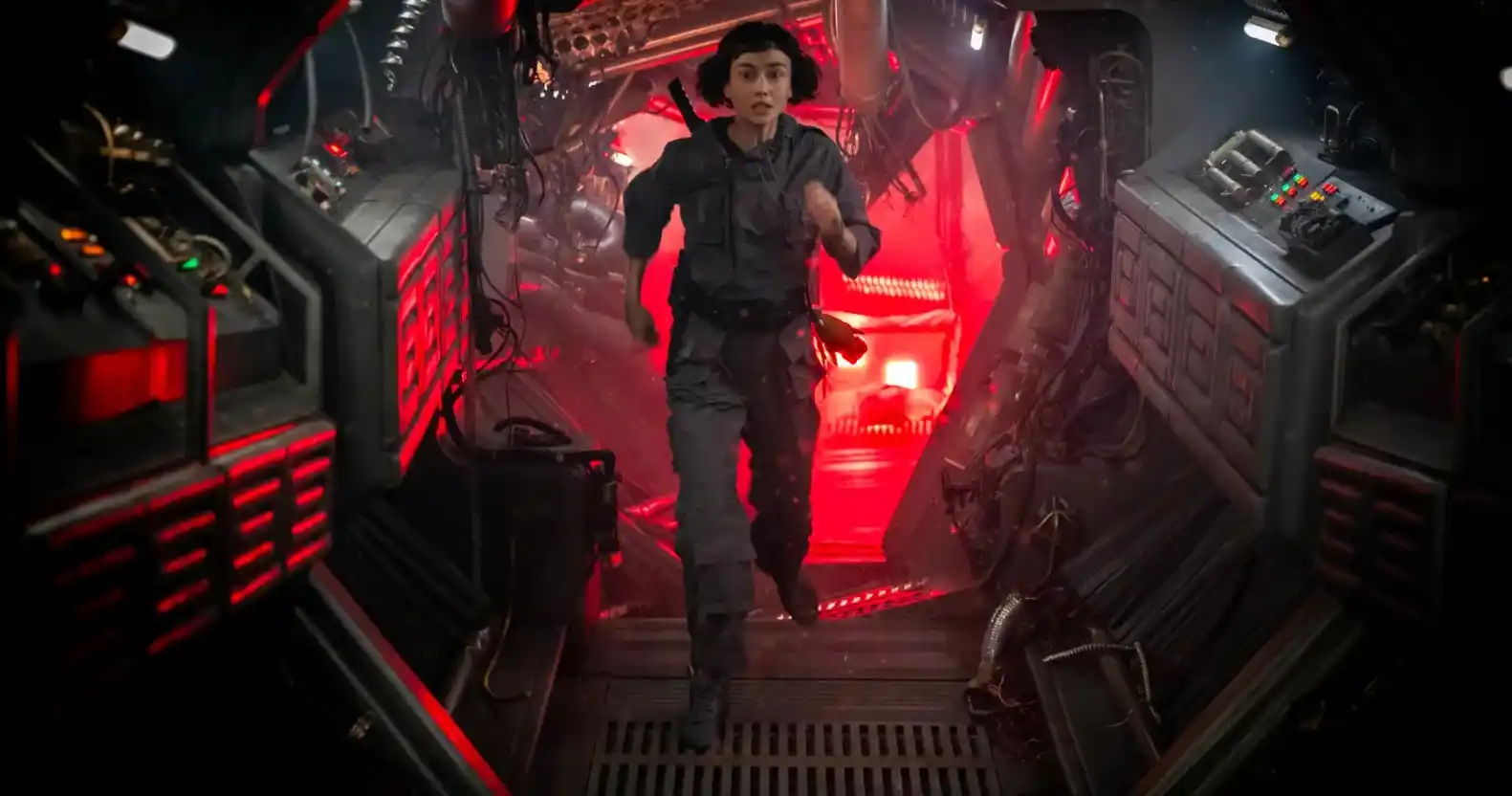
The Alien franchise is a complex, multi-generational saga spanning over 300 years of fictional history, primarily documenting humanity’s disastrous encounters with the Xenomorph species and the unethical machinations of the Weyland-Yutani Corporation. This recap covers the foundational prequels, the core Ellen Ripley tetralogy, and the mid-timeline expansions including the 2024 and 2025 entries.
The narrative of the Alien universe is divided into three distinct eras: the age of creation and biological origin (the prequels), the era of corporate exploitation and colonial expansion (the mid-timeline), and the eventual biological synthesis and decline (the late-timeline). To understand the franchise in 2026, one must look at both the chronological order of events and the evolution of the Xenomorph as a biological weapon.
The Chronological Order of the Alien Universe
Navigating the Alien timeline can be difficult due to the non-linear release of films and television series. As of 2026, the official canon follows a progression that begins in the late 21st century and concludes in the 24th century.
- Prometheus (set in 2093): The discovery of the Engineers and the origin of the "black goo."
- Alien: Covenant (set in 2104): David 8’s experimentation and the creation of the Protomorph.
- Alien: Earth (set c. 2120): The first major contact on the home planet (released in 2025).
- Alien (set in 2122): The encounter on the Nostromo.
- Alien: Romulus (set in 2142): Bridging the gap between the original film and the sequel.
- Aliens (set in 2179): The colonial marine mission to LV-426.
- Alien 3 (set in 2179): The crash on Fiorina 161.
- Alien: Resurrection (set in 2381): The cloning of Ripley and the Newborn.
While the Alien vs. Predator films exist, they are generally considered a separate continuity from the main Ridley Scott and James Cameron timeline.
The Era of Creation: Prometheus and Covenant
The origins of the franchise do not begin with the Xenomorph itself, but with its precursors and the hubris of man and android. In Prometheus (2012), the Weyland Corporation funds a mission to the moon LV-223 to find the "Engineers," a race of giants who allegedly seeded life on Earth.
The mission uncovers a biological weapon known as the Chemical A0-3959X.91 (the black goo). This substance is highly mutagenic, reacting to the intent and biology of the host. The android David 8, seeking to surpass his human creators, begins experimenting with this pathogen. The results are catastrophic, leading to the birth of the "Deacon" and the near-total loss of the Prometheus crew, save for Dr. Elizabeth Shaw and a decapitated David.
Ten years later, in Alien: Covenant (2017), a colonization ship lands on Planet 4, where David has been stranded. It is revealed that David committed genocide against the remaining Engineer population using their own weapon. Through a decade of selective breeding and genetic engineering, David refined the black goo into the first recognizable Xenomorph eggs. This era establishes that the Xenomorph is not necessarily a natural evolution but a designer plague—a reflection of its creator’s nihilism.
The Bridge: Alien: Earth and Alien: Romulus
For decades, the gap between the 1979 original and the 1986 sequel was unexplored. However, recent additions have filled these critical years. Alien: Earth, the 2025 series, provided the first grounded look at how the Weyland-Yutani corporation managed early Xenomorph threats on Earth before the era of deep-space hauling became the norm. This series emphasized the corporate espionage and the initial cover-ups that allowed the company to keep the creature's existence a secret for the general public while pursuing it for the weapons division.
Alien: Romulus (2142) takes place exactly 20 years after the destruction of the Nostromo. It follows a group of young space colonists who scavenge a derelict Weyland-Yutani research station, the Renaissance. The station is divided into two modules: Romulus and Remus. Here, it is revealed that the company had recovered biological samples from the debris of the original Nostromo incident. This film bridges the aesthetic of the "low-tech" 1979 world with the "high-tech" corporate laboratories, showing how the company attempted—and failed—to synthesize the Xenomorph’s regenerative properties into a serum for human enhancement.
The Ripley Saga: Alien (1979)
The 2122 incident remains the most significant turning point in the franchise. The commercial hauler Nostromo, carrying 20 million tons of mineral ore, intercepts a distress signal from the moon LV-426. Per company protocol, the crew is required to investigate or forfeit their pay.
The landing party discovers a derelict Engineer vessel containing thousands of eggs. Executive Officer Kane is impregnated by a Facehugger, leading to the birth of the "Big Chap" Xenomorph aboard the Nostromo. The ship's science officer, Ash, is revealed to be a Weyland-Yutani sleeper android with "Special Order 937": ensure the return of the organism, even if it means the crew is expendable. Ellen Ripley is the sole human survivor, escaping in the shuttle Narcissus after detonating the Nostromo's reactor.
The Colonial Marine Conflict: Aliens (1986)
After 57 years in hypersleep, Ripley is rescued. She discovers that LV-426—the site of the original derelict—has been colonized by "terraformers" and renamed Hadley’s Hope. When contact with the colony is lost, Ripley reluctantly joins a squad of Colonial Marines as a consultant.
This chapter introduces the Xenomorph Queen, a massive egg-laying matriarch. Unlike the solitary stalker of the first film, Aliens presents the species as a hive-mind entity. The mission is a tactical failure; the marines are decimated, and the colony is destroyed by an atmospheric processor explosion. Ripley, the orphan Newt, Corporal Hicks, and the android Bishop are the only survivors to enter cryosleep for the journey home.
The End of the Line: Alien 3 and Resurrection
The saga takes a bleak turn in Alien 3 (1992). A fire aboard the Sulaco causes the escape pod to crash on Fiorina 161, a "lead works" refinery and maximum-security correctional facility. Newt and Hicks are killed in the crash. Ripley discovers that a stowaway Facehugger has not only caused the crash but has also impregnated her with a Queen embryo.
Working with the prisoners and without any advanced weaponry, Ripley manages to kill the "Dragon" Xenomorph (born from a dog or ox, inheriting its quadrupedal traits). To prevent Weyland-Yutani from obtaining the Queen inside her, Ripley sacrifices herself by jumping into the refinery’s furnace.
The story concludes—canonically—in Alien: Resurrection (2381). Two hundred years after her death, scientists on the USM Auriga use blood samples to clone Ripley (Project 8). The eighth attempt, Ripley 8, possesses a mixture of human and Xenomorph DNA, including enhanced strength and acidic blood. The Queen they extract also has human traits, eventually giving birth to "The Newborn," a horrific hybrid with a skeletal face and human eyes. Ripley 8 eventually destroys the creature and the Auriga, returning to a desolate Earth.
Xenomorph Biology and Life Cycle
Understanding the Alien franchise requires a technical grasp of the Xenomorph’s parasitic nature. The creature follows a specific, multi-stage development process that ensures maximum adaptability to any host environment.
| Stage | Name | Description | Role |
|---|---|---|---|
| 1 | Ovomorph (Egg) | A leathery, stationary vessel produced by a Queen. | Long-term storage of the parasite. |
| 2 | Facehugger | An arachnid-like organism that attaches to a host's face. | Implantation of the embryo (Plagiarus praepotens). |
| 3 | Chestburster | A small, snake-like larval stage that exits the host's thoracic cavity. | Rapid growth and host consumption. |
| 4 | Adult (Drone/Warrior) | The final bipedal form with a pharyngeal jaw and acidic blood. | Protection of the hive and procurement of hosts. |
| 5 | Queen | A massive, multi-limbed leader with an external egg sac. | Hive reproduction and command. |
| 6 | Praetorian | A larger, armored caste often serving as the Queen's guard. | Defense of the matriarch. |
The Xenomorph is famous for its "DNA Reflex," a process where it takes on physical characteristics of its host. A Xenomorph born from a human is bipedal; one born from a quadruped (like in Alien 3) is a faster, four-legged runner; and one born from a Predator (the "Predalien") possesses mandibles and dreadlock-like appendages.
The Role of Weyland-Yutani
The true antagonist of the franchise is rarely the Xenomorph itself, but rather the Weyland-Yutani Corporation. Their slogan, "Building Better Worlds," masks a predatory capitalistic drive to weaponize the Xenomorph.
The company views the Xenomorph as the "perfect organism," unclouded by conscience, remorse, or delusions of morality. Throughout the timeline, the corporation’s internal "Weapons Division" has consistently sacrificed employees, colonies, and entire starships to secure a specimen. By the time of Alien: Romulus, we see that this obsession isn't just about weapons, but about extracting the Xenomorph's "divine" resilience to solve human mortality—a goal that began with Peter Weyland in Prometheus.
Frequently Asked Questions
Is "Alien: Romulus" a reboot or a sequel?
Alien: Romulus is a standalone sequel (often called an "inter-quel") set between the events of Alien (1979) and Aliens (1986). It does not erase any previous films but adds context to the company’s research during the 57-year gap when Ripley was in hypersleep. It focuses on how the company recovered the original "Big Chap" from the first film to continue their experiments.
Why is David 8 so important to the Alien lore?
David 8, the android protagonist of Prometheus and Alien: Covenant, is essentially the architect of the modern Xenomorph. While the Engineers created the raw biological material (the black goo), David used his knowledge of human and synthetic logic to refine that material into the specific egg-and-parasite cycle seen in the later films. He represents the theme of the "creation turning on the creator."
What happened to the Engineers?
The Engineers were an ancient race that used biological engineering to seed life on various planets, including Earth. However, they also developed the black goo as a weapon of mass destruction, presumably to "reset" planets that did not meet their expectations. In Alien: Covenant, it is revealed that David 8 wiped out a massive settlement of Engineers on Planet 4, leaving the race seemingly extinct or in extreme hiding by the time of the Ripley era.
Do I need to watch the "Alien vs. Predator" movies?
For the main narrative following Ellen Ripley and the origins of the Xenomorph (the Scott/Cameron timeline), the Alien vs. Predator (AVP) films are not required. Most fans and filmmakers treat them as an alternate "what-if" universe. The main Alien timeline suggests that humans did not encounter the Xenomorph until the late 21st century, whereas AVP suggests they were on Earth thousands of years ago.
What is the significance of the "Black Goo"?
The Black Goo, or Chemical A0-3959X.91, is the foundational element of the franchise’s biology. It is a "primordial soup" that rewrites the DNA of any living thing it touches. In its pure form, it can disintegrate an organism to seed a planet with new life; in its weaponized form, it creates aggressive mutations. The Xenomorph is the ultimate refinement of this substance’s potential for destruction.
Strategic Recommendation for Viewers
If you are new to the franchise in 2026 or looking to revisit it, the most effective way to experience the story is through Release Order rather than Chronological Order. Starting with the 1979 original Alien allows you to experience the mystery and terror of the creature as it was intended, without the heavy exposition provided by the prequels.
After watching the original quartet (Alien through Resurrection), move to the prequels (Prometheus and Covenant) to understand the "Why" behind the "What." Finally, watch the mid-timeline entries like Alien: Romulus and Alien: Earth to see how modern filmmaking has expanded the corporate lore and the immediate aftermath of the Nostromo incident. This progression preserves the suspense while rewarding long-term viewers with deeper world-building.