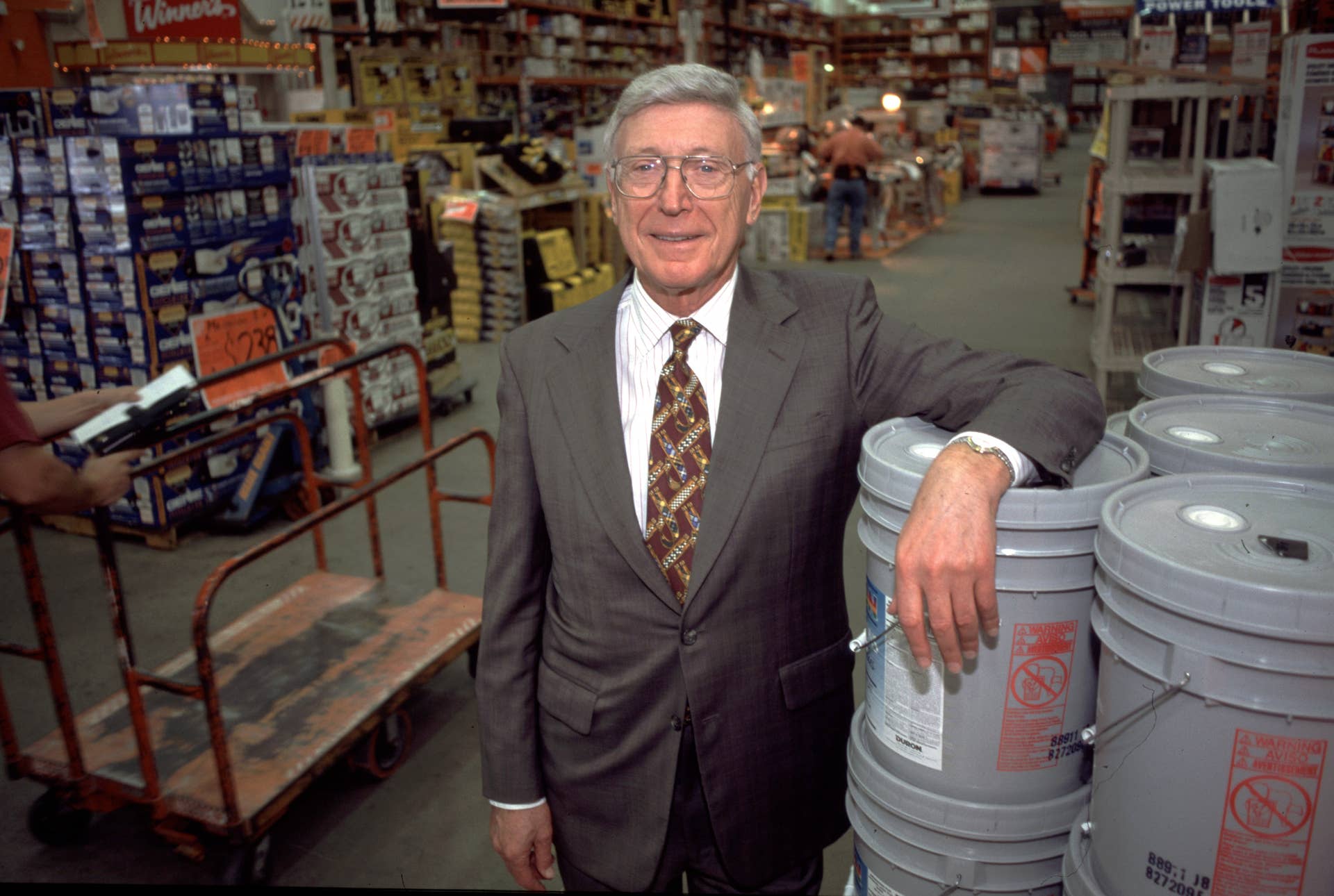
Arthur Blank is widely recognized for his instrumental role in co-founding The Home Depot, a company that fundamentally transformed the home improvement retail landscape. Alongside Bernie Marcus, Pat Farrah, and Ron Brill, Blank turned the concept of the "warehouse-style" home improvement store into a global powerhouse, prioritizing customer service, deep inventory, and employee expertise. While his career has since expanded into professional sports and philanthropy, his tenure at The Home Depot remains the cornerstone of his business reputation.
The Origins and Vision of The Home Depot
The story of The Home Depot began in 1978, following the departure of Arthur Blank and Bernie Marcus from Handy Dan Improvement Centers, a California-based home improvement chain. The duo, along with their partners, sought to create a retail environment that solved the primary frustration of the era: the lack of expert advice and the scarcity of inventory at existing hardware stores.
Their vision was to build a warehouse-scale environment that offered not just a vast array of tools and materials, but also the specialized knowledge required to use them. At the time, this was a radical departure from the existing model of small, localized hardware stores or high-end specialty shops. The partners envisioned a "one-stop-shop" where a professional contractor could find everything needed for a project, and a DIY (Do-It-Yourself) enthusiast could receive the guidance necessary to complete complex home repairs.
The Warehouse Concept and Scale
The primary operational innovation was the size of the stores. By occupying massive retail footprints, The Home Depot could stock tens of thousands of items that smaller retailers simply could not accommodate. This massive scale allowed for bulk purchasing, which in turn kept prices competitive. Blank, who served as the company's president and later CEO, played a pivotal role in operationalizing this strategy, ensuring that the logistical challenges of managing such massive inventory were handled with precision.
The Culture of Service
Beyond the logistics, Blank was a significant force in shaping the company’s internal culture. He emphasized the "inverted pyramid" management philosophy, which posited that leadership should exist to support store associates, who in turn supported the customers. This focus on the employee-customer relationship became a core tenet of the brand. Training programs were institutionalized to ensure that store staff were not merely clerks, but subject-matter experts capable of walking a customer through the installation of a water heater, the tiling of a floor, or the wiring of a room.
Arthur Blank’s Operational Leadership
Arthur Blank served as President of The Home Depot from its inception until 1997, and subsequently as CEO until his retirement in 2002. During his leadership, the company underwent explosive growth, expanding from a regional chain in the Southeast to a dominant national and eventually international force.
Strategic Expansion
Blank’s strategy was marked by aggressive yet calculated geographic expansion. He focused on ensuring that the core "warehouse" experience remained consistent across new locations. As the company scaled, he oversaw the implementation of advanced information technology systems to manage supply chains and inventory tracking, which allowed the business to maintain high stock levels without succumbing to the inefficiencies of traditional retail models.
Navigating Market Competition
Throughout the 1980s and 1990s, the home improvement sector saw significant consolidation. The Home Depot faced stiff competition from regional players and emerging national competitors. Blank’s approach to this competition was to double down on the company’s core value proposition: value-added service. Rather than engaging in purely price-based wars, he focused on the customer experience—empowering staff to solve problems for shoppers, which fostered immense brand loyalty.
Comparison of Strategic Philosophies
The following table contrasts the traditional hardware retail model of the late 1970s with the warehouse model institutionalized by Arthur Blank and his co-founders at The Home Depot.
| Feature | Traditional Hardware Model | The Home Depot Model |
|---|---|---|
| Store Size | Small, localized footprint | Large warehouse format |
| Inventory Depth | Limited to high-turnover items | Massive stock depth and variety |
| Staff Expertise | Varied; often limited retail clerk | Expert advisors and tradespeople |
| Pricing Strategy | Premium or moderate markups | High-volume, low-margin (EDLP) |
| Target Market | Small projects/replacement parts | Contractors and DIY homeowners |
| Customer Experience | Transactional | Consultative and educational |
Transition from Retail to Philanthropy and Sports
After stepping down from his day-to-day role at The Home Depot in 2002, Arthur Blank shifted his professional focus toward sports ownership and concentrated philanthropic efforts. This transition allowed him to apply the same management and operational principles he honed in the retail sector to new environments.
The Atlanta Falcons and Beyond
Blank’s acquisition of the Atlanta Falcons in 2002 brought a focus on the fan experience that mirrored his focus on the customer experience at The Home Depot. He consistently prioritized affordability in stadium concessions and fan engagement, acknowledging that a successful organization must be deeply connected to its community. His development of the Mercedes-Benz Stadium was a landmark project that set new standards for sports facility design and operational efficiency.
Philanthropic Initiatives
The Arthur M. Blank Family Foundation continues to emphasize long-term, systemic change in areas such as youth development, environmental stewardship, and community health. The discipline required to manage a multi-billion dollar retail enterprise has translated into a metrics-driven approach to philanthropy, where success is measured by long-term impact rather than mere financial output.
The Enduring Legacy of the "Home Depot Way"
In 2026, The Home Depot remains one of the world's most successful retailers. The systems and culture established by Arthur Blank and his partners have proven remarkably resilient. While the company has since modernized with extensive e-commerce capabilities, delivery services, and digital project management tools, the foundational reliance on a knowledgeable workforce and extensive inventory remains intact.
Impact on Modern Retail
Blank’s legacy is often cited in business schools as a masterclass in scaling a retail operation without losing the quality of the customer experience. The "warehouse model" forced every other retailer in the space to adapt or exit the market, effectively raising the bar for the entire home improvement industry.
Lessons for Modern Entrepreneurs
For those looking at Blank’s career as a case study, the most important lesson is the marriage of operational efficiency with human-centric values. A company can have the best logistics, but if it fails to provide value through expertise and service, it will eventually lose its competitive edge. Blank’s ability to remain focused on the customer while scaling to thousands of stores is the defining characteristic of his tenure at The Home Depot.
Frequently Asked Questions
What was Arthur Blank’s primary role at The Home Depot?
Arthur Blank was a co-founder of The Home Depot. He served as the company’s President for nearly two decades and later transitioned to the role of CEO, guiding the company through its most significant periods of national expansion and public growth.
Did Arthur Blank invent the warehouse-style home improvement store?
While he did not act alone, Blank and his co-founders were the pioneers who successfully scaled the warehouse-style retail model. They adapted this concept from early retail experiments and institutionalized it, making it the industry standard for home improvement.
How did the management style of Arthur Blank impact store employees?
Blank championed an "inverted pyramid" management style. This approach required leadership to prioritize the needs of store associates so they, in turn, could focus entirely on providing high-quality service and technical advice to customers.
What is the connection between his retail background and his sports ownership?
Blank applied the same principles of customer-centricity and operational discipline to his ownership of the Atlanta Falcons. He focused on fan engagement, fair pricing, and long-term community development, viewing the fans as "customers" deserving of a high-value experience.
Is Arthur Blank still involved in the day-to-day operations of The Home Depot?
No. Arthur Blank retired from his executive roles at The Home Depot in 2002. Since then, he has dedicated his time to his family foundation, his sports franchises, and various investment ventures, leaving the retail company to professional management teams.
How does The Home Depot’s current strategy reflect its roots?
In 2026, The Home Depot continues to prioritize the physical store experience alongside digital integration. The core commitment to carrying a vast inventory that enables both contractors and DIYers to complete projects remains the central pillar of the company’s ongoing success.
Moving Forward
The partnership that built The Home Depot serves as a foundational example of successful entrepreneurship. For those studying the evolution of modern retail, the trajectory taken by Arthur Blank illustrates that success is rarely just about the product; it is about building a system that solves specific, recurring problems for the end-user. As the company continues to evolve into new digital frontiers, the principles of store-level expertise and inventory availability remain the true, verified backbone of its market-leading position. Whether acting as a CEO, an owner, or a philanthropist, Blank’s career demonstrates that the most effective strategy often involves simply listening to the customer and removing the barriers to their success.