The Annenberg Media Center is a state-of-the-art, multi-platform newsroom and media production hub located in Wallis Annenberg Hall at the University of Southern California (USC). It serves as a real-time learning laboratory where undergraduate and graduate students produce digital, broadcast, audio, and social media journalism under professional mentorship.
While search queries for "Annenberg Media Center" primarily refer to this physical and operational journalism hub at USC in Los Angeles, the term is occasionally confused with Annenberg Learner (formerly Annenberg/CPB), an independent division of the Annenberg Foundation that funds and distributes educational multimedia content. This guide focuses primarily on the USC Annenberg Media Center—its facility structure, production workflows, student opportunities, and newsroom guidelines—while clarifying its place in modern media education.
History and Evolution of the Annenberg Media Center
The modern Annenberg Media Center was established with the opening of Wallis Annenberg Hall in October 2014. Designed to replace legacy, siloed student media facilities—where television, radio, and print teams operated in separate spaces—the center was conceived as a 20,000-square-foot converged newsroom. The physical layout reflects the shifting demands of 21st-century journalism, prioritizing digital-first publishing, rapid cross-platform deployment, and collaborative reporting.
Before the launch of Wallis Annenberg Hall, USC student broadcast journalism operated largely through Annenberg TV News (ATVN) out of the older Annenberg School building (ASC). Audio projects were similarly compartmentalized. The creation of the central Media Center consolidated these distinct operations under a single banner: Annenberg Media.
- Legacy Model: Separate Silos
- ATVN (TV Broadcast)
- Radio / Audio Projects
- Web / Print Reporting
- Modern Annenberg Media Center (2014 Convergence)
- Unified Newsroom (Digital, Video, Audio, Social, Desk Teams)
This structural shift allowed reporters, producers, video editors, and engagement specialists to sit side-by-side at a central assignment desk, sharing research, video footage, and audio tracks across multiple delivery channels.
The educational model of the Media Center rests on two main pillars:
- Student Editorial Leadership: Students hold top leadership roles, acting as executive editors, managing editors, desk editors, and line producers who direct daily news gathering and coverage decisions.
- Professional Mentorship: Veteran journalists, faculty members, and media managers sit on the newsroom floor alongside students, offering live guidance on legal issues, verification standard practices, ethical choices, and technical execution.
Facility Architecture and Technical Infrastructure
Located on the first floor of Wallis Annenberg Hall, the Media Center is designed around a transparent, open-concept floor plan that connects technical control spaces with open news-gathering desks.
- Wallis Annenberg Hall
- Annenberg Media Center
- Broadcast Studio
- Control Rooms & Audio Suites
- Central Assignment Desk / Multi-Platform Workstations
- Impact / Narrative
- Social & Digital Desks
- Annenberg Media Center
The Central Newsroom Floor
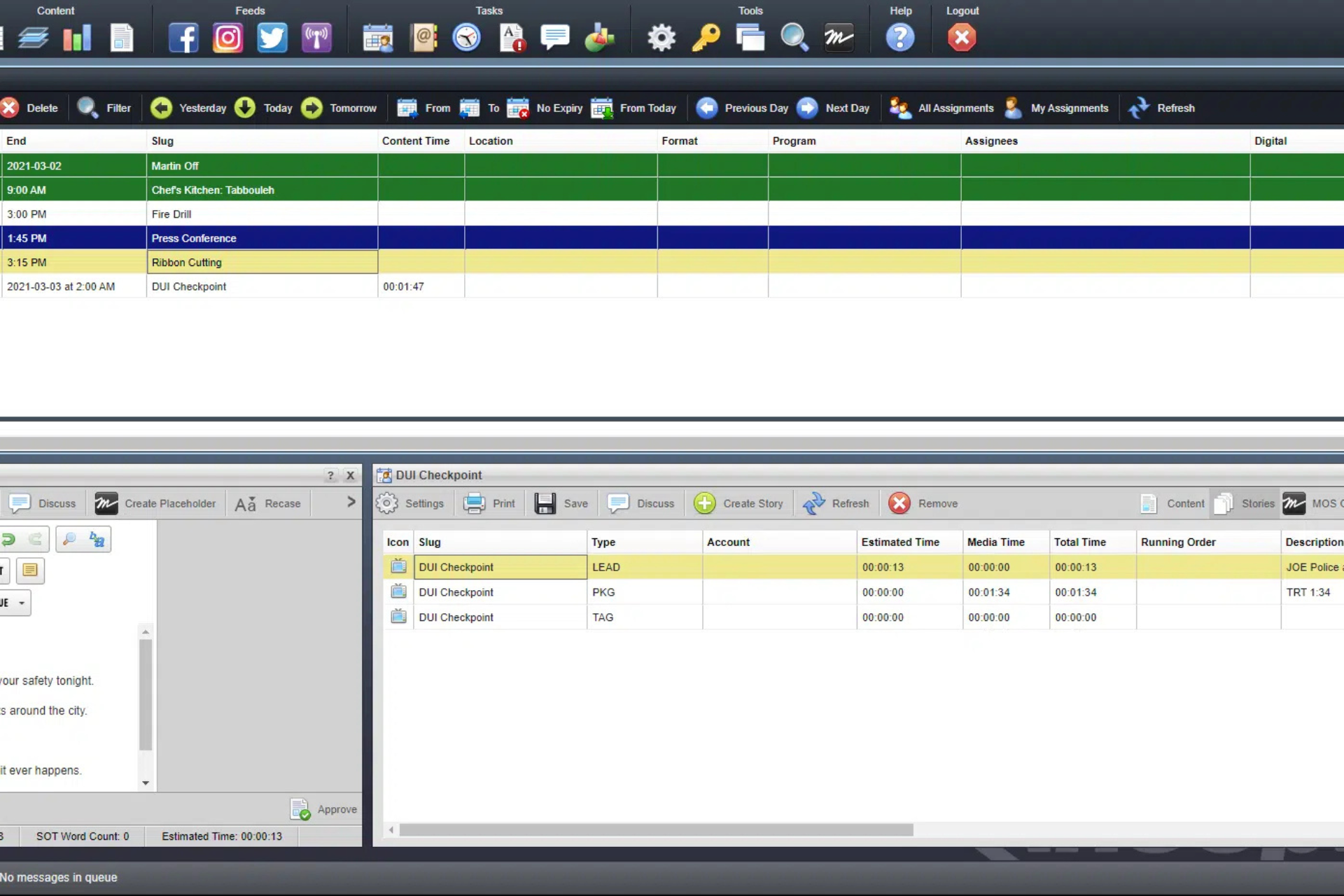
At the core of the space sits the central assignment desk, equipped with multiple monitors, broadcast wire feeds, and communication systems. Surrounding the center desk are dedicated workstations grouped by reporting beats and platforms:
- Digital & Web Desk: Handles breaking news updates, long-form enterprise reporting, and continuous publishing on
uscannenbergmedia.com. - Social & Mobile Media Desk: Tailors original storytelling for platforms including Instagram, TikTok, X (formerly Twitter), and YouTube.
- Impact & Narrative Video Desk: Focuses on investigative reporting, documentary-style packages, and news magazine segments.
- Audio & Podcast Hub: Dedicated to audio news updates, feature stories, and narrative podcast production.
Studios and Broadcast Control Rooms
Flanking the main newsroom floor are professional-grade broadcast environments:
- Live Broadcast Studio: Features a fully adjustable set, green screen walls, professional studio lighting grids, teleprompters, and robotic camera arrays. The studio is visible from the building’s central atrium through floor-to-ceiling glass walls, creating a live media spectacle within the academic space.
- Control Rooms: Equipped with industry-standard broadcast switchers, audio mixing consoles, graphics engine workstations (such as Ross Video or Chyron systems), and playback servers.
- Audio Recording & Podcast Booths: Acoustically isolated rooms outfitted with broadcast condenser microphones, multitrack audio interfaces, and digital audio workstations (DAWs) such as Adobe Audition and Pro Tools.
- Post-Production Editing Suites: High-performance computers running nonlinear editing software, including Adobe Premiere Pro and DaVinci Resolve, paired with central network storage for fast clip sharing.
Operating Student Outlets and Content Desks
The Media Center hosts several distinct student-run brands and specialized coverage teams, each serving a specific audience segment and distribution channel.
- Annenberg Media Center
- Annenberg Media (Daily News & Web Publishing)
- Impact News Magazine (Deep Dives)
- Audio & Radio Podcasts (Audio Stories)
Annenberg Media (Daily Digital & Video)
Annenberg Media is the flagship student news organization operating out of the center. It publishes news daily across digital platforms and produces live television news broadcasts during the academic semester. The outlet covers local campus affairs at USC, surrounding South Los Angeles community news, municipal politics, culture, sports, and science/technology.
Impact News Magazine
Impact is the long-form broadcast and video news magazine produced by students within the Media Center. Unlike daily breaking news broadcasts, Impact focuses on investigative projects, mini-documentaries, and deep-dive enterprise reporting. Segments produced under Impact frequently win regional and national collegiate journalism awards.
Audio and Podcasting Units
The audio team within the Media Center generates weekly news wrap-ups, commentary, and specialized podcasts. These audio projects cover a spectrum of topics, ranging from local housing and transit issues to university administration accountability and culture coverage.
Specialized Desks
To ensure thorough coverage of diverse topics, the newsroom maintains dedicated beat desks:
- Equity & Inclusion Desk: Focuses on stories affecting underrepresented communities, systemic access, and identity.
- Sports Desk: Covers USC Trojans athletics, local professional sports teams, and sports business.
- Culture & Entertainment Desk: Reports on Los Angeles arts, film, music, and campus student life.
- Bilingual / News in Spanish: Produces news content targeted at Spanish-speaking communities in Los Angeles, expanding the newsroom's civic reach.
Outlet Structure and Technical Workflows
The following table outlines how the primary production teams inside the Annenberg Media Center operate, their primary target distribution channels, and the primary toolsets used.
| Outlet / Production Unit | Primary Distribution Channel | Core Content Focus | Key Software & Hardware | Participation Requirement |
|---|---|---|---|---|
| Annenberg Media Web/Digital | Website (uscannenbergmedia.com), Newsletter |
Breaking news, enterprise features, local civic reporting | WordPress, Adobe Creative Cloud, Google Workspace | Open to all USC students; integrated into journalism labs |
| Annenberg Media Broadcast | Live streaming, local cable feeds, YouTube | Daily live television broadcasts, studio anchors, field packages | Ross Video switchers, iNEWS / ENPS, Teleprompters, Adobe Premiere Pro | Enrolled in journalism production courses or approved volunteers |
| Social & Mobile Desk | Instagram, TikTok, X, YouTube Shorts | Platform-native video, infographics, live coverage updates | Mobile editing apps, Canva, Adobe After Effects | Open enrollment + student leadership positions |
| Impact Video Magazine | Web, YouTube, special broadcast showcases | In-depth investigative packages, short documentaries | Cinema cameras (e.g., Sony FX series), Adobe Premiere, DaVinci Resolve | Advanced broadcast journalism courses & experienced volunteers |
| Audio & Podcast Hub | Spotify, Apple Podcasts, Web | Narrative audio stories, news roundups, interview shows | Adobe Audition, Pro Tools, Rode / Shure broadcast microphones | Open to all students; audio course integration |
Student Participation, Academic Integration, and Workflows
Participation in the Annenberg Media Center is open to the broader USC student body, though it serves as the core practical laboratory for students enrolled in the USC Annenberg School for Communication and Journalism.
Academic Course Integration
Many undergraduate and graduate degree programs in journalism at USC require practical media center shifts as part of their core curriculum. Courses such as introductory reporting, video production, broadcast anchoring, and digital site management assign students directly to newsroom desks.
- Reporting Practicums: Students act as field reporters, gathering interviews, shooting video, writing copy, and filing stories under deadline pressure.
- Executive Production Courses: Advanced students take on producer roles, building broadcast rundowns, managing assignment sheets, and directing studio crews.
Volunteer Opportunities and Paid Fellowships
Non-journalism majors and non-enrolled students can participate in the Media Center as volunteers. The newsroom offers introductory workshops at the beginning of each semester to train new recruits on editorial tools, cameras, and style guidelines. Additionally, senior editorial positions—such as Executive Editors, Desk Chiefs, and Technical Directors—are often paid student staff positions funded by the school.
Daily Newsroom Workflow Cycle
A typical day in the Media Center follows a structured operational cycle designed to mimic professional newsrooms:
09:00 AM: Morning Pitch Meeting (Identify stories, assign beats)
11:00 AM: Field Reporting & Asset Gathering (Interviews, video, audio)
02:00 PM: Mid-Day Check-in & Editing (Copy editing, video trimming)
04:00 PM: Digital Publishing & Broadcast Prep (Web updates, rundown lock)
06:00 PM: Live Evening Broadcast & Social Distribution
Morning Pitch Meeting (09:00 AM): Student editors and faculty advisors meet to discuss breaking news, assign stories, evaluate pitch ideas, and coordinate cross-platform resources.
Asset Gathering & Fieldwork (10:00 AM - 02:00 PM): Reporters head into the field across campus and the greater Los Angeles metropolitan area to conduct interviews, capture video, and record ambient audio.
Editing and Verification (02:00 PM - 04:00 PM): Writers draft copy, and video editors assembly-cut packages. Drafts pass through student desk editors and faculty advisors for fact-checking, legal checks, and style verification.
Publishing and Airtime (04:00 PM - 06:00 PM): Digital articles are published to the website; social teams generate mobile clips; and the broadcast team executes live evening news broadcasts from the main studio.
Editorial Guidelines, Ethics, and Community Reporting
The Annenberg Media Center operates under a rigorous set of editorial policies developed to balance student learning with professional accountability.
Code of Ethics and Guidelines
Students working in the Media Center adhere to journalistic standards modeled after the Society of Professional Journalists (SPJ) Code of Ethics. Key tenets include:
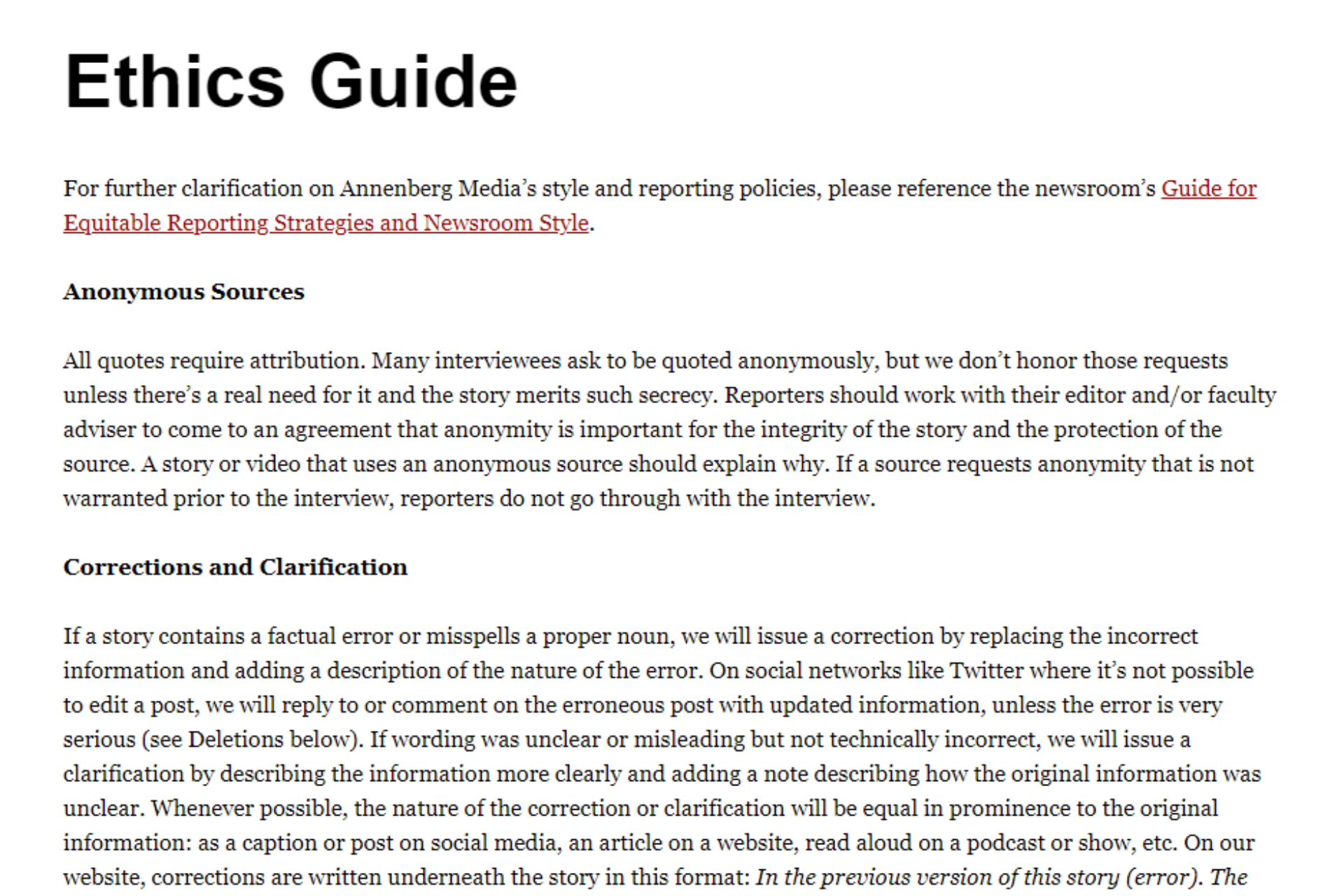
- Accuracy and Verification: Every facts claim, statistic, and quote must be verified prior to publication. Anonymous sources are used strictly as a last resort and require executive editor approval.
- Independence: Student reporters must remain independent of political, institutional, or commercial interests. Conflicts of interest must be disclosed immediately to editors.
- Correction Policy: When errors occur, the Media Center issues transparent corrections on web articles and broadcast updates detailing what was corrected and why.
Community-Centered Reporting
Unlike standard student papers that focus exclusively on campus governance and student life, the Annenberg Media Center prioritizes reporting on South Los Angeles and the broader municipality. Reporters cover city council proceedings, local housing trends, transportation developments, environmental justice, and local arts initiatives. This orientation provides real-world civic journalism experience while offering local coverage to neighboring communities.
Key Differences: USC Media Center vs. Annenberg Learner
Because the name "Annenberg" is attached to multiple high-profile educational initiatives, readers frequently confuse the USC Annenberg Media Center with Annenberg Learner. Understanding the distinction is crucial when navigating resources or seeking contacts.
- Annenberg Entities
- USC Annenberg Media Center
- Location: USC Campus (Los Angeles)
- Focus: Student Journalism & Newsroom
- Output: Daily News, Broadcasts, Podcasts
- Annenberg Learner
- Location: Annenberg Foundation
- Focus: K-12 & Teacher Resources
- Output: Educational Video Series
- USC Annenberg Media Center
Annenberg Learner (Learner.org)
- What It Is: An educational initiative funded by the Annenberg Foundation that funds and distributes multimedia resources, video series, and teacher professional development materials.
- Target Audience: K-12 educators, college instructors, and independent learners nationwide.
- Famous Content: Educational video series such as The Western Tradition, Destinos: An Introduction to Spanish, and Against All Odds: Inside Statistics.
- Operational Base: Operates independently of USC newsroom operations.
USC Annenberg Media Center
- What It Is: The physical and operational newsroom situated inside Wallis Annenberg Hall at the University of Southern California.
- Target Audience: The USC campus community, residents of Los Angeles, and digital news consumers.
- Famous Content: Daily news reporting, Impact magazine, local investigative projects, and live collegiate sports coverage.
Frequently Asked Questions
Is the Annenberg Media Center open to students outside the journalism school?
Yes. Any enrolled student at the University of Southern California—regardless of their major or school—can volunteer and produce content for Annenberg Media outlets. However, senior editorial positions and specialized technical roles may require prerequisite training workshops or relevant coursework experience.
How does the Annenberg Media Center differ from the Daily Trojan?
The Daily Trojan is USC's independent, student-run campus newspaper, operating out of the Student Union building with its own separate editorial board, budget, and business management. The Annenberg Media Center is housed within the USC Annenberg School for Communication and Journalism in Wallis Annenberg Hall and operates with faculty oversight, professional mentorship, and integrated curriculum labs.
Can high school students or the general public use the Media Center's facilities?
No. The physical production facilities, studios, editing suites, and equipment checkouts inside the Annenberg Media Center are strictly reserved for active USC students, faculty, and authorized media staff. However, the news products (website articles, podcasts, YouTube broadcasts) are freely accessible to the public.
How can public PR representatives submit press releases or tips to the newsroom?
Press releases, news tips, and event announcements can be submitted directly to the Annenberg Media assignment desk via their official email contact channels listed on uscannenbergmedia.com. Pitch submissions are reviewed during daily morning assignment meetings by student desk editors.
Where can I watch or listen to content produced by the Annenberg Media Center?
Content is distributed through multiple digital outlets:
- Web: Official news reporting is available at
uscannenbergmedia.com. - Social Platforms: Video packages and updates are published on YouTube, Instagram, and TikTok under the Annenberg Media handle.
- Podcasts: Audio programs are available on major streaming platforms including Apple Podcasts and Spotify.
Actionable Next Steps for Students and Visitors
Whether you are a prospective student, a current USC student seeking to build a journalism portfolio, or a community member looking to engage with local news, consider the following next steps:
- Tour the Facility: Prospective students can schedule tours of Wallis Annenberg Hall through the USC Annenberg Admissions Office to view the Media Center during live production hours.
- Attend an Orientation Session: Current USC students interested in joining the newsroom should attend the Annenberg Media open house and orientation held during the first two weeks of the fall and spring semesters.
- Submit Story Tips: Local residents and community organizations in South Los Angeles can contact the central assignment desk to share local news tips, community events, or investigative leads.
- Access Published Archives: Researchers and educators seeking historic student journalism or broadcast coverage can browse the searchable archives on the Annenberg Media website or contact the USC Libraries Special Collections.