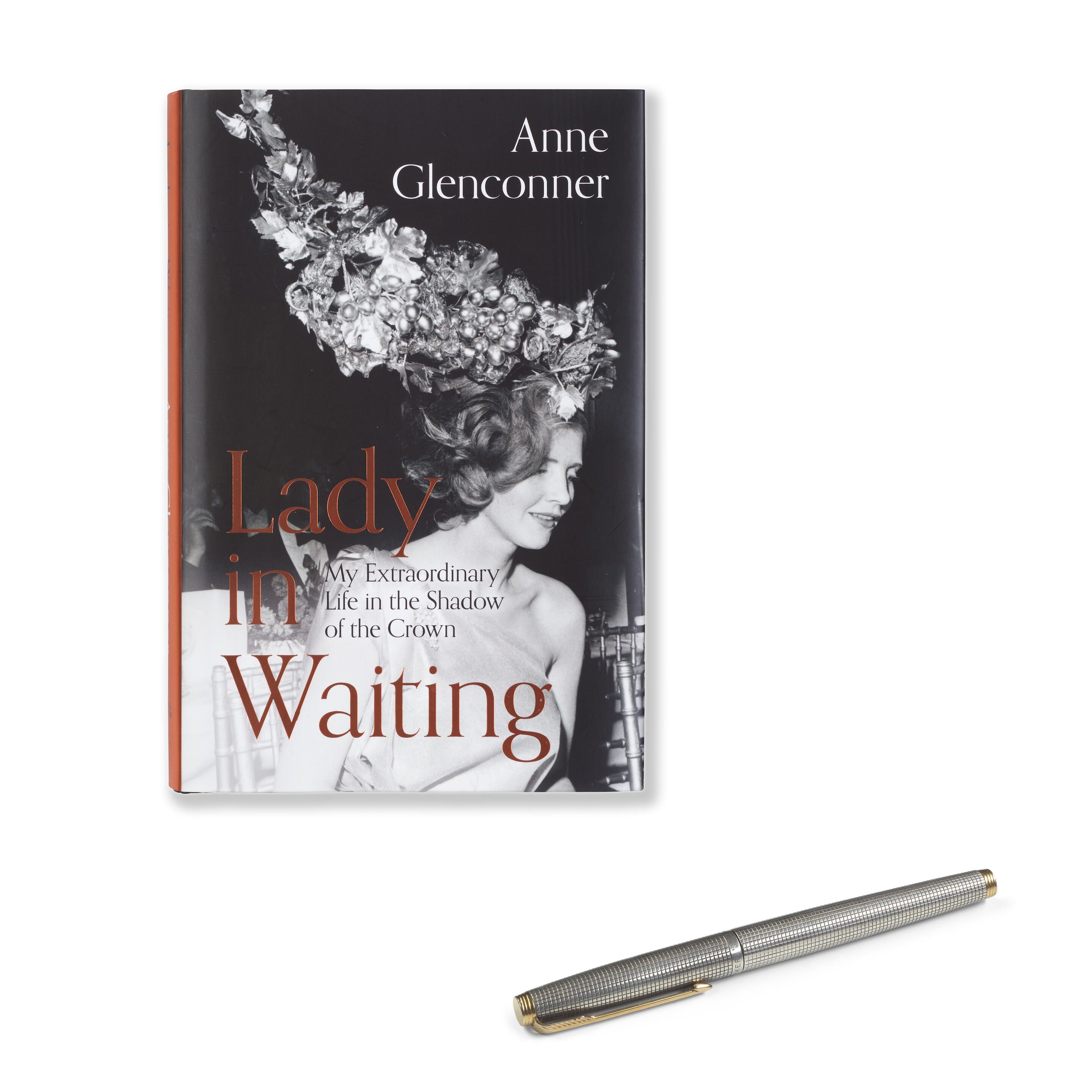
Anne Glenconnor, born Lady Anne Coke, is a British aristocrat and bestselling author renowned for her role as Lady-in-Waiting to Princess Margaret. As a childhood friend of the Royal Family and a Maid of Honour at Queen Elizabeth II’s 1953 coronation, she provides a unique, intimate perspective on British royalty and 20th-century aristocratic life.
Standing as a witness to the most private corridors of power and the most public displays of pageantry, Anne Glenconnor (now the Dowager Baroness Glenconnor) has transitioned from a silent fixture of the royal household to one of the most compelling storytellers of the modern era. As of 2026, her memoirs and historical insights continue to serve as primary sources for historians and enthusiasts of the House of Windsor. Her life, marked by extreme privilege, staggering personal tragedy, and a late-in-life literary resurgence, offers a profound study in resilience and the changing nature of the British class system.
The Formative Years at Holkham Hall
Born in 1932, Anne Coke was the eldest daughter of the 5th Earl of Leicester. Her upbringing at Holkham Hall, one of England’s most grand Palladian estates in Norfolk, was the epitome of traditional aristocratic life. The scale of Holkham—a house with 365 windows and miles of corridors—dictated a childhood of both splendor and isolation.
Despite her lineage, the laws of primogeniture meant that as a woman, she could not inherit the estate. This early realization of the "disappointment" of her gender in the eyes of traditional inheritance laws shaped much of her early outlook. However, the proximity of Holkham to the royal estate at Sandringham facilitated a close bond between the Coke family and the Royal Family. Anne and her sister were frequent playmates of the young Princesses Elizabeth and Margaret, establishing a foundation of trust that would last a lifetime.
The 1953 Coronation: A Maid of Honour
One of the most significant moments in Anne Glenconnor’s life—and indeed in 20th-century British history—was her selection as one of the six Maids of Honour for the coronation of Queen Elizabeth II in 1953.
The role was not merely ceremonial; it required grueling rehearsals and physical endurance. The Maids of Honour were responsible for carrying the Queen's heavy velvet train, which was roughly 18 feet long. Anne has frequently recounted the sensory details of that day: the smell of the incense in Westminster Abbey, the deafening cheers of the crowds, and the use of small vials of smelling salts hidden in their gloves to prevent fainting. This event solidified her place at the heart of the British establishment, a position she would hold for the next seven decades.
Marriage to Colin Tennant and the Creation of Mustique
In 1956, Anne married Colin Tennant, who later became the 3rd Baron Glenconnor. The marriage was, by most accounts, volatile and extraordinary. Colin Tennant was a mercurial figure, known for his creative brilliance and explosive temper. He is perhaps best remembered for purchasing the Caribbean island of Mustique for £45,000 in 1958.
At the time, Mustique was a mosquito-infested outcrop with no running water or infrastructure. Under Colin’s vision and Anne’s social management, it was transformed into a legendary retreat for the rich and famous.
The Royal Gift and Social Hub
To ensure the island’s prestige, Colin gave Princess Margaret a ten-acre plot as a wedding present in 1960. This act turned Mustique into a royal sanctuary, away from the prying eyes of the British press. Anne played the role of the quintessential hostess, balancing her husband’s eccentricities while entertaining global icons:
- Mick Jagger and David Bowie became regular fixtures.
- The island developed a reputation for "bohemian royalty," where the strict protocols of London were replaced by beach parties and informal luxury.
- Anne managed the complex logistics of island life, often shielding guests from her husband’s frequent outbursts.
Service to Princess Margaret: The Lady-in-Waiting
In 1971, Anne Glenconnor was appointed Lady-in-Waiting to Princess Margaret. Unlike the roles in the Queen’s household, being a Lady-in-Waiting to the Princess involved a blend of professional duty and deep personal companionship.
Responsibilities and Loyalty
The role of a Lady-in-Waiting is often misunderstood as purely social. In reality, Anne was responsible for:
- Logistical Coordination: Managing the Princess's schedule, correspondence, and travel arrangements.
- Public Representation: Accompanying the Princess on official engagements both in the UK and during overseas tours to the Commonwealth.
- Discretion: Serving as a confidante during the Princess’s turbulent divorce from Lord Snowdon and her subsequent relationship with Roddy Llewellyn.
Anne remained in this position until the Princess’s death in 2002. In her later writings, Anne has been a staunch defender of Margaret’s legacy, portraying her not as the "difficult" royal often depicted in the media, but as a loyal, witty, and deeply vulnerable friend who took her royal duties seriously despite her personal struggles.
Personal Tragedies and Resilience
While her public life was defined by glamour and royalty, Anne Glenconnor’s private life was marked by profound tragedy. Of her five children, she faced the devastating loss of two sons and the near-fatal injury of a third:
- Charlie: Her eldest son died of complications related to hepatitis and addiction in 1996.
- Henry: Her second son died of AIDS in 1990, during a period when the disease carried a heavy social stigma. Anne cared for him devotedly until the end.
- Christopher: Sustained a severe brain injury in a motorcycle accident in Belize, requiring years of intensive care and rehabilitation, which Anne spearheaded.
Her ability to navigate these losses while maintaining her public duties and her marriage to a difficult husband became the cornerstone of her reputation for "British stoicism." She has often stated that her service to the Princess provided a necessary distraction and a sense of purpose during her darkest family hours.
The Literary Resurgence: From Lady-in-Waiting to Bestseller
In 2019, at the age of 87, Anne Glenconnor published her memoir, Lady in Waiting: My Extraordinary Life in the Shadow of the Crown. The book was an immediate sensation, providing a rare "insider-outsider" view of the monarchy.
Why Her Writing Resonated
Anne’s writing was successful because it bypassed the usual dry tone of aristocratic biographies. Instead, she offered:
- Authentic Vulnerability: She spoke candidly about her husband’s domestic abuse and the pain of losing her children.
- Witty Anecdotes: Her stories about Princess Margaret—such as the Princess cleaning her own windows or her reactions to modern life—humanized the royal family.
- Historical Documentation: She preserved the details of a vanishing world of grand houses and rigid social codes.
Following the success of her first memoir, she expanded into historical fiction and a second memoir, Whatever Next?, focusing on the lessons she learned through a life of upheaval.
Published Works and Genres
| Title | Year | Genre | Primary Focus |
|---|---|---|---|
| Lady in Waiting | 2019 | Memoir | Her life with Princess Margaret and Mustique. |
| Murder on Mustique | 2020 | Crime Fiction | A mystery novel set on the island she helped build. |
| A Haunting at Holkham | 2021 | Historical Fiction | A mystery inspired by her childhood home. |
| Whatever Next? | 2022 | Memoir | Reflections on aging, resilience, and untold anecdotes. |
Anne Glenconnor’s Cultural Impact in 2026
As of 2026, Anne Glenconnor remains a vital cultural figure. Her portrayal in the popular Netflix series The Crown (by Nancy Carroll) introduced her to a younger, global audience, but it is her own voice that has left the most lasting mark.
She has become a symbol of a particular type of British character: the resilient aristocrat who survives through duty, humor, and an refusal to be defeated by circumstance. In an era where the British Royal Family is undergoing significant transition, her first-hand accounts serve as a bridge between the era of George VI and the modern monarchy of the 2020s.
Common Questions About Anne Glenconnor
Did Anne Glenconnor inherit any of the Mustique fortune?
When Colin Tennant died in 2010, he unexpectedly left his entire estate—including his remaining interests on Mustique—to his long-time manservant, Kent Adonai. This led to a prolonged legal battle. While Anne eventually reached a settlement, the experience was a public and private shock, highlighting the complexities of her long marriage to the eccentric Baron.
How accurate is her portrayal in The Crown?
While The Crown dramatizes certain events, Anne Glenconnor has generally been supportive of the series, though she has occasionally corrected minor historical details in interviews. She was particularly close to the production team during the seasons covering Princess Margaret's later life, ensuring the portrayal captured the Princess's specific mannerisms.
Why did she wait so long to write her memoirs?
Anne has stated that out of loyalty to Princess Margaret and the Queen, she did not feel it was appropriate to share her stories while they were still in the peak of their reigns or during her husband's lifetime. It was only after a period of reflection in her 80s that she felt the "vanishing world" she inhabited needed to be documented for future generations.
Is she still involved with the Mustique island community?
While the island has changed significantly and is now managed by the Mustique Company, the Tennant family name remains synonymous with its history. Anne remains a respected figure in the community, though she spends the majority of her time in Norfolk, near her childhood home of Holkham.
What is the "Glenconnor Way" of resilience?
In her book Whatever Next?, she outlines a philosophy of "moving forward." She advocates for staying active, maintaining a sense of humor even in tragedy, and the importance of female friendships—a bond she shared deeply with Princess Margaret.
Conclusion and Further Reading
Anne Glenconnor’s life serves as a remarkable map of the 20th century’s social and royal evolution. From the rigid protocols of a 1953 coronation to the celebrity-soaked beaches of Mustique, she has navigated the heights of society and the depths of personal grief with unwavering poise.
For those looking to understand the modern British monarchy, her memoirs are essential reading. They provide the human context that formal histories often miss. If you are interested in exploring her work further, start with Lady in Waiting to understand the foundational history, then progress to Whatever Next? for a deeper look at the philosophy of a woman who has seen—and survived—it all. Her stories remind us that behind the tiaras and the grand estates lie lives of complex duty, immense struggle, and enduring friendship.