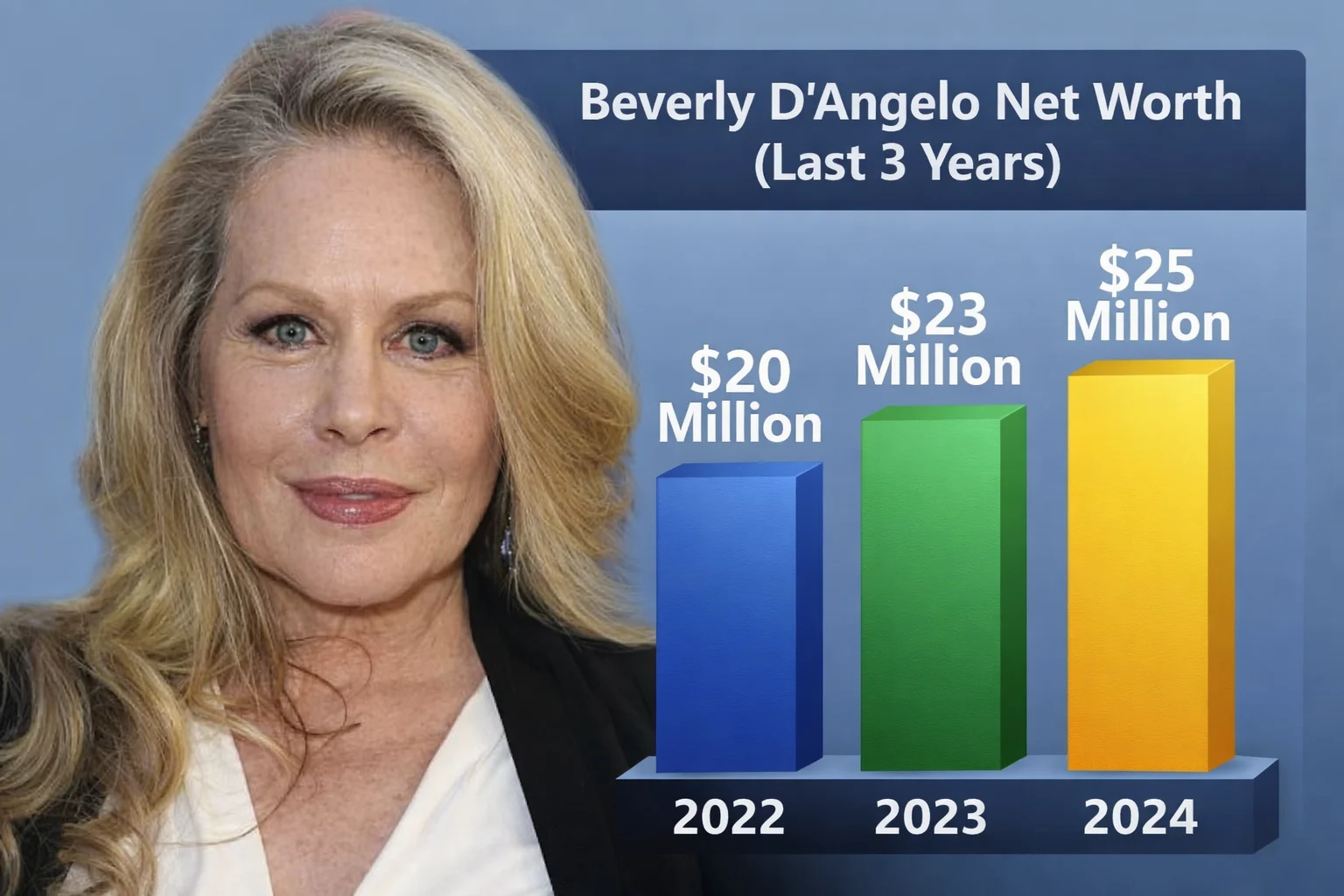
Estimating an individual's net worth at a specific figure, such as $800,000 in 2024, requires examining a multifaceted portfolio of assets, liabilities, and income streams. When public figures, content creators, or private individuals reach a net worth approaching the million-dollar milestone, their financial standing is typically defined by a mix of liquid savings, real estate equity, investments, and business valuation. Evaluating this financial milestone involves breaking down how assets are accumulated, assessing common debts, and understanding the financial planning required to sustain and grow wealth.
Defining Net Worth: The Foundation of Financial Evaluation
To understand what an $800,000 net worth represents, one must first examine the basic economic formula that governs personal finance. Net worth is not simply a measure of annual income or total cash flow; rather, it is the total value of all accumulated assets minus total liabilities.
Assets vs. Liabilities
Assets encompass everything of monetary or exchangeable value that an individual owns. This includes:
- Cash and cash equivalents (checking accounts, high-yield savings, certificates of deposit).
- Investment portfolios (stocks, bonds, mutual funds, exchange-traded funds).
- Retirement accounts (401(k), individual retirement accounts, pensions).
- Real property (primary residences, rental properties, land equity).
- Personal property of significant value (vehicles, jewelry, intellectual property, business equity).
Liabilities, conversely, represent all financial obligations or debts owed to external parties. These commonly include mortgages, auto loans, student debt, credit card balances, and personal business loans. Subtracting the total sum of these liabilities from the gross value of all assets yields the net worth figure.
The Significance of the $800k Milestone
An $800,000 net worth places an individual significantly above the national median for most developed economies. From a financial planning perspective, this level of wealth represents the upper threshold of the "Mass Affluent" category—individuals who have moved beyond living paycheck to paycheck and have built substantial security, but have not yet crossed the multi-million-dollar threshold associated with high-net-worth individuals (HNWIs). At $800k, portfolios often begin generating meaningful passive income through dividends, interest, or rental yields, shifting the focus from pure accumulation to asset protection and tax efficiency.
Breakdown of Wealth Segments in a Mid-Tier Portfolio
A net worth of $800,000 is rarely held entirely in cash. In fact, holding that much liquid cash in a traditional bank account would expose the holder to significant purchasing power erosion due to inflation. Instead, a balanced asset allocation typically spans several distinct categories.
| Asset Class | Typical Percentage | Primary Purpose |
|---|---|---|
| Real Estate Equity | 35% - 50% | Long-term appreciation |
| Retirement / Investments | 30% - 40% | Wealth compounding |
| Liquid Savings & Cash | 10% - 15% | Emergency fund & liquidity |
| Alternative Assets | 0% - 10% | Diversification |
Real Estate Equity
For many individuals holding an $800,000 net worth, real estate forms the bedrock of their financial portfolio. Real estate equity is calculated as the current market value of a property minus the remaining mortgage principal. Even with conservative property valuations, homeownership in major metropolitan areas or suburban markets often contributes several hundred thousand dollars in net equity over a decade or two of consistent mortgage amortization and market appreciation.
Liquid Investments and Retirement Accounts
Equities and fixed-income securities held in brokerage accounts, alongside tax-advantaged retirement vehicles like IRAs and 401(k) plans, form the growth engine of a mid-tier net worth. At this stage, diversification across index funds, blue-chip stocks, and perhaps some bond allocations helps safeguard the portfolio against market volatility while capturing long-term economic growth.
Factors Influencing Personal Net Worth in 2024
Evaluating a financial snapshot from 2024 requires looking at the broader economic environment of that specific period. The year 2024 was characterized by persistent inflation, elevated interest rates compared to the historic lows of the early 2020s, and resilient performance in global equity markets.
The Impact of Interest Rates
High interest rates present a dual-edged sword for individuals with an $800k net worth. On one hand, savers benefit from attractive yields on high-yield savings accounts, money market funds, and Treasury bills, allowing cash reserves to generate substantial risk-free returns. On the other hand, elevated interest rates increase borrowing costs for real estate and business expansion, potentially slowing down debt-fueled asset acquisition.
Inflation and Purchasing Power
Inflationary pressures in 2024 meant that maintaining the real value of an $800,000 portfolio required active management. Assets that failed to outpace inflation effectively lost purchasing power. Consequently, individuals at this wealth tier increasingly leaned toward growth-oriented equities and inflation-hedged real estate rather than holding excess capital in low-yield deposit accounts.
Strategic Financial Planning for Wealth Preservation
Reaching an $800,000 net worth requires discipline, but maintaining and growing that wealth requires deliberate strategy. Financial planners typically advise individuals at this stage to focus on several core pillars: tax optimization, risk management, and estate planning.
Tax-Efficient Investing
As investment portfolios grow, tax drag can significantly eat into annual returns. Utilizing tax-advantaged accounts to their maximum legal limits, harvesting tax losses in taxable brokerage accounts, and carefully managing capital gains distributions are critical practices. For instance, shifting income-generating assets into tax-sheltered vehicles prevents unnecessary tax liabilities from eroding the compounding effect.
Risk Management and Insurance
Protecting an $800,000 net worth from unforeseen catastrophic events is just as important as growing it. Comprehensive insurance coverage—including umbrella liability policies, adequate health and disability insurance, and proper property coverage—ensures that a single lawsuit, medical emergency, or property disaster does not wipe out years of disciplined savings.
Frequently Asked Questions
What does an $800,000 net worth mean in practical terms?
An $800,000 net worth means that the total value of all your assets (cash, investments, real estate, property) exceeds your total liabilities (mortgages, loans, debts) by $800,000. It provides strong financial security, emergency cushioning, and a solid foundation for retirement planning, though it typically still requires active income generation or careful withdrawal strategies to sustain long-term living expenses.
Is $800k enough to retire comfortably?
Whether $800k is sufficient for retirement depends heavily on lifestyle, geographic location, and age. Using the classic 4% safe withdrawal rule, an $800,000 portfolio would generate approximately $32,000 per year in pre-tax income. Combined with social security, pensions, or part-time work, this can provide a comfortable retirement in moderate-cost-of-living areas, though high-cost urban centers may require a larger nest egg.
How are debts factored into a net worth calculation?
Debts are subtracted directly from the total cash value of your assets. For example, if someone owns a home worth $500,000 with a remaining mortgage balance of $300,000, only the net equity of $200,000 contributes to their overall net worth, alongside other assets and liabilities.
What are the best ways to grow a portfolio from $800k toward $1 million?
Reaching the seven-figure milestone from an $800k base typically involves maintaining consistent savings rates, avoiding high-interest consumer debt, allowing tax-advantaged investments to compound, and occasionally rebalancing asset allocations to balance growth potential with risk tolerance.
Does net worth include liquid cash only?
No. Net worth is a comprehensive measure that includes illiquid assets such as real estate, private business equity, vehicles, and retirement accounts alongside liquid cash and publicly traded stocks. Liquid cash is usually only a small fraction of a total net worth portfolio.
Conclusion and Next Actions
Evaluating an individual net worth figure like an $800,000 valuation highlights the importance of balancing liquid reserves with long-term appreciating assets. Whether managing personal finances or analyzing public financial profiles, understanding the underlying components of assets and liabilities provides a realistic view of economic stability. For those approaching or maintaining this financial level, the logical next steps involve conducting an annual portfolio review, consulting certified financial planners for tax mitigation strategies, and ensuring that asset allocations align with long-term personal goals.