The primary amendments for civil rights in the United States are the 13th, 14th, and 15th Amendments (the Reconstruction Amendments) and the 19th, 24th, and 26th Amendments, which expanded voting protections. Together, these provisions prohibit slavery, mandate equal protection under the law, and prevent disenfranchisement based on race, sex, or age.
The United States Constitution was originally drafted without specific protections for individual civil rights, a gap that was partially addressed by the Bill of Rights and later fundamentally transformed by the post-Civil War amendments. As we evaluate the legal landscape in 2026, these constitutional pillars remain the primary mechanisms for challenging discrimination and ensuring that "equal justice under law" is not merely a slogan but a binding legal requirement. Understanding these amendments requires looking beyond their text into how the Supreme Court interprets them and how they empower citizens to seek redress in federal courts.
The Reconstruction Amendments: The Foundation of Civil Rights
The period immediately following the American Civil War saw the most significant expansion of civil rights in the nation’s history. Known as the Reconstruction Amendments, the 13th, 14th, and 15th Amendments were designed to integrate formerly enslaved people into the body politic as full citizens.
The 13th Amendment: Abolition of Slavery and Involuntary Servitude
Ratified in 1865, the 13th Amendment abolished slavery and involuntary servitude, except as punishment for a crime. While the primary goal was the immediate end of chattel slavery, the amendment has been interpreted by modern courts to empower Congress to pass laws against the "badges and incidents" of slavery. This includes contemporary issues such as human trafficking and certain forms of forced labor. In 2026, legal scholars continue to debate the "punishment clause," which has been criticized for its role in the evolution of the American carceral system, but the amendment remains the absolute constitutional barrier against the ownership of one human being by another.
The 14th Amendment: Citizenship, Due Process, and Equal Protection
Perhaps the most litigated part of the Constitution, the 14th Amendment (1868) serves as the bedrock for modern civil rights litigation. It contains three critical clauses:
- The Citizenship Clause: Overturned the Dred Scott decision by granting citizenship to all persons born or naturalized in the United States.
- The Due Process Clause: Prohibits state and local governments from depriving persons of life, liberty, or property without a fair procedure. This clause is the vehicle for "substantive due process," which protects fundamental rights not explicitly mentioned elsewhere, such as the right to privacy.
- The Equal Protection Clause: Requires states to provide equal protection under the law to all persons within their jurisdictions. This clause was the legal basis for Brown v. Board of Education and remains the primary tool for fighting discrimination based on race, gender, and other protected characteristics.
The 15th Amendment: The Right to Vote Regardless of Race
Ratified in 1870, the 15th Amendment prohibits the federal government and each state from denying a citizen the right to vote based on "race, color, or previous condition of servitude." While this amendment initially failed to prevent the rise of Jim Crow laws like literacy tests and poll taxes, it provided the constitutional authority for the landmark Voting Rights Act of 1965. In the current legal environment of 2026, the 15th Amendment continues to be a central focus in cases involving redistricting and "vote dilution" where minority communities’ political power is structurally diminished.
Expanding the Franchise: Gender, Age, and Financial Barriers
The struggle for civil rights did not end with the Reconstruction Era. Over the following century, several amendments were ratified to remove specific barriers to political participation, ensuring that the democratic process was accessible to a broader segment of the population.
The 19th Amendment: Women’s Suffrage
Ratified in 1920, the 19th Amendment guaranteed that the right of citizens to vote shall not be denied or abridged by the United States or by any State on account of sex. This was the culmination of decades of activism by the suffrage movement. While it did not immediately grant all women the practical ability to vote—as many women of color still faced racial barriers—it removed the legal justification for gender-based disenfranchisement. Today, this amendment is cited not just in voting cases, but as a symbolic and legal reinforcement of gender equality in the public sphere.
The 24th Amendment: Abolishing the Poll Tax
During the Jim Crow era, many Southern states implemented poll taxes to prevent low-income Black citizens from voting. The 24th Amendment, ratified in 1964, prohibited the use of poll taxes in federal elections. The Supreme Court later extended this prohibition to state elections via the 14th Amendment’s Equal Protection Clause in Harper v. Virginia State Board of Elections. This amendment is a critical protection against wealth-based discrimination in the exercise of constitutional rights.
The 26th Amendment: Lowering the Voting Age
In response to the Vietnam War, where 18-year-olds were drafted to fight but could not vote, the 26th Amendment was ratified in 1971. It lowered the minimum voting age from 21 to 18. This amendment is unique for its rapid ratification, reflecting a national consensus that those old enough to serve the country in the military must have a voice in its governance.
Summary of Civil Rights Amendments
The following table provides a quick reference to the amendments that have shaped civil rights protections in the U.S. legal system.
| Amendment | Year Ratified | Primary Function | Key Impact on Civil Rights |
|---|---|---|---|
| 13th | 1865 | Abolished slavery | Ended legal chattel slavery and involuntary servitude. |
| 14th | 1868 | Defined citizenship/Equal protection | Established that states cannot deny equal protection or due process. |
| 15th | 1870 | Voting rights (Race) | Prohibited voting discrimination based on race or color. |
| 19th | 1920 | Voting rights (Sex) | Guaranteed women the right to vote nationwide. |
| 23rd | 1961 | D.C. Electoral votes | Gave residents of the District of Columbia the right to vote for President. |
| 24th | 1964 | Abolished poll taxes | Removed financial barriers to voting in federal elections. |
| 26th | 1971 | Voting rights (Age) | Lowered the national voting age to 18 years old. |
The Bill of Rights and Civil Liberties: The First, Fourth, and Fifth Amendments
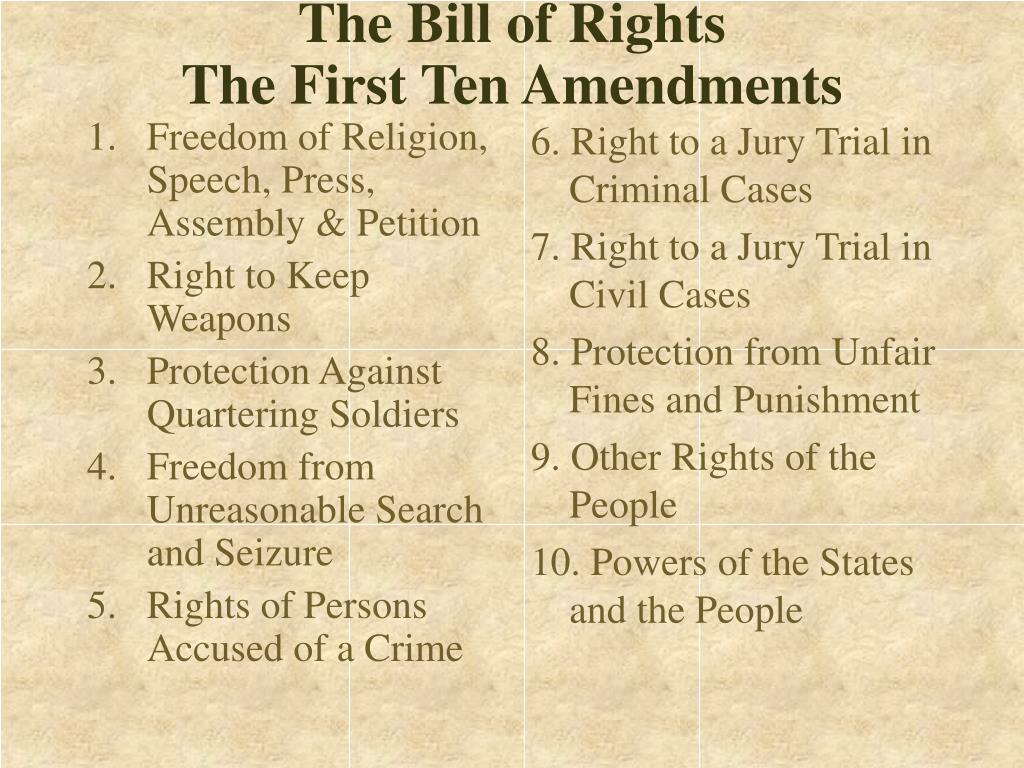
While the Reconstruction Amendments are the primary "civil rights" amendments (focusing on equal treatment), the Bill of Rights provides the "civil liberties" (freedoms from government interference) that make rights movements possible. In the context of 2026, the interaction between these two categories is vital.
The First Amendment and the Right to Protest
Civil rights progress in the United States has almost always been driven by the exercise of First Amendment rights. The freedoms of speech, assembly, and petition allow marginalized groups to organize, protest, and demand legislative change. Without the First Amendment, the Civil Rights Movement of the 1960s would have lacked the legal protection necessary to conduct marches, sit-ins, and public advocacy.
Due Process and Protection from Unreasonable Seizure
The Fourth and Fifth Amendments protect individuals from overreach by law enforcement. The Fourth Amendment's protection against "unreasonable searches and seizures" and the Fifth's guarantee of "due process" are frequently invoked in civil rights cases involving police misconduct or systemic bias in the criminal justice system. In 2026, these amendments are at the center of debates regarding digital privacy, surveillance technology, and the use of artificial intelligence in policing.
The Doctrine of Incorporation: Applying Rights to the States
A technical but essential concept in civil rights law is Incorporation. Originally, the Bill of Rights applied only to the federal government. For example, a state government could theoretically restrict free speech without violating the First Amendment.
This changed with the 14th Amendment. Through a series of Supreme Court decisions in the 20th century, the Court ruled that the Due Process Clause of the 14th Amendment "incorporates" most of the Bill of Rights, making them applicable to state and local governments. This was a revolutionary shift because it allowed citizens to sue state officials in federal court for violations of their fundamental liberties. Today, almost all civil rights litigation relies on the fact that these protections are universal across all levels of government.
Legislative Enforcement: From Constitution to Code
The amendments themselves are often broadly phrased, which is why they include "enforcement clauses" giving Congress the power to pass appropriate legislation. These clauses are the constitutional "teeth" that allow for the creation of specific statutes.
- The Civil Rights Act of 1964: Relies on the 14th Amendment and the Commerce Clause to ban discrimination in public accommodations and employment.
- The Voting Rights Act of 1965: Primarily based on the enforcement power granted by the 15th Amendment.
- The Americans with Disabilities Act (ADA): While passed much later, it draws on the spirit of the 14th Amendment to ensure equal access and opportunity for individuals with disabilities.
In 2026, these statutes are the primary tools used by the Department of Justice Civil Rights Division and private litigants to address modern issues like algorithmic bias, housing discrimination, and accessibility in the digital age.
The State of Civil Rights in 2026
As of 2026, the interpretation of these amendments continues to evolve. The federal judiciary is currently grappling with how the 14th Amendment applies to new technologies and changing social norms.
One of the most significant areas of legal development involves Substantive Due Process. This is the legal theory that the 14th Amendment protects certain fundamental rights—such as the right to marry, the right to bodily autonomy, and the right to parental control over education—even if they are not explicitly written in the text. Following several high-profile Supreme Court shifts in the early 2020s, the focus in 2026 has turned toward state constitutions as additional layers of protection for civil rights, while federal amendments provide the minimum "floor" of rights that no state can drop below.
Furthermore, Section 5 of the 14th Amendment (the enforcement power) remains a point of contention. Some argue that Congress should use this power more aggressively to protect voting rights and reproductive healthcare, while others believe that the Supreme Court should limit Congressional reach to maintain a balance of power between the states and the federal government.
Frequently Asked Questions
What is the difference between civil rights and civil liberties?
Civil rights refer to the right to be free from unequal treatment (discrimination) based on certain protected characteristics like race, gender, or disability. These are largely found in the 14th and 15th Amendments. Civil liberties are basic freedoms guaranteed by the Bill of Rights (like free speech and religion) that protect individuals from government tyranny.
Can a constitutional amendment be repealed?
Yes, a constitutional amendment can be repealed by a subsequent amendment. The only time this has occurred in U.S. history was when the 21st Amendment repealed the 18th Amendment (Prohibition). Repealing a civil rights amendment would require a two-thirds vote in both houses of Congress and ratification by three-fourths of the states, making it an extremely difficult process.
Does the 14th Amendment apply to private businesses?
Generally, no. The 14th Amendment says "No State shall..." meaning it applies to government actions (state actors). However, the Civil Rights Act of 1964, which was passed using Congressional powers linked to the 14th Amendment and the Commerce Clause, does apply to private businesses that are open to the public or have a certain number of employees.
Why is the 14th Amendment considered the most important for civil rights?
The 14th Amendment is foundational because it created the "Equal Protection Clause" and the "Due Process Clause." These two provisions allow the federal government to ensure that states do not discriminate against their citizens. It also serves as the bridge that applies the Bill of Rights to the states through the doctrine of incorporation.
What are the "badges and incidents" of slavery under the 13th Amendment?
This legal term refers to the lingering effects or structures of the slave system, such as racial profiling or restricted movement. Under the 13th Amendment, Congress has the power to pass laws that aim to eliminate these vestiges, though the Supreme Court has historically been cautious about how far this power extends.
Next Steps for Protecting Your Rights
If you believe your civil rights—as guaranteed by these amendments—have been violated, the following steps are generally recommended:
- Document the Incident: Keep detailed records of dates, times, individuals involved, and any correspondence related to the alleged discrimination or rights violation.
- File a Complaint with the EEOC: For employment discrimination, the Equal Employment Opportunity Commission is the federal agency responsible for enforcing civil rights laws in the workplace.
- Contact the DOJ: For violations of voting rights or police misconduct, you can submit a report to the Civil Rights Division of the Department of Justice.
- Consult Legal Counsel: Constitutional law is highly complex. A civil rights attorney can help you determine if your case meets the specific legal thresholds for a federal lawsuit under statutes like 42 U.S.C. § 1983, which allows individuals to sue government officials for civil rights violations.
Understanding the amendments is the first step in participating in a democracy. These documents are living frameworks that require constant vigilance and legal engagement to remain effective in protecting all citizens.