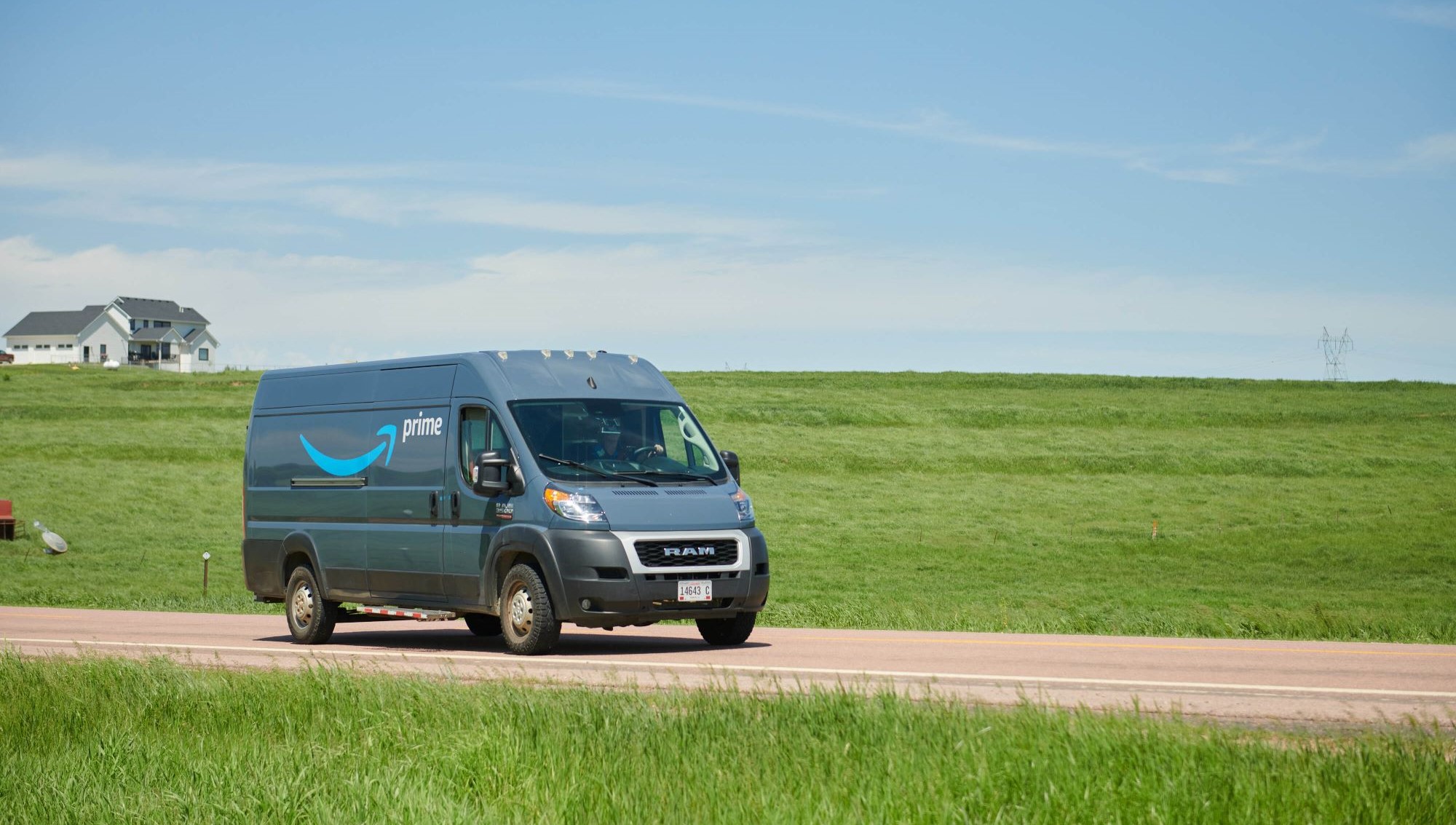
Amazon has significantly expanded its rural delivery reach by transitioning from a reliance on third-party carriers to a decentralized, partner-heavy logistics model. Through programs like Amazon Hub Delivery and specialized Rural Delivery Service Partners (DSPs), the company now utilizes local small businesses and optimized routing technology to ensure that remote addresses receive Prime-level service with increased frequency and reliability.
Rural logistics have historically represented the "final frontier" for e-commerce. While urban centers benefit from high population density and short distances between stops, rural areas present the opposite: sprawling landscapes, unpaved roads, and long distances between customers. In 2026, Amazon’s strategy for these regions has matured into a sophisticated multi-modal system that prioritizes local partnerships over massive centralized hubs.
The Evolution of the Rural Logistics Gap
For much of the last decade, rural customers occupied a secondary tier of e-commerce convenience. Delivery times often stretched to five or seven days, and the "last mile" was almost exclusively handled by the United States Postal Service (USPS) through its Parcel Select service. While the USPS remains a vital partner for the most isolated locations, Amazon has aggressively moved to bring more of this volume "in-house" or under its direct operational umbrella.
The primary challenge in rural delivery is the "cost-per-stop." In a city like New York or Chicago, a delivery driver might drop off 30 packages in a single apartment building. In rural Wyoming or Maine, that same driver might travel 15 miles between two stops. To bridge this gap, Amazon has moved away from the traditional "hub-and-spoke" model where all packages originate from a distant metropolitan fulfillment center. Instead, the 2026 model focuses on micro-logistics and community integration.
Amazon Hub Delivery: The Backbone of Rural Expansion
The most significant shift in rural expansion is the Amazon Hub Delivery program. This initiative represents a departure from the traditional professional courier model. Instead of hiring full-time drivers to navigate winding country roads, Amazon partners with existing small businesses—such as florists, coffee shops, hardware stores, and gas stations—to perform the final delivery leg.
How the Partnership Works for Small Businesses
In 2026, thousands of rural businesses have integrated Amazon delivery into their daily operations. These businesses are not required to own a fleet of vans. Instead, they use their existing staff and vehicles to deliver a set number of packages within a specific radius of their storefront.
- Package Receipt: Amazon delivers a daily shipment of sorted packages to the partner business each morning.
- Flexible Delivery: The business owner has the flexibility to deliver these packages at any point during their operating hours, provided they meet the delivery window.
- Compensation: Partners are typically paid per package delivered. In many rural communities, this provides a critical secondary revenue stream that helps small businesses remain viable despite fluctuating local foot traffic.
This model solves the density problem. A local florist is already driving across the county to deliver arrangements; adding five Amazon packages to that route makes the trip significantly more profitable for the business and more efficient for Amazon.
Requirements and Eligibility
To participate in the Hub Delivery program, rural businesses must meet specific criteria designed to ensure package safety and delivery reliability:
- Secure Storage: Businesses must have a dedicated, climate-controlled area to store packages before they are loaded for delivery.
- Staffing: The business must have reliable staff members who can pass background checks, as they will be handling customer property.
- Technology Integration: Partners use the Amazon Chime and dedicated delivery apps to scan packages and confirm "proof of delivery" via photos, ensuring the same level of tracking visibility found in urban areas.
Specialized Rural DSPs (Delivery Service Partners)
While the Hub Delivery program handles smaller volumes, Amazon has also adapted its Delivery Service Partner (DSP) program for rural terrains. Unlike urban DSPs that utilize the standard blue Amazon Prime vans, rural DSPs often employ specialized equipment.
In 2026, rural DSPs are increasingly utilizing four-wheel-drive vehicles and smaller, more agile vans capable of navigating steep grades and unpaved driveways. Amazon provides these partners with specialized training focused on "Rural On-Road" (ROR) safety. This training covers topics such as wildlife encounters, low-traction driving, and "no-turn" navigation—preventing drivers from getting stuck in areas where cell service is non-existent.
Furthermore, Amazon has adjusted the "route density" metrics for rural DSPs. In urban areas, a driver's performance is measured by the number of packages delivered per hour. In rural contracts, the metric shifts toward route completion and safety, acknowledging that a 100-mile route with 50 stops is just as demanding as a 10-mile route with 200 stops.
Prime Air: The Role of Drone Delivery in 2026
By 2026, drone delivery has moved beyond the experimental phase and into targeted rural and suburban deployment. Amazon’s Prime Air drones, specifically the MK30 model, are now operational in several rural clusters across the United States, United Kingdom, and Italy.
Drones are particularly effective for "high-urgency, low-weight" items in rural areas, such as medicines, small electronics, or household essentials. Instead of a delivery van driving 40 minutes round-trip for a single bottle of infant ibuprofen, a drone can complete the delivery in under 15 minutes.
Technical Capabilities of the MK30
- Range: Approximately 10–15 kilometers from the base station.
- Weather Tolerance: Capable of flying in light rain and various temperature extremes common in rural climates.
- Safety Systems: Features "sense-and-avoid" technology to navigate around trees, power lines, and chimneys without human intervention.
While drones do not replace the traditional delivery van, they act as a "pressure valve" for the rural logistics network, taking the most inefficient small-item deliveries off the road.
Technological Innovations: Overcoming Mapping and Addressing Hurdles
One of the greatest obstacles to rural delivery has always been the inaccuracy of standard GPS mapping. Rural addresses are often "calculated" rather than "verified," leading drivers to the wrong side of a creek or a locked gate miles from the actual residence.
Amazon has addressed this through its proprietary Map Error Correction (MEC) system. By leveraging data from millions of Flex and DSP deliveries, Amazon’s AI builds a high-resolution map that includes:
- Gate Codes and Access Points: Verified locations for where a driveway actually begins.
- Turn-Around Points: Identifying where a large van can safely turn around on a narrow road.
- Offline Navigation: Rural drivers’ devices now download local map data automatically, allowing for seamless GPS guidance even when cellular towers are out of reach.
Additionally, Amazon utilizes What3Words integration and refined geofencing to ensure that "front porch" delivery actually means the front porch, even if the porch is 500 yards away from the public road.
Sustainability and the Rural EV Challenge
As Amazon pushes toward its "Shipment Zero" goal—aiming for 50% of all shipments to be net-zero carbon by 2030—the rural expansion faces a unique sustainability challenge. Electric vehicles (EVs) that perform perfectly in stop-and-go city traffic often struggle with the long distances and lack of charging infrastructure in the countryside.
In 2026, Amazon has addressed this by:
- In-Hub Charging: Providing grants to Rural DSPs to install high-speed DC fast chargers at their home stations.
- Hybrid Routing: Utilizing Rivian electric delivery vessels for shorter rural "loops" while reserving high-efficiency internal combustion or hybrid vehicles for the most remote "long-haul" routes.
- Local Carbon Offsets: Partnering with rural land conservation projects to offset the inevitable footprint of long-distance ground transportation in areas where EVs are not yet viable.
Comparison of Amazon Rural Delivery Methods (2026)
| Feature | Amazon Hub Delivery | Rural DSP (Standard) | Prime Air (Drone) | Amazon Flex (Gig) |
|---|---|---|---|---|
| Primary Operator | Local Small Businesses | Independent Logistics Co. | Autonomous Systems | Independent Contractors |
| Ideal Terrain | Small towns/villages | Sprawling rural counties | 10km radius of station | Suburban-Rural fringe |
| Vehicle Type | Personal/Business vehicle | 4WD Vans / Box Trucks | MK30 Hexacopter | Personal vehicle |
| Capacity | 20–50 packages/day | 150–250 packages/day | 1 package per flight | 30–60 packages/block |
| Key Advantage | Uses local knowledge | High volume/Reliability | Extreme speed | Scalability during peaks |
Economic Impact on Rural Communities
The expansion of Amazon’s reach is more than a logistical feat; it is an economic driver for rural regions. By 2026, the Hub Delivery program has become a vital lifeline for small-town main streets. The income generated by delivering Amazon packages often covers the rent or utility costs for a struggling storefront, allowing them to continue serving their community with their primary goods and services.
Furthermore, the creation of Rural DSP centers brings technical and managerial jobs to areas where employment options were previously limited to agriculture or retail. These centers often serve as the largest employers in their respective counties, offering competitive wages and benefits that were once only available in larger cities.
Managing Consumer Expectations: Speed vs. Reliability
In rural areas, Amazon has shifted its marketing focus from "Same-Day Delivery" to "Reliable Delivery." While Prime members in Seattle might expect a package in four hours, a Prime member in rural Montana prioritizes knowing exactly when the package will arrive and ensuring it isn't left at the end of a mile-long driveway in the rain.
Amazon’s "Delivery Day" feature is heavily utilized in rural areas. By consolidating multiple orders into a single weekly delivery, Amazon can optimize the route for the driver and reduce the number of trips to remote locations. This not only lowers the environmental impact but also ensures that rural residents receive all their items at once, often via a driver they have come to recognize as a regular part of their community.
Frequently Asked Questions
How can a small business join the Amazon Hub Delivery program?
Small businesses can apply through the official Amazon Hub Delivery portal. Eligibility is based on the business's location relative to existing delivery gaps, their ability to store packages securely, and their staffing levels. Amazon provides the necessary software and training, and there is generally no upfront cost for the business to join.
Is Amazon still using USPS for rural deliveries in 2026?
Yes, the USPS remains a critical partner. While Amazon has shifted a large percentage of its volume to its own network and Hub Partners, the "Last Mile" to the most geographically isolated homes—such as those in deep wilderness or islands—is still frequently handled by the Postal Service due to their universal service mandate.
Do rural deliveries cost more for Prime members?
No. Amazon maintains a consistent Prime membership fee regardless of the customer's location. The expansion of the Hub and DSP networks is designed to lower Amazon's internal costs of delivery, allowing them to maintain the same consumer price point for rural residents as they do for urban ones.
What happens if a rural delivery driver cannot access my property?
In 2026, the Amazon delivery app includes detailed "driver notes" and photo-verified access points. If a driver cannot reach a home due to a washed-out road or locked gate, they are instructed to contact the customer via the app for instructions. If no contact is made, packages are often redirected to the nearest Amazon Hub Locker or Counter (often located in a nearby town) for secure pickup.
Are Amazon's rural delivery drones safe?
The MK30 drones used in 2026 are equipped with multiple layers of redundancy and advanced AI "sense-and-avoid" technology. They are certified by the FAA (in the US) and equivalent international bodies. These drones are designed to be "quiet" and non-intrusive, and they do not use cameras for surveillance, only for navigation and obstacle detection.
Recommended Next Action for Rural Residents and Businesses
For rural residents looking to optimize their delivery experience, the best next step is to update your "Delivery Instructions" in the Amazon app. Ensure your "drop point" is accurately pinned on the map and provide gate codes or specific descriptions of your driveway entrance.
For rural small business owners, visiting the Amazon Hub Delivery website to check your zip code's eligibility is a low-risk way to explore an additional revenue stream. As Amazon continues to expand its reach through 2026 and beyond, being the "delivery heart" of your local community can provide significant financial stability.