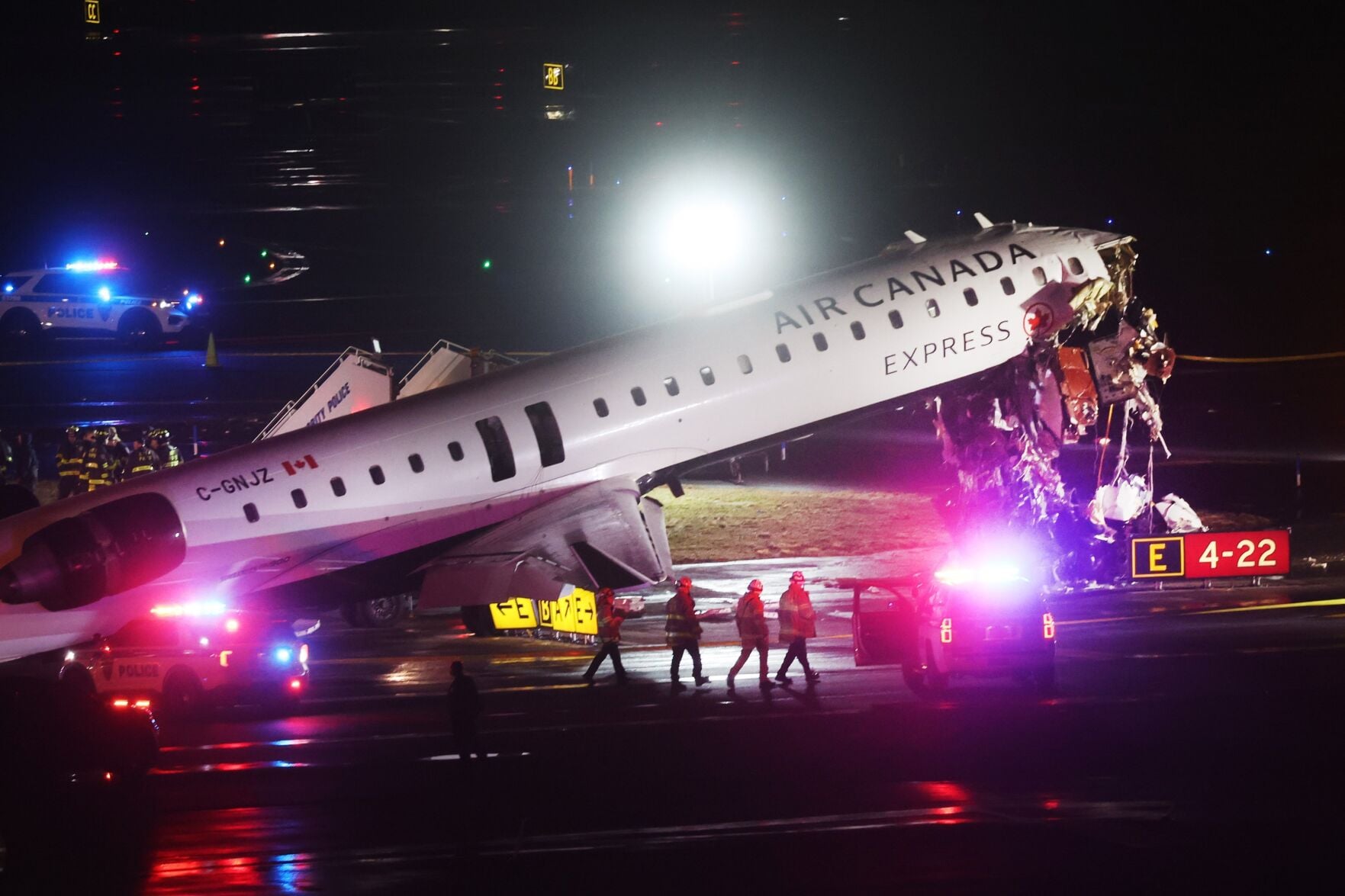
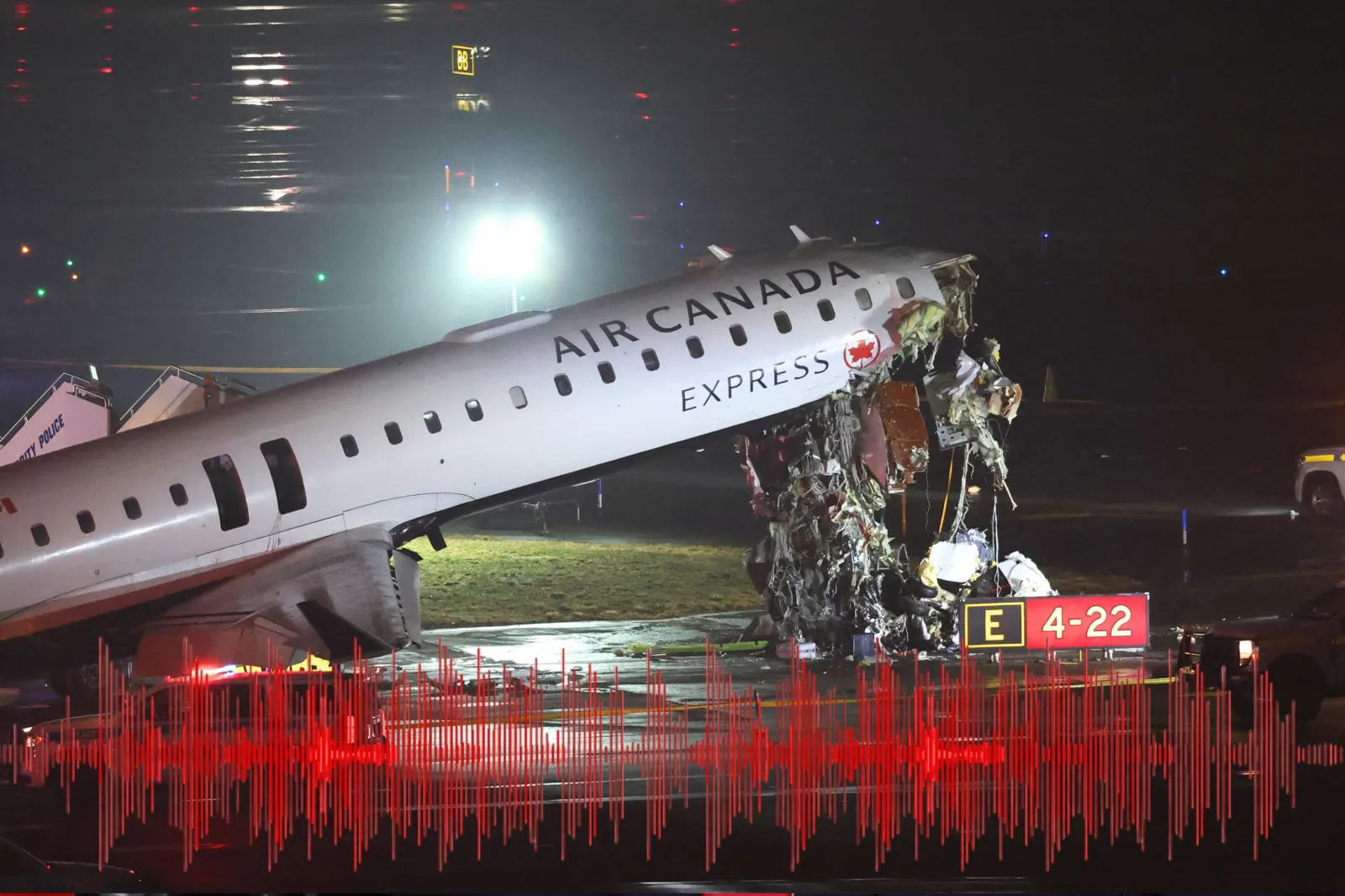
The most notable incident involving Air Canada at LaGuardia Airport (LGA) occurred in June 2015, when an Air Canada Express flight operated by Jazz Aviation declared an emergency due to a landing gear malfunction. While the aircraft landed safely without injuries, the event remains a primary case study for emergency response and regional aircraft maintenance protocols at New York’s most congested airport.
Understanding the Air Canada Express Flight 7332 Incident
In June 2015, Air Canada Express Flight 7332, a De Havilland Dash 8-300 (DHC-8-300), became the center of a significant safety event at LaGuardia Airport. The flight, originating from Toronto Pearson International Airport (YYZ), reported an issue with its landing gear during the approach to the New York City airspace. As the pilots prepared for descent, instrumentation indicated that the landing gear had failed to lock into the proper position for touchdown.
The flight crew immediately initiated standard emergency protocols, which included notifying Air Traffic Control (ATC) at LaGuardia and the New York TRACON (Terminal Radar Approach Control). The decision was made to perform a "fly-by" near the tower so that ground observers could visually inspect the state of the landing gear. This is a common procedure in aviation when cockpit indicators conflict with the physical state of the aircraft's mechanical systems.
Upon confirmation that the gear appeared to be down, though its locked status remained unverified by the onboard computers, the pilots prepared for an emergency landing. Emergency response teams from the Port Authority of New York and New Jersey (PANYNJ) were dispatched to Runway 4/22. The aircraft touched down safely, and subsequent inspections revealed a sensor malfunction rather than a total mechanical collapse. However, the incident resulted in the temporary closure of one of LaGuardia’s two primary runways, causing a ripple effect of delays across the Northeast corridor.
Technical Analysis: The Dash 8 Landing Gear System
The De Havilland Dash 8 is a workhorse of regional aviation, known for its ruggedness and ability to operate on shorter runways. However, its landing gear system is complex, relying on a combination of hydraulic pressure, mechanical locks, and proximity sensors to ensure safe operation.
In the case of the 2015 incident, the investigation focused on the Proximity Sensor Electronic Unit (PSEU). This system is responsible for monitoring the position of the landing gear and doors. If a sensor fails or becomes misaligned due to vibration or debris, it can send a "disagree" signal to the cockpit. This forces the crew to treat the situation as a potential gear-up landing, which requires foam on the runway (in extreme cases) and the evacuation of passengers upon landing.
| Technical Component | Function in Incident | Failure Mode |
|---|---|---|
| Hydraulic Actuator | Physically moves the gear legs. | Functional; moved gear to down position. |
| Down-Lock Sensor | Signals the cockpit that gear is safe. | Failed; provided inconsistent "unsafe" reading. |
| NLG (Nose Landing Gear) | Supports the front of the aircraft. | Most common site for indicator errors in regional turboprops. |
| Emergency Extension | Manual backup for gear deployment. | Employed by crew as a precautionary measure. |
The Unique Challenges of Operating at LaGuardia Airport
To understand why an Air Canada incident at LaGuardia attracts significant attention, one must look at the physical and operational constraints of the airport itself. LaGuardia is often described as one of the most challenging major airports in North America for both pilots and controllers.
Runway Configuration and "The Square"
LaGuardia operates with two intersecting runways: 4/22 and 13/31. Unlike the parallel runways found at JFK or Newark, LGA’s layout requires precise timing and leaves little room for error. When an Air Canada flight experiences a technical issue on the runway, the entire airport effectively grinds to a halt. There is no "spare" runway to handle the overflow, leading to immediate diversions to airports as far away as Philadelphia or Boston.
High Traffic Density
Air Canada operates dozens of daily flights between Toronto, Montreal, and LaGuardia. These "shuttle" flights are high-frequency and rely on quick turnarounds. Any incident, even a minor ground clip or a "bird strike" (which are common at LGA due to its proximity to Flushing Bay), disrupts the tightly choreographed schedule of the transborder corridor.
Proximity to Water
LGA is surrounded by water on three sides. This creates unique meteorological conditions, such as sudden fog or wind shears, which can exacerbate minor technical issues into major safety concerns. For Air Canada pilots, the approach into LGA—particularly the "River Visual" to Runway 13—demands high levels of situational awareness.
Historical Safety Context and Ground Incidents
While the 2015 landing gear event is the most documented technical failure, Air Canada's history at LaGuardia includes various "ground incidents" that reflect the cramped nature of the airport's older infrastructure. Prior to the massive renovation completed in the early 2020s, the gate areas at Terminal B were notoriously tight.
Wing-Clip Incidents and Taxiway Congestion
In several instances over the past decade, Air Canada aircraft (specifically the Embraer 175 and 190 series used for regional routes) have been involved in "wing-tip" contact with other aircraft or ground equipment. These are categorized as incidents rather than accidents by the National Transportation Safety Board (NTSB), but they require rigorous safety investigations and structural integrity checks.
The cause of these incidents is almost always attributed to "tight alleyways" and "congested ramp areas." In 2026, the modern Terminal B and C layouts have significantly reduced these risks by providing wider taxi lanes and digitized ground movement radar, but historical data shows that Air Canada, like all major carriers at LGA, had to navigate a remarkably small footprint for many years.
Emergency Protocols for Passengers and Crew
When an incident occurs at LaGuardia involving a Canadian carrier, a complex set of international and domestic protocols is activated. This ensures that safety is maintained and that the subsequent investigation is thorough.
- Pilot Discretion and Declaration: The Captain has the final authority to declare an emergency ("Mayday") or a state of urgency ("Pan-Pan"). Once declared, the aircraft receives priority handling from ATC.
- PANYNJ Fire & Rescue: The Port Authority maintains a specialized Aircraft Rescue and Firefighting (ARFF) unit at LGA. In the event of an Air Canada incident, these units are positioned at predetermined points along the runway before the aircraft touches down.
- TSB and NTSB Cooperation: Since Air Canada is a Canadian entity, any significant incident on U.S. soil involves both the NTSB (United States) and the Transportation Safety Board of Canada (TSB). The NTSB leads the investigation if the incident occurs in the U.S., but the TSB appoints an "Accredited Representative" to monitor the findings.
- Passenger Management: Following an emergency landing, passengers are either deplaned on the runway via slides (if there is a fire threat) or towed to the gate for a normal deplanement. Air Canada’s "Special Assistance Team" is then activated to handle rebooking and psychological support.
Passenger Rights and Compensation in Aviation Incidents
For travelers involved in an Air Canada incident at LaGuardia, the legal framework for compensation is governed by both the Montreal Convention and the Canadian Air Passenger Protection Regulations (APPR).
Because these flights are international (transborder), the rules are different than domestic U.S. flights. If a flight is delayed or canceled due to a technical incident (like a landing gear failure), the airline is generally required to provide:
- Communication regarding the status of the flight.
- Food and drink in reasonable quantities.
- Hotel accommodation and transportation for overnight delays.
- Rebooking on the next available flight, including on competitor airlines if necessary.
However, safety-related incidents are often classified as "required for safety purposes," which can limit the amount of cash compensation passengers receive compared to "controllable" delays like crew scheduling. It is essential for passengers to retain all boarding passes and incident reports provided by the airline at the gate.
Modern Safety Improvements at LaGuardia (Status 2026)
By 2026, the frequency of technical incidents at LaGuardia has decreased due to several factors. Air Canada has modernized its regional fleet, moving away from older turboprops to more advanced aircraft like the Airbus A220 (formerly the Bombardier CSeries). These aircraft feature highly redundant flight control systems and advanced diagnostic tools that can predict mechanical failures before they occur.
Furthermore, the "New LaGuardia" infrastructure includes:
- Wider Taxiways: Reducing the risk of wing-clip incidents.
- Engineered Materials Arrestor System (EMAS): These are "crushable concrete" blocks at the end of runways designed to safely stop an aircraft that overruns the runway. While not needed in the 2015 Air Canada incident, they provide a critical safety net for LGA’s short runways.
- ASDE-X Technology: Advanced Surface Detection Equipment that allows controllers to see the precise position of every aircraft and vehicle on the ground, even in heavy fog, preventing runway incursions.
Comparison of Recent Incident Types at LGA
The following table categorizes the types of incidents Air Canada and its regional partners have encountered at LaGuardia over the last operational period.
| Incident Category | Frequency | Primary Cause | Typical Outcome |
|---|---|---|---|
| Mechanical (In-flight) | Rare | Sensor failure/Hydraulics | Emergency landing; No injuries. |
| Ground Collision | Moderate | Congested Ramp/Taxiway | Minor skin damage; Flight cancellation. |
| Bird Strike | Common | Proximity to Flushing Bay | Precautionary return to airport. |
| Diversion (Weather) | High | LGA Wind/Visibility Limits | Landing at JFK, EWR, or PHL. |
| Runway Incursion | Very Rare | Pilot/ATC communication error | "Go-around" or aborted takeoff. |
FAQ: Air Canada LaGuardia Safety and Operations
What was the most serious Air Canada incident at LaGuardia?
The June 2015 landing gear emergency involving a Jazz Aviation Dash 8 is considered the most significant technical incident in recent history. Although it resulted in no injuries, it caused a major disruption to airport operations and required a full emergency response.
Is Air Canada safe to fly into LaGuardia?
Yes. Air Canada maintains a high safety rating and follows the rigorous standards set by Transport Canada and the FAA. The incidents reported at LGA are generally minor and reflective of the airport's difficult operating environment rather than systemic failures within the airline.
What should I do if my Air Canada flight is involved in an incident at LGA?
Follow all crew instructions immediately. Once on the ground and in a safe location, contact Air Canada ground staff for rebooking. Under the Canadian APPR, you are entitled to assistance and potential compensation depending on the nature of the delay.
How does the new LaGuardia terminal affect Air Canada safety?
The redevelopment of Terminal B has significantly improved safety by creating more space for aircraft movement on the ground. The modernized gates and taxiway layouts have drastically reduced the likelihood of ground collisions and wing-clips that were common in the old, cramped infrastructure.
Does Air Canada use the same runways as other airlines at LGA?
Yes. All airlines at LaGuardia share the same two runways (4/22 and 13/31). Air Canada pilots undergo specific simulator training for the unique approach paths required at LGA, such as the "Parkway Visual" to Runway 31.
Final Recommendations for Travelers
When flying Air Canada to or from LaGuardia, it is advisable to monitor flight status via the Air Canada mobile app, which provides real-time updates on technical delays or diversions. Given the congested nature of the New York airspace and the operational constraints of LGA, travelers should always allow for extra connection time. In the event of a mechanical incident, passengers should request a written "Statement of Delay" from the gate agent to facilitate any future insurance or compensation claims.