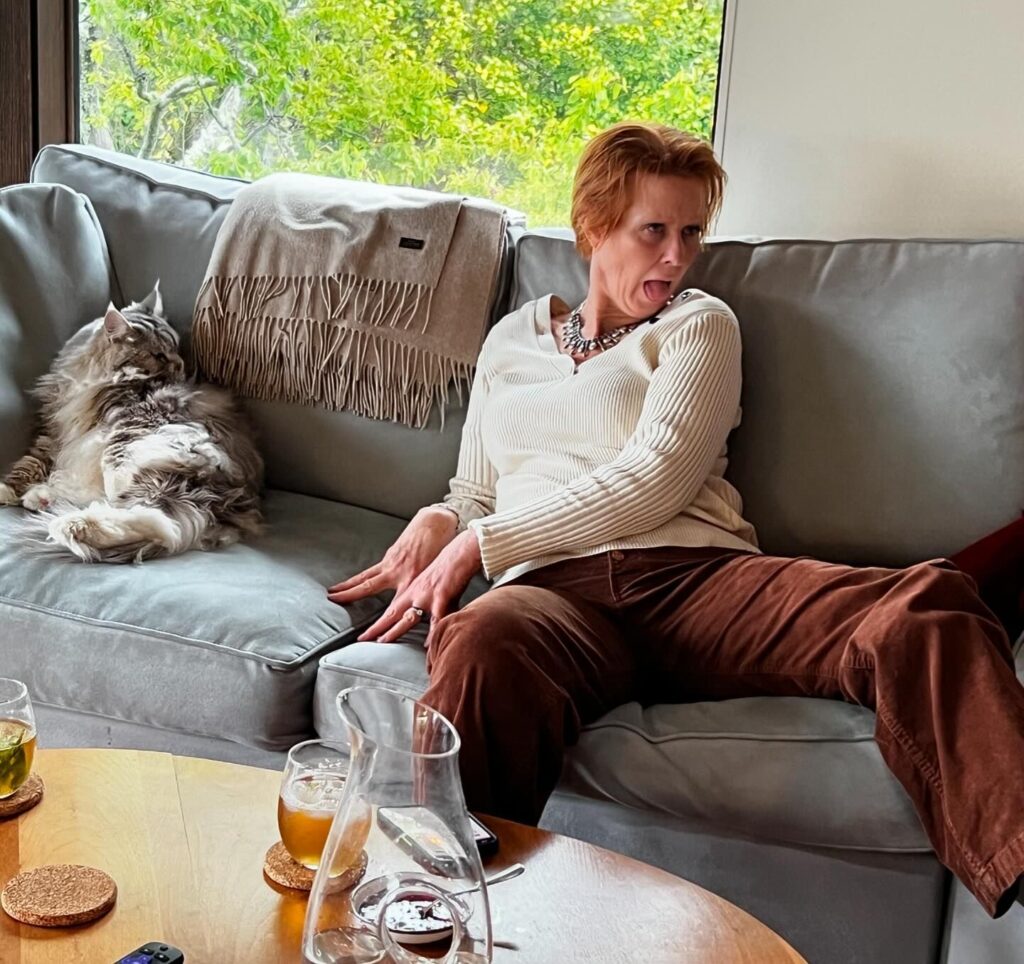
Cynthia Nixon’s career is defined by a rare ability to evolve across mediums, transitioning from a celebrated child actor to a powerhouse of stage, television, and political activism. Her professional trajectory reflects an instinct for shifting roles—moving from the stability of long-term television projects to the rigorous, transformative demands of live theater—while consistently using her platform to influence social and political landscapes in the United States.
The Foundation: Early Mastery of the Craft
The trajectory of Cynthia Nixon’s career did not begin in a singular, explosive moment but rather through a steady accumulation of experience in the 1980s. Her professional origin story is rooted in the theater, an environment that demands a specific type of discipline. Unlike film, where a scene can be captured in multiple takes, the stage requires a consistent, sustained performance. This environment forced Nixon to adapt early to the rigors of technical acting.
During her formative years, Nixon balanced traditional education with professional engagements, including appearances on Broadway as a teenager. This duality is essential to understanding her later choices; she learned early on that success was not merely about being cast, but about developing the stamina required for a multi-decade career. Her work in the 1980s and 1990s, spanning productions such as The Real Thing and Indiscretions, demonstrated a preference for complex, dialogue-heavy material. By selecting roles that prioritized intellectual depth over commercial spectacle, she established a professional identity that prioritized the work itself.
The Television Pivot: Sex and the City as a Catalyst
While Nixon had built a respectable resume before the late 1990s, her role as Miranda Hobbes in Sex and the City (1998–2004) represented a fundamental shift in her public profile and career capacity. The character of Miranda was a departure from the traditional archetypes seen on network television at the time; she was defined by her professional ambition, sharp cynicism, and pragmatic approach to interpersonal relationships.
Adaptation, in this context, was two-fold. First, Nixon had to adapt to the grueling pace of a television schedule, which requires actors to inhabit a character over the course of several years and dozens of episodes. Second, she had to navigate the transition from a stage actor known to theater enthusiasts to a household name. The success of the show afforded her the financial and creative autonomy to pursue projects that interested her personally, rather than roles that were merely commercially viable. This period serves as the primary example of how Nixon utilized a popular commercial vehicle to pivot into more selective, curated artistic choices.
Theater as a Constant: Returning to the Roots
For many actors, the jump to television stardom leads to a career defined solely by screen work. Nixon’s career trajectory is distinct because of her consistent return to the stage. Her Tony Award-winning performance in Rabbit Hole (2006) and her subsequent work in plays like Wit and The Little Foxes indicate a deliberate strategy of returning to the theater to "re-calibrate."
Theater requires a different set of muscles than television. In the theater, there is no editing room; the performance is the product. By consistently returning to the stage, Nixon ensures her craft remains honed by the immediacy of live audiences. This habit of returning to theater acts as a safeguard against the creative stagnation that can sometimes result from long-term television commitments. It is a form of professional adaptation that prioritizes longevity and artistic growth over the transient nature of fame.
The Intersection of Art and Activism
In the 2010s and 2020s, Nixon expanded the scope of her professional life to include significant political activism and a run for the office of Governor of New York in 2018. This was not merely a transition to a new field; it was an extension of the values she had explored in her artistic work. For decades, Nixon had used her public visibility to advocate for public education, LGBTQ+ rights, and various progressive causes.
The transition from actor to political candidate is one of the most challenging pivots in the entertainment industry. Nixon’s 2018 gubernatorial campaign forced her to adapt her communication style to suit the requirements of policy-based public discourse. While the campaign was ultimately unsuccessful, it solidified her role as a public intellectual and advocate. Her ability to synthesize personal experience with systemic policy issues demonstrated a level of professional maturity that distinguishes her from many of her peers.
Comparative Analysis of Professional Phases
Understanding the evolution of Nixon’s career requires looking at how she balances different modes of performance and public service. The following table highlights the distinct phases and the adaptive skills required for each.
| Career Phase | Primary Medium | Adaptive Skill Required | Goal |
|---|---|---|---|
| Early Career | Theater/Film | Technical discipline | Building a professional foundation |
| TV Stardom | Episodic Television | Character consistency/Public profile management | Establishing autonomy and reach |
| Established Actor | Theater/Prestige TV | Project selectivity/Creative control | artistic depth and reputation |
| Activism/Politics | Public Advocacy | Policy discourse/Communication strategy | Systemic social change |
Navigating Modern Media Landscapes
As of 2026, the media landscape is vastly different from when Nixon began her career. The rise of streaming platforms, social media, and the globalization of content have altered the way actors manage their careers. Nixon has navigated these shifts by embracing prestige television—such as her role in The Gilded Age—which aligns with her preference for historical and character-driven narratives.
Her approach to modern media is characterized by a balance between maintaining a professional presence and protecting her private life. Unlike celebrities who use social media to document their daily lives, Nixon uses her platform primarily for advocacy and professional updates. This serves as a final, critical layer of her professional adaptation: the ability to utilize modern tools without being consumed by the industry's demand for constant, superficial exposure.
Frequently Asked Questions
How has Cynthia Nixon’s theater background influenced her on-screen acting? Nixon’s theater training emphasizes vocal projection, memorization, and an understanding of character arc within a live environment. This is evident in her television work, where she brings a high degree of precision to dialogue and physical characterization, often making her performances feel more structured and intentional than those of actors who primarily work in film.
What was the significance of Nixon’s run for Governor in 2018? The campaign marked a transition from celebrity activism to active political participation. It allowed her to translate years of advocacy—specifically regarding New York's public school system—into a formal platform, proving that the skills acquired in performance (public speaking, storytelling, and persuasion) have clear analogs in the political sphere.
Why does Cynthia Nixon frequently return to Broadway? Returning to Broadway allows Nixon to engage with complex, live scripts that are often unavailable in commercial cinema. It serves as a creative "reset" that allows her to challenge herself in front of a live audience, which she has stated in various interviews is essential for her professional satisfaction and growth.
How has the "Sex and the City" role shaped her career trajectory? The massive success of the show provided her with the "social capital" to greenlight projects she cares about. It transformed her from a well-regarded character actor into a cultural icon, giving her the platform to advocate for issues that she believes are essential, such as LGBTQ+ rights and education reform.
What defines Cynthia Nixon's approach to character selection in 2026? Currently, Nixon focuses on projects that offer historical context, intellectual challenge, or significant narrative depth. She favors projects that allow her to subvert audience expectations, moving away from the lighthearted comedies of her early TV career toward more nuanced, dramatic, and period-accurate storytelling.
Professional Next Steps
For those interested in observing the evolution of professional artists, the study of Cynthia Nixon offers a roadmap for longevity. Her career suggests that the key to sustained success is not necessarily the pursuit of the "next big thing," but the willingness to adapt to new environments while remaining anchored to a consistent set of artistic values.
If you are an aspiring creative or a fan looking to understand the mechanics of a long-term career, follow the progression of her upcoming stage and television productions. Note how she chooses roles that allow for creative expansion rather than typecasting. Her path demonstrates that adaptation is not about losing one’s identity to fit a new market, but about using the skills acquired in one arena to master the challenges of another.