Accredited engineering programs are academic courses of study that have been formally evaluated and certified by an independent body, such as ABET, to meet rigorous quality standards set by the engineering profession. This accreditation ensures that a curriculum provides the necessary technical competency, practical skill sets, and ethical training required for students to enter the workforce and pursue professional licensure.
The Role of Accreditation in Engineering Education
In the field of engineering, accreditation is not merely a label; it is a critical validation of a program's instructional quality and technical relevance. When a college or university offers an "accredited" engineering degree, it signifies that the institution has undergone a comprehensive, peer-reviewed evaluation process.
The primary organization responsible for this oversight in the United States is ABET (formerly the Accreditation Board for Engineering and Technology). An ABET-accredited program must demonstrate that its students reach specific learning outcomes, including the ability to apply knowledge of mathematics, science, and engineering, as well as the ability to design and conduct experiments and analyze data.
For students, attending an accredited program acts as a form of quality assurance. It confirms that the faculty, laboratory facilities, curriculum, and institutional support are aligned with the requirements of the global engineering industry. Employers frequently prioritize graduates from accredited institutions because they possess a baseline of competency that has been verified by external industry experts rather than just the university's internal metrics.
Why Accreditation Matters for Professional Licensure
One of the most significant reasons to choose an accredited program is its direct link to professional licensure, specifically the Professional Engineer (PE) status. Most state engineering boards in the U.S. require a degree from an ABET-accredited program as a prerequisite for taking the Fundamentals of Engineering (FE) exam and the subsequent Principles and Practice of Engineering (PE) exam.
If a student earns a degree from a non-accredited program, they may find it substantially more difficult—and in some jurisdictions, impossible—to obtain a PE license. While some states have pathways for graduates of non-accredited programs to become licensed, these often require significantly more years of documented, supervised professional experience, creating a much longer and more arduous path to career advancement.
For engineers working in civil, structural, or certain electrical and mechanical fields, licensure is often mandatory for signing and sealing engineering drawings, approving plans, and taking legal responsibility for public safety projects. Without the foundational credential of an accredited degree, an engineer's career trajectory is often capped, preventing them from reaching senior roles that demand official professional standing.
Key Criteria for Accreditation
Accreditation is not a permanent status; it is a cyclical process. Programs are periodically audited to ensure they maintain high standards as technology and industry practices evolve. An accrediting body typically evaluates several core areas:
- Curriculum Design: The program must include a balanced distribution of basic mathematics, physical sciences, and specialized engineering topics.
- Faculty Qualifications: Instructors must possess appropriate academic and professional backgrounds to teach complex engineering principles.
- Institutional Support: The university must provide adequate funding, modern laboratory equipment, and library resources to facilitate effective learning.
- Student Outcomes: The program must systematically measure and document what its students are actually learning and how they perform in real-world scenarios.
- Continuous Improvement: Institutions must demonstrate a process for gathering data on student success and using that data to iterate and improve the curriculum.
Comparison of Engineering Degree Pathways
Students often encounter different types of programs, some of which may sound similar but have vastly different accreditation statuses. Understanding these differences is essential for long-term career planning.
| Program Type | Primary Focus | Accreditation Context | Professional Goal |
|---|---|---|---|
| BS in Engineering (ABET) | Theoretical & Applied | ABET-accredited | PE Licensure & Design |
| Engineering Technology | Hands-on & Implementation | ABET-TAC accredited | Technical roles & operations |
| Non-Accredited Degree | Academic/General | None (University only) | Research/General industry |
| Online/Distance Learning | Flexible Delivery | Varies (Must check status) | Professional advancement |
It is crucial to verify the specific accreditation of a program, as some universities offer both accredited engineering programs and non-accredited "engineering technology" or "applied science" programs. While both have value, they prepare students for different roles within the engineering ecosystem.
Verification Steps: How to Confirm Program Status
Before enrolling in a program, prospective students should take active steps to verify that the specific degree program—not just the university—is accredited.
- Use Official Directories: Always consult the official database of the accrediting body. For ABET, use the "Find ABET-Accredited Programs" search tool on their website.
- Check for Program-Level Accreditation: A university may be "regionally accredited," which is a broad institutional status, but that does not mean a specific engineering degree is accredited. Ensure the specific major (e.g., "Bachelor of Science in Electrical Engineering") is listed in the accrediting body's directory.
- Verify the Location and Delivery Method: Accreditation is often granted to programs at specific campuses. If you are enrolling in an online program, verify that the online curriculum itself is recognized under the accredited umbrella of that institution.
- Request Official Documentation: If in doubt, contact the department head of the engineering school. Admissions offices may sometimes conflate general institutional accreditation with specialized program accreditation.
Common Pitfalls and Troubleshooting
Many students find themselves in difficult positions because they mistakenly assume that a reputable university name automatically implies accreditation for all its technical programs.
One common mistake is enrolling in a program that is "in the process" of seeking accreditation. While some new programs are eventually accredited retroactively, there is no guarantee. A student who graduates from a program before it receives official accreditation may still face hurdles when applying for licensure, as some state boards only recognize the degree if the program was accredited at the time of graduation.
If you are currently in a program that is not accredited, investigate the "experience" requirements for the PE exam in your target jurisdiction immediately. You may be able to supplement your education with a Master’s degree from an accredited program, which some states accept as a path to fulfilling the educational requirement for licensure.
Global Perspective: The Washington Accord
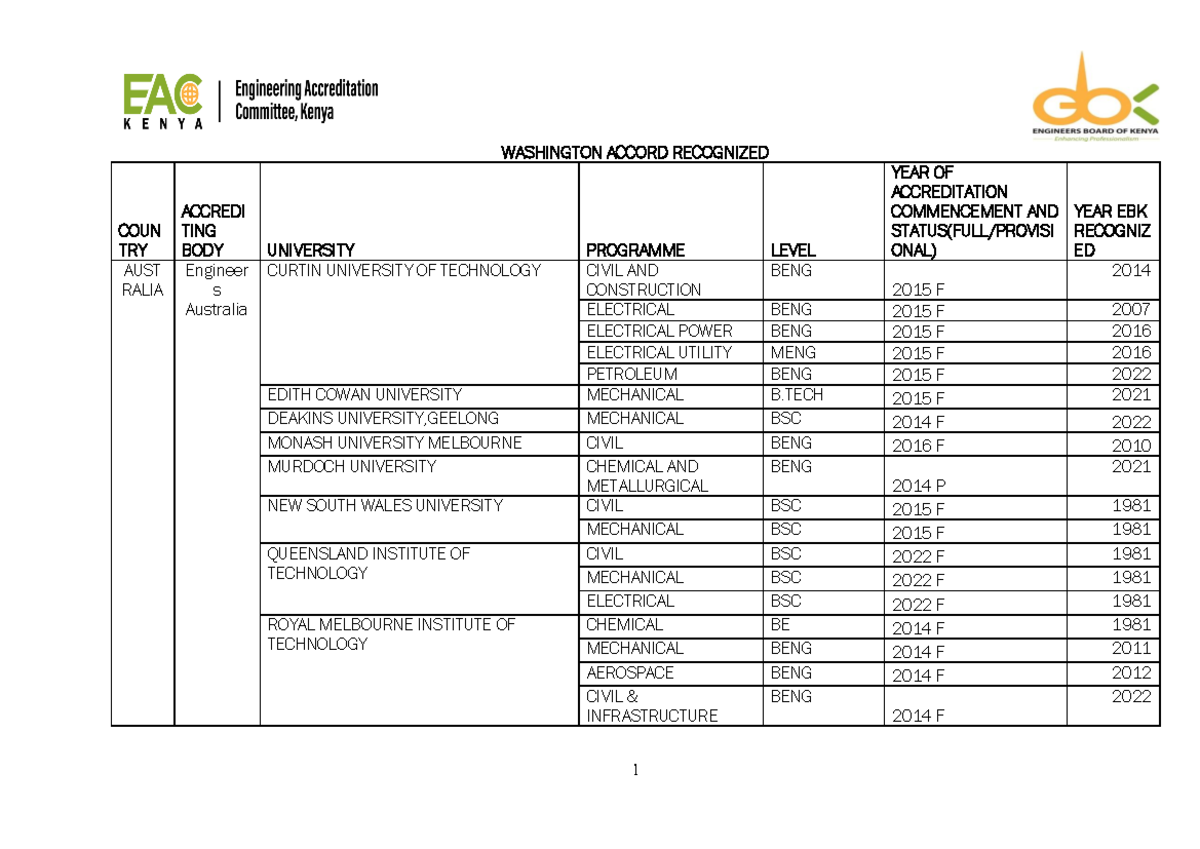
For students planning to work internationally, accreditation takes on a global dimension through the Washington Accord. This is an international agreement between bodies responsible for accrediting engineering degree programs.
Degrees accredited by the signatories of the Washington Accord are recognized as substantially equivalent. This means that if you graduate from an accredited program in the U.S., your degree is likely to be recognized by other signatory countries (such as Canada, the UK, Australia, and others) as meeting the academic requirements for professional practice. This is a vital consideration for engineers whose career goals involve multinational projects or relocation.
Frequently Asked Questions (FAQ)
1. Is institutional accreditation the same as program accreditation? No. Institutional accreditation (regional or national) certifies the college as a whole, focusing on fiscal and academic stability. Program-level accreditation (like ABET) is a rigorous, specialized review of the specific technical curriculum, faculty, and outcomes of an engineering department.
2. Can I get a job without a degree from an accredited program? Yes, many employers hire engineers based on skills and experience, and not all engineering roles require a PE license. However, for roles involving public infrastructure, safety-critical systems, or government contracting, an accredited degree is almost always a baseline requirement.
3. Does an online engineering degree hold the same weight as an on-campus degree? If the online degree program is ABET-accredited, it is considered equivalent to its on-campus counterpart. The accreditation status is what matters, not the medium of delivery. Always verify the specific accreditation status of the online program listing.
4. What if my program was accredited only for part of my time there? This is a high-risk scenario. Most licensing boards require the program to have been accredited at the time you earned your degree. If you are in this situation, contact your state’s Board of Professional Engineers early to determine if your specific coursework and experience will satisfy their requirements.
5. How often do programs lose their accreditation? Accreditation is a continuous process. If a program fails to meet updated criteria or suffers from severe staffing or funding cuts, it may be placed on probation or lose its accreditation. Students should monitor the status of their program regularly through the accrediting body's official updates.
Conclusion and Next Actions
The decision to pursue an engineering degree is a significant investment of time and resources. Choosing an accredited program ensures that your degree acts as a viable foundation for both your immediate employment prospects and your long-term career aspirations, including professional licensure.
To protect your academic investment, perform a formal verification search on the official website of the relevant national accrediting body (such as ABET for the U.S.). If you are currently enrolled in a program, save the accreditation documentation provided by your department. If you find your program is not accredited, consult the specific requirements of your state’s licensing board to understand the alternative paths available for your specific career path. Always prioritize transparency in your academic planning to ensure your qualifications align with the realities of the engineering profession.