Individuals with a felony conviction can readily qualify for accidental death life insurance, as most policies require no medical underwriting and rarely review criminal records. However, virtually every policy includes a strict criminal acts exclusion clause, which automatically voids claim payouts if the insured's death occurs during or as a direct result of committing an illegal act.
Securing financial protection for your family after a criminal conviction presents distinct hurdles. While traditional term or whole life insurance applications scrutinize criminal backgrounds, court dispositions, probation terms, and driving records, accidental death insurance functions differently. Understanding how accidental death coverage operates, what its limitations are, and how underwriting handles prior convictions ensures you do not pay premiums on a policy that may fail to pay out when your beneficiaries need it most.
What Is Accidental Death Insurance?
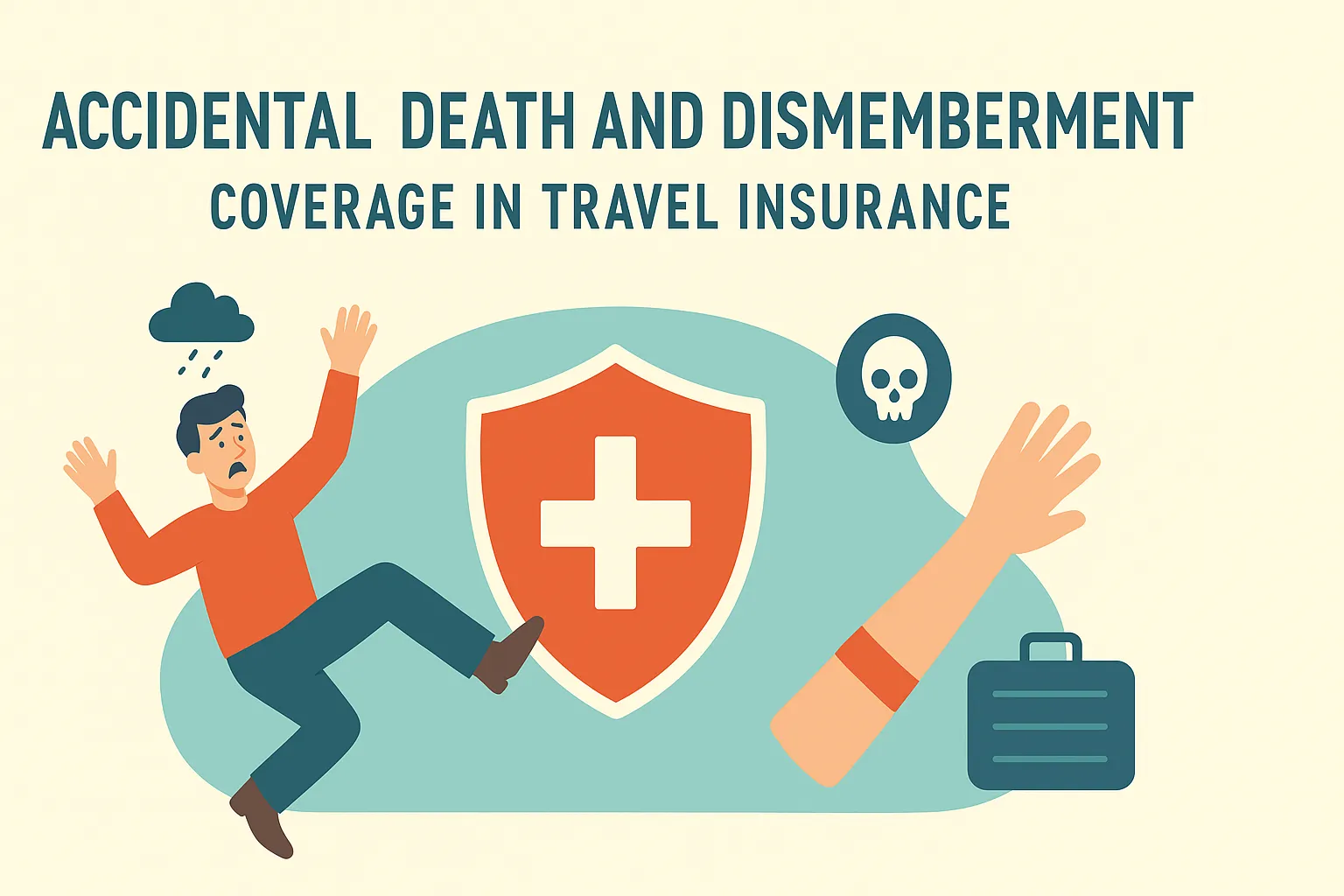
Accidental death insurance—frequently sold as a standalone policy or paired with dismemberment benefits as an Accidental Death and Dismemberment (AD&D) policy—pays a cash benefit to designated beneficiaries only if the policyholder dies as the direct result of a covered accident.
Unlike standard life insurance, which covers deaths resulting from natural causes, aging, terminal illness, and accidents, accidental death coverage is highly restrictive. Covered events typically include fatal motor vehicle collisions, industrial or equipment accidents, accidental drownings, falls, fires, and fatal exposure to the elements.
Because accidental death policies do not insure against illness, cardiovascular failure, cancer, stroke, or old age, insurers face far lower aggregate claim liability. Consequently, premiums remain significantly lower than traditional life insurance, and carriers streamline or eliminate traditional risk assessments, such as criminal record checks and medical exams.
Can You Get Accidental Death Insurance With a Felony?
The short answer is yes. In most circumstances, individuals with a felony record can secure an accidental death policy far more easily than traditional term or permanent life insurance.
Eligibility fundamentally depends on the underwriting tier of the policy:
1. Guaranteed Issue Accidental Death Coverage
Many standalone accidental death and group AD&D plans (often offered through credit unions, labor organizations, or direct-to-consumer insurers) are guaranteed issue. These policies do not require a medical exam, a prescription check, or a background screening through criminal databases. As long as you meet basic age requirements (typically between 18 and 70 or 80 years old) and legal residency requirements, your application is automatically approved. For individuals with recent convictions, active probation, or serious criminal classifications, guaranteed issue accidental coverage offers an immediate avenue for baseline financial protection.
2. Simplified Issue Accidental Death Coverage
Some carriers offer expanded accidental benefits with higher maximum face values (e.g., $250,000 to $1,000,000) under a simplified issue structure. While these policies skip full medical examinations, the application often includes a short questionnaire. Underwriters may ask:
- Are you currently incarcerated, under indictment, or on probation or parole?
- Within the past 3 to 10 years, have you been convicted of a felony or a misdemeanor involving driving under the influence (DUI/DWI), reckless endangerment, or controlled substances?
If an applicant answers affirmatively to active legal supervision, the carrier may postpone eligibility until probation or parole concludes. If the conviction occurred outside the requested lookback window, approval is generally straightforward.
The Critical Caveat: The Felony Exclusion Clause
While obtaining an accidental death policy with a past conviction is relatively simple, collecting on a claim requires an understanding of standard contract exclusions. Life insurance policies, and AD&D contracts in particular, contain standard exclusion clauses that dictate when a carrier will legally deny a claim.
The felony exclusion clause (sometimes labeled the "illegal act" or "commission of a crime" exclusion) is standard across virtually all accidental death policies in the United States. This clause typically states that no benefit will be paid if the insured person's injury or death:
- Occurs while the insured is committing, or attempting to commit, a felony;
- Results directly from participation in an illegal occupation, assault, or riot;
- Involves the operation of a motor vehicle while legally intoxicated or under the influence of illicit substances.
How Insurers Investigate Claims
When an accidental death claim is submitted, the insurance company does not simply disburse funds upon receipt of a death certificate. The carrier requests the official police incident report, toxicological screenings, autopsy reports, and coroner findings.
If the documentation indicates that the insured was engaged in a felonious act at the time of the fatal incident, the claim will be denied, even if the policy was active and premiums were paid on schedule.
- Scenario A (Excluded): An individual with a prior conviction is involved in a high-speed vehicle chase following a robbery and dies in a crash. The carrier invokes the felony exclusion, denying the death benefit to the beneficiary.
- Scenario B (Covered): An individual with a prior felony conviction works as a heavy equipment operator, holds an active accidental death policy, and dies due to a workplace industrial collapse. Because the accident was completely unrelated to criminal activity, the policy pays out the full death benefit.
The existence of a prior record does not void accidental coverage; rather, committing a new felony at the exact time of death triggers the contractual exclusion.
Comparing Insurance Options for Individuals With Felonies
Depending on your conviction type, how much time has passed since completing sentencing or parole, and your health status, accidental death insurance may be your sole immediate option, or it may serve as an affordable supplement to broader life insurance.
| Coverage Type | Criminal Background Check? | Medical Underwriting? | Incarceration / Probation Eligibility | Primary Coverage Scope | Typical Benefit Limits |
|---|---|---|---|---|---|
| Accidental Death (AD&D) | Rarely (Guaranteed Issue) | None | Postponed if incarcerated; possible on probation | Accidents only (fatal collisions, falls, drownings) | $50,000 – $500,000 |
| Guaranteed Issue Whole Life | No | None | Postponed during incarceration | All causes (accidents, natural death, illness) | $5,000 – $25,000 |
| Simplified Issue Term Life | Yes (Public records review) | Health questionnaire; no physical exam | Typically declined on active probation | All causes (subject to standard contestability) | $25,000 – $250,000 |
| Fully Underwritten Term Life | Yes (Comprehensive background check) | Blood, urine, physical, and medical records | Must have completed probation (typically 1–10 years) | All causes (most comprehensive protection) | $100,000 – $2,000,000+ |
Underwriting Factors That Impact Approval
When applying for life insurance products that extend beyond pure guaranteed-issue accidental death policies, life insurance underwriters evaluate the totality of an applicant's legal history. Understanding these parameters helps you choose the right product at the right time.
1. Conviction Category and Severity
Carriers assess the statistical mortality risk connected with specific criminal behaviors. Crimes of property (such as grand larceny or non-violent fraud) are viewed with less underwriting severity than violent offenses, manslaughter, or drug distribution. Multiple offenses establish a pattern that underwriters frequently decline, whereas an isolated single conviction with subsequent rehabilitation is treated more leniently.
2. Time Elapsed Since Sentence Completion
Underwriting guidelines measure time starting from the absolute completion of the sentence, including probation, community service, parole, and restitution payment—not from the date of the offense or initial release from custody.
- Active Sentence/Probation: Fully underwritten and simplified life policies almost uniformly decline applicants currently serving probation or parole. Accidental death policies, however, may still accept them if no criminal questions are included on the form.
- 1 to 3 Years Post-Probation: Some mid-tier simplified policies consider non-violent offenders, often charging higher premiums ("table ratings").
- 5 to 10 Years Post-Probation: Many mainstream life insurers will consider applicants for standard term or whole life coverage, provided the applicant maintains a clean criminal, driving, and employment record during that decade.
3. Driving Records (MVR Checks)
Accidental death underwriters closely examine Motor Vehicle Reports (MVR). A felony vehicular manslaughter conviction, multiple DUIs, or frequent reckless driving citations present an immediate, quantifiable risk of accidental automotive death. Even an accidental policy application that skips criminal records might pull an MVR and reject an applicant with severe moving violations.
Application Strategies and Practical Steps
Securing reliable accidental death life insurance while rebuilding your financial portfolio requires careful navigation. Use the following structured steps to minimize the risk of application rejections and post-claim disputes.
Step 1: Request Your Official Records
Before completing any insurance application that requests background information, pull your official state and federal criminal records, as well as your state driving record. Ensure that dispositions are accurate and that expunged or dismissed charges do not erroneously appear as active convictions. Knowing the exact date your probation or parole was formally discharged prevents inadvertent misrepresentation on insurance paperwork.
Step 2: Differentiate Between Guaranteed Issue and Medically/Legally Underwritten Products
If you were discharged from probation within the last 12 to 24 months, do not risk unnecessary denials on fully underwritten term life policies, as formal underwriting denials are logged into the Medical Information Bureau (MIB) and can complicate future applications. Instead, apply for a guaranteed-issue accidental death policy to establish immediate financial protection for your dependents.
Step 3: Practice Absolute Honesty
Never lie on an insurance application. If an accidental death policy questionnaire specifically asks, "Have you ever been convicted of a felony?" or "Are you currently on probation?", answer truthfully.
Under the statutory contestability period (typically the first two years of any life insurance policy), an insurer has the legal right to audit all statements made on the application if a claim occurs. If the insurance company finds material misrepresentation—meaning you untruthfully answered a direct question that would have altered their decision to issue coverage—they can rescind the policy, refund the paid premiums, and refuse the death benefit to your family.
Step 4: Examine Policy Wording Regarding Toxic Substances
Accidental death contracts often exclude deaths where the insured had unauthorized controlled substances or elevated alcohol levels in their system, even if the primary event was an unintended accident (such as a motor vehicle collision caused by a third party). If your past legal history involved substance use, look for policies with standard, narrow exclusions rather than sweeping clauses that forfeit coverage for non-contributory factors.
Common Exclusions in Accidental Death Policies
Beyond the felony exclusion clause, accidental death coverage contains numerous coverage limits that distinguish it from traditional life insurance. Anyone relying on an accidental death plan must understand what these policies do not cover:
- Natural Causes and Illness: Fatal heart attacks, cancer, kidney failure, infections, and strokes are natural medical conditions, not accidents. If an insured individual experiences a medical episode that leads to death, accidental death insurance pays nothing.
- Medical Complications: Fatal errors during surgery or adverse reactions to prescribed medical treatments are universally excluded under accidental policies.
- Suicide or Self-Inflicted Harm: Any intentional self-harm or suicide is excluded under all accidental contracts.
- War, Insurrection, and Civil Unrest: Deaths occurring as a result of active participation in civil riots, armed insurrections, or military combat operations are not covered.
- High-Risk Activities: Engaging in hazardous sports or hobbies (such as skydiving, private aviation, or auto racing) may void accidental death claims unless a specific rider was added to the contract.
Alternative Financial Protection Options
If accidental death coverage does not provide broad enough protection for your family's needs, consider these additional financial tools:
Guaranteed Issue Whole Life Insurance
For individuals seeking coverage for natural death, illness, or final funeral expenses, guaranteed issue whole life insurance provides permanent coverage with no medical exams or criminal background questions. These policies feature modest benefit amounts—commonly ranging between $5,000 and $25,000—and feature a two-year graded benefit period. If the insured dies of natural causes within the first two years, the insurer refunds paid premiums plus a small interest rate; accidental deaths, however, are covered for the full face amount starting on day one.
Group Life Insurance Through an Employer
Employer-sponsored group term life insurance represents one of the most accessible paths to comprehensive coverage for individuals with a criminal past. Many employers offer basic life coverage equal to one or two times your annual salary as an automatic benefit. In most standard enrollment periods, these group policies are issued on a guaranteed basis without individual background inquiries or medical underwriting.
Frequently Asked Questions
Can an accidental death policy be denied simply because I have a criminal record?
No. Standalone guaranteed issue accidental death policies do not screen applicants for prior criminal convictions, and a past record alone cannot be used to deny a valid accident claim. The insurer can only deny a claim if the death fell under an explicit policy exclusion, such as if you were committing a crime at the time of your death or were under the influence of illegal substances.
What happens if I die in an accident while on probation?
Being on active probation does not automatically void an accidental death claim. As long as your death was purely accidental (such as an occupational accident or a car crash in which you were not the at-fault driver or committing an offense) and you were completely honest on your application, the insurance carrier is obligated to pay the death benefit. However, the insurer will thoroughly review police and autopsy reports to confirm that no probation violations or unlawful activities contributed to the fatal event.
Can an incarcerated individual have an accidental death insurance policy?
Incarcerated individuals are almost uniformly ineligible to buy new accidental death or life insurance policies. The state of incarceration drastically alters underwriting risk, and carriers place applications from inmates on immediate hold until release. If an individual purchased a valid policy prior to incarceration, the policy may technically remain active as long as premiums are paid; however, deaths resulting from prison altercations or institutional discipline are subject to specific exclusions and legal scrutiny.
Will an accidental death policy pay out if the insured dies from a drug overdose?
In almost all cases, no. Accidental death policies explicitly exclude deaths resulting from the voluntary ingestion of illicit narcotics, controlled substances taken without a valid prescription, and toxic substance poisoning. Even if the overdose was legally ruled "accidental" by a medical examiner, standard policy contracts treat illegal substance ingestion as an excluded hazard.
How soon after completing a felony sentence can I apply for traditional life insurance?
Eligibility for traditional term or whole life insurance typically opens up 1 to 5 years after the full discharge of probation, parole, and restitution for non-violent offenses. For violent crimes, significant financial crimes, or major drug offenses, insurers may enforce a mandatory 5- to 10-year waiting period, or decline coverage entirely. Accidental death insurance and guaranteed issue life policies remain viable alternatives during this post-sentencing window.
Securing the Right Coverage
Accidental death insurance serves as an accessible financial tool if your background restricts you from qualifying for traditional life insurance. It bridges the protection gap, ensuring your dependents possess immediate financial support if an unforeseen fatal accident occurs.
To take action:
- Determine your current legal standing and pull your motor vehicle and criminal records to verify all probationary dates are accurately closed out.
- Select a guaranteed-issue accidental death policy to obtain baseline financial protection without navigating an intrusive underwriting process.
- Once 3 to 5 years have passed since your complete release from community supervision, consult an independent life insurance broker licensed across multiple carriers. An independent broker can confidentially submit informal underwriting inquiries to locate traditional, fully protective life insurance plans that evaluate your long-term rehabilitation and clean post-conviction history fairly.
Disclaimer: This article provides general financial and insurance educational information and does not constitute formal legal or financial advice. Life insurance eligibility, rates, and contractual exclusion terms vary by carrier, state law, and individual circumstances. Consult a licensed insurance professional or legal advisor for specific case guidance.