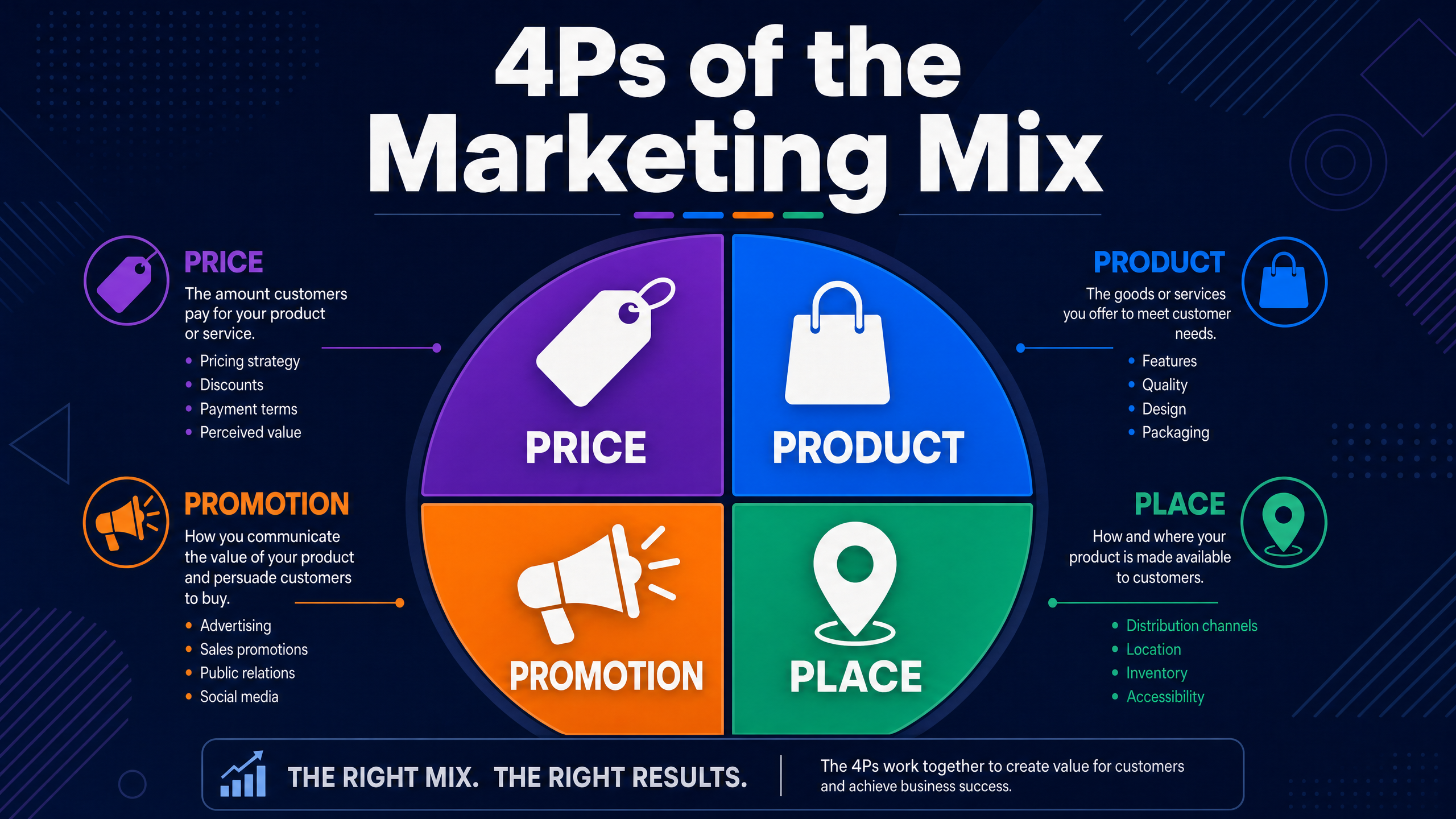
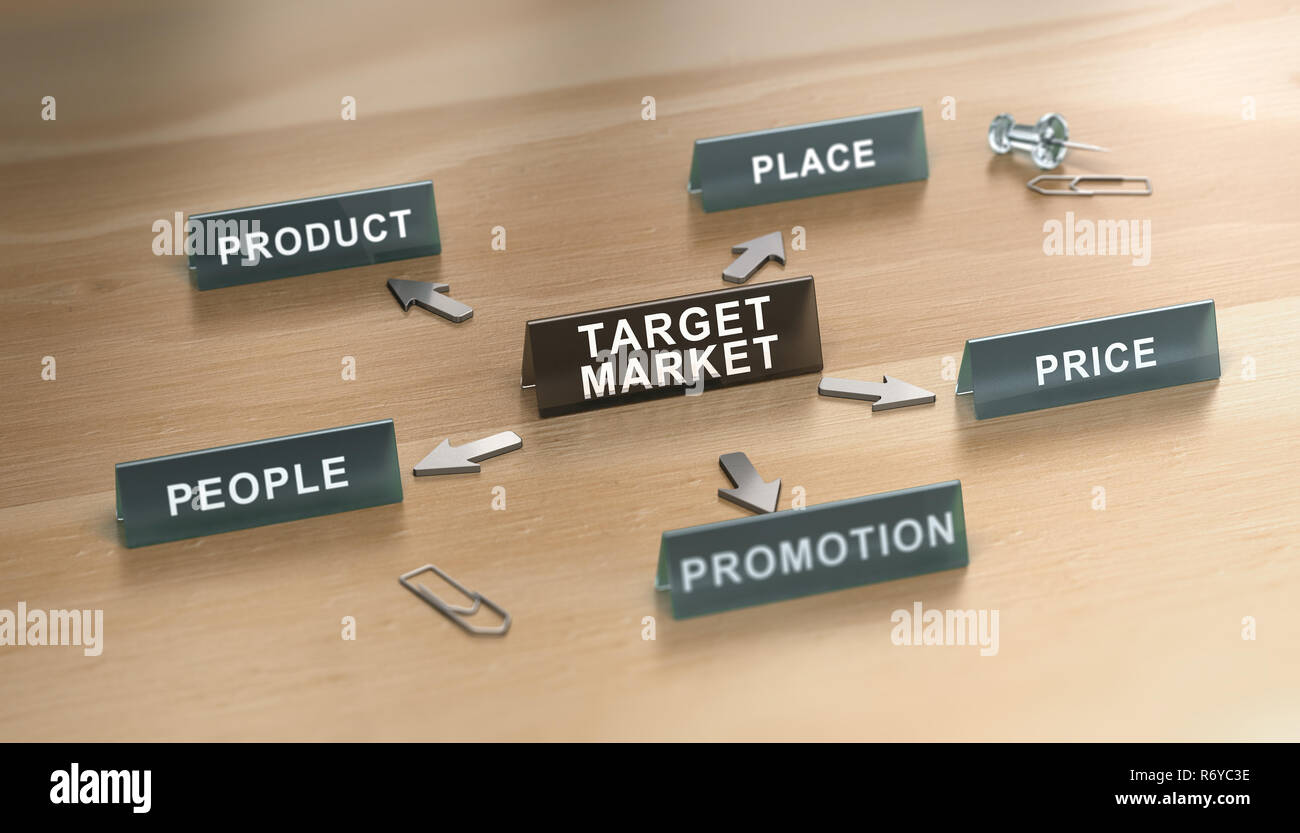
The 5Ps marketing mix—Product, Price, Place, Promotion, and People—is a strategic framework used by businesses to align their internal capabilities with external market demands. By balancing these five interconnected elements, organizations can develop a cohesive strategy that creates value for customers, establishes a competitive advantage, and ensures long-term profitability in an increasingly complex and automated global economy.
In the 2026 business environment, the 5Ps have evolved beyond simple tactical checklists into a sophisticated matrix for managing customer experience (CX) and brand equity. While the original 4Ps (McCarthy, 1960) focused heavily on the mechanics of physical goods, the addition of "People" recognizes that in a service-dominant and AI-integrated economy, the human element is the ultimate differentiator. This article examines each element and provides a blueprint for using them to shape a resilient marketing strategy.
The Evolution of the Marketing Mix: From 4Ps to 5Ps
The transition from the traditional 4Ps to the 5Ps was not merely an academic exercise; it was a response to the shift from a product-centric economy to a service-and-experience-centric one. In 2026, the distinction between "product" and "service" has largely blurred. Most physical products now come with digital layers, and most services rely on physical touchpoints.
The inclusion of People as the fifth pillar acknowledges that every transaction involves a relationship. Whether it is the customer service representative resolving a conflict, the engineer designing a user interface, or the executive representing the brand's values, people are the pulse of the marketing strategy. Understanding this evolution is critical for any organization attempting to navigate the modern marketplace where consumer trust is the most valuable currency.
1. Product: The Foundation of Value Creation
The Product element encompasses everything a company offers to satisfy a customer’s needs or desires. In 2026, "Product" is no longer a static entity; it is often a dynamic ecosystem. This includes physical goods, digital services, and the intangible benefits—such as status or peace of mind—that come with them.
Strategic Product Development
To shape strategy through the Product lens, businesses must focus on solving specific problems rather than just adding features. The 2026 market favors "Minimum Lovable Products" (MLP) over the traditional "Minimum Viable Products" (MVP). Consumers expect intuitive design, immediate utility, and sustainability.
- Core Functionality: What is the primary problem this product solves?
- Quality and Durability: How does the product stand up to competition and time?
- Sustainability and Ethics: In 2026, a product’s environmental footprint is a core feature, not an afterthought.
- Branding and Packaging: The visual and tactile experience that differentiates the product on a shelf or a digital screen.
Lifecycle Management
Effective strategy requires managing the product lifecycle—from introduction and growth to maturity and eventual decline. By 2026, "circular design" has become a standard, where products are designed with their end-of-life recycling or repurposing in mind. This foresight shapes the brand’s reputation for responsibility and innovation.
2. Price: The Revenue and Perception Driver
Price is the only element of the marketing mix that generates revenue; the others generate costs. However, pricing is about more than just numbers. It is a powerful communication tool that signals quality, exclusivity, or value.
Dynamic and Value-Based Pricing
In 2026, businesses have moved away from simple cost-plus pricing. Instead, they utilize AI-driven value-based pricing and dynamic pricing models. Value-based pricing determines the price based on the perceived value to the customer rather than the cost of production. Dynamic pricing, frequently used in travel, logistics, and e-commerce, adjusts prices in real-time based on demand, inventory levels, and competitor behavior.
Psychological Pricing Factors
Price shapes strategy by influencing consumer psychology. A premium price can position a brand as a luxury leader (skimming strategy), while a lower price can help a brand gain rapid market share (penetration strategy). Strategy in 2026 also involves complex subscription models and "freemium" tiers, which require a deep understanding of customer lifetime value (CLV) to ensure the entry-level price does not erode the brand's long-term profitability.
3. Place: Modern Distribution and Omnichannel Mastery
Place refers to how a product or service reaches the customer. In 2026, "Place" is synonymous with omnichannel distribution. The goal is to provide a seamless experience whether the customer is shopping via a mobile app, a virtual reality (VR) storefront, a social commerce platform, or a physical retail location.
The Shift to D2C and "Phygital" Retail
Many brands have shifted toward a Direct-to-Consumer (D2C) model to regain control over the customer relationship and data. However, the concept of "Phygital"—the blending of physical and digital experiences—defines the current landscape. For example, a customer might browse a product in a VR showroom (Digital) and then pick it up at a local automated locker (Physical).
- Channel Selection: Choosing between wholesalers, retailers, or owned e-commerce platforms.
- Logistics and Fulfillment: In 2026, speed is a competitive necessity. Strategy involves optimizing "last-mile" delivery via autonomous drones or local micro-fulfillment centers.
- Geographic Strategy: Determining where to focus resources, especially as regional regulations on data and commerce continue to diverge.
4. Promotion: Narrative and Engagement in 2026
Promotion involves all the methods a business uses to communicate the benefits of its products and services to the target audience. By 2026, the era of "shouting" at consumers through mass advertising has largely ended, replaced by "dialogue" and "community building."
The Rise of Hyper-Personalization
With the death of third-party cookies, promotion strategy now relies heavily on first-party data and AI-enabled hyper-personalization. Brands no longer send generic emails; they provide tailored content that predicts the customer's next need based on past behavior and real-time context.
- Integrated Marketing Communications (IMC): Ensuring a consistent message across social media, search engine marketing (SEM), public relations, and influencer partnerships.
- Content Marketing: Providing value through education and entertainment rather than just sales pitches.
- Social Proof: In 2026, user-generated content (UGC) and authentic peer reviews carry more weight than professional ad campaigns.
- AI-Generated Creative: Using generative AI to produce high volumes of localized, personalized advertisements efficiently.
5. People: The Critical Human Element
The fifth P, People, is often the most significant factor in a strategy’s success or failure. This includes everyone involved in the business, from front-line staff to the C-suite, as well as the customers themselves who participate in co-creating the brand experience.
Internal Culture and Customer Experience (CX)
A company’s internal culture directly impacts its external brand. In 2026, "Employee Branding" is a key marketing strategy. If employees are disengaged or poorly trained, the "Place" and "Product" elements will inevitably suffer.
- Training and Empowerment: Ensuring staff have the tools and authority to solve customer problems immediately.
- Customer Success Teams: Moving beyond reactive "support" to proactive "success," helping customers get the most value out of their purchases.
- Human-AI Collaboration: In 2026, "People" also involves the management of AI agents. A key strategic question is: Where do we use AI for efficiency, and where do we require a human touch for empathy?
Comparison of the Marketing Mix Elements
The following table summarizes how each element contributes to a unified business strategy in 2026.
| Element | Primary Objective | Key Strategy in 2026 | Strategic Impact |
|---|---|---|---|
| Product | Solving Customer Needs | Minimum Lovable Product (MLP); Circular Design | Drives brand loyalty and functional differentiation. |
| Price | Capturing Value | Value-Based & Dynamic Pricing; Subscription Models | Influences brand perception and ensures profitability. |
| Place | Ensuring Accessibility | Omnichannel & "Phygital" Distribution | Affects convenience and market reach. |
| Promotion | Communicating Value | Hyper-Personalization; Community Engagement | Builds brand awareness and drives conversion. |
| People | Delivering Experience | Human-AI Collaboration; Employee Advocacy | Acts as the primary differentiator in service quality. |
Integrating the 5Ps into a Unified Strategy
The 5Ps do not exist in isolation; they are highly interdependent. A change in one element necessitates adjustments in the others. For instance, if a company decides to reposition its Product as a luxury item, it must simultaneously increase the Price, limit distribution to exclusive Places, upgrade the Promotion to high-end media, and ensure its People provide concierge-level service.
Conducting a 5Ps Strategic Audit
To ensure the marketing mix is aligned, businesses should conduct regular audits. This involves evaluating each "P" against current market trends and competitor moves.
- Product Audit: Is our offering still relevant? Are we incorporating the latest sustainable materials?
- Price Audit: Are our margins sustainable? Does our pricing reflect the value we provide compared to AI-driven competitors?
- Place Audit: Are we where our customers are? Are there friction points in our delivery process?
- Promotion Audit: Is our messaging consistent across all digital and physical touchpoints? Are we utilizing first-party data effectively?
- People Audit: Does our team embody our brand values? Are we effectively balancing automation with human empathy?
Common Pitfalls to Avoid
Even with a structured framework, strategies can fail if the 5Ps are misapplied. One common mistake is siloed management, where different departments manage different "Ps" without communication. This leads to a fragmented customer experience. For example, the marketing team might promote a "premium experience" while the logistics team (Place) uses a low-cost, slow shipping method.
Another pitfall is ignoring the 'People' element. Many organizations invest heavily in technology and product design but neglect the training of the staff who represent the brand. In an era where a single negative social media post can go viral, the human touch—or the lack thereof—can make or break a strategy.
Finally, businesses often fall into the trap of static strategy. The 5Ps should be reviewed and adjusted frequently. What worked in 2024 or 2025 may no longer be effective in 2026 due to shifts in consumer behavior or technological breakthroughs.
Frequently Asked Questions (FAQs)
What is the difference between the 4Ps and the 5Ps?
The 4Ps (Product, Price, Place, Promotion) focus on the tactical aspects of selling goods. The 5Ps add "People" to the mix, acknowledging that human interaction and service quality are vital for modern marketing, especially in service-oriented and digital-first industries.
Why is 'People' considered a marketing element?
People are considered a marketing element because they are the face of the brand. In 2026, the interaction between a customer and a company's staff—or its AI representatives—is a core part of the product's value. Happy, well-trained employees create happy, loyal customers.
How does technology influence the 5Ps in 2026?
Technology, particularly AI and data analytics, enables hyper-personalization in Promotion, dynamic models in Price, and automated fulfillment in Place. It also transforms the Product by adding digital features and improves the People element by automating routine tasks, allowing humans to focus on complex emotional labor.
Can a business succeed by focusing on only one of the 5Ps?
While a business might have a "strength" in one area (like a revolutionary product), long-term success requires balance. A great product will fail if it is priced incorrectly, cannot be found by customers, is promoted poorly, or is supported by unhelpful people.
How often should a company review its marketing mix?
In the fast-paced market of 2026, a comprehensive review of the 5Ps should occur at least annually. However, specific elements like Price and Promotion should be monitored and adjusted in real-time or quarterly to respond to market fluctuations.
Final Recommendation: Achieving Strategic Cohesion
The most successful strategies in 2026 are those that achieve strategic cohesion. This means that all five elements of the marketing mix are working toward the same goal. To achieve this, start by defining your "People" first. Understand who your customers are and who your employees need to be to serve them. From there, build a "Product" that solves their specific problems, set a "Price" that reflects that value, ensure it is available in the "Places" they frequent, and "Promote" it through authentic, data-driven narratives.
By treating the 5Ps as a living system rather than a static list, your organization can remain agile, relevant, and customer-centric in a constantly evolving global market.
External Sources for Further Reference: