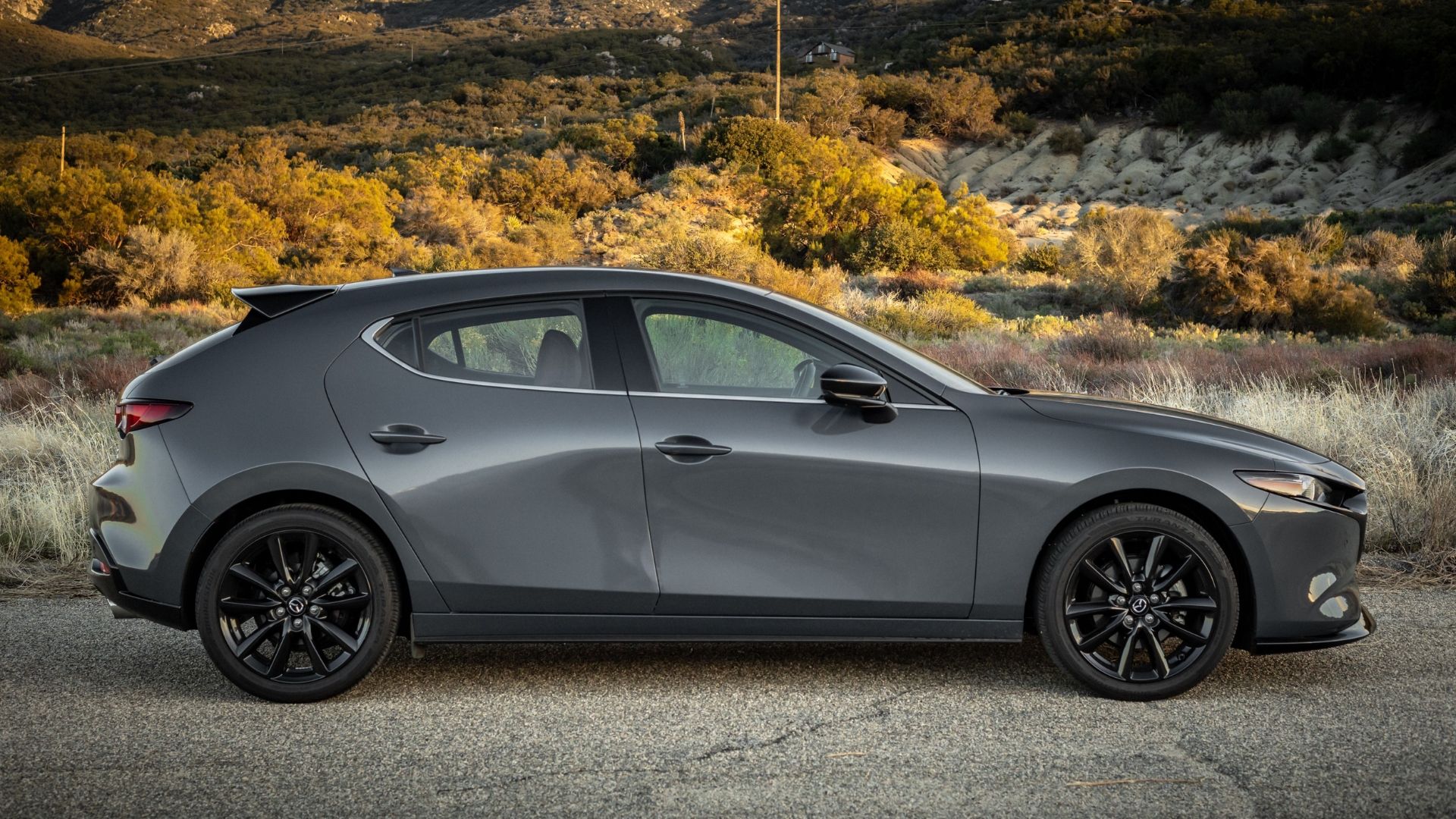
When Mazda introduced the turbocharged engine option mated to its i-Activ all-wheel-drive system in the fourth-generation Mazda 3, it bridged the gap between a sleek daily driver and a genuine hot hatch or sedan. Independent automotive testing consistently clocks the Mazda 3 AWD Turbo from 0 to 60 mph in roughly 5.6 to 5.9 seconds, depending on traction, fuel quality, and testing conditions. This performance level transforms a mainstream compact car into a swift competitor capable of challenging entry-level luxury sport sedans.
Evolution of the Mazda 3 Turbo Platform
To understand how the Mazda 3 achieves a sub-6-second zero-to-sixty sprint, one must examine the mechanical evolution of the fourth-generation platform. Prior iterations relied on naturally aspirated SKYACTIV-G four-cylinder engines that prioritized fuel economy and linear power delivery over outright acceleration. While praised for their sharp chassis dynamics and precise manual or automatic transmissions, enthusiasts frequently requested a factory forced-induction variant to match the car’s athletic exterior styling.
Mazda responded by integrating the 2.5-liter Skyactiv-G dynamic pressure turbo engine into both the hatchback and sedan body styles. Unlike smaller displacement turbochargers designed solely for EPA fuel economy ratings, this powerplant is engineered to deliver a broad wave of low-end torque. When fueled with 93 octane gasoline, the engine produces 250 horsepower and a stout 320 lb-ft of torque. Running on standard 87 octane drops the output to 227 horsepower and 310 lb-ft, which can subtly alter acceleration figures during a 0 to 60 mph test.
Decoding the 5.6-Second 0-60 Time: How It Is Achieved
Achieving a 5.6-second 0-60 mph time requires a specific confluence of mechanical advantages, tire grip, and drivetrain behavior. It is not merely a matter of horsepower-to-weight ratio, but how effectively that power is transferred to the pavement from a standstill.
The Role of i-Activ All-Wheel Drive
The predictive i-Activ all-wheel-drive system plays a critical role in launching the car efficiently. By continuously monitoring external variables—including steering angle, exterior temperature, braking pressure, and windshield wiper usage—the car's computer anticipates traction loss before it occurs. During a hard launch, power is distributed instantly to the rear wheels to prevent front-wheel spin and torque steer, which frequently plague high-output front-wheel-drive hatchbacks.
Transmission Tuning and Launch Mechanics
The Skyactiv-Drive six-speed automatic transmission avoids the rubber-band feel of continuously variable transmissions (CVTs) or the sometimes jerky engagement of dual-clutch units. While it lacks launch control in the traditional sense, drivers can achieve optimal acceleration by holding the brake, building a modest amount of engine boost, and releasing the brake simultaneously. The transmission shifts firmly and utilizes tall enough gearing to keep the engine in its optimal power band through second gear, crossing the 60 mph threshold just as a shift to third gear approaches.
Technical Specifications Comparison
To place the Mazda 3 AWD Turbo’s acceleration in context, it helps to review its key mechanical metrics alongside its primary competitors in the compact performance segment.
| Vehicle Model | Engine Configuration | Horsepower | Torque (lb-ft) | Drivetrain | Estimated 0-60 Time |
|---|---|---|---|---|---|
| Mazda 3 2.5 Turbo | 2.5L Turbo I4 | 250 (93 oct) | 320 (93 oct) | AWD | 5.6 – 5.9 seconds |
| Volkswagen Golf GTI | 2.0L Turbo I4 | 241 | 273 | FWD | 5.1 – 6.0 seconds |
| Subaru Impreza WRX | 2.4L Turbo Boxer 4 | 271 | 258 | AWD | 5.4 – 5.8 seconds |
| Honda Civic Si | 1.5L Turbo I4 | 200 | 192 | FWD | 6.7 – 7.1 seconds |
| Hyundai Elantra N | 2.0L Turbo I4 | 276 | 289 | FWD | 5.0 – 5.3 seconds |
Real-World Driving Dynamics Versus Track Figures
While a 5.6-second 0-60 time provides a convenient metric for bench racing, real-world driving reveals a more nuanced driving character. The Mazda 3 Turbo is not designed as a hardcore, stripped-out track weapon like a Civic Type R. Instead, it functions as a grand tourer or an upscale commuter car with a hidden reserve of straight-line velocity.
The suspension tuning balances daily comfort with body control. During acceleration tests, the chassis exhibits minimal squat, and the steering remains weighted and communicative. However, the torsion beam rear suspension—utilized across the fourth-generation Mazda 3 lineup to optimize interior cargo packaging—can occasionally feel unsettled mid-corner over broken pavement compared to multi-link independent rear setups found in rivals like the Golf GTI.
Furthermore, weight is a factor. Tipping the scales at roughly 3,375 to 3,450 pounds depending on whether you choose the sedan or the heavier hatchback configuration, the added hardware of the all-wheel-drive system and sound-deadening materials makes the car heavier than some lighter front-wheel-drive competitors. This weight dampens extreme agility slightly while improving highway stability and foul-weather traction.
Fuel Quality, Ambient Conditions, and Test Variations
Drivers attempting to replicate magazine-tested 0-60 times must account for several external variables. Mazda explicitly designs its high-output turbo engine to alter performance parameters based on the fuel pumped into the tank.
- Octane Rating: Using 87 octane reduces peak output by 23 horsepower and 10 lb-ft of torque, which can add a few tenths of a second to the 0-60 sprint. Premium 93 octane is required to unlock the advertised 250 horsepower peak.
- Density Altitude: Hot ambient temperatures, high humidity, and high elevation reduce oxygen density, suffocating forced-induction engines and slowing down acceleration times.
- Tire Compound: Factory all-season tires prioritize longevity and quietness over maximum grip. Upfitting the Mazda 3 Turbo with dedicated sticky summer tires significantly improves launch traction and reduces 0-60 times closer to the 5.5-second mark.
Frequently Asked Questions
Does the Mazda 3 Turbo come with a manual transmission?
No. The turbocharged engine option is exclusively paired with a six-speed Skyactiv-Drive automatic transmission equipped with paddle shifters. Enthusiasts seeking a manual gearbox must opt for the naturally aspirated 2.5-liter front-wheel-drive hatchback, which offers a six-speed manual only in select trim levels.
How does fuel octane affect the 0-60 performance?
Running standard 87 octane fuel lowers engine output to 227 horsepower, while 93 octane unlocks the full 250 horsepower. Independent testing indicates this power discrepancy translates to a noticeable difference in throttle response and acceleration times, making premium fuel essential for maximum performance.
Is the Mazda 3 AWD Turbo considered a true hot hatch?
It occupies a unique middle ground. While its 5.6-second 0-60 capability matches traditional hot hatches in a straight line, its suspension tuning, luxurious interior appointments, and lack of aggressive aerodynamic body kits position it closer to an entry-level near-luxury sport compact than an aggressive track-day tool.
Can the i-Activ AWD system send power exclusively to the rear wheels?
The i-Activ system is front-biased under normal cruising conditions to maximize fuel efficiency. However, it can dynamically transfer up to 50 percent of available torque to the rear axle instantaneously when it detects slip, cornering loads, or rapid throttle application.
What is the fuel economy of the Mazda 3 Turbo?
According to EPA estimates, the Mazda 3 AWD Turbo achieves roughly 23 mpg in the city and 32 mpg on the highway for the sedan, with the hatchback dropping by approximately 1 mpg due to aerodynamics and weight. Aggressive driving that exploits the 5.6-second acceleration capability will naturally yield lower figures.
Final Recommendation
For drivers evaluating the Mazda 3 AWD Turbo, the 5.6-second 0-60 capability should be viewed as a bonus rather than the sole reason for purchase. The vehicle excels as a refined, all-weather daily driver that delivers effortless passing power and sophisticated styling. Prioritize using 93 octane fuel if you want to experience the engine's full potential, and consider upgrading the factory tires if you intend to push the chassis through demanding twisty roads.