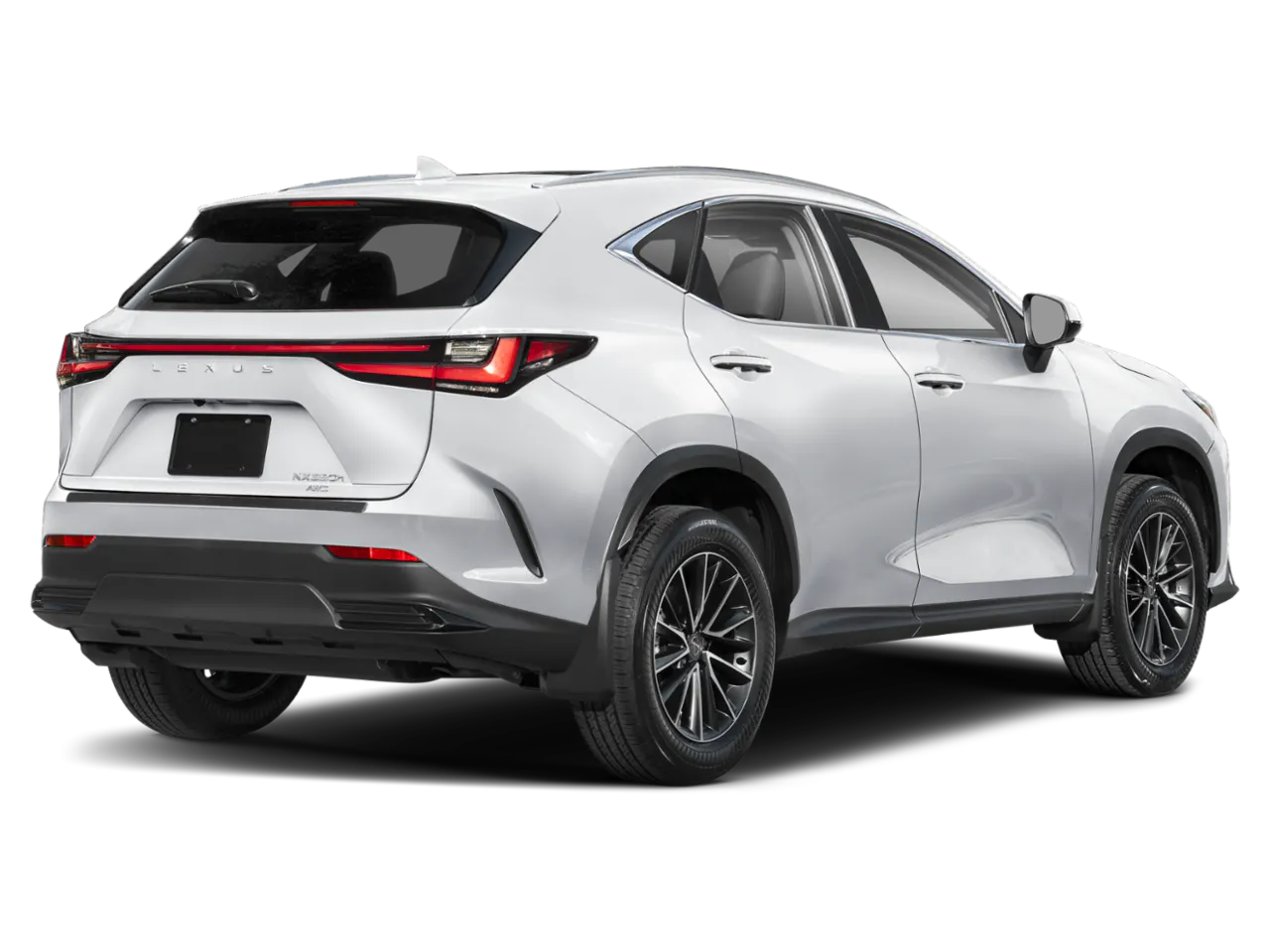
The 2026 Lexus NX 350h achieves an EPA-estimated fuel economy of 41 MPG in the city, 37 MPG on the highway, and 39 MPG combined. This impressive efficiency is made possible by its 2.5-liter fourth-generation Lexus Hybrid Drive system and standard Electronic On-Demand All-Wheel Drive, positioning it as one of the most fuel-efficient luxury compact SUVs currently on the market.
Understanding the 2026 Lexus NX 350h Hybrid Powertrain
To understand why the 2026 Lexus NX 350h achieves its specific MPG ratings, one must look at the mechanical synergy under the hood. The vehicle utilizes the Lexus Hybrid Drive system, which is a "full hybrid" setup. Unlike mild hybrids that only assist the engine, or plug-in hybrids (PHEVs) that require a charging cable for maximum efficiency, the NX 350h manages its energy flow autonomously through a combination of a gasoline engine and electric motor-generators.
The 2.5L Inline-4 Atkinson Cycle Engine
The heart of the system is a 2.5-liter four-cylinder engine that operates on the Atkinson cycle. In a traditional Otto cycle engine, the intake valve closes shortly after the piston begins its upward stroke. In an Atkinson cycle engine, the intake valve stays open longer, allowing some of the air-fuel mixture to push back into the intake manifold. This effectively shortens the compression stroke relative to the expansion stroke, extracting more energy from the combustion process. While this typically reduces low-end torque, the hybrid’s electric motors compensate for that loss, resulting in a powertrain that is highly efficient at converting fuel into forward motion.
Dual Motor-Generators and the Rear E-Four Motor
The NX 350h does not use a traditional geared transmission. Instead, it employs an Electronically controlled Continuously Variable Transmission (ECVT). This unit houses two electric motor-generators (MG1 and MG2). MG1 acts primarily as a starter for the engine and a generator to charge the battery, while MG2 drives the front wheels and provides regenerative braking.
Furthermore, the 2026 NX 350h features a third electric motor located on the rear axle. This creates the Electronic On-Demand All-Wheel Drive (AWD) system. Because there is no physical driveshaft connecting the front and rear axles, the vehicle avoids the mechanical friction and weight penalties associated with traditional AWD systems, which is a primary reason why its highway MPG remains so high despite having four-wheel traction capability.
Breaking Down the EPA Estimates: City vs. Highway
The EPA ratings for the 2026 Lexus NX 350h—41 city and 37 highway—reveal a characteristic common to hybrids but opposite to traditional internal combustion engine (ICE) vehicles.
Why City MPG is Higher (41 MPG)
In urban driving, the NX 350h excels due to regenerative braking. Every time you lift your foot off the accelerator or apply the brakes, the electric motors reverse their function, acting as generators to capture kinetic energy that would otherwise be lost as heat. This energy is stored in the lithium-ion battery pack. Additionally, at low speeds or during stop-and-go traffic, the system frequently shuts off the gasoline engine entirely, allowing the vehicle to operate in EV (Electric Vehicle) mode. This "engine-off" time dramatically boosts city fuel economy.
Why Highway MPG is Lower (37 MPG)
On the highway, the aerodynamics of a compact SUV and the physics of sustained high speeds work against the hybrid system. At 65–75 mph, the gasoline engine must run almost continuously to overcome wind resistance. While the electric motors still provide occasional assistance, there are fewer opportunities for regenerative braking. Despite this, 37 MPG is remarkably high for a luxury SUV, largely due to the engine’s Atkinson cycle efficiency and the optimized aerodynamics of the NX chassis.
Real-World Fuel Economy vs. EPA Ratings
While the EPA provides a standardized benchmark, real-world results for the 2026 Lexus NX 350h can vary based on several environmental and behavioral factors. Most drivers report averages between 36 and 42 MPG depending on their specific commute.
The "Combined" rating of 39 MPG is the most accurate predictor for the average user. However, if your daily drive consists of 90% high-speed interstate travel, you should expect to see closer to 37 MPG. Conversely, those who live in dense urban environments with heavy traffic may actually exceed the 41 MPG city rating, as the vehicle spends a higher percentage of time in electric-only mode.
Factors Influencing Your Lexus NX 350h Fuel Efficiency
Several variables can either optimize or degrade the fuel efficiency of the NX 350h. Understanding these can help owners maximize their range per tank.
Driving Modes: Eco, Normal, and Sport
The 2026 Lexus NX 350h features selectable drive modes that alter the vehicle's behavior:
- Eco Mode: This mode prioritizes fuel economy by smoothing out throttle responses and reducing the workload of the air conditioning system. It encourages more frequent use of the electric motor.
- Normal Mode: Provides a balance between fuel efficiency and engine responsiveness.
- Sport Mode: Sharpens throttle response and keeps the gasoline engine engaged more frequently for immediate power. Using Sport mode consistently will noticeably drop your MPG.
Wheel Size and Aerodynamics
The NX 350h is available with different wheel sizes, typically ranging from 18-inch to 20-inch alloys. Larger wheels are heavier and have a higher rolling resistance. Additionally, they often come with wider tires that increase aerodynamic drag. Choosing the standard 18-inch wheels is generally the best path for those seeking to match or beat the EPA's 39 MPG combined rating.
Climate and Seasonal Changes
Hybrid batteries are sensitive to temperature. In extreme cold, the gasoline engine must run more frequently to generate heat for the cabin and to bring the battery up to its optimal operating temperature. Furthermore, "winter blend" fuels used in many regions have lower energy density, which can result in a 10-15% drop in MPG during the winter months.
Comparing the NX 350h to Other Lexus NX Models
The 2026 Lexus NX lineup offers several different powertrains. Comparing them highlights why the 350h is often considered the "sweet spot" for value and efficiency.
| Model | Powertrain Type | HP | EPA Combined MPG | Fuel Requirement |
|---|---|---|---|---|
| NX 250 | 2.5L 4-Cyl (Gas) | 203 | 28 MPG | Regular |
| NX 350 | 2.4L Turbo (Gas) | 275 | 25 MPG | Premium |
| NX 350h | 2.5L Hybrid | 240 | 39 MPG | Premium Recommended |
| NX 450h+ | 2.5L Plug-in Hybrid | 304 | 84 MPGe / 37 MPG | Premium |
The NX 350h provides an 11 MPG advantage over the base NX 250 and a 14 MPG advantage over the more powerful turbocharged NX 350. While the NX 450h+ offers a higher MPGe (miles per gallon equivalent) due to its 37 miles of all-electric range, once the battery is depleted, it achieves roughly 37 MPG—slightly less than the standard 350h due to the added weight of its much larger battery pack.
How the 2026 NX 350h Ranks Against Luxury Hybrid Competitors
In the luxury compact SUV segment, the Lexus NX 350h remains a leader in fuel efficiency. Many European competitors, such as the BMW X3 or Audi Q5, primarily focus on "mild-hybrid" systems that assist with start-stop functionality but do not allow for significant electric-only driving.
- BMW X3 xDrive30i: Typically averages around 24–25 MPG combined.
- Audi Q5 45 TFSI: Generally delivers 24–26 MPG combined.
- Volvo XC60 B5: Offers roughly 25–26 MPG combined.
The Lexus NX 350h maintains a nearly 50% efficiency advantage over these non-full-hybrid luxury rivals. Its closest competition comes from its corporate sibling, the Toyota Crown Signia, and high-end trims of the Toyota RAV4 Hybrid, though neither offers the same level of interior refinement or dealership service experience as the Lexus.
Maintenance and Longevity: Keeping the Hybrid System Efficient
To ensure the 2026 Lexus NX 350h maintains its 39 MPG rating over the life of the vehicle, specific maintenance is required.
- Hybrid Battery Cooling: The lithium-ion battery under the rear seat has an air intake vent. It is crucial to keep this vent free of dust, pet hair, or obstructions (like blankets or bags). If the battery overheats, the system will rely more heavily on the gasoline engine, reducing MPG.
- Tire Pressure: Hybrid efficiency is highly sensitive to tire pressure. Even a 5 PSI drop can significantly increase rolling resistance and lower your average fuel economy.
- Oil Viscosity: Lexus specifies low-viscosity oil (often 0W-16) for this engine to minimize internal friction. Using a heavier weight oil during a change can negatively impact the engine's ability to cycle on and off efficiently.
Technical Specifications Table: 2026 Lexus NX 350h
| Feature | Specification |
|---|---|
| Engine | 2.5-liter Inline 4-cylinder with Lexus Hybrid Drive |
| Horsepower | 240 Total System HP |
| Transmission | Electronically controlled Continuously Variable Transmission (ECVT) |
| Drive Type | Electronic On-Demand All-Wheel Drive (AWD) |
| City MPG | 41 |
| Highway MPG | 37 |
| Combined MPG | 39 |
| Fuel Tank Capacity | 14.5 Gallons |
| Total Estimated Range | ~565 Miles |
| Battery Type | Lithium-ion (Li-ion) |
Frequently Asked Questions
Does the 2026 Lexus NX 350h require premium gas?
Lexus recommends 91 octane premium unleaded fuel for the NX 350h to achieve the advertised 240 horsepower and maximum fuel efficiency. While the vehicle can run on 87 octane regular gasoline without damaging the engine, the engine's computer will retard ignition timing to prevent knocking, which typically results in a slight decrease in both power and MPG.
How many miles of range does the NX 350h have?
With a 14.5-gallon fuel tank and an EPA combined rating of 39 MPG, the 2026 Lexus NX 350h has a theoretical maximum range of approximately 565 miles. In practical use, most drivers will see the "low fuel" light illuminate with about 2 gallons remaining, suggesting a comfortable cruising range of about 480–500 miles between fill-ups.
Can the NX 350h drive on electricity alone?
Yes, the NX 350h has an EV Mode button. This allows the vehicle to operate solely on electric power at low speeds (typically under 25 mph) for short distances, provided the battery has sufficient charge. However, the system is designed to manage this automatically for maximum efficiency rather than being used as a dedicated electric vehicle.
Is the NX 350h more efficient than the NX 450h+?
The answer depends on your driving habits. The NX 450h+ (Plug-in Hybrid) is much more efficient if you can charge it daily and drive less than 37 miles. However, for long-distance highway trips where the plug-in battery is depleted, the NX 350h is actually slightly more efficient (39 MPG vs 37 MPG) because it is lighter.
Does the AWD system reduce the fuel economy?
In a traditional SUV, AWD reduces MPG due to the weight of the driveshaft and extra friction. However, because the NX 350h uses an independent rear electric motor (E-Four AWD) with no physical connection to the front engine, the "penalty" for having AWD is virtually nonexistent compared to a front-wheel-drive hybrid of the same size.
Practical Recommendation
If fuel efficiency is your primary concern but you still want a premium luxury experience, the 2026 Lexus NX 350h is the most logical choice in the Lexus lineup. To achieve the best real-world results, we recommend sticking with the 18-inch wheels, using the 91 octane fuel as recommended by the manufacturer, and utilizing the Eco drive mode during urban commutes. For drivers who primarily travel on the highway, the 37 MPG rating remains impressive, but focusing on a steady cruising speed (65-70 mph) will yield significantly better results than aggressive high-speed driving.