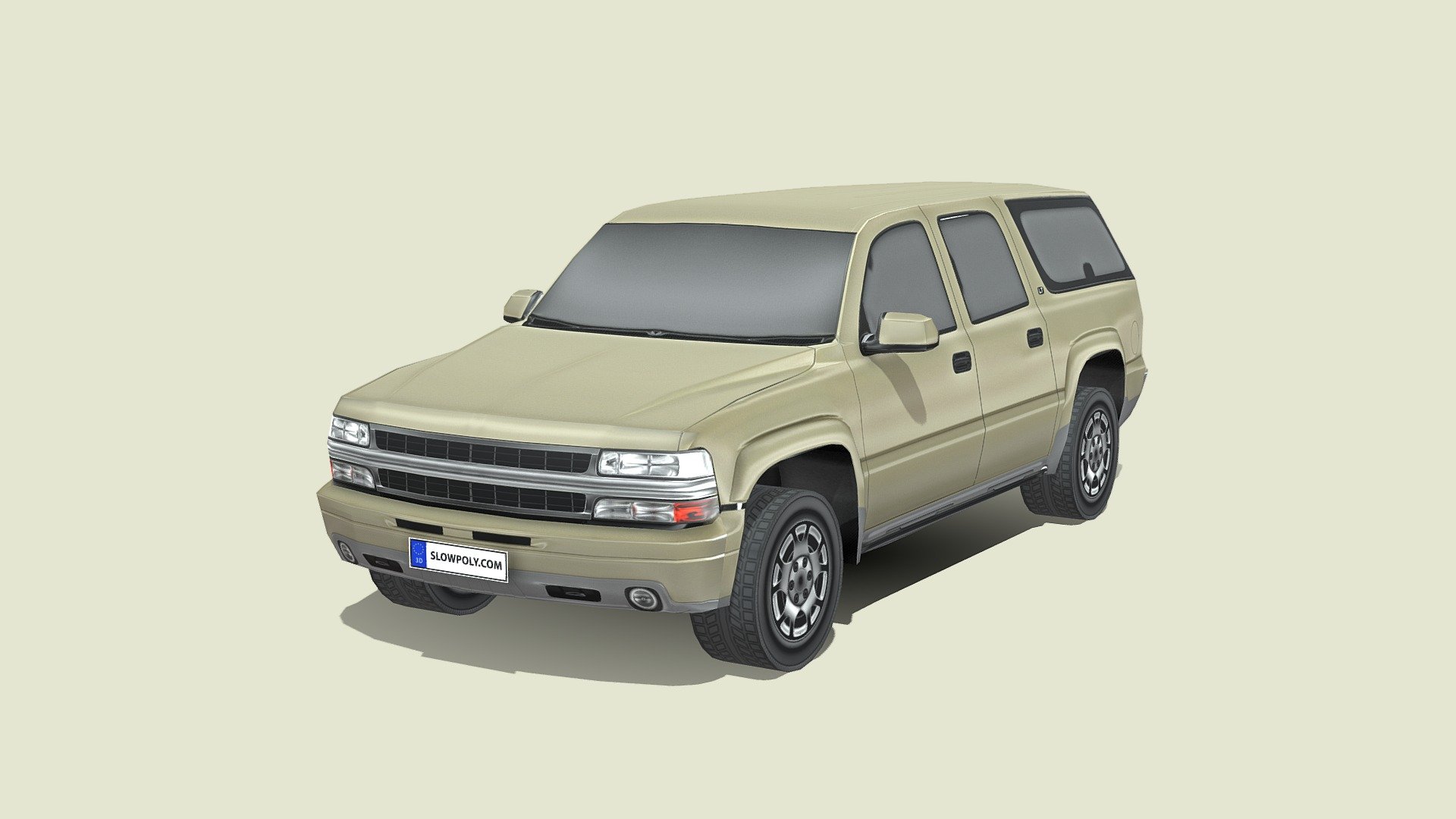
The 2005 Chevrolet SUV lineup represents a definitive era of American automotive history, defined by body-on-frame architectures, robust small-block V8 powerplants, and maximum passenger and towing utility. Spanning compact, midsize, and full-size segments, the 2005 model year solidified Chevrolet's dominance in the utility market just before a sweeping industry shift toward unibody crossovers and stricter fuel economy standards.
Evolution of the 2005 Chevrolet SUV Lineup
By 2005, General Motors had fully established the GMT800 platform for its full-size utility vehicles, while its midsize and compact offerings catered to a rapidly growing demographic of suburban families and outdoor enthusiasts. The 2005 model year was not a ground-up redesign, but rather a mature continuation phase where reliability, electronic stability control integration, and interior creature comforts received significant refinement.
Understanding this lineup requires examining how Chevrolet segmented its utility portfolio. Buyers in 2005 could choose from vehicles designed for heavy-duty towing, rugged off-road trail driving, or nimble urban commuting. The brand leveraged shared architectures and powertrain components to reduce manufacturing costs while offering distinct exterior styling and interior packaging across models.
Full-Size Giants: Tahoe, Suburban, and Avalanche
At the core of Chevrolet’s 2005 market share were the full-size body-on-frame sport utility vehicles built on the GMT800 platform. These models shared mechanical DNA with the Chevrolet Silverado pickup truck, offering exceptional structural rigidity and towing capacity.
Chevrolet Tahoe
The Chevrolet Tahoe remained the quintessential full-size family transporter. Available in both rear-wheel drive (2WD) and four-wheel drive (4WD) configurations, it seated up to nine passengers across three rows. Trim levels ranged from the base LS to the luxurious LT, with the Z71 off-road package catering to enthusiasts seeking specialized suspension tuning, skid plates, and unique body cladding.
Chevrolet Suburban
For buyers requiring maximum cargo and passenger capacity, the Chevrolet Suburban offered an extended wheelbase over the Tahoe. With nearly 20 additional inches of overall length, the Suburban provided generous third-row legroom and expansive cargo space even with all seats occupied. It served as the default choice for large families, government agencies, and commercial fleets requiring heavy-duty hauling capabilities.
Chevrolet Avalanche
Bridging the gap between pickup truck utility and SUV passenger comfort, the Chevrolet Avalanche featured a unique Midgate system. This removable partition allowed owners to convert the cabin from a traditional five-passenger crew cab into an open truck bed. Built on a modified Suburban frame, the Avalanche retained full-size SUV ride quality while offering unprecedented cargo flexibility.
Midsize and Compact Options: TrailBlazer and Tracker
While full-size models dominated sales volume, Chevrolet also offered competitive options in the midsize and compact segments for buyers seeking improved fuel efficiency and maneuverability.
Chevrolet TrailBlazer
The midsize Chevrolet TrailBlazer was built on the GMT360 platform and featured a sophisticated independent front suspension and a five-link solid rear axle. It was praised for its powerful standard Vortec 4200 inline-six engine, which punched above its weight class with 275 horsepower. The TrailBlazer lineup also included the extended TrailBlazer EXT variant, which added a third-row seat and a slightly longer wheelbase, as well as the performance-oriented TrailBlazer SS variant's early development groundwork (though the SS officially debuted for the 2006 model year).
Chevrolet Tracker
Representing the compact end of the spectrum, the Chevrolet Tracker was a lightweight, small-footprint utility vehicle derived from a joint venture with Suzuki. Available in two-door soft-top and four-door hardtop configurations, the Tracker was designed for budget-conscious buyers seeking basic four-wheel-drive capability and compact urban agility. By 2005, the Tracker was in its final production years for the North American market, paving the way for future compact offerings.
Powertrain Specifications and Engineering
The engineering philosophy behind the 2005 Chevrolet SUV lineup prioritized durability, torque delivery, and straightforward mechanical maintenance. Pushrod V8 engines and robust cast-iron or aluminum blocks formed the backbone of the mechanical offerings.
| Model | Standard Engine | Horsepower | Torque | Transmission | Max Towing Capacity |
|---|---|---|---|---|---|
| Chevrolet Tracker | 2.0L I4 | 127 hp | 131 lb-ft | 5-speed manual / 4-speed auto | 1,500 lbs |
| Chevrolet TrailBlazer | 4.2L Inline-6 (Vortec 4200) | 275 hp | 275 lb-ft | 4-speed automatic (4L60-E) | 6,300 lbs |
| Chevrolet Tahoe | 4.8L V8 (Vortec 4800) | 295 hp | 295 lb-ft | 4-speed automatic (4L60-E) | 7,700 lbs |
| Chevrolet Suburban 1500 | 5.3L V8 (Vortec 5300) | 295 hp | 335 lb-ft | 4-speed automatic (4L60-E) | 8,100 lbs |
| Chevrolet Suburban 2500 | 6.0L V8 (Vortec 6000) | 325 hp | 360 lb-ft | 4-speed heavy-duty (4L80-E) | 10,200 lbs |
Fuel economy across the full-size lineup was typical for the era, generally ranging between 12 to 16 mpg in city driving and 16 to 20 mpg on the highway, depending on axle ratios and drivetrain selection. Premium fuel requirements were generally avoided, as these engines ran efficiently on standard 87-octane gasoline.
Interior Design, Comfort, and Technology
Cabin design in 2005 Chevrolet SUVs reflected automotive ergonomics of the mid-2000s, utilizing durable plastics, faux wood accents, and available leather seating surfaces.
- Seating Configurations: Full-size models offered bench or bucket seats in the front, split-folding second rows, and removable or fold-flat third-row benches.
- Infotainment and Electronics: Factory-installed options included Bose audio systems, rear-seat DVD entertainment systems with wireless headphones, and early iterations of OnStar safety and telematics.
- Climate Control: Dual-zone automatic climate control was standard on higher trims like the LT, with separate rear-cabin controls mounted in the headliner or center console.
Ergonomically, dashboard layouts featured large, easy-to-read analog gauges and chunky climate and radio buttons designed to be operated while wearing work gloves. However, critics of the era frequently noted that the extensive use of hard plastics detracted from an otherwise functional cabin space.
Safety Ratings and Equipment
Safety standards in 2005 focused primarily on structural crashworthiness and foundational electronic aids rather than the comprehensive active driver-assistance suites standard in modern vehicles.
Standard safety equipment across the GMT800 full-size lineup included dual-stage frontal airbags, anti-lock braking systems (ABS), and daytime running lights. Side-impact curtain airbags were introduced as optional equipment on select trims late in the production cycle. Electronic Stability Control, marketed by GM as StabiliTrak, became increasingly available on full-size SUVs, helping drivers maintain control during emergency maneuvers by selectively applying brake pressure and reducing engine torque.
National Highway Traffic Safety Administration (NHTSA) crash tests generally awarded the 2005 Tahoe and Suburban four out of five stars for driver and front-passenger protection in frontal impacts, reflecting the mass advantage of body-on-frame construction in multi-vehicle collisions.
Common Ownership Considerations and Maintenance
Evaluating a 2005 Chevrolet SUV today requires understanding its mechanical strengths and well-documented wear points. These vehicles are generally regarded as mechanically resilient, but age-related maintenance is inevitable.
Common Mechanical Issues
- Transmission Wear: The 4L60-E four-speed automatic transmission found in the TrailBlazer, Tahoe, and 1500-series Suburban is prone to internal component wear—specifically clutch packs and sun shells—especially if used extensively for heavy towing without auxiliary fluid coolers.
- Suspension and Steering: Front suspension components, including ball joints, tie rod ends, and idler arms, experience accelerated wear due to the heavy weight of the front end.
- Electrical Gremlins: Instrument cluster stepper motors frequently fail, leading to inaccurate gauge readings (speedometer, fuel level, oil pressure). Door lock actuators and climate control blower motor resistors are also common failure points.
- Intake Manifold Gaskets: On Vortec V8 engines, original composite intake manifold gaskets can degrade over time, leading to minor coolant or vacuum leaks that trigger check-engine lights.
Despite these issues, parts availability is exceptional, and the aftermarket support network makes DIY repairs straightforward and economical compared to modern import alternatives.
Frequently Asked Questions
What is the towing capacity of a 2005 Chevrolet Tahoe?
A properly equipped 2005 Chevrolet Tahoe can tow between 7,400 and 7,700 pounds, depending on whether it is configured with rear-wheel drive or four-wheel drive and the selected rear axle gear ratio (such as the common 3.73 or 4.10 ratios).
Did the 2005 Chevrolet Suburban come with a V8 engine?
Yes. The 2005 Chevrolet Suburban 1500 came standard with either a 4.8-liter or 5.3-liter Vortec V8 engine, while the heavy-duty 2500 series stepped up to a robust 6.0-liter V8 designed for maximum payload and towing utility.
Is the 2005 Chevrolet TrailBlazer reliable?
The TrailBlazer is generally considered reliable, particularly due to its durable Vortec 4200 inline-six engine, which is mechanically robust and capable of surpassing high mileage thresholds with routine oil changes and basic maintenance.
What platform is the 2005 Chevrolet Tahoe built on?
The 2005 Chevrolet Tahoe is built on General Motors' truck-derived GMT800 platform, sharing its frame, suspension geometry, and powertrain architecture with the Chevrolet Silverado pickup truck of the same era.
What fuel economy does a 2005 Chevrolet Suburban achieve?
Real-world fuel economy for a 2005 Chevrolet Suburban typically ranges from 12 to 14 mpg in city driving and 16 to 19 mpg on the highway, resulting in a combined average of approximately 14 to 15 mpg under normal driving conditions.
Final Recommendation
For buyers evaluating a 2005 Chevrolet SUV today—whether for budget-friendly utility, restoration, or reliable winter transportation—focus on maintenance history rather than odometer readings alone. Prioritize models where previous owners have addressed transmission servicing, suspension wear, and intake gasket replacement. Inspect the frame rails for rust, especially on vehicles originating from northern states with winter road salting, and verify that all electronic accessories and four-wheel-drive engagement mechanisms function correctly before purchase.