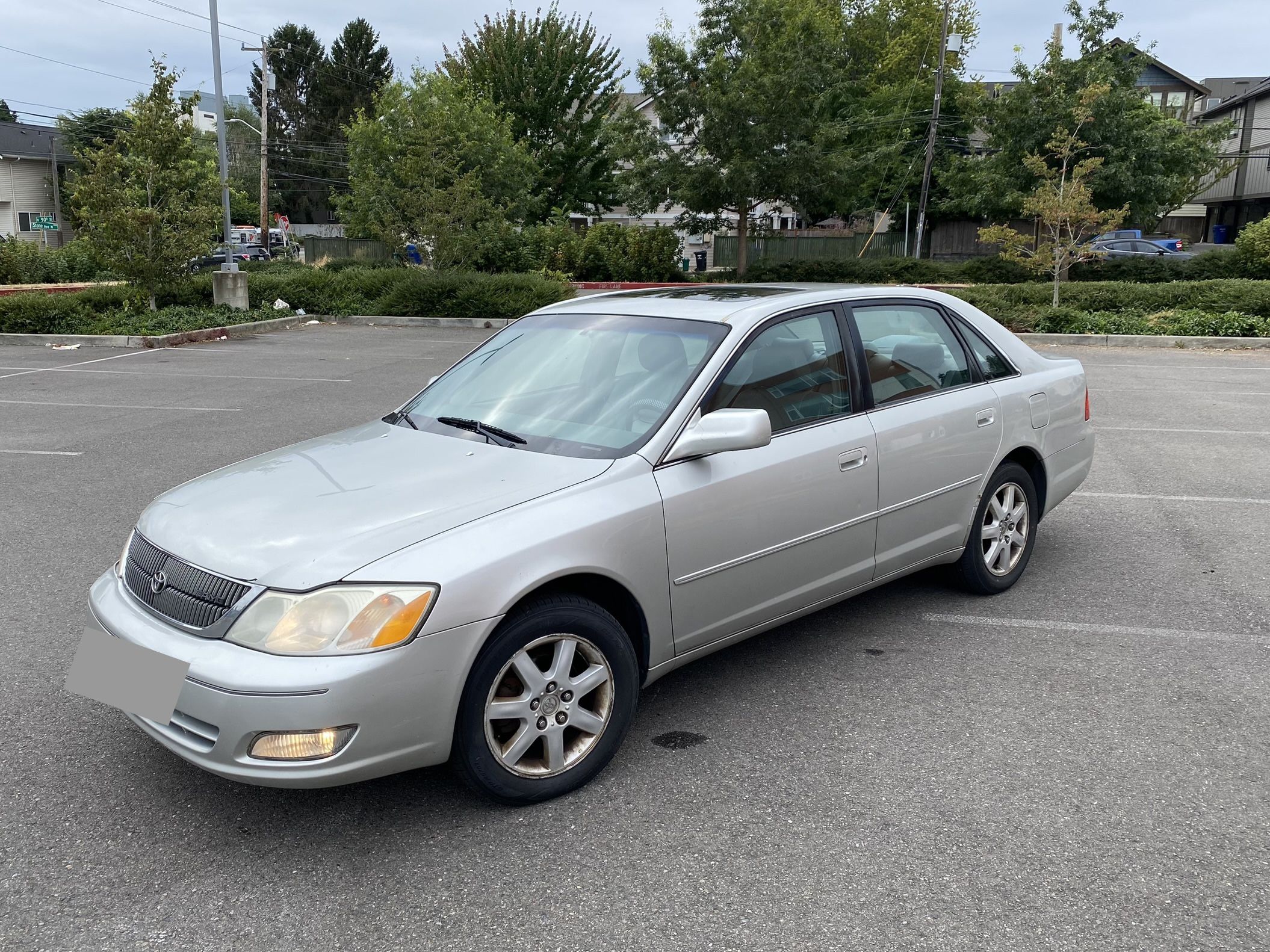
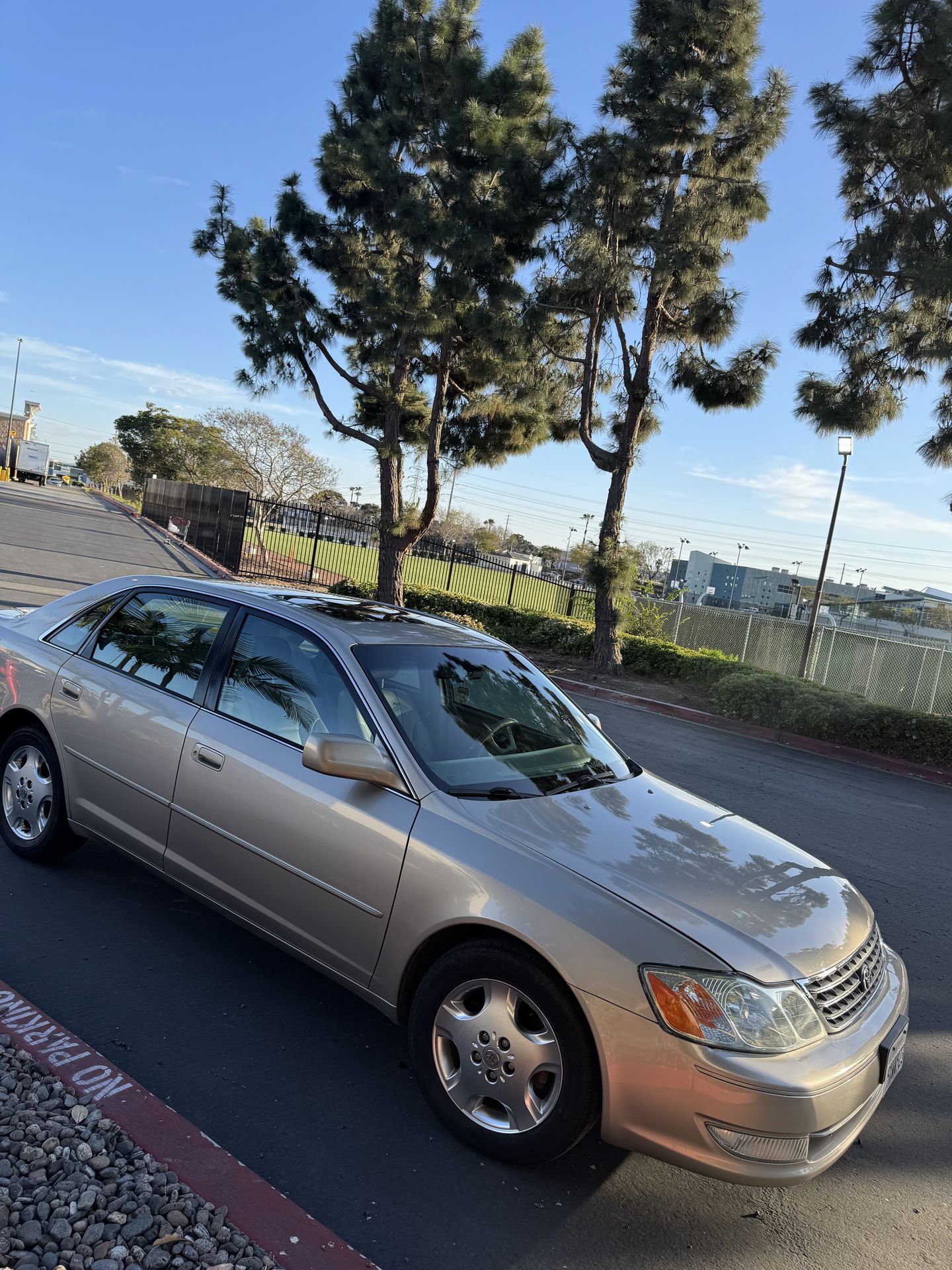
The 2003 Toyota Avalon XL is a full-size front-wheel-drive sedan powered by a 3.0-liter V6 engine producing 210 horsepower, mated to a 4-speed automatic transmission, offering a 103-inch wheelbase, MacPherson strut suspension, and an EPA fuel economy rating of roughly 19 mpg city and 27 mpg highway.
Introduction to the 2003 Toyota Avalon XL
The 2003 Toyota Avalon XL represents a specific era of American-market full-size sedans engineered for comfort, reliability, and highway cruising. Positioned as the top-tier passenger car in Toyota’s North American lineup prior to the introduction of the Avalon's later generations, the XL trim served as the well-equipped entry point, sitting just below the more luxurious Limited trim. Disambiguating the XL trim from the Limited is essential for buyers and enthusiasts: while the Limited included upscale amenities like automatic climate control, premium audio systems, and leather-trimmed seats as standard, the XL relied on a more traditional, utilitarian approach that still emphasized high build quality, ample interior volume, and a plush ride.
Understanding the precise specifications of the 2003 Toyota Avalon XL requires looking past general marketing claims and examining its mechanical blueprints, structural dimensions, powertrain output, and safety design. As automotive history values this model for its mechanical longevity, examining its detailed specifications provides necessary context for maintenance, restoration, or pre-purchase evaluation.
Powertrain and Mechanical Specifications
At the heart of the 2003 Toyota Avalon XL is a tried-and-true powerplant: the 1MZ-FE engine. This 3.0-liter, 2995 cc, 24-valve, double-overhead-cam (DOHC) V6 engine utilizes aluminum alloy for both its cylinder block and cylinder heads, paired with Toyota's VVT-i (Variable Valve Timing with intelligence) system. This mechanical configuration was designed to deliver smooth power delivery across a broad rpm range rather than aggressive track performance.
Engine Output and Performance Data
- Displacement: 3.0 liters (2,995 cc)
- Horsepower: 210 hp @ 5,800 rpm
- Torque: 220 lb-ft @ 4,400 rpm
- Compression Ratio: 10.5:1
- Bore x Stroke: 87.5 mm x 83.0 mm
- Fuel System: Sequential multi-port electronic fuel injection with knock control
The engine breathes through a resin intake manifold and expels gases via stainless steel exhaust manifolds. It is paired exclusively with a 4-speed electronically controlled automatic transmission with overdrive (ECT-i). This transmission features shift logic designed to minimize gear hunting on inclines and ensure seamless power delivery to the front wheels.
Dimensions, Weight, and Aerodynamics
The Avalon XL was engineered to maximize interior passenger volume, falling squarely into the full-size sedan classification of its time. Its exterior footprint balances road presence with maneuverability.
Exterior and Interior Measurements
- Wheelbase: 107.1 inches
- Overall Length: 191.9 inches
- Overall Width: 72.0 inches
- Overall Height: 58.5 inches
- Track Width (Front/Rear): 61.8 inches / 61.4 inches
- Curb Weight: Approximately 3,461 lbs
- Fuel Tank Capacity: 18.5 gallons
- Cargo Volume (Trunk): 16.0 cubic feet
The aerodynamic profile of the Avalon XL contributes to its highway stability, boasting a drag coefficient ($C_d$) of approximately 0.29. This low aerodynamic drag helps reduce wind noise at sustained highway speeds and optimizes fuel efficiency. The platform utilizes a unibody construction with front and rear crumple zones designed to absorb and dissipate frontal and rear impact energy.
Chassis, Suspension, and Braking Systems
Ride comfort is the defining characteristic of the 2003 Toyota Avalon XL chassis. Toyota engineered the suspension and braking architecture to isolate cabin occupants from road imperfections while maintaining predictable handling dynamics.
Suspension Architecture
- Front Suspension: Independent MacPherson struts with L-shaped lower arms, coil springs, gas-filled shock absorbers, and a stabilizer bar.
- Rear Suspension: Independent dual-link strut-type configuration with coil springs, gas-filled shock absorbers, and a stabilizer bar.
This four-wheel independent setup allows each wheel to react to road conditions independently, significantly reducing body roll during cornering compared to traditional live-axle layouts of earlier eras. Steering is handled by a variable-assist power rack-and-pinion system, providing a light steering feel at low parking speeds and a heavier, more stable resistance at highway velocity.
Braking and Wheels
- Front Brakes: Ventilated power-assisted disc brakes (approx. 10.8 inches).
- Rear Brakes: Solid power-assisted disc brakes (approx. 10.6 inches).
- Anti-lock Braking System (ABS): Standard four-channel, four-sensor system with Electronic Brake-force Distribution (EBD).
- Wheel and Tire Size: 15-inch steel wheels with full covers (or optional alloy wheels) wrapped in P205/65R15 all-season tires.
Interior Features, Comfort, and Technology
While the XL trim omitted some of the leather and woodgrain excesses of the Limited variant, it provided a spacious, functional cabin designed for long-distance driving.
Cabin Ergonomics and Seating
The Avalon XL was notable for its front bench seat configuration, which allowed the vehicle to seat up to six passengers across two rows. This bench seat featured a fold-down center armrest with integrated storage and cup holders, giving owners the flexibility of bucket-seat ergonomics with the capacity of a bench. Alternatively, some models were ordered with front bucket seats and a center console. Upholstery consisted of high-grade, durable fabric designed to withstand heavy wear.
Convenience and Climate Control
- Air Conditioning: Manual climate control system with high-output blower and rear passenger floor ducts.
- Audio System: AM/FM stereo with cassette player and in-dash single CD player, routing audio through a multi-speaker configuration.
- Instrumentation: Analog optitron-style gauges featuring a speedometer, tachometer, fuel level, and coolant temperature readouts.
- Storage: Deep door pockets, a dual-tier glove compartment, seatback pockets, and a spacious center console or armrest storage bin.
Fuel Economy and Environmental Specifications
The 2003 Toyota Avalon XL was designed to meet strict emissions standards of its era while delivering respectable fuel economy for a large V6 sedan.
| Metric | Specification |
|---|---|
| EPA City MPG | 19 mpg |
| EPA Highway MPG | 27 mpg |
| EPA Combined MPG | 22 mpg |
| Fuel Requirement | Regular Unleaded (87 octane or higher) |
| Emissions Certification | Low Emission Vehicle (LEV) compliant |
Real-world fuel economy typically mirrors these EPA figures when the vehicle is properly maintained, with clean air filters, fresh spark plugs, and properly inflated tires. The 18.5-gallon fuel tank allows for a theoretical highway cruising range of nearly 500 miles on a single fill-up, making it a capable road trip vehicle.
Safety Ratings and Equipment
Occupant protection in the 2003 Toyota Avalon XL relied on a combination of passive structural design and active restraint systems.
Passive and Active Safety Features
- Airbags: Dual-stage driver and front passenger frontal airbags. Front seat-mounted side-impact airbags were available as an optional extra.
- Seatbelts: 3-point seatbelts for all five primary seating positions, with height-adjustable shoulder anchors and pretensioners for the front occupants.
- Child Safety: Lower Anchors and Tethers for CHildren (LATCH) system in the rear outboard seating positions, along with rear door child-safety locks.
- Structural Safety: High-strength steel side-impact door beams and energy-absorbing cabin pillars.
In crash testing conducted by the National Highway Traffic Safety Administration (NHTSA), the 2003 Avalon platform earned high marks, scoring 5 stars for driver protection and 4 to 5 stars for front passenger protection in frontal impact tests.
Maintenance Considerations and Common Issues
Maintaining a 2003 Toyota Avalon XL in peak operating condition requires attention to a few known mechanical tendencies associated with the 1MZ-FE engine platform.
Common Mechanical Points to Monitor
- Valve Cover Gaskets: Over time, the rubber gaskets tend to harden and leak oil into the spark plug tubes or down the exterior of the engine block. Replacement is straightforward during routine spark plug changes.
- Knock Sensors: The wiring harness and sensors can degrade due to heat cycles, triggering a check engine light (Diagnostic Trouble Code P0325 or P0330).
- Timing Belt: The 1MZ-FE utilizes an interference engine design driven by a rubber timing belt. This belt, along with the water pump and tensioner pulleys, must be replaced every 90,000 miles or 9 years to prevent catastrophic engine damage.
- Suspension Struts: Original struts and mount bearings frequently wear out past the 150,000-mile mark, resulting in a floaty ride or clunking noises over bumps.
Frequently Asked Questions
What kind of engine does the 2003 Toyota Avalon XL have?
The 2003 Toyota Avalon XL is powered by a 3.0-liter 24-valve V6 engine (designated 1MZ-FE) featuring VVT-i technology. It produces 210 horsepower and 220 lb-ft of torque, providing smooth acceleration suited for highway cruising and daily commuting.
Does the 2003 Toyota Avalon XL have a timing belt or timing chain?
The 2003 Toyota Avalon XL uses a rubber timing belt rather than a timing chain. Because the 3.0L V6 is an interference engine, this belt must be inspected and replaced every 90,000 miles to prevent internal engine damage if the belt snaps.
How many people can seat in a 2003 Toyota Avalon XL?
Depending on how it was optioned from the factory, the Avalon XL can seat up to six passengers. It frequently featured a front bench seat with a column-mounted or dash-adjacent shifter layout, though individual front bucket seats were also an available configuration.
What is the fuel economy of the 2003 Toyota Avalon XL?
The EPA fuel economy rating for the 2003 Avalon XL is 19 mpg in the city and 27 mpg on the highway, with a combined rating of 22 mpg. It runs on standard regular unleaded gasoline (87 octane).
Is the 2003 Toyota Avalon XL reliable?
The 2003 Toyota Avalon XL is widely regarded as an exceptionally reliable vehicle. With basic preventative maintenance—specifically routine oil changes, transmission fluid services, and timely timing belt replacements—these sedans frequently exceed 250,000 to 300,000 miles of service.
Conclusion and Next Actions
The 2003 Toyota Avalon XL remains a benchmark for durable, comfortable full-size sedan engineering. Reviewing its specifications confirms that its appeal lies in mechanical simplicity, ride quality, and structural integrity. If you are evaluating a used model, verify the maintenance history specifically regarding the timing belt replacement interval, check for oil leaks around the valve cover gaskets, and test-drive the vehicle to ensure the 4-speed automatic transmission shifts smoothly across all gears.