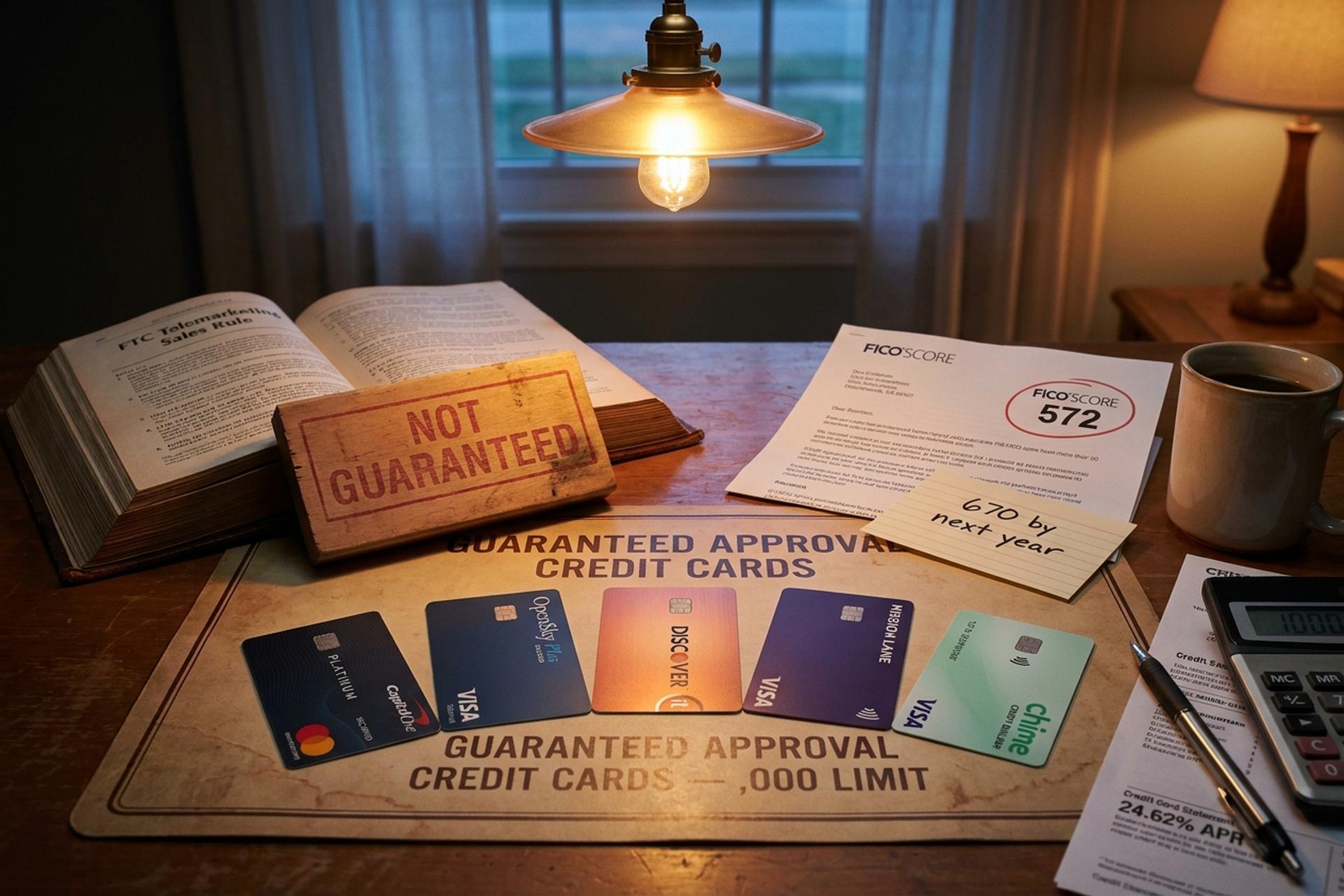
Navigating the credit market when you have poor credit, no credit history, or past bankruptcies often leads consumers to search for "1000 limit guaranteed approval credit cards," though financial realities dictate that no legitimate credit card issuer can offer a guaranteed approval policy or an automatic $1,000 credit limit without checking a consumer's financial background, relying instead on secured credit cards and alternative lending products that require a refundable security deposit.
The Reality of "Guaranteed Approval" and Credit Limits
When researching credit products, consumers frequently encounter advertisements or forum discussions promising "guaranteed approval" or immediate access to a $1,000 credit limit. In the context of modern personal finance, these claims require careful evaluation. Under federal lending regulations and standard risk-management practices, regulated financial institutions and major credit card issuers cannot and do not guarantee credit approval for every applicant. Every legitimate credit card application undergoes some form of underwriting, identity verification, and risk assessment.
The term "guaranteed approval" is typically a marketing tactic used by predatory lenders, fee-heavy catalog cards, or subprime issuers. These offers often target individuals with damaged credit scores who are desperate to secure revolving credit. While the issuer may ultimately approve the application, they frequently attach hidden administrative fees, high annual percentage rates (APRs), and monthly maintenance charges that rapidly consume the initial available credit.
Furthermore, receiving a specific $1,000 credit limit out of the gate is rarely automatic for applicants with impaired credit profiles. For unsecured credit cards, issuers base the credit limit on the applicant’s income, debt-to-income ratio, and credit score. If an applicant has a low credit score or a thin credit file, an unsecured card—if approved—will typically start with a much lower limit, such as $300 or $500, to mitigate the issuer's financial exposure.
Secured credit cards represent the primary pathway for individuals to secure a $1,000 credit limit without a pristine credit history. With a secured card, the credit limit is directly tied to a security deposit provided by the cardholder. By depositing $1,000 into a collateral account, the consumer effectively secures a $1,000 credit limit. This structure eliminates financial risk for the issuer, which is why approval rates for secured cards are exceptionally high, provided the applicant can verify their identity, pass basic anti-fraud checks, and afford the initial deposit.
How Secured Credit Cards Work as an Alternative
For consumers seeking a reliable revolving credit line with a predictable limit, secured credit cards function as the most dependable and cost-effective mechanism available. Understanding the operational mechanics of these products helps demystify how a consumer can reliably obtain and manage a $1,000 credit limit.
A secured credit card requires the cardholder to place a cash security deposit with the issuing bank or credit union before opening the account. This deposit acts as collateral for the line of credit. If the cardholder defaults on their payments, the issuer uses the deposit to cover the outstanding balance. Because the issuer bears virtually no financial risk, approval criteria are lenient, focusing primarily on identity verification and the ability to fund the deposit rather than historical credit scores.
| Feature | Secured Credit Cards | Subprime Unsecured "Guaranteed" Cards |
|---|---|---|
| Approval Odds | High (subject to identity and deposit verification) | Often misleadingly marketed; approval is never 100% guaranteed |
| Initial Credit Limit | Equal to the security deposit (e.g., $1,000 deposit = $1,000 limit) | Typically low ($200–$500), reduced further by upfront fees |
| Upfront Costs | Refundable security deposit; minimal or zero application fees | High setup fees, annual fees, and monthly maintenance charges |
| Credit Bureau Reporting | Reports to all three major bureaus (Experian, Equifax, TransUnion) | Varies; some report only negative data or charge fees to report |
| Deposit Return | Fully refundable upon account closure with a zero balance or graduation | N/A (fees are non-refundable) |
The operational process for establishing a secured card with a $1,000 limit involves several straightforward steps:
- Research and Selection: Identify issuers that offer secured cards reporting payment history to all three major credit bureaus (Experian, Equifax, and TransUnion).
- Application Submission: Complete the application providing personal identification, Social Security number, employment status, and gross annual income.
- Deposit Funding: Upon conditional approval, transfer or pay the security deposit. To secure a $1,000 limit, the applicant must deposit exactly $1,000, though some issuers allow deposits ranging from $200 up to $5,000.
- Account Activation: Receive the physical card in the mail, activate it, and begin making routine purchases while maintaining a low credit utilization ratio.
Understanding Underwriting and Verification Requirements
Even though secured credit cards and reputable credit-builder products offer high acceptance rates, issuers must comply with federal banking laws, including the USA PATRIOT Act and the Truth in Lending Act. These regulations require institutions to verify the identity of every applicant and ensure transparency regarding costs and terms.
When an applicant submits an information packet for a credit card, the issuer initiates an automated or manual underwriting review. This review checks several baseline parameters:
- Identity Verification: The issuer verifies the applicant’s legal name, residential address, date of birth, and Social Security number or Individual Taxpayer Identification Number (ITIN). Discrepancies in public records can trigger a request for documentation, such as a utility bill or driver's license.
- Ability to Pay: Under the Credit CARD Act of 2009, issuers must evaluate an applicant's independent ability to make the required minimum payments. For unemployed applicants, household income or alternative financial resources can often be considered legally.
- Deposit Clearance: For secured cards, the application cannot be fully processed until the security deposit clears the applicant's external checking or savings account. This process can take anywhere from three to five business days.
- Credit Report Inquiry: Most issuers perform a soft credit check during initial pre-qualification or a hard credit inquiry upon formal application. Consumers should verify whether the inquiry impacts their credit score before applying.
Pitfalls of Subprime Unsecured Offers
Consumers searching for an easy credit fix frequently fall victim to predatory financial products masquerading as guaranteed approval cards with high limits. Recognizing the warning signs of predatory lending protects consumers from accumulating unnecessary debt and destructive fees.
Predatory credit card offers often feature aggressive marketing campaigns promising to ignore past bankruptcies, foreclosures, or charge-offs. However, the fine print reveals a burdensome fee structure. A typical predatory card might advertise a $1,000 credit limit but immediately deduct a setup fee, an annual fee, and a monthly participation fee from the available credit before the card is even mailed.
Consequently, a consumer might activate a card with a nominal $1,000 limit only to find that $300 or $400 has already been consumed by mandatory fees. This leaves the cardholder with a severely restricted available balance and a high utilization ratio from day one, which actively harms their credit score rather than helping it. Furthermore, these cards often carry exorbitant APRs exceeding 30%, compounding the financial burden if the balance is not paid in full each month.
To avoid these traps, consumers must carefully review the Schumer Box—the standardized table that discloses APRs, annual fees, transaction fees, and grace periods—before submitting any personal information or financial commitments to an issuing institution.
Steps to Build Credit and Qualify for Higher Limits
Achieving a true, unsecured credit card with a $1,000 or higher limit requires a systematic approach to credit management. Building a robust credit profile takes time, discipline, and adherence to proven financial practices.
- Establish Consistent Payment History: Payment history accounts for 35% of a consumer's FICO score. Making on-time payments every month is the single most effective action a borrower can take. Setting up automatic payments for at least the minimum amount prevents accidental late payments.
- Maintain Low Credit Utilization: Utilization represents the amount of revolving credit currently being used compared to the total credit limit. Keeping utilization below 30%—and ideally below 10%—signals responsible credit management to scoring models and issuers.
- Graduate Secured Cards: Many reputable issuers of secured cards periodically review accounts after 6 to 12 months of consecutive on-time payments. If the account demonstrates responsible usage, the issuer may automatically refund the security deposit, transition the account to an unsecured card, and potentially increase the credit limit.
- Monitor Credit Reports Regularly: Consumers are entitled to free weekly credit reports from the three major credit bureaus through AnnualCreditReport.com. Reviewing these reports ensures accuracy and helps identify potential errors or fraudulent activity early.
Frequently Asked Questions
Are there any credit cards with truly guaranteed approval?
No legitimate, regulated credit card issuer offers truly guaranteed approval to every applicant. All financial institutions must verify applicant identity, assess fraud risk, and evaluate the applicant's ability to make payments in accordance with federal lending laws. Offers claiming 1000 limit guaranteed approval credit cards are typically marketing hooks for secured cards or subprime products with high fees.
How do I get a $1,000 credit limit if I have bad credit?
The most reliable method to secure a $1,000 credit limit with bad credit is through a secured credit card. By depositing $1,000 of your own money into a collateral account with the issuing bank, you establish a matching $1,000 credit limit. This eliminates risk for the lender, resulting in near-certain approval while allowing you to build positive payment history.
Do secured credit card deposits earn interest?
In most cases, security deposits held for secured credit cards do not earn interest. However, policies vary by institution. Some specialized credit unions or online fintech platforms offer interest-bearing security deposit accounts or certificates of deposit (CDs) that serve as collateral while generating modest returns.
How long does it take for a secured card to graduate to unsecured?
The timeline for a secured card to graduate to an unsecured card depends on the issuer's internal policies and your account performance. Most major issuers conduct automatic reviews between 6 and 12 months. Consistent on-time payments, maintaining a low balance, and practicing overall good financial hygiene accelerate the graduation process.
Will applying for a secured credit card hurt my credit score?
Applying for a secured credit card typically results in a hard credit inquiry, which can temporarily lower your credit score by a few points. However, the long-term positive impact of establishing an on-time payment history and increasing your total available credit far outweighs the temporary dip from the inquiry.
What fees should I watch out for when looking for credit-building cards?
When evaluating credit cards for rebuilding or establishing credit, carefully inspect the Schumer Box for application fees, monthly maintenance fees, annual fees, and excessive late payment charges. Reputable secured cards typically feature low or zero annual fees and do not charge monthly maintenance fees just to keep the account open.
Practical Next Actions
For consumers seeking a reliable revolving line of credit with a $1,000 limit, the most prudent course of action is to evaluate established financial institutions offering secured credit cards. Avoid subprime lenders that demand exorbitant upfront fees for unsecured cards with unverified approval promises. Determine your available cash flow to fund a refundable security deposit, verify that the card issuer reports to all three major credit bureaus, and commit to paying your balance in full each month to build a durable, positive credit history.