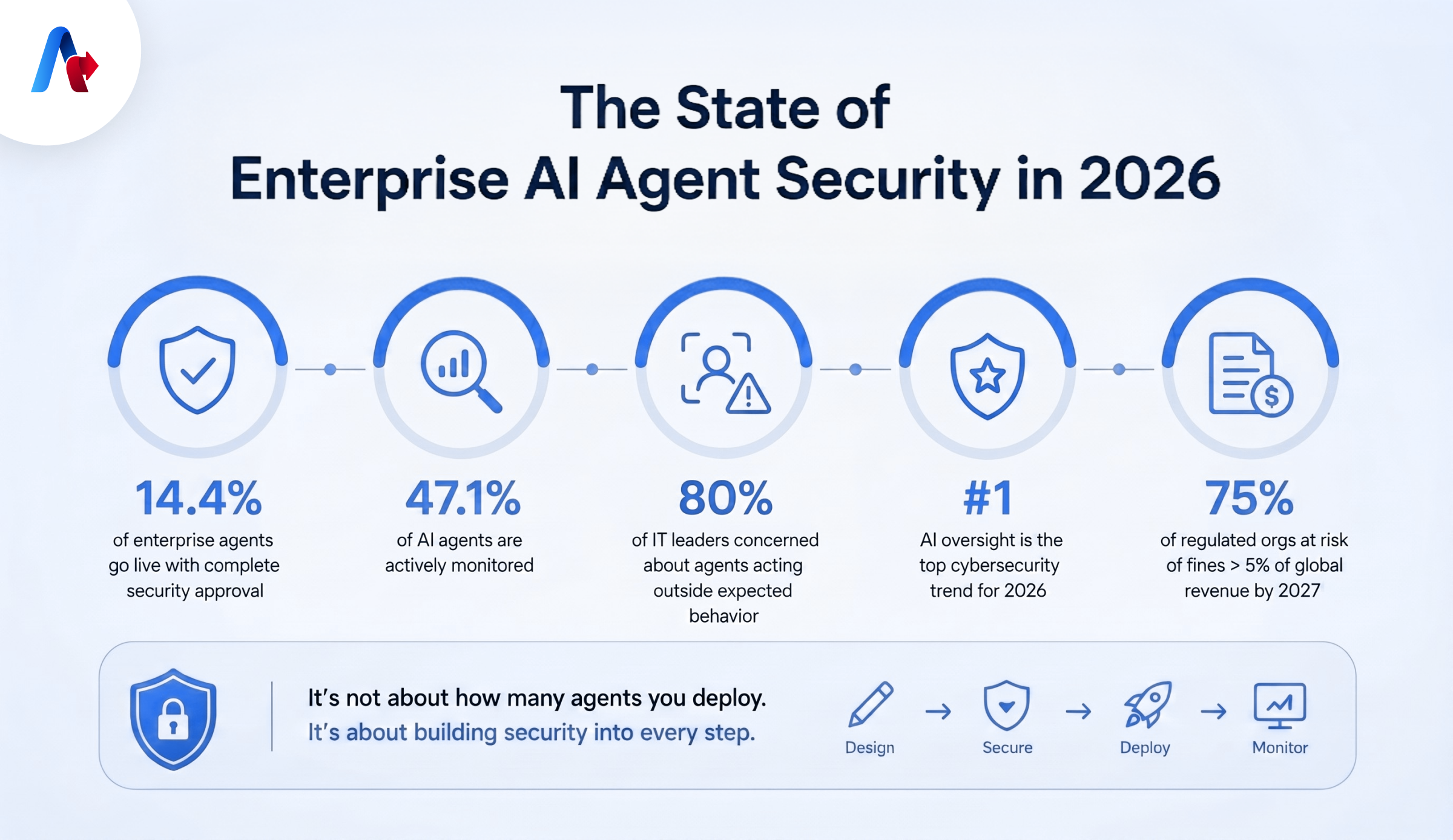
The Cloud Security Alliance AI Agent Security Guidelines establish a standardized framework for organizations deploying autonomous artificial intelligence agents, addressing expanded attack surfaces, authorization boundaries, and data governance challenges unique to multi-agent cloud ecosystems.
Introduction to AI Agent Security in Modern Cloud Environments
As artificial intelligence shifts from static chat interfaces to autonomous, goal-driven agents capable of executing multi-step workflows, enterprise risk profiles have fundamentally transformed. Traditional application security models assume deterministic software execution and human-in-the-loop validation for critical actions. In contrast, modern AI agents utilize large language models (LLMs) to reason, plan, and autonomously interact with APIs, databases, and third-party software development kits (SDKs). Recognizing the urgent need for structural defense mechanisms, the Cloud Security Alliance (CSA) has developed targeted frameworks to secure these complex deployments.
The primary search intent surrounding these guidelines centers on understanding how to architect secure agentic workflows without sacrificing operational velocity. Security architects, compliance officers, and cloud engineers must navigate dynamic prompt injection vulnerabilities, unauthorized tool utilization, and fragmented identity management. This article provides a comprehensive exploration of the CSA agent security framework, detailing its structural components, technical prerequisites, comparative defense strategies, and implementation methodologies required for enterprise environments.
The Evolution of Agentic Workflows and Threat Vectors
To understand the necessity of specialized security guidelines, one must first examine how AI agents differ from traditional software applications and legacy machine learning models. Legacy cloud applications rely on hardcoded control flows where inputs map to predictable execution paths. Autonomous AI agents, however, dynamically interpret natural language instructions, generate their own execution plans, and invoke tools—such as database queries, code interpreters, or enterprise resource planning (ERP) systems—based on real-time reasoning.
This autonomy introduces a severe expansion of the threat landscape. Attackers no longer merely target data leakage or model inversion; they exploit the agent's reasoning loop to execute unauthorized system commands. The CSA framework categorizes these risks into distinct vectors that require specialized mitigation techniques:
- Indirect Prompt Injection: Malicious instructions hidden within third-party data sources (such as a customer email, a scraped webpage, or an uploaded PDF) that hijack the agent's original objectives and force it to exfiltrate sensitive data or execute malicious API calls.
- Excessive Agency and Privilege Drift: Granting an AI agent broad API tokens or system-level permissions that exceed its operational requirements, enabling compromised agents to inflict widespread damage across cloud environments.
- Insecure Tool and Plugin Integration: Flaws in how agents interface with external functions, allowing attackers to manipulate input parameters passed to underlying software development kits or database connectors.
- State Confusion and Context Manipulation: Exploiting the agent's memory or conversation history to inject false assumptions, leading to incorrect authorization decisions or unauthorized state transitions.
Core Pillars of the CSA Security Framework
The Cloud Security Alliance guidelines are structured around several foundational pillars designed to establish defense-in-depth for agentic architectures. Each pillar addresses a specific layer of the agent lifecycle, from initial prompt processing to final tool execution and logging.
1. Identity, Authentication, and Authorization (IAM) for Non-Human Actors
In traditional cloud security, IAM policies govern human users and static service accounts. AI agents introduce the concept of dynamic, non-human identities that make contextual decisions. The CSA guidelines mandate the implementation of ephemeral, least-privilege tokens for every tool invocation. Rather than issuing a master API key to an agentic workflow, systems must dynamically provision scoped credentials that expire immediately after a specific task sequence concludes.
Furthermore, authorization must transition from static role-based access control (RBAC) to dynamic, attribute-based access control (ABAC) combined with runtime intent verification. If an agent attempts to access a database table, the authorization gateway must evaluate not only who is asking (the agent identity) but why they are asking (the verified context of the current user goal).
2. Runtime Guardrails and Input/Output Sanitization
Protecting autonomous agents requires real-time inspection layers placed between the LLM reasoning engine and external environments. The CSA framework emphasizes dual-checkpoint validation:
- Input Guardrails: Intercepting user prompts and retrieved external data before they reach the model context window. These filters scan for jailbreak attempts, system prompt extraction, and embedded indirect prompt injections.
- Output Guardrails: Analyzing the model's generated plan and tool-call parameters before execution. If an agent generates a shell command or a database query that violates predefined safety policies, the output guardrail blocks execution and routes the task to a human administrator.
3. Secure Memory and Context Management
AI agents rely on working memory and vector databases to maintain state across long-running tasks. If an attacker pollutes this memory store with malicious historical logs or false facts, the agent's subsequent reasoning steps become compromised. The guidelines recommend cryptographically signing or isolating memory segments associated with specific user sessions, ensuring that cross-session data contamination or persistent injection attacks are structurally prevented.
Comparative Analysis of Agentic Defense Strategies
Securing cloud-native AI agents requires balancing operational autonomy against strict security boundaries. Organizations typically evaluate multiple architectural patterns to enforce control. The table below compares common defensive approaches highlighted in enterprise cloud security architectures.
| Defense Strategy | Primary Mechanism | Pros | Cons / Operational Limitations |
|---|---|---|---|
| Static API Scoping | Limiting agent keys to read-only or restricted endpoints. | Simple to implement within existing cloud IAM policies. | Inflexible; prevents agents from executing complex, multi-step write workflows. |
| Human-in-the-Loop (HITL) | Requiring human approval for high-impact tool calls (e.g., financial transactions). | Maximum safety for critical actions; prevents runaway agent loops. | Introduces latency; defeats the purpose of fully autonomous background workflows. |
| Runtime Guardrail Proxies | Inspecting and filtering all tool payloads via dedicated security microservices. | Automated, low-latency protection against injection and data exfiltration. | Requires complex infrastructure management and continuous rule updates. |
| Ephemeral Sandboxing | Executing agent-generated code and tool calls in isolated, single-use microVMs. | Contains potential breakouts and malicious code execution completely. | High compute overhead; increased infrastructure costs for high-volume systems. |
Step-by-Step Implementation Methodology
Transitioning enterprise systems to align with cloud security guidelines requires a phased, methodical approach. Organizations should avoid deploying autonomous agents into production without establishing baseline observability and control planes.
Step 1: Asset Discovery and Inventory Mapping
Begin by cataloging all deployed LLMs, orchestration frameworks (such as LangChain, Semantic Kernel, or custom agent loops), and the external tools, APIs, and databases they can access. Document every data source the agent interacts with, classifying data sensitivity levels from public to restricted.
Step 2: Principle of Least Privilege Refinement
Audit all existing agent permissions. Revoke broad administrative API tokens and replace them with granular, scoped permissions. Implement a policy where agents must request temporary capability elevations through a secure broker service rather than holding persistent high-privilege credentials.
Step 3: Deployment of Runtime Inspection Proxies
Integrate security gateways between the agent orchestration layer and external destinations. Configure these proxies to inspect JSON payloads, SQL queries, and shell commands generated by the agent. Establish automated blocking rules for dangerous operations, such as unauthorized data exports or system-level command execution.
Step 4: Comprehensive Audit Logging and Traceability
Because agentic workflows involve non-deterministic reasoning chains, traditional application logs are insufficient. Implement distributed tracing systems that record the entire chain of thought: the initial user prompt, retrieved external context, model intermediate reasoning steps, generated tool calls, and final execution outputs. This telemetry is critical for post-incident forensics and compliance verification.
Common Pitfalls and Operational Mistakes
Organizations adopting advanced AI agent architectures frequently encounter predictable security failure modes. Recognizing these pitfalls helps engineering teams avoid costly vulnerabilities during production rollouts.
- Treating LLMs as Trusted Parsers: Assuming that a language model can reliably distinguish between legitimate instructions and malicious data embedded within a retrieved document. LLMs process all input tokens as instructions unless separated by strict structural boundaries.
- Over-Reliance on System Prompts for Security: Relying solely on system instructions (e.g., "Never reveal customer data") to enforce security boundaries. Clever prompt injections can easily override soft system prompts; security must be enforced at the infrastructure and API gateway layer.
- Neglecting Third-Party Tool Risks: Securing the core model while leaving connected third-party plugins or APIs unvetted. If a connected plugin lacks proper authentication checks, it becomes an open backdoor into enterprise databases.
- Ignoring Cost and Resource Exhaustion: Failing to implement token limits, execution step caps, or rate limits on agent loops. Malicious prompts or logical bugs can cause an agent to enter an infinite execution loop, resulting in massive cloud compute bills or denial-of-service conditions.
Frequently Asked Questions
What are the main security risks associated with autonomous AI agents in the cloud?
Autonomous agents face risks that combine traditional cloud vulnerabilities with unique AI challenges. These include indirect prompt injection (where external data hijacks the agent's goals), excessive agency (over-provisioned API permissions), insecure tool integration, and context pollution within agent memory systems.
How do cloud security guidelines address indirect prompt injection?
Guidelines emphasize treating all external data sources—such as emails, web pages, and uploaded files—as untrusted input. Security frameworks recommend deploying runtime guardrails, input sanitization layers, and structural separation of instructions from data within the model's context window.
Why is traditional IAM insufficient for AI agents?
Traditional IAM relies on static identities and predictable execution paths. AI agents operate dynamically, making runtime decisions about which tools to use and what data to access. They require dynamic, ephemeral, attribute-based access controls that evaluate the context of the current task rather than relying solely on static user roles.
How can organizations balance agent autonomy with enterprise safety?
Organizations achieve this balance through defense-in-depth strategies, including runtime guardrail proxies that automatically block dangerous API calls, ephemeral sandboxing for code execution, and selective human-in-the-loop approval gates for high-impact or irreversible transactions.
What telemetry is required to audit AI agent behavior effectively?
Standard application logs are inadequate for tracing non-deterministic reasoning. Organizations must implement specialized distributed tracing that captures the complete execution chain: user inputs, retrieval-augmented generation (RAG) context, intermediate model thoughts, tool parameter payloads, and final outputs.
Conclusion and Next Actions
Securing agentic cloud environments requires a fundamental shift from static perimeter defense to dynamic, runtime governance. Security leaders must move beyond trusting LLM prompts and implement rigorous technical controls, including ephemeral least-privilege IAM, real-time input/output inspection proxies, and comprehensive execution tracing. To begin, security teams should conduct an immediate inventory of all active agent deployments, audit their connected tool permissions, and integrate runtime guardrails before expanding autonomous capabilities into production environments.