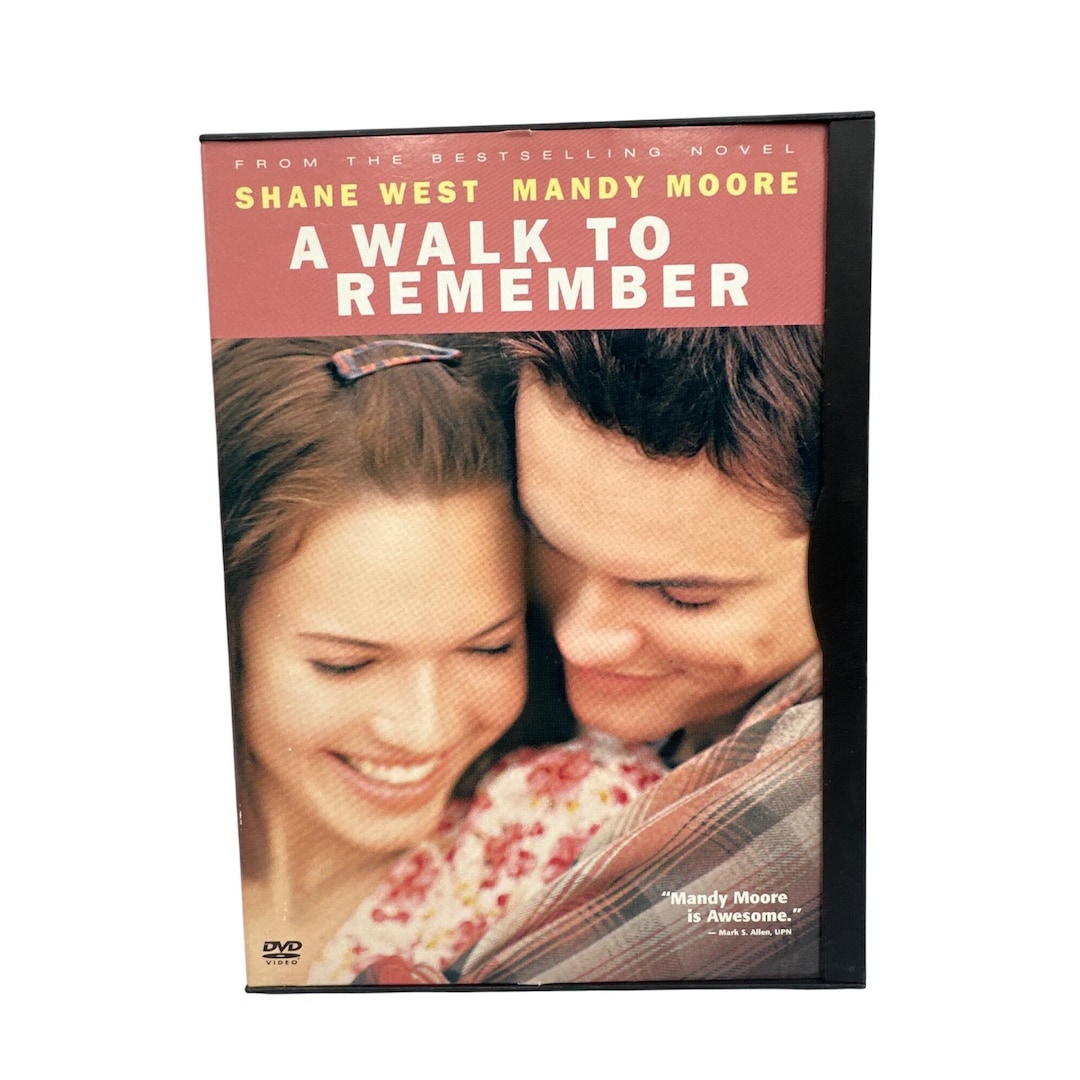
Nicholas Sparks’s bestselling 1999 novel A Walk to Remember and its 2002 film adaptation share the same emotional core, but they differ significantly in their settings, character arcs, and plot details. While the book is set in the 1950s and features a deeply spiritual, plain-looking Jamie Sullivan, the movie updates the timeline to the early 2000s, makes Jamie conventionally attractive, and transforms Landon Carter from a rebellious jerk into an indifferent adolescent forced to undergo a redemptive transformation.
Introduction and Cultural Context
When Nicholas Sparks published A Walk to Remember in October 1999, the novel quickly captured a massive readership with its sentimental, faith-driven narrative of teenage love and tragedy. The book drew heavily upon Sparks's personal history, specifically inspired by his younger sister, Danielle, who passed away from cancer in 2000.
Just a few years later, in January 2002, Warner Bros. released the cinematic adaptation directed by Adam Shankman and starring Shane West as Landon Carter and Mandy Moore as Jamie Sullivan. The film adaptation altered numerous elements of the source material to appeal to contemporary adolescent audiences, modernizing the aesthetic, adjusting character motivations, and altering the specific mechanics of the plot. Examining the differences between the A Walk to Remember book and movie highlights how Hollywood translates print media into visual storytelling, altering tone and character development to fit a two-hour theatrical run.
Temporal Setting and Atmosphere
The most immediate and striking difference between the book and the movie is the time period in which the story takes place.
The 1950s Nostalgia of the Novel
In the original book, Nicholas Sparks sets the narrative in 1958. This mid-century setting heavily influences the atmosphere, social norms, and pacing of the story. The small town of Beaufort, North Carolina, feels isolated and culturally distinct from the rapid modernization of the late 20th century. High school culture in the late 1950s carries distinct social codes, and the clothing, vernacular, and general worldview of the characters reflect a simpler, more conservative era. This temporal placement allows Sparks to frame the story as a nostalgic reminiscence, told from the perspective of an older Landon Carter looking back at his youth.
The Turn-of-the-Millennium Modernization of the Film
The 2002 film adaptation completely discards the 1950s setting, updating the timeline to contemporary early-2000s America. The characters wear modern denim, listen to pop-rock music, use early-generation cell phones, and navigate the high school social hierarchies typical of the turn of the millennium. This modernization was a deliberate strategic choice by the filmmakers to make the story relatable to contemporary teenagers, ensuring the film could compete with other youth-oriented romance movies of the era. However, this change shifts the cultural texture of the narrative, trading mid-century quaintness for high school teen-movie tropes.
Character Conception and Physical Appearance
How the two main characters—Landon Carter and Jamie Sullivan—are introduced and developed represents a major divergence point between the two mediums.
Jamie Sullivan: From Plain to Polished
In the novel, Jamie Sullivan is deliberately described as plain, unconcerned with fashion, and visually unremarkable. She wears an oversized brown cardigan every day, pins her hair back in a severe bun, and carries her Bible wherever she goes. Her appearance makes her an outcast at school, someone the cool clique actively ignores or mocks.
In the film, Mandy Moore portrays Jamie Sullivan. Despite wearing oversized sweaters and minimal makeup in the first half of the film, Moore remains a recognizable pop star and actress with conventional Hollywood beauty. When the plot reaches the pivotal school play scene where Jamie removes her cardigan to reveal a striking white dress, the visual transformation is framed as a traditional Hollywood glow-up. This shift alters the social dynamics of the story; in the movie, Jamie is ostracized primarily because she is deeply religious and studious, whereas the book's Jamie is genuinely overlooked due to her lack of conventional aesthetic appeal.
Landon Carter: From Cynic to Reluctant Hero
Landon Carter undergoes a notable softening in the transition from page to screen. In the novel, Landon is part of a wealthy, prominent local family and begins the story surrounded by edgy, rebellious peers who engage in minor vandalism and casual cruelty. His initial attitude toward Jamie is marked by genuine annoyance and peer-pressure-driven cruelty.
In the movie, Landon is introduced as a cynical, disillusioned troublemaker who participates in a dangerous prank that goes wrong, forcing him to perform community service as punishment. This community service requirement—which includes tutoring younger children and participating in the school spring musical—provides an immediate structural framework for his forced proximity to Jamie. While both versions feature Landon maturing through his relationship with Jamie, the movie leans into the "bad boy redeemed by a good girl" trope, whereas the book presents a more internal, spiritually grounded awakening.
Plot Structure and Narrative Events
While the general trajectory—boy meets girl, boy falls in love with terminally ill girl, tragedy strikes, and love endures—remains the same, the specific events and subplots diverge sharply.
| Element | The Book (1999) | The Movie (2002) |
|---|---|---|
| Setting | Beaufort, North Carolina in 1958 | Beaufort, North Carolina in the early 2000s |
| Landon's Status | Son of a wealthy, respected congressman | Disaffected high school rebel doing court-ordered service |
| Jamie's Appearance | Plain, wears oversized cardigans and a bun | Played by Mandy Moore; traditional Hollywood beauty |
| The Spring Play | A Christmas play written by Jamie's father | A modern high school musical production |
| Jamie's Wish | To get married in the church and plant a tree | To get married in the church and witness a miracle |
| The Ending | Landon visits her years later as an adult, remembering her | Emotional flash-forward showing Landon transformed |
The High School Play and Musical Rehearsals
In the book, Jamie’s father, Hegbert Sullivan, writes a local Christmas pageant titled The Christmas Angel, and Landon is forced to star in it alongside Jamie. The play is a modest, community-centric church production that highlights the deep religious fabric of their small town.
In the movie, the production is changed to a secular high school musical directed by a dramatic teacher, and Jamie sings the musical centerpiece. This change allows Mandy Moore to showcase her real-world musical talents, giving the film its most iconic soundtrack moments, including her performance of "Only Hope."
The Climax and Resolution
The emotional climax in both versions centers on Jamie’s leukemia diagnosis. However, the narrative resolutions differ in scope and tone. In the book, Landon and Jamie marry in the small church, and the story concludes with an epilogue set four years later, where an older Landon visits Jamie's grave and reflects on how she taught him the true meaning of faith and love.
The movie compresses this timeline. After their wedding, Jamie passes away shortly thereafter. The film concludes with a poignant flash-forward showing Landon returning to Beaufort years later, having successfully entered medical school—fulfilling a promise to Jamie—and demonstrating how profoundly she changed his life path.
Thematic Treatment of Faith
Religion and faith occupy a central role in both versions, but their execution reflects the different narrative constraints of novels versus cinema.
Nicholas Sparks infuses the book with explicit Christian themes. Jamie’s faith is unwavering, grounded in constant prayer, biblical study, and active charity work. Landon’s internal monologue details his gradual theological shift from skepticism to a profound, spiritual acceptance of God’s plan, even in the face of insurmountable sorrow.
The film softens the overt theological dialogue to appeal to a broader, multiplex audience. While Jamie’s faith remains the cornerstone of her character, the movie frames her beliefs more as general spiritual purity, optimism, and emotional resilience rather than strict evangelical adherence. This makes the film accessible to viewers of diverse backgrounds while retaining the core message of selflessness and grace.
Critical Reception and Legacy
Upon release, A Walk to Remember by Nicholas Sparks received mixed reviews from literary critics who pointed out its sentimental and predictable plotting, yet it became a massive commercial success that cemented Sparks's status as a master of contemporary romantic drama.
The 2002 film adaptation met a similar critical reception initially—earning a modest rating on aggregate review sites—yet it achieved enduring cult status among fans of early-2000s teen cinema. The film's soundtrack, emotional resonance, and chemistry between Mandy Moore and Shane West helped it outlast many of its contemporary teen romance counterparts, making it a definitive cultural touchstone for the genre.
Frequently Asked Questions
Which came first, the book or the movie?
The novel came first, published by Nicholas Sparks in October 1999. The cinematic adaptation followed a little over two years later, premiering in theaters in January 2002.
Does Jamie die in both the book and the movie?
Yes, Jamie Sullivan passes away from leukemia in both versions. Her terminal illness serves as the emotional catalyst for Landon’s maturation and the story's tragic romantic core.
Why did the movie change the setting from the 1950s to the modern day?
The filmmakers decided to update the timeline to the early 2000s to make the story more relatable to contemporary teen moviegoers, utilizing modern fashion, music, and social dynamics.
Did Mandy Moore sing her own songs in the movie?
Yes, Mandy Moore performed all of her character's vocal tracks in the film, including her standout performance of "Only Hope" during the school musical sequence.
Which version is more faithful to the emotional tone of Nicholas Sparks's writing?
While the movie simplifies some of the deeper religious and historical nuances of the 1950s book, both versions successfully capture the tear-jerking, sentimental romance that defines Nicholas Sparks's signature storytelling style.
Conclusion and Final Recommendation
Choosing between A Walk to Remember book and movie depends largely on personal preference for narrative depth versus cinematic romance. Readers seeking a slower-paced, spiritually grounded, and historically textured 1950s period piece will find the novel offers richer character development and internal reflection. Conversely, viewers looking for a poignant, visually polished teen romance driven by strong early-2000s nostalgia and memorable musical performances will find the film adaptation to be a satisfying watch. For the complete experience, reading the novel first provides the foundational context, while watching the film brings the emotional musical moments to life.