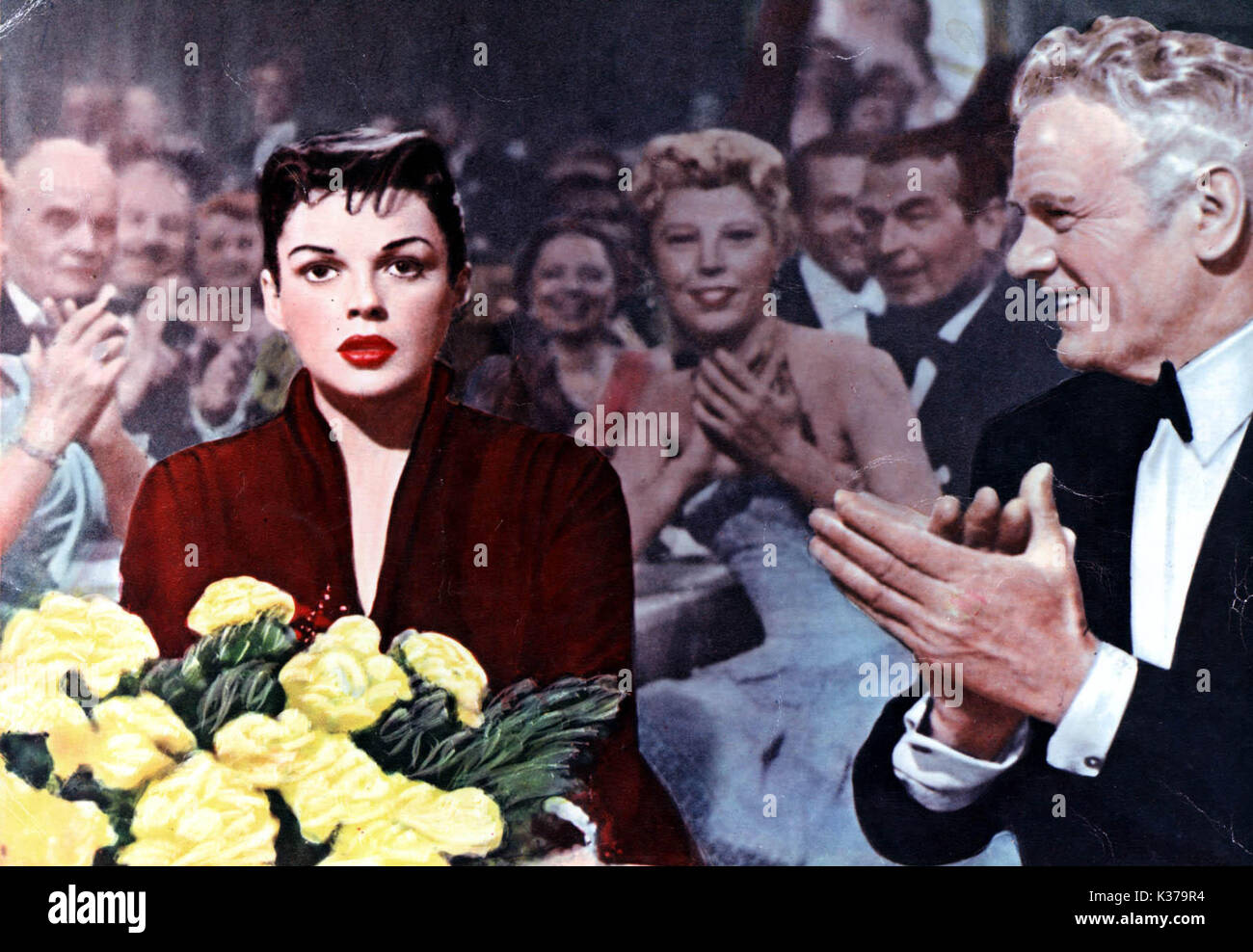
The 1954 version of A Star Is Born, starring Judy Garland and James Mason, is widely regarded as the definitive cinematic exploration of fame, addiction, and sacrifice. Directed by George Cukor, this musical drama serves as a showcase for Garland’s unparalleled talent, while its complex production and subsequent restoration have made it a cornerstone of film history and preservation.
The Genesis of the 1954 Masterpiece
The 1954 production of A Star Is Born was more than just a remake of the 1937 film starring Janet Gaynor; it was designed as a monumental "comeback" vehicle for Judy Garland. After being released from her contract at MGM in 1950 following years of personal and professional struggles, Garland sought a project that would re-establish her status as the world’s greatest entertainer. Along with her husband and producer Sid Luft, she formed Trans-Cinerama (later Transcona Enterprises) to produce the film in partnership with Warner Bros.
The project was ambitious from the outset. Warner Bros. spared no expense, eventually spending over $5 million—an astronomical sum for the early 1950s—making it one of the most expensive films ever produced at that time. The studio’s investment was a gamble on Garland's box-office draw and the public’s enduring fascination with the "rise and fall" narrative of Hollywood itself.
George Cukor’s Vision
Director George Cukor, who had famously declined to direct the 1937 original because it felt too close to his own experiences in Hollywood, was persuaded to helm the 1954 version. Cukor was known as a "woman's director," a label he disliked but which reflected his ability to elicit extraordinary performances from leading ladies. For A Star Is Born, Cukor moved beyond simple melodrama, utilizing the new CinemaScope technology to create a sense of intimacy within a widescreen format.
Cukor’s direction focused on the psychological toll of celebrity. Unlike later iterations that leaned heavily into the rock-and-roll lifestyle, the 1954 film is a deeply felt character study. It explores the transition of Esther Blodgett into Vicki Lester not just as a career change, but as a total reconstruction of identity, while simultaneously charting the disintegration of Norman Maine’s dignity.
Technical Specifications and Innovation
The film was a technical marvel of its era. It was one of the first major features to use CinemaScope, a wide-screen process that required directors to rethink how they staged scenes. Cukor used the width of the frame to emphasize the distance growing between the two leads, even when they shared the screen.
| Feature | Specification (1954 Original Release) |
|---|---|
| Director | George Cukor |
| Screenwriter | Moss Hart |
| Cinematography | Winton C. Hoch and Sam Leavitt |
| Aspect Ratio | 2.55:1 (CinemaScope) |
| Film Process | Technicolor |
| Sound | 4-track Magnetic Stereo |
| Original Runtime | 181 minutes (Premiere) |
| Restored Runtime | 176 minutes (1983 Reconstruction) |
The use of Technicolor in the film is legendary. The vibrant, saturated colors in musical sequences like "Born in a Trunk" contrast sharply with the muted, somber tones used during Norman Maine’s private moments of despair. This visual dichotomy reinforces the film's theme: the bright facade of Hollywood versus the dark reality of those who inhabit it.
The Narrative Heart: Norman Maine and Vicki Lester
At its core, A Star Is Born is a tragedy of crossing trajectories. James Mason delivers what many critics consider his finest performance as Norman Maine, a charismatic but fading matinee idol struggling with chronic alcoholism. Mason’s Maine is not a villain; he is a man of deep sensitivity who recognizes Esther’s genius instantly.
Judy Garland’s portrayal of Esther Blodgett/Vicki Lester is often cited as one of the greatest performances in the history of motion pictures. Garland brings a raw, vulnerable quality to the role that mirrors her own real-life struggles. Her ability to pivot from a powerhouse musical number to a scene of quiet, devastating heartbreak is what gives the film its lasting power.
Key Scenes and Performances
The film’s emotional anchor is the song "The Man That Got Away." Filmed in a single, continuous take (after many failed attempts and different lighting setups), it captures Garland at the height of her powers. The scene takes place in a dark, after-hours club where Esther sings for herself and her fellow musicians. Norman Maine watches from the shadows, and in that moment, the audience sees what he sees: a star being born.
Another pivotal sequence is the "Born in a Trunk" medley. Although it was added late in production and not directed by Cukor (it was handled by Richard Barstow), it serves as a condensed biography of a performer’s life. While some critics argue it slows the narrative, it remains a quintessential display of Garland’s versatility, encompassing comedy, dance, and dramatic singing.
The Tragedy of the Cutting Room Floor
The history of A Star Is Born is inextricably linked to its editing. After the film's successful premiere in late 1954, which ran 181 minutes, theater owners complained that the length limited the number of daily screenings. Against Cukor’s wishes, Warner Bros. executives cut approximately 27 minutes from the film.
These cuts were devastating. They removed crucial character development scenes, including the early stages of Esther and Norman’s romance and several musical bridges. The result was a film that felt choppy and less emotionally resonant. Tragically, the studio ordered the excised footage to be destroyed to recover the silver content in the film stock—a common practice at the time that led to the loss of many cinematic treasures.
The 1983 Restoration
For decades, the full version of the film was thought to be lost forever. In the early 1980s, film historian Ronald Haver embarked on a quest to reconstruct the original 181-minute cut. While he was unable to find all the lost footage, he discovered the complete original soundtrack.
Haver’s restoration, released in 1983, used the recovered audio paired with production stills and "pan-and-scan" movements to fill the gaps where the film was missing. This reconstruction allowed audiences to finally experience the narrative depth Cukor had intended. As of 2026, this version remains the standard for home media and archival screenings, preserving the integrity of the performances even where the visuals are incomplete.
Critical Reception and the Academy Awards Controversy
Upon its release, the film received glowing reviews, particularly for Garland and Mason. However, its legacy is also marked by one of the most famous upsets in Academy Award history. At the 27th Academy Awards in 1955, Judy Garland was the heavy favorite for Best Actress.
Garland was in the hospital having recently given birth to her son, Joey Luft, and a television crew was stationed in her room to capture her acceptance speech. In a shocking turn of events, the award went to Grace Kelly for The Country Girl. The "snub" is still discussed by film historians today as a moment where the industry failed to recognize a transformative, once-in-a-generation performance. James Mason also lost the Best Actor award to Marlon Brando (On the Waterfront).
Despite the lack of major Oscars, the film's reputation has only grown over the decades. It is frequently cited on lists of the greatest films ever made and was selected for preservation in the United States National Film Registry in 1983 for being "culturally, historically, or aesthetically significant."
Comparing the Iterations of A Star Is Born
The 1954 version sits in the middle of a long line of "Star" stories. Each version reflects the era in which it was made.
| Year | Lead Actress | Lead Actor | Primary Setting |
|---|---|---|---|
| 1937 | Janet Gaynor | Fredric March | Classic Hollywood (Drama) |
| 1954 | Judy Garland | James Mason | The Golden Age Musical |
| 1976 | Barbra Streisand | Kris Kristofferson | The Rock Music Industry |
| 2018 | Lady Gaga | Bradley Cooper | Modern Country/Pop Industry |
While the 2018 version brought the story to a new generation with great success, the 1954 version is unique because it is the only one that functions as both a film and a meta-commentary on its lead star’s actual life. When Vicki Lester cries over Norman Maine’s decline, audiences in 1954 (and 2026) cannot help but see the echoes of Garland’s own well-documented battles.
Why the 1954 Version Remains Relevant in 2026
In an era of digital perfection and rapid-fire content, the 1954 A Star Is Born stands as a testament to the power of the "long-form" emotional journey. It does not rush its characters. The descent of Norman Maine is painful and slow, and the rise of Vicki Lester is earned through grueling work and heartbreak.
The film also serves as a masterclass in musical integration. The songs are not just breaks in the action; they are the action. They reveal the characters' internal states in ways that dialogue alone cannot. For modern audiences and film students, studying Cukor’s use of space and Garland’s use of her voice remains essential.
Accessibility and Viewing Recommendations
For those looking to experience this classic in 2026, the following steps are recommended:
- Seek the Restored Version: Ensure you are watching the 176-minute reconstruction. The shorter 154-minute version, which still circulates on some platforms, lacks the emotional weight provided by the restored audio and stills.
- High-Definition Formats: The film was shot in Technicolor and CinemaScope. To appreciate the visual grandeur, watch it in 4K Ultra HD or Blu-ray if possible. The color depth and wide frames are significantly diminished on standard-definition streams.
- Contextual Reading: Before watching, a brief review of Judy Garland’s career between 1950 and 1954 adds a layer of poignancy to her performance.
Frequently Asked Questions
Why is part of the 1954 version shown with still photos?
The still photos are used to fill gaps where the original film footage was cut and destroyed by the studio in late 1954. During the 1983 restoration, the complete audio track was found, but approximately 20 minutes of film remained lost. Using production stills allowed the restorers to keep the story intact and use the recovered audio.
Did Judy Garland win an Oscar for A Star Is Born?
No, she did not. Although she was the favorite to win Best Actress at the 1955 Academy Awards, the award went to Grace Kelly for The Country Girl. This remains one of the most controversial losses in Oscar history.
Is the 1954 version a remake of the 1937 film?
Yes, it is the first remake of the 1937 original. While the basic plot—an older star helping a younger star rise while he falls into alcoholism—remains the same, the 1954 version turned the story into a musical and significantly deepened the psychological profiles of the characters.
Who wrote the songs for the 1954 A Star Is Born?
The songs were written by the legendary team of Harold Arlen (music) and Ira Gershwin (lyrics). Their contributions include "The Man That Got Away," "Gotta Have Me Go with You," and "It's a New World."
How long is the full version of the movie?
The original premiere version was 181 minutes. The most complete version available today is the 1983 restoration, which runs approximately 176 minutes.
Final Recommendation for Viewers
To truly appreciate A Star Is Born starring Judy Garland (1954), one must view it not just as a movie, but as an event. It is a sprawling, ambitious, and deeply moving piece of art that captures the highest highs and lowest lows of the human condition. Whether you are a fan of classic Hollywood musicals or a student of dramatic acting, this film is an essential requirement. Experience it on the largest screen possible to fully absorb the CinemaScope compositions and the sheer magnitude of Garland’s performance.