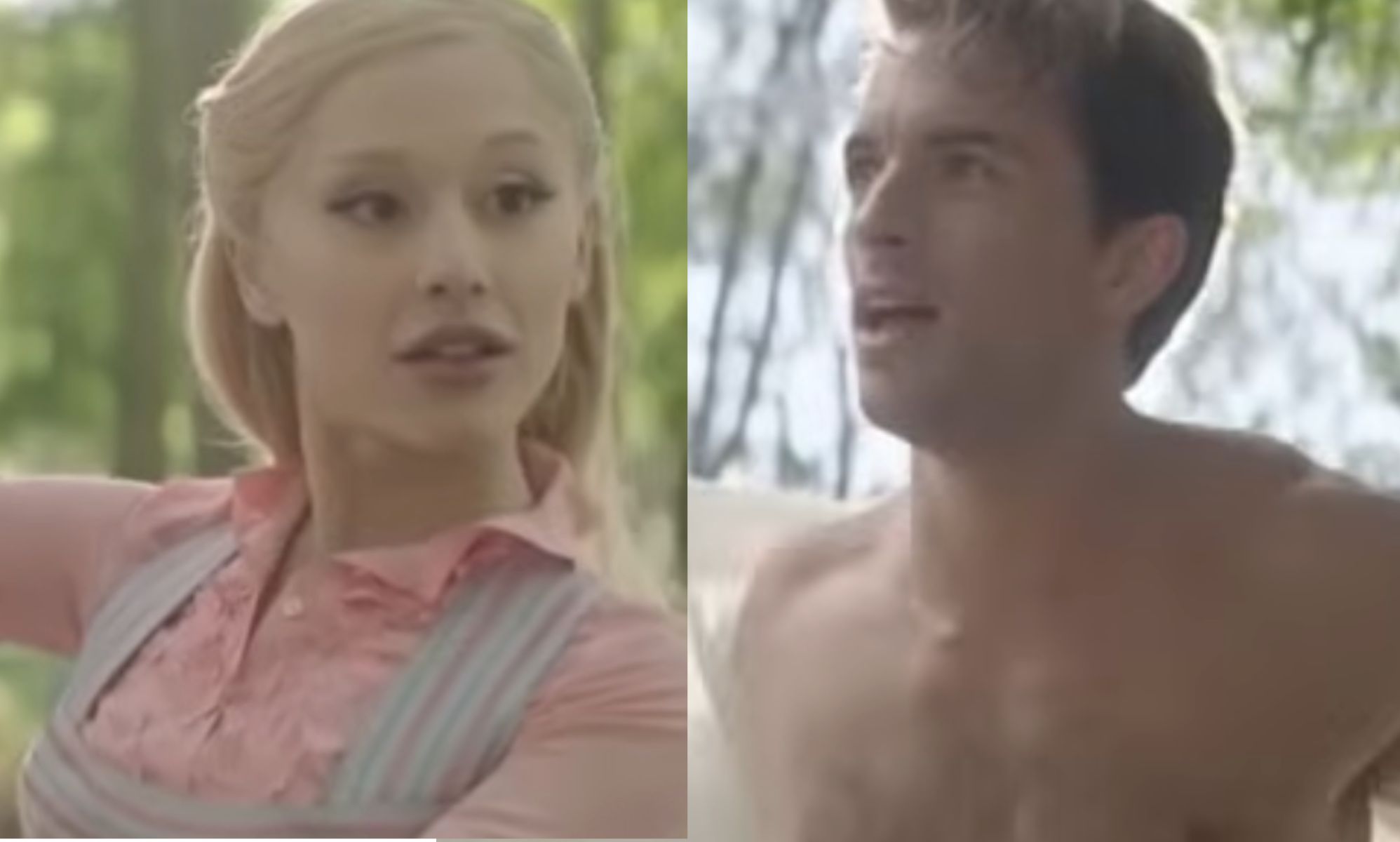
In the canonical scripts of the Wicked musical and the original novel by Gregory Maguire, neither Elphaba nor Glinda is explicitly identified as gay. Both characters share a primary romantic interest in Fiyero. However, the intense emotional bond between them is frequently interpreted through a queer-coded lens, leading many fans and performers to view their connection as a profound "soulmate" relationship that transcends traditional friendship.
Understanding the Relationship Dynamics in Wicked
To answer whether the main characters in Wicked are gay, one must first distinguish between the three primary versions of the story: the 1995 novel by Gregory Maguire, the 2003 Broadway musical, and the two-part film adaptation completed by 2025. Across all these iterations, the central theme remains the complicated, transformative relationship between Elphaba Thropp (the Wicked Witch of the West) and Glinda Upland (the Good Witch).
While the plot of each version includes a heterosexual romantic arc involving Fiyero Tigelaar, the emotional gravity of the story is almost entirely centered on the two women. This has led to decades of academic analysis, fan fiction, and "shipping" (the act of rooting for a romantic pairing) within the LGBTQ+ community. As of 2026, the discussion around the "queerness" of Wicked has only intensified following the cinematic release, which leaned heavily into the chemistry between the two leads.
The Original Novel: Gregory Maguire’s Vision
In Gregory Maguire's Wicked: The Life and Times of the Wicked Witch of the West, the world of Oz is much darker and more sexually complex than the Broadway version. The novel explores themes of political corruption, racial tension (between humans and Animals), and fluid morality.
In the book, Elphaba is depicted as having a significant and tragic sexual relationship with Fiyero. This affair is a central plot point that drives her character's development and her eventual descent into isolation. Glinda, similarly, is portrayed as having various romantic interests and eventually marrying.
However, Maguire’s writing often blurs the lines of intimacy. There is a specific sequence in the novel where Elphaba and Glinda share a bed during their time at Shiz University. While the text does not describe a sexual encounter, the intimacy—both physical and emotional—is palpable. Maguire has often stated in interviews that he views the bond between the two women as a "love story," though not necessarily a sexual one. In the literary sense, their relationship fits the "romantic friendship" trope often found in 19th-century literature, where two women share a level of devotion that mirrors or exceeds that of a marriage.
The Broadway Musical: Queer Coding and Subtext
When Wicked was adapted for the stage by Stephen Schwartz and Winnie Holzman, the story was streamlined into a more traditional musical theater structure. The political nuances were simplified, and the friendship between Elphaba and Glinda became the undisputed heart of the show.
What is Queer Coding?
"Queer coding" refers to the practice of giving a character traits, behaviors, or narratives that suggest they belong to the LGBTQ+ community without explicitly stating their identity. In Wicked, several elements contribute to this interpretation:
- The "Outsider" Narrative: Elphaba’s experience as a "green girl" is a powerful metaphor for anyone who feels different from the societal norm. Her struggle for acceptance and her eventual "coming out" against the Wizard’s regime resonates deeply with the LGBTQ+ experience.
- The "What Is This Feeling?" Dynamic: In the musical, the song "What Is This Feeling?" is used to establish the "loathing" between the two characters. However, musical theater history is full of romantic "meet-cutes" that begin with animosity. The high energy and obsession they show toward one another are often seen as a thin veil for attraction.
- The "For Good" Finale: The show's climactic duet, "For Good," is arguably one of the most romantic songs in modern musical theater, despite being sung between two friends. The lyrics—"Because I knew you, I have been changed for good"—describe a soul-deep transformation that many viewers interpret as a declaration of love.
The Role of Fiyero
The presence of Fiyero is the primary argument against the characters being "gay" in a strictly literal sense. In the musical, both Elphaba and Glinda are in love with him. Fiyero eventually chooses Elphaba, and their duet "As Long As You're Mine" is a standard heterosexual romantic ballad.
Critics and fans often suggest that Fiyero serves as a "beard" or a safe narrative device that allows the show to maintain mainstream appeal while the "real" love story happens between the two women. This interpretation suggests that while the characters may be bisexual or pansexual, the heteronormative constraints of traditional musical theater in 2003 prevented an explicit romantic relationship between them.
The 2024-2025 Movie Adaptations and Modern Perspectives
By the time the two-part film adaptation concluded its run in 2025, the cultural conversation had shifted significantly. Directed by Jon M. Chu and starring Cynthia Erivo as Elphaba and Ariana Grande as Glinda, the films brought a new level of scrutiny to the characters' sexualities.
The filmmakers and actors were aware of the "Gelphaba" (Glinda + Elphaba) shipping culture. During the press tours in late 2024 and throughout 2025, both Erivo and Grande spoke about the "cosmic love" between their characters. While the films did not change the plot to make the characters explicitly gay—preserving the Fiyero romance—the chemistry was directed in a way that acknowledged the queer fans' perspective.
In the 2026 cultural landscape, Wicked is widely accepted as a "queer" story, regardless of whether the characters are canonically gay. This is because the story focuses on the liberation of the self, the rejection of oppressive structures, and a love that defies "gravity"—all hallmarks of queer cinema and literature.
Comparing Character Orientations Across Media
The following table summarizes the romantic and sexual orientations of the main characters as presented in the various versions of Wicked.
| Version | Elphaba's Romantic Interest | Glinda's Romantic Interest | Relationship Nature | Explicit LGBTQ+ Content |
|---|---|---|---|---|
| Novel (1995) | Fiyero (Sexual/Romantic) | Various suitors/Husband | Intense, lifelong soul-bond | Implied fluidity; political themes |
| Musical (2003) | Fiyero (Romantic) | Fiyero (Romantic/Social) | "Best Friends" with heavy subtext | None (Queer-coded) |
| Film (2024/25) | Fiyero (Romantic) | Fiyero (Romantic) | Deep emotional/cosmic intimacy | Subtle nods; "Pink & Green" branding |
Are There Any Gay Characters in Wicked?
While the question of Elphaba and Glinda remains in the realm of subtext and interpretation, the broader world of Wicked does occasionally touch on LGBTQ+ representation, depending on the production.
Supporting Characters
In the original novel, Maguire includes several side characters who inhabit the fringes of Ozian society, some of whom are implied to have same-sex interests. In various stage productions of the musical, certain ensemble members or minor characters are sometimes played with a queer sensibility, though the script does not explicitly define their sexuality.
Pfannee and Shenshen
In the Shiz University scenes, Glinda’s two sycophantic friends, Pfannee and Shenshen, are sometimes portrayed with a "mean girl" coding that fans have occasionally interpreted as having a repressed or subtle queer dynamic, though this is rarely a focus of the narrative.
The Wizard and Gender/Identity
Some modern analyses of Wicked look at the Wizard of Oz himself as a figure of performative identity. While not "gay" in the traditional sense, the Wizard represents the artifice of persona—someone who is not who they claim to be. This resonates with the "closeted" experience, though it is more of a metaphorical connection than a literal one.
The "Gelphaba" Phenomenon: Why Fans Ship Them
The term "shipping" is central to understanding why so many people believe Elphaba and Glinda are gay. The "Gelphaba" ship is one of the most enduring in theater history. There are several reasons why this pairing is so popular:
- Opposites Attract: The "Pink and Green" aesthetic is a classic visual representation of the "opposites attract" trope. The sunshine-bright Glinda and the dark, brooding Elphaba fit a romantic archetype that fans find compelling.
- The "For Good" Lyrics: As mentioned previously, the lyrics are indistinguishable from a romantic goodbye. When two characters sing about being "changed for good" by one another, it suggests an intimacy that goes beyond a standard friendship.
- The Absence of Other Strong Bonds: For both characters, their relationship with each other is the most significant of their lives. Fiyero, while important, often feels like a secondary catalyst for their individual growth, whereas their relationship with each other is the primary catalyst.
Expert Guidance: How to Interpret the Story
When engaging with Wicked, it is helpful to understand that "canon" (the official facts of the story) and "headcanon" (the personal interpretations of the fans) are both valid ways to experience art.
If you are looking for an official statement from the creators, the answer is: No, they are not gay. They are written as two women who both love the same man and share a life-changing friendship.
If you are looking for a thematic analysis, the answer is: Yes, the story is inherently queer. It centers on two women who find their power and identity through their connection to each other, ultimately rejecting the societal expectations (and the men) that attempt to define them.
Common Misconceptions
- Misconception: The movie made them a couple.
- Fact: The 2024 and 2025 movies followed the musical's plot closely. While the chemistry was emphasized, they remained friends in the script.
- Misconception: Gregory Maguire said they are gay.
- Fact: Maguire has described them as having a "primary" relationship, but he has not officially labeled their sexualities as lesbian. He prefers to keep the nature of their bond open to interpretation.
Frequently Asked Questions
Do Elphaba and Glinda kiss in the movie?
No, Elphaba and Glinda do not kiss in the 2024 or 2025 Wicked films. Their physical affection is limited to hugs, holding hands, and a deep, emotional closeness during their musical numbers. The films stay true to the stage musical's portrayal of their relationship as a profound friendship.
Does the musical imply that Elphaba is a lesbian?
The musical does not explicitly state Elphaba’s sexuality. However, her status as an outcast and her rejection of traditional Ozian standards have made her a queer icon. While she has a romantic relationship with Fiyero, many fans interpret her character as being queer-coded or bisexual.
Is Fiyero a distraction from their relationship?
In many literary and theatrical critiques, Fiyero is viewed as a "bridge" between the two women. His character allows them to interact and provides a source of conflict, but the most significant emotional development in the show occurs during the scenes where Fiyero is absent, and only Elphaba and Glinda remain.
Are there any openly LGBTQ+ actors in the Wicked cast?
Yes, many actors who have played these roles are members of the LGBTQ+ community. For example, Cynthia Erivo, who played Elphaba in the 2024 film, has spoken openly about her identity as queer/bisexual. Many Broadway alumni who have played the roles of Glinda, Elphaba, and Fiyero over the years are also openly LGBTQ+.
Is Wicked considered a "lesbian story" by critics?
While not classified as "lesbian fiction" in the traditional sense, Wicked is frequently analyzed in gender and sexuality studies as a narrative of female intimacy. Many critics argue that the "primary" love story is the one between the two women, making it a cornerstone of queer-coded media.
Final Recommendation
If you are exploring the world of Wicked for the first time in 2026, the best way to understand the characters' sexuality is to look at the intent of the bond rather than the label.
Watch the 2024 and 2025 films or a live stage production with an eye for how the characters prioritize one another. Whether you see them as "just friends" or as the true loves of each other's lives, the power of Wicked lies in its ability to portray a relationship that is "unlimited"—defying the labels and boundaries that the world of Oz (and our own) tries to place upon it. For those interested in the deeper, more explicit explorations of these themes, reading Gregory Maguire’s original series provides a much more nuanced, albeit non-romantic, look at the complexities of Ozian identity.