Yes, there are multiple cryptocurrency exchange-traded funds (ETFs) available to investors in 2026. These financial products allow individuals to gain exposure to digital assets like Bitcoin and Ethereum through traditional brokerage accounts without the technical complexities of managing private keys, digital wallets, or account registrations on specialized cryptocurrency exchanges.
The Evolution of Crypto-Linked Financial Products
The landscape of cryptocurrency investment has transitioned from speculative, unregulated peer-to-peer trading to a formalized component of the broader financial market. For years, investors seeking exposure to digital assets had to navigate decentralized exchanges, custodial risks, and complex tax reporting requirements. By 2026, the maturity of the regulatory environment—particularly in the United States and other major global financial hubs—has facilitated the proliferation of spot and futures-based cryptocurrency ETFs.
A cryptocurrency ETF functions similarly to a standard equity ETF, such as one tracking the S&P 500. It is a pooled investment security that trades on a major stock exchange. When you purchase a share of a crypto ETF, you are essentially buying a derivative or a direct claim on the underlying assets held by the fund, managed by professional investment firms.
Spot vs. Futures ETFs: Distinguishing the Mechanisms
Understanding the difference between "spot" and "futures" ETFs is critical for any investor. These two structures represent fundamentally different ways of tracking the price of a cryptocurrency.
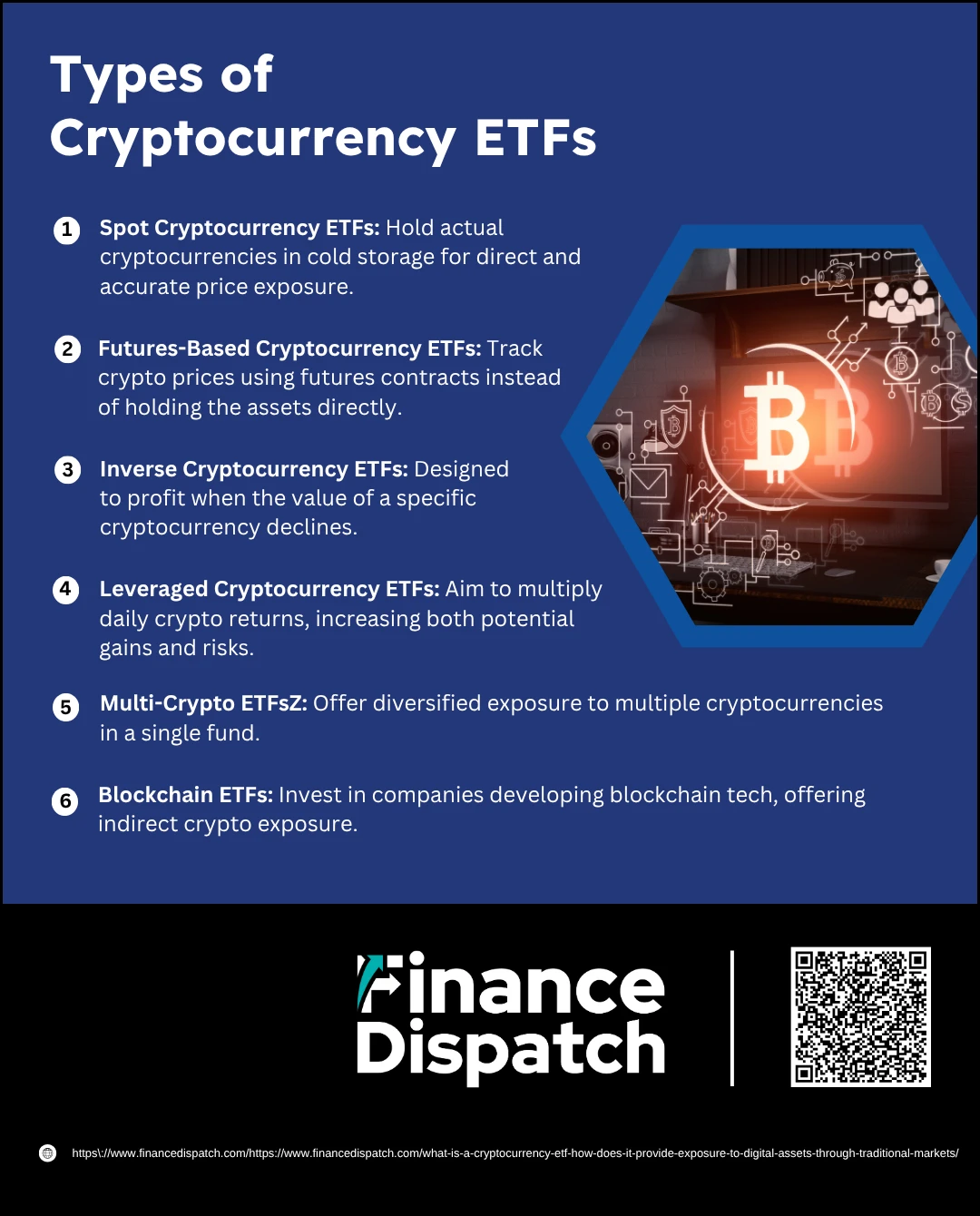
1. Spot Cryptocurrency ETFs A spot ETF holds the actual digital asset (e.g., actual Bitcoin or Ethereum) in secure, institutional-grade cold storage. When an investor buys shares of a spot ETF, the fund provider must hold the equivalent amount of the asset, ensuring that the ETF’s price closely mirrors the real-time market value of the cryptocurrency. This is generally preferred by investors seeking a direct correlation to price movements.
2. Futures-Based ETFs A futures-based ETF does not hold the physical asset. Instead, it invests in futures contracts—legal agreements to buy or sell a cryptocurrency at a predetermined price on a future date. These funds track the price of those contracts rather than the current market price of the asset. Because futures contracts expire and must be "rolled over" into new contracts, these funds can suffer from a phenomenon known as "contango," where the cost of replacing expiring contracts can erode returns over time.
Why Investors Choose ETFs Over Direct Ownership
The primary driver for the adoption of crypto ETFs is institutional and personal convenience. By moving cryptocurrency exposure into the "wrapped" structure of an ETF, investors gain several advantages:
- Regulatory Compliance: ETFs are subject to rigorous oversight by financial regulators, such as the U.S. Securities and Exchange Commission (SEC). This provides a layer of legal security that individual crypto wallets lack.
- Tax Efficiency: In many jurisdictions, holding an asset through an ETF simplifies tax reporting. Since these products are traded on traditional exchanges, your broker will provide standardized tax documents, such as Form 1099, at the end of the fiscal year.
- Accessibility: You do not need to learn how to manage a private key or secure a hardware wallet. You can use your existing brokerage account—the same one you use for stocks and bonds—to trade these assets during standard market hours.
- Safety and Custody: Cryptocurrency exchanges have historically been targets for hackers. ETFs employ professional, third-party custodians with high-grade insurance and security protocols, significantly reducing the risk of asset theft.
Comparative Overview of Crypto Investment Methods
| Feature | Direct Cryptocurrency Ownership | Spot Cryptocurrency ETF |
|---|---|---|
| Storage | Private wallet (self-custody) | Professional custodial services |
| Trading Hours | 24/7 Global Markets | Standard Stock Exchange Hours |
| Tax Reporting | Manual / Complex | Simplified via Brokerage |
| Regulatory Oversight | Limited | High (SEC/Regulated Exchanges) |
| Management Fees | None (Network fees apply) | Expense Ratios (annual fee) |
| Access | Crypto Exchange | Traditional Brokerage |
Prerequisites for Investing
Before adding a cryptocurrency ETF to your portfolio, you must ensure you have the necessary infrastructure:
- A Valid Brokerage Account: You must have an account with a platform that provides access to the major exchanges (e.g., NYSE, NASDAQ). Most online discount brokers support these products.
- Risk Assessment: Cryptocurrency remains a highly volatile asset class. Even when packaged as an ETF, the underlying asset's price can fluctuate drastically. You should never allocate more capital than you are prepared to lose.
- Understanding Expense Ratios: Unlike buying Bitcoin directly, which involves transaction fees, ETFs charge an "expense ratio." This is an annual percentage of your investment that goes toward covering the fund's operational, legal, and custodial costs. Before buying, compare the expense ratios of various providers to ensure you are not paying excessive fees.
Important Considerations and Risks
While ETFs mitigate the risk of technical mismanagement, they do not eliminate market risk. The price of an ETF share will fluctuate in lockstep with the volatility of the underlying cryptocurrency.
Furthermore, "tracking error" is a potential risk. This occurs when the ETF's performance deviates from the actual market price of the cryptocurrency due to factors like management fees, cash drag (holding cash while waiting for investment), or issues in the futures market for non-spot funds. Always review the fund’s "prospectus"—the formal legal document—to understand the specific strategy and potential pitfalls of the fund you are considering.
Frequently Asked Questions
Are crypto ETFs available in all countries? Regulation varies by jurisdiction. While the U.S., Canada, and several European nations have approved spot Bitcoin and Ethereum ETFs, other regions maintain stricter regulations. Always check your local financial authority's stance before attempting to trade.
Can I trade crypto ETFs outside of stock market hours? Generally, no. Because these are traded on traditional stock exchanges, they follow those exchanges' operating hours. Unlike direct cryptocurrency trading, which occurs 24/7, ETF trading is typically limited to business hours, though some brokers offer limited extended-hours trading.
Do I actually own the cryptocurrency? No. When you buy a crypto ETF, you own a share of a financial product that tracks the performance of the asset. You do not hold the underlying digital coins in a wallet, meaning you cannot move those coins to a different address or use them for transactions on the blockchain.
What is the tax implication of selling a crypto ETF? In most tax jurisdictions, selling an ETF share is treated as a capital gain or loss. Because this is a security, you will be subject to capital gains tax based on your holding period (short-term vs. long-term) and your specific tax bracket. Consult a tax professional regarding your personal situation.
Are there ETFs for smaller altcoins? As of 2026, the vast majority of regulated crypto ETFs are focused on Bitcoin and Ethereum due to their liquidity and regulatory acceptance. ETFs for smaller "altcoins" are significantly rarer and may not be available on standard exchanges.
Recommendation for Next Steps
If you are interested in pursuing crypto ETFs, start by logging into your existing brokerage platform and searching for the ticker symbols of major Bitcoin or Ethereum ETFs. Review their expense ratios and historical performance data provided by the brokerage. Before placing a trade, ensure your investment strategy aligns with the high volatility inherent in digital assets. If you are uncertain about the tax or investment implications, consult with a certified financial advisor who is familiar with digital asset products.