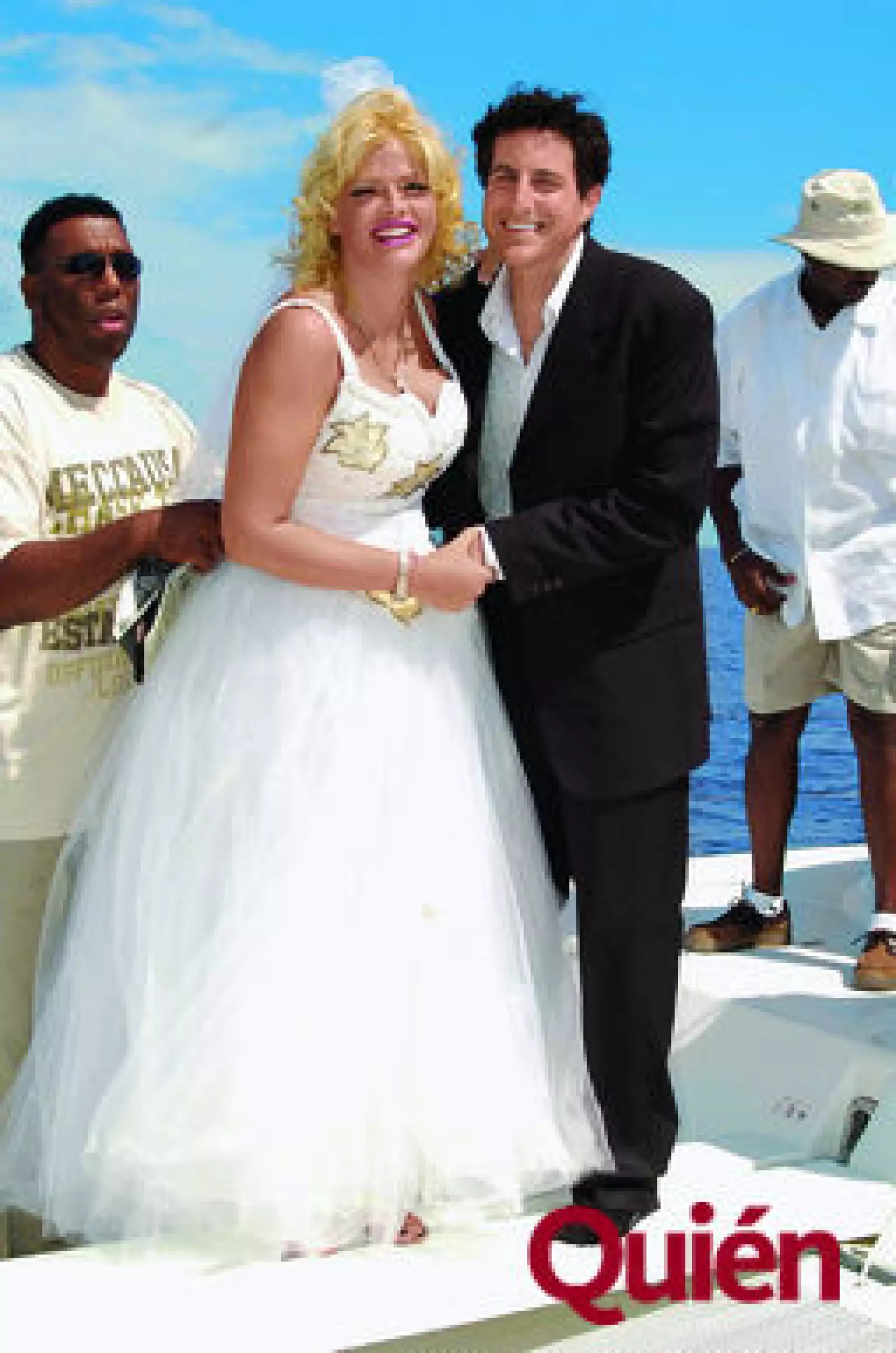
J. Howard Marshall II possessed an estimated net worth between $500 million and $1.6 billion at the time of his death in 1995, built primarily through his early stake in Great Northern Oil Company and his holdings in Koch Industries. Anna Nicole Smith spent decades locked in high-profile legal battles to claim a portion of this immense oil fortune, though she ultimately passed away in 2007 without ever receiving a permanent payout from the estate.
The financial legacy of J. Howard Marshall II and his brief marriage to the glamorous model and actress Anna Nicole Smith remains one of the most litigated and publicly scrutinized estates in modern American legal history. To understand the true value of the Marshall estate and why it generated decades of courtroom battles, it is necessary to examine how the wealth was accumulated, the structure of Marshall's asset protection strategies, the specifics of his will, and the cascading series of bankruptcy, federal district, and Supreme Court cases that defined the saga.
The Origins of J. Howard Marshall II’s Wealth
J. Howard Marshall II was not merely a wealthy socialite; he was a pioneering figure in the American petroleum industry. Born in 1905, Marshall graduated from Yale Law School and later served as a special counsel to the petroleum administrative board during the New Deal era. His deep understanding of oil and gas law allowed him to transition from regulatory work to corporate strategy and direct petroleum investments.
Marshall’s greatest financial breakthrough occurred in 1952 when he invested $2 million to help finance the creation of the Great Northern Oil Company, which built a massive oil refinery in Rosemount, Minnesota. In 1959, Marshall orchestrated a complex transaction involving oil tycoon Fred C. Koch. Marshall traded his substantial equity stake in Great Northern Oil Company for a 15% interest in Koch Industries, a private conglomerate that would go on to become one of the largest privately held corporations in the United States.
Over the subsequent decades, Koch Industries experienced exponential growth driven by petroleum refining, chemicals, energy, fiber, and diverse commodity trading. While Marshall served on the board of directors for Koch Industries for many years, his 15% stake appreciation served as the primary engine of his multi-hundred-million-dollar fortune. By the early 1990s, his holdings generated substantial annual dividends, cementing his status as an ultra-high-net-worth individual.
Valuation of the Estate in 1995
When J. Howard Marshall II passed away on August 5, 1995, at the age of 90, the exact valuation of his net worth became a fiercely contested point of contention among his heirs. Independent financial analyses and court filings placed his net worth between $500 million and $1.6 billion, depending on how specific private equity valuations, real estate holdings, and trust assets were calculated at the time.
The vast majority of this wealth was tied up in non-liquid, closely held corporate stock, specifically shares of Koch Industries. Because Koch Industries is a privately held company rather than a publicly traded entity, determining a definitive market value for its shares required complex corporate valuations and expert financial testimony.
| Asset Category | Description | Estimated Value / Significance |
|---|---|---|
| Koch Industries Stock | 15% equity interest acquired via the 1959 Great Northern Oil transaction. | Core driver of the estate, valued in the hundreds of millions. |
| Trusts and Foundations | Pre-death asset transfers and structured offshore/domestic trusts. | Designed to pass wealth directly to his son, E. Pierce Marshall. |
| Real Estate & Personal Property | Properties in Texas and the Bahamas, vehicles, art, and jewelry. | Valued in the tens of millions; heavily contested during probate. |
| Cash and Liquid Investments | Dividend payouts, bank accounts, and short-term securities. | Utilized immediately to fund initial legal defense and estate administration. |
The Marriage and the Will
J. Howard Marshall II met Anna Nicole Smith (born Vickie Lynn Hogan) in 1991 at a Houston strip club where she was working. At the time, Marshall was elderly, frail, and confined to a wheelchair, while Smith was a 26-year-old aspiring model. Despite a 63-year age gap, the couple engaged in a high-profile courtship, culminating in their marriage on June 27, 1994, in Houston, Texas. Marshall was 89 years old; Smith was 26.
The marriage lasted just 14 months until Marshall's death in August 1995. Crucially, J. Howard Marshall II did not include Anna Nicole Smith in his formal last will and testament. Instead, the entirety of his multi-million-dollar estate was structured to pass through a complex web of living trusts and foundations controlled by his younger son, E. Pierce Marshall.
Anna Nicole Smith argued that her late husband had orally promised her half of his vast estate during their courtship, providing her with lavish gifts, real estate, and financial support while he was alive. When the will was read and she received nothing, Smith filed a legal challenge in a Texas probate court, claiming that E. Pierce Marshall had tortiously interfered with her expected inheritance through fraud, coercion, and undue influence over his aging father.
Decades of Legal Battles: From Probate to the Supreme Court
The legal war over J. Howard Marshall II’s net worth spanned more than two decades, outliving both Anna Nicole Smith and E. Pierce Marshall. The litigation moved through multiple state and federal jurisdictions, establishing significant legal precedents regarding federal court jurisdiction over probate matters.
The Texas Probate Court Trial (1996–2001)
Anna Nicole Smith initiated her legal challenge in Texas state probate court, arguing that E. Pierce Marshall manipulated his father into cutting her out of his estate plans. A Texas jury ruled in favor of E. Pierce Marshall in 2001, concluding that J. Howard Marshall II was of sound mind when he executed his estate plans and that no undue influence or fraud occurred. The jury awarded Smith nothing and ordered her to pay millions in legal fees.
The Federal Bankruptcy Court Victory (2000–2002)
While the Texas probate battle was underway, Anna Nicole Smith filed for Chapter 11 bankruptcy in California in 1996. Within the bankruptcy proceedings, she filed a counterclaim against E. Pierce Marshall for tortious interference with an expected inheritance, demanding hundreds of millions of dollars.
A federal bankruptcy judge in California ruled in Smith's favor in 2000, awarding her $474.9 million in damages (later reduced to $88.5 million). The bankruptcy judge found clear evidence that J. Howard Marshall II intended to provide handsomely for Smith through a series of inter vivos (lifetime) gifts and trust structures that E. Pierce Marshall allegedly intercepted or suppressed.
Appeals and Supreme Court Rulings (2006 and 2011)
The legal saga reached the United States Supreme Court twice:
- Marshall v. Marshall (2006): The Supreme Court ruled in a unanimous decision that federal bankruptcy courts had jurisdiction to hear Smith's tortious interference claim, reversing lower appellate rulings that barred federal courts from interfering with state probate matters. This victory did not award Smith money directly; it merely allowed her federal claim to proceed.
- Stern v. Marshall (2011): Following Smith’s death in February 2007 (and E. Pierce Marshall’s death in 2006), the case returned to the Supreme Court. The Court ruled that Article III of the Constitution barred bankruptcy judges from entering final judgments on counterclaims that relied purely on state common law, effectively stripping Smith’s estate of the $88 million award.
What Did Anna Nicole Smith Ultimately Receive?
Despite the massive scale of J. Howard Marshall II’s net worth, Anna Nicole Smith never received a permanent, enforceable payout from the estate itself.
During the brief period of their marriage and the immediate aftermath of Marshall’s death, Smith did acquire significant assets through gifts, allowances, and legal settlements. Marshall had purchased a multi-million-dollar home for her in Texas, provided high-end vehicles, and funded lavish living expenses during his lifetime. However, these assets were largely depleted by the astronomical costs of her legal defense, personal staff, and lifestyle maintenance over the subsequent decade.
When Anna Nicole Smith passed away in February 2007, her remaining estate—and any ongoing legal claims—passed to her infant daughter, Dannielynn Birkhead. Subsequent legal efforts by Larry Birkhead, acting on behalf of Dannielynn, attempted to secure sanctions against the Marshall estate for hiding assets and manipulating court proceedings. In 2014, a federal judge ordered Smith’s estate to pay nearly $1 million in sanctions to the Marshall estate, permanently closing the door on any recovery of the oil fortune.
Frequently Asked Questions
How much was J. Howard Marshall II worth when he died?
J. Howard Marshall II held an estimated net worth between $500 million and $1.6 billion at the time of his death in 1995. This wealth was primarily concentrated in his 15% equity stake in Koch Industries, alongside various real estate holdings, cash reserves, and trust assets.
Did Anna Nicole Smith inherit any money from her husband?
No. Anna Nicole Smith did not inherit any money through J. Howard Marshall II’s formal will. Although a federal bankruptcy court initially awarded her nearly $475 million in 2000 based on a claim of tortious interference, that judgment was ultimately overturned by the U.S. Supreme Court in 2011.
Why did Anna Nicole Smith sue E. Pierce Marshall?
Anna Nicole Smith sued J. Howard Marshall II’s younger son, E. Pierce Marshall, alleging that he used fraud, coercion, and undue influence to prevent his father from fulfilling an alleged promise to leave her half of his vast oil fortune.
Who controls the J. Howard Marshall II estate today?
Following the death of E. Pierce Marshall in 2006, control of the remaining family assets and corporate holdings passed to his heirs and associated family trusts. The decades-long litigation concluded entirely in the 2010s with all claims by Anna Nicole Smith’s estate dismissed.
How did J. Howard Marshall II make his money?
Marshall accumulated his fortune through a combination of corporate law practice, government service during the New Deal, and a pivotal 1952 investment in the Great Northern Oil Company. In 1959, he traded that equity stake for a 15% ownership share in Koch Industries, which grew exponentially over the following decades.
Summary and Next Actions
The multi-billion-dollar net worth of J. Howard Marshall II demonstrates how early private equity investments in industrial giants like Koch Industries can generate generational wealth. For readers examining estate planning, high-net-worth probate disputes, or the legal mechanics of tortious interference, the Marshall-Smith litigation serves as a landmark case study in asset protection, jurisdictional boundaries between state probate and federal courts, and the extreme costs of protracted litigation. When evaluating complex estates, consulting specialized estate planning attorneys and financial advisors remains the primary safeguard against similar prolonged legal vulnerabilities.