Amerihome mortgage solutions are designed to provide homeowners and prospective buyers with a range of financing products, including conventional, FHA, and VA loans, through a digital-first origination and servicing platform. By offering varied loan structures and refinancing options, the organization acts as a critical link between retail borrowers and the secondary mortgage market, providing standardized underwriting and long-term loan administration.
Understanding the Role of Amerihome Mortgage
Amerihome operates primarily as a mortgage lender and servicer. In the modern housing market, it is essential to distinguish between a "lender" and a "servicer." When you obtain a home loan through a retail channel, the lender evaluates your creditworthiness, debt-to-income ratio, and property value to issue the funds. Once the loan is funded, the servicing component begins—this involves the day-to-day management of your account, including collecting monthly payments, managing escrow accounts for property taxes and homeowner's insurance, and handling inquiries regarding the loan balance.
For borrowers, Amerihome provides a centralized portal to manage these financial obligations. Because they function as both an originator (creating the loan) and a servicer (managing the loan), borrowers often benefit from consistent communication throughout the life of the mortgage. This integration is designed to reduce the friction typically associated with mortgage servicing transfers, where a loan is sold to a third-party bank shortly after closing.
Core Loan Products Offered
Amerihome offers a standard suite of residential mortgage products that cater to various financial profiles. Understanding which product fits your specific situation is the first step in the borrowing process.
Conventional Loans
Conventional loans are the most common type of mortgage in the United States. These loans are not insured by the federal government and generally adhere to the guidelines set by Fannie Mae and Freddie Mac. They are ideal for borrowers with stable credit histories and sufficient down payment funds. In 2026, these remain the standard for primary residences, second homes, and investment properties.
FHA Loans
Federal Housing Administration (FHA) loans are designed to assist borrowers who may not qualify for conventional financing due to lower credit scores or smaller down payments. These loans require a mortgage insurance premium (MIP), which protects the lender in the event of default. This is a common choice for first-time homebuyers who need the flexibility of lower credit score requirements.
VA Loans
Veterans Affairs (VA) loans are a specialized benefit for active-duty military personnel, veterans, and surviving spouses. These loans offer highly favorable terms, often including zero down payment requirements and the absence of private mortgage insurance (PMI). Because they are guaranteed by the Department of Veterans Affairs, they represent a significant cost-saving vehicle for those who qualify through military service.
The Mortgage Lifecycle: From Application to Servicing
The journey of an Amerihome loan follows a structured path. Navigating this successfully requires attention to detail and timely document submission.
1. Pre-Qualification and Pre-Approval
Before house hunting, a borrower must establish their budget. Pre-qualification provides an estimate based on self-reported financial data. Pre-approval, however, is a more rigorous process where the lender verifies your income, assets, and credit report. A pre-approval letter from Amerihome signals to sellers that you are a serious, vetted buyer, which is often a requirement in competitive 2026 housing markets.
2. Underwriting and Verification
Once a property is under contract, the loan enters the underwriting phase. During this time, an underwriter reviews the entire financial package—including tax returns, pay stubs, bank statements, and the property appraisal—to ensure the loan meets all investor guidelines. This stage is where "conditions" may be issued, requiring the borrower to provide additional documentation to clear any discrepancies.
3. Closing
The closing process involves the final review of the Closing Disclosure (CD). This document must be provided to the borrower at least three business days before signing. It outlines the final terms, interest rates, and total cash required to close. Once the documents are signed and the funds are disbursed, the loan is officially recorded, and servicing begins.
Comparison of Mortgage Features
The following table summarizes the key distinctions between the primary loan products often managed through Amerihome.
| Loan Type | Down Payment Requirement | Credit Score Sensitivity | Primary Audience |
|---|---|---|---|
| Conventional | Typically 3%–20% | High impact on rates | Strong credit, stable income |
| FHA | As low as 3.5% | Moderate flexibility | First-time buyers, lower credit |
| VA | 0% | Flexible | Veterans and military service |
Note: Specific requirements and eligibility criteria can change based on internal lender policies and shifts in federal regulatory standards as of 2026.
Managing Your Account as an Amerihome Borrower
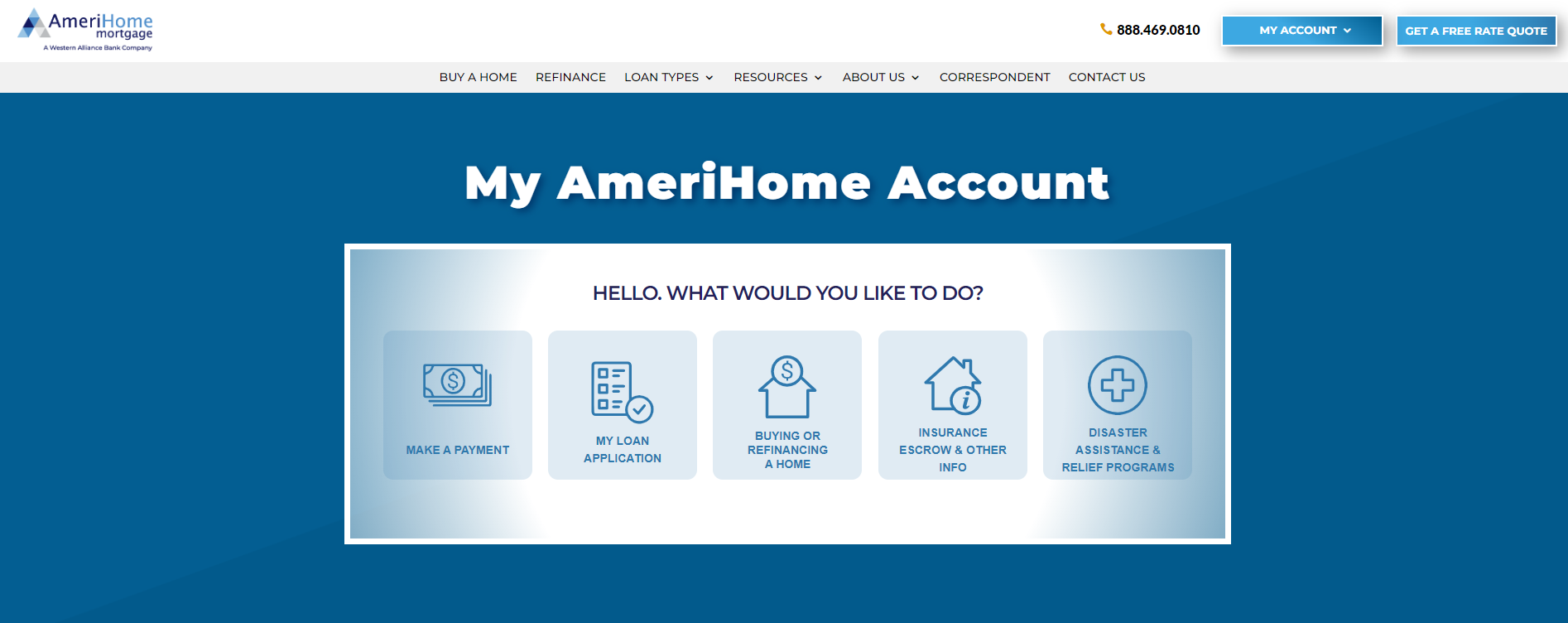
Once your loan is established, the Amerihome servicing platform becomes your primary interface. Borrowers typically utilize the online portal to perform several essential tasks:
- Payment Scheduling: Setting up automated clearing house (ACH) transfers to ensure on-time payments, which is critical for maintaining a healthy credit score.
- Escrow Analysis: Reviewing the annual escrow analysis statement. This document explains how much is being collected for taxes and insurance. If property tax rates increase in your jurisdiction, your monthly payment may adjust to cover the shortage in the escrow account.
- Year-End Statements: Accessing Form 1098, which outlines the mortgage interest paid during the calendar year, essential for tax reporting purposes.
Common Challenges and Troubleshooting
Despite the streamlined digital nature of modern lending, borrowers occasionally encounter hurdles. Understanding how to address these proactively can prevent long-term complications.
Escrow Shortages and Surpluses
An escrow shortage occurs when the actual costs of your property taxes or homeowner’s insurance premiums exceed the estimates made at the time of your last annual review. This typically results in a higher monthly mortgage payment. Conversely, a surplus may result in a refund or a credit toward future payments. Always review your annual escrow disclosure notice carefully to understand why these changes occur.
Loan Servicing Transfers
While Amerihome is a servicer, it is important to understand that in the mortgage industry, servicing rights can be bought and sold. If your loan is transferred to a different servicer, federal law requires that both the outgoing and incoming servicers provide you with a "Goodbye" and "Hello" letter at least 15 days before the transfer. Your loan terms—the interest rate, principal balance, and maturity date—remain unchanged regardless of who holds the servicing rights.
Credit Score Fluctuations
It is a common mistake to open new lines of credit, such as a car loan or a new credit card, while in the midst of the mortgage underwriting process. Any change to your debt-to-income ratio or credit utilization can trigger a re-evaluation of your loan approval. It is widely recommended by financial professionals to avoid making large financial changes between pre-approval and the final funding of your loan.
Frequently Asked Questions
What should I do if I am having trouble making my monthly mortgage payments?
Contact the Amerihome servicing department immediately. Most lenders have a loss mitigation department that can discuss options such as forbearance, repayment plans, or loan modifications. Engaging early provides more options than waiting until a payment is severely delinquent.
How do I request a payoff statement?
A payoff statement shows the exact amount required to satisfy your mortgage loan in full, including interest calculated through a specific date. You can generally request this through the online portal or by calling the customer service department directly. Always ensure you are requesting a payoff for a specific, future date to avoid discrepancies.
Does Amerihome offer refinancing options?
Yes, they offer various refinancing products, including rate-and-term refinances and cash-out refinances. A rate-and-term refinance is typically used to lower your interest rate or change the loan term (e.g., from a 30-year to a 15-year mortgage), while a cash-out refinance allows you to leverage your home equity to obtain liquid funds.
What is the purpose of the annual escrow analysis?
The purpose is to ensure that you have enough funds in your escrow account to pay your property taxes and homeowner's insurance when they come due. The lender performs this audit annually to account for fluctuations in tax rates and insurance premiums, ensuring the account remains solvent.
Are my private financial records secure when using the online portal?
Amerihome, like other regulated financial institutions, employs encryption standards to protect sensitive data. As a user, you should practice good cyber-hygiene by using strong, unique passwords and ensuring your contact information, such as your email address and phone number, is always up to date to receive important security notifications.
Conclusion and Next Actions
Navigating the mortgage landscape requires a clear understanding of your specific product and the responsibilities inherent in being a borrower. If you are currently in the process of applying, focus on maintaining your financial stability and providing requested documentation promptly to keep the underwriting process moving. If you are already a borrower, ensure your profile is set up on the servicing portal to monitor your escrow account and maintain on-time payments.
For specific questions regarding your existing account, refer to your most recent monthly statement to find the correct contact information for Amerihome support. If you are considering a new loan, start by reviewing your credit report and calculating your debt-to-income ratio to ensure you meet the prerequisite guidelines for the loan product that best suits your long-term housing goals.