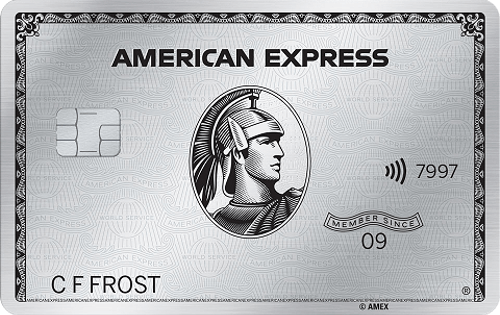
The American Express Plum Card is a charge card tailored for businesses seeking flexible cash flow management through extended payment terms and early-payment discounts, though it requires paying the balance in full each month and carries a significant annual fee.
Navigating the landscape of corporate and business credit cards requires a careful analysis of liquidity management, cash flow timing, and fee structures. For growing companies, maintaining smooth working capital is often more critical than accumulating traditional travel miles or hotel points. The American Express Plum Card occupies a distinctive niche in the commercial finance sector. Unlike standard credit cards that revolve balances with interest, or traditional charge cards that demand payment within 30 days, the Plum Card provides a unique value proposition centered on extended payment flexibility and prompt-payment incentives.
Evaluating this financial product demands an exhaustive look at its fee schedule, reward mechanisms, structural mechanics, and ideal user profiles. Business owners must weigh the trade-offs between cash flow optimization and ongoing operational costs to determine if this card aligns with their enterprise's financial strategy.
Understanding the American Express Plum Card Structure
The American Express Plum Card is structured as a business charge card rather than a traditional revolving credit card. This fundamental design means there is no pre-set spending limit, though your purchasing capacity adjusts dynamically based on factors such as payment history, credit record, and financial resources.
Unlike consumer charge cards, the Plum Card is engineered specifically for businesses that manage substantial monthly expenses—such as inventory purchases, supplier invoices, marketing campaigns, and payroll processing. The core appeal lies in its dual-mechanism approach to invoicing: it rewards companies that pay quickly while providing a safety net for those that need extra time to collect from their own customers.
The Mechanics of Pay Over Time and Extended Terms
The defining characteristic of the American Express Plum Card is its flexibility regarding invoice settlement. Cardmembers are given two primary choices for handling their statement balances each billing cycle:
- The Early Pay Discount: If you pay off your statement balance within 10 days of the statement closing date, you receive an unlimited 1.5% discount on that portion of the eligible charges. There is no cap on the total discount you can earn, making this option exceptionally lucrative for enterprises with high monthly overhead.
- The 60-Day Extended Terms: If market conditions or slow-paying clients leave your business short on immediate liquidity, you can take up to 60 days from the invoice date to pay your balance without incurring interest charges, provided you make the minimum payment due.
This flexibility separates the Plum Card from standard net-30 vendor terms. It gives business owners breathing room during cash flow crunches while retaining the security and administrative controls associated with American Express corporate products.
Evaluating Fees and Financial Costs
Every business financial decision must account for direct expenses, and the American Express Plum Card comes with a notable upfront cost. Understanding these financial obligations is essential for calculating the true return on investment (ROI) of holding the card.
Annual Fee Overview
The Plum Card carries an annual fee of $250. However, American Express historically structures promotional offers for new applicants, such as an introductory fee waiver for the first year. Business owners must project whether their monthly spend will generate enough value through early-payment discounts to comfortably surpass this annual overhead.
Absence of Foreign Transaction Fees
For enterprises engaged in global trade, importing materials, or managing travel for international teams, the Plum Card imposes zero foreign transaction fees. Purchases made outside the United States are converted without extra surcharges, protecting profit margins on international transactions.
Late Payment and Penalty Structures
Because the Plum Card is a charge card, it expects timely execution of either the minimum payment or the full balance. Failing to meet the minimum payment due by the designated date triggers late fees and can adversely affect both business and personal credit scores tied to the account guarantee. Furthermore, violating the terms can jeopardize your standing and reduce your dynamic spending capacity.
The 1.5% Early Pay Discount: Math and Value
The primary monetary benefit of the American Express Plum Card is the 1.5% early-payment discount. To fully appreciate its value, business owners should analyze how this model compares to standard cash-back credit cards.
Calculating Potential Savings
Consider a mid-sized marketing agency or wholesale distributor charging $50,000 per month on their Plum Card. If the business consistently settles its statement balance within the 10-day window, the 1.5% discount yields:
- Monthly Savings: $50,000 × 0.015 = $750
- Annual Savings: $750 × 12 = $9,000
Subtracting the $250 annual fee leaves a net financial benefit of $8,750 per year. For businesses with high-volume, recurring expenses who maintain healthy cash reserves to clear bills rapidly, this return can eclipse the value offered by typical rewards cards that pay in points or miles.
Comparison of Business Card Structures
| Card Feature | American Express Plum Card | Traditional Cash-Back Business Card | Travel Rewards Business Card |
|---|---|---|---|
| Primary Incentive | 1.5% discount on early payments | 1.5% to 2% cash back on all purchases | 2x to 5x points on travel and dining |
| Payment Structure | Pay in full, 60-day terms, or early discount | Revolving credit with monthly minimums | Revolving credit with monthly minimums |
| Spending Limit | No pre-set spending limit | Fixed credit limit | Fixed credit limit |
| Foreign Transaction Fees | $0 | Varies (often 0% to 3%) | Generally $0 |
| Annual Fee | $250 | Varies ($0 to $195+) | Typically $95 to $595 |
Additional Perks, Protections, and Account Management
Beyond cash flow management and discounts, the American Express Plum Card includes a suite of corporate tools designed to streamline accounting and safeguard company purchases.
Expense Management Tools
American Express provides robust digital dashboards that integrate with major accounting software packages like QuickBooks. Cardmembers can issue employee cards with customized spending limits, track expenses by category or project, and download detailed reports to simplify tax preparation and internal auditing.
Purchase Protections and Insurance
Business operations involve inherent risks regarding damaged goods or fraudulent charges. The Plum Card includes several built-in protections:
- Buyer’s Assurance: Extends the manufacturer’s warranty on eligible items purchased entirely with the card.
- Return Protection: Can refund the purchase price of eligible items if the merchant will not accept a return within 90 days of purchase.
- Accountability and Fraud Protection: Zero Liability protection safeguards the business against unauthorized charges, complemented by real-time fraud monitoring alerts.
Eligibility Requirements and Application Process
Qualifying for the American Express Plum Card requires meeting standard commercial underwriting criteria. American Express evaluates both the business entity and the primary guarantor.
What American Express Looks For
- Credit Score: A strong personal credit score (typically in the good to excellent range, 700+) is crucial, as the owner acts as a guarantor for the business account.
- Business Revenue and History: While exact revenue thresholds fluctuate based on internal risk models, applicants must demonstrate stable business revenue, time in operation, and solid banking history.
- Entity Documentation: Depending on whether your business is organized as a Sole Proprietorship, LLC, Corporation, or Partnership, you will need an Employer Identification Number (EIN) or Social Security Number (SSN), along with official formation documents.
Advantages and Disadvantages of the Plum Card
Every financial product involves trade-offs. Reviewing the explicit pros and cons helps clarify whether the card matches your operational model.
Key Advantages
- Unlimited Earning Potential: The 1.5% early-pay discount has no ceiling, scaling directly with your enterprise expenditure.
- Liquidity Buffer: The option for up to 60 days to pay without interest provides breathing room when accounts receivable are delayed.
- No Preset Spending Limit: Accommodates large, unexpected business expenses without hitting rigid credit ceilings.
- No Foreign Transaction Fees: Ideal for international supply chains and travel.
Key Disadvantages
- Annual Fee: The $250 fee requires a baseline monthly spend to justify, making it less attractive for low-volume businesses.
- No Travel Points: Businesses focused on accumulating airline miles or hotel loyalty points will find no utility here, as rewards are paid strictly as statement credits.
- Strict Discipline Required: Failing to pay within the 10-day window forfeits the discount, while failing to settle balances according to agreement terms can trigger severe penalties and credit damage.
Suitability: Is the American Express Plum Card Right for Your Business?
The American Express Plum Card is not a universal solution; it serves a specific type of commercial enterprise.
It is an exceptional tool for established B2B companies, high-volume service providers, and growing retailers who maintain sufficient liquid capital to clear their statements within 10 days, allowing them to capture pure cash savings. Conversely, startups with volatile cash flow, businesses seeking travel rewards, or companies unable to consistently clear or manage their balances should look toward alternative commercial credit options.
Careful internal auditing of your company's monthly expense volume, payment cycles, and cash reserves will reveal whether the Plum Card can serve as a profitable asset in your financial toolkit.