Managing money laundering risk within Altec Construction requires a sophisticated understanding of how high-value physical assets, complex supply chains, and multi-layered subcontracting structures can be exploited. In 2026, firms like Altec must navigate stringent global AML (Anti-Money Laundering) frameworks, focusing on "Know Your Business" (KYB) protocols and beneficial ownership transparency to prevent illicit financial flows from entering the construction lifecycle.
The Intersection of Infrastructure and Financial Crime
The construction industry remains one of the most vulnerable sectors for money laundering globally. For a firm like Altec Construction, which operates within large-scale infrastructure or commercial development, the inherent complexity of project financing creates "blind spots" that illicit actors may seek to exploit. As of 2026, international regulators, including the Financial Action Task Force (FATF), have increased their scrutiny of the real estate and construction sectors, moving them from "low-oversight" categories to high-priority monitoring zones.
Money laundering in construction often involves the "placement" and "layering" of illicit funds through legitimate business transactions. Because Altec Construction deals with massive capital outlays, varying material costs, and a revolving door of subcontractors, it is easier for third parties to hide the origin of funds within the noise of daily operations. The risk is not merely theoretical; it carries significant legal, financial, and reputational consequences that can halt projects and trigger debarment from government contracts.
Primary Money Laundering Vulnerabilities for Altec Construction
To effectively mitigate risk, Altec Construction must identify the specific channels through which money laundering occurs. These vulnerabilities are often baked into the standard operating procedures of the industry, making them difficult to detect without specialized oversight.
Over-Invoicing and Under-Invoicing Schemes
One of the most common methods involves the manipulation of invoices for materials and services. A subcontractor or supplier might issue an invoice to Altec for an amount significantly higher than the market value of the goods provided. Altec pays the invoice, and the "surplus" is later kicked back to the launderer in a seemingly unrelated transaction. Conversely, under-invoicing allows for the transfer of value where assets are sold below market price to settle illicit debts or move wealth across borders.
Ghost Employees and Payroll Fraud
In large-scale projects, the workforce is often fluid. Launderers may use "ghost employees"—individuals who appear on the payroll but do not actually work for Altec—to funnel "clean" salary payments to illicit actors. Because construction sites often have hundreds of workers with varying shifts, detecting a few non-existent employees requires rigorous on-site verification that many firms historically neglected.
The Use of Shell Companies in the Supply Chain
Altec Construction relies on a deep hierarchy of vendors. Laundering risks escalate when Tier 2 or Tier 3 subcontractors are owned by anonymous shell companies. These entities are used to "layer" transactions, making it nearly impossible to trace the ultimate beneficial owner (UBO). By the time Altec's compliance team looks at the primary contractor, the illicit funds have already been integrated into the project's legitimate cash flow.
The 2026 Regulatory Environment for Construction Firms
As we navigate 2026, the legal landscape has shifted toward mandatory transparency. Altec Construction is no longer just a builder; it is functionally a "gatekeeper" in the eyes of financial regulators.
The Corporate Transparency Act (CTA) and Beyond
In the United States, the maturity of the Corporate Transparency Act has effectively ended the era of anonymous shell companies. Altec is now required to verify the beneficial ownership of its partners. Failure to do so can result in criminal penalties. Similarly, in the European Union, the Sixth and Seventh Anti-Money Laundering Directives (AMLD6/7) have harmonized the definition of "predicate offenses," meaning that even if Altec is not directly involved in the laundering, "willful blindness" to a subcontractor's activities can lead to corporate liability.
Enhanced Due Diligence (EDD) Requirements
Regulatory bodies now expect Altec to perform Enhanced Due Diligence on any project involving "High-Risk Jurisdictions" or "Politically Exposed Persons" (PEPs). If a developer or a major private investor in an Altec project has ties to regions with weak AML controls, Altec must implement additional monitoring, including verifying the "Source of Wealth" (SoW) and "Source of Funds" (SoF).
Comparative Risk Assessment: Construction Project Phases
The following table outlines the different stages of an Altec Construction project and the associated money laundering risk levels and common red flags.
| Project Phase | Risk Level | Primary Risk Type | Common Red Flags |
|---|---|---|---|
| Bidding & Tendering | High | Bribery & Corruption | Unusually low bids that suggest outside funding; involvement of unknown shell companies. |
| Land Acquisition | Very High | Placement of Illicit Funds | Cash-heavy transactions; purchase prices significantly above or below market value. |
| Procurement | Medium | Over-Invoicing | Frequent changes in suppliers; invoices that lack detail or match standard market rates. |
| Construction/Execution | High | Payroll & Subcontractor Fraud | High turnover of subcontractors; "ghost" workers; payments to third parties not in the contract. |
| Project Completion | Medium | Value Integration | Rapid resale of the finished asset at an inflated price; complex leaseback arrangements. |
Implementing a Robust AML Compliance Program
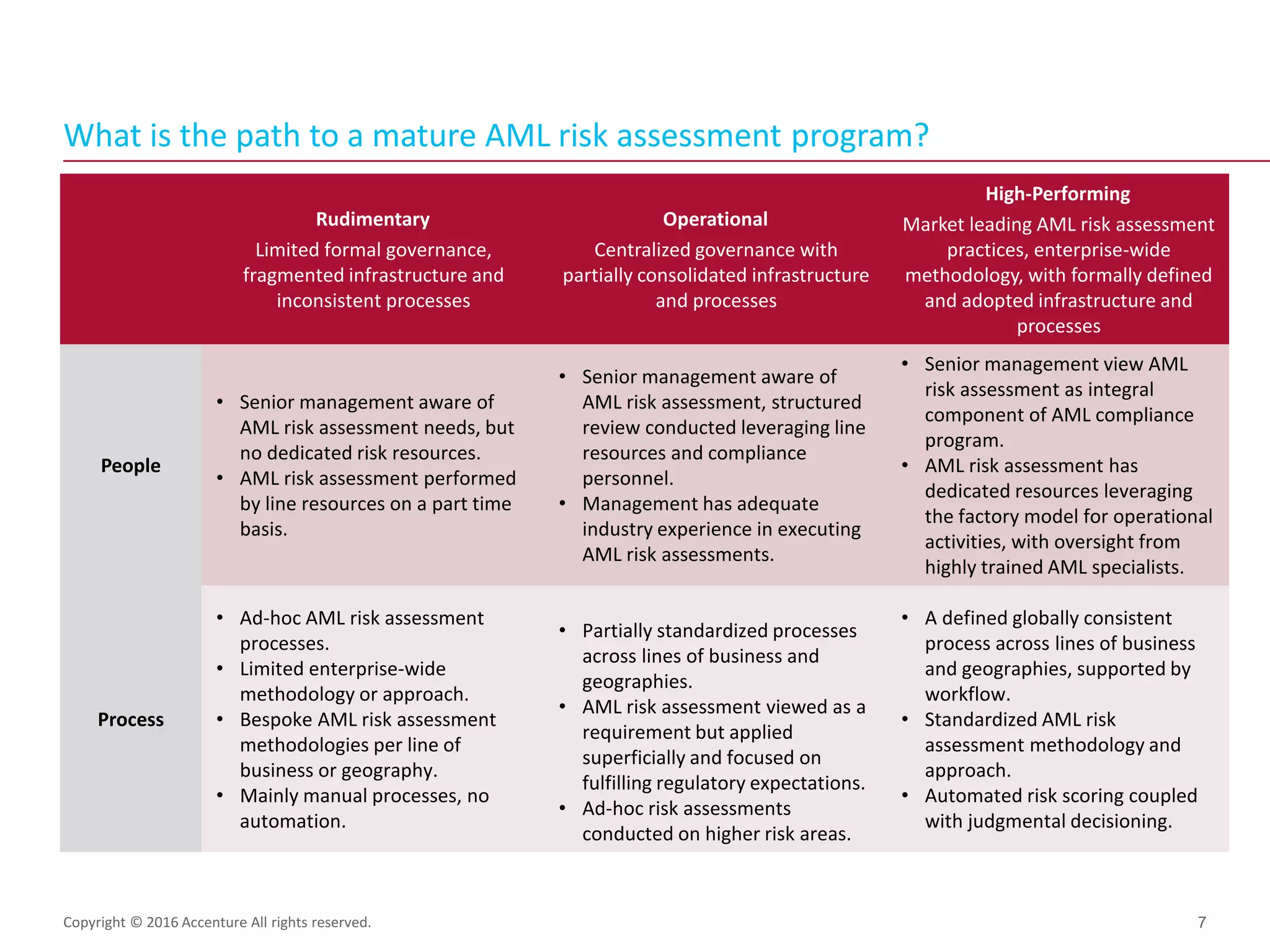
For Altec Construction to protect itself, it must move beyond basic "check-the-box" compliance. A modern AML program in 2026 integrates technology with traditional auditing.
Step 1: Institutionalizing the Risk Assessment
Altec must conduct an annual enterprise-wide risk assessment. This involves analyzing the geographic locations of projects, the types of clients (government vs. private), and the methods of payment. For example, projects in emerging markets or those funded through complex offshore vehicles require a higher "Risk Score" and more frequent auditing.
Step 2: Automated KYB (Know Your Business)
Manual background checks are no longer sufficient for the volume of vendors Altec manages. By 2026, Altec should be using automated KYB platforms that pull real-time data from global corporate registries. These systems should flag any subcontractor whose ownership structure includes entities in tax havens or individuals on global sanctions lists.
Step 3: Transaction Monitoring and Anomaly Detection
Altec’s finance department should utilize AI-driven anomaly detection. These systems "learn" the typical payment patterns of a project. If a supplier suddenly requests payment to a different bank account in a different country, or if the frequency of "change orders" (which can be used to hide extra payments) spikes unexpectedly, the system should automatically freeze the transaction for human review.
Step 4: Employee Training and Whistleblower Protection
The frontline against money laundering is the staff on the ground. Project managers and site supervisors must be trained to recognize physical red flags—such as expensive equipment being brought on-site that wasn't in the budget, or subcontractors who seem indifferent to costs. A secure, anonymous whistleblower portal is essential to allow employees to report suspicious behavior without fear of retaliation.
Technical Mitigation: Blockchain and Smart Contracts
By 2026, the industry has seen a rise in the use of Distributed Ledger Technology (DLT) to mitigate laundering risks. Altec Construction can leverage blockchain for "Provenance Tracking." By recording every transaction and material delivery on an immutable ledger, the company creates a permanent audit trail.
Smart contracts can also be programmed to only release payments once specific milestones are met and verified by an independent third party. This prevents the "leakage" of funds into illicit channels, as the payment logic is tied directly to physical progress on the construction site. While this requires a high initial investment in digital infrastructure, it significantly reduces the cost of compliance and the risk of regulatory fines in the long run.
Avoiding Common Pitfalls in AML Compliance
Many firms, including those of Altec's scale, often fall into the trap of focusing solely on the "Big Picture" while ignoring the details of the supply chain.
- Relying on "Standard" Contracts: Standardized contracts often lack specific AML representations and warranties. Altec should ensure that all contracts allow for "Right to Audit" clauses, giving them the legal authority to inspect a subcontractor’s books if suspicious activity is detected.
- Neglecting the "Source of Wealth": Knowing where the money came from is different from knowing who the person is. If a private developer is funding a project, Altec must verify how that developer acquired their capital. In 2026, "I made it in real estate" is no longer a sufficient answer for regulators.
- Inconsistent Monitoring: Risk is not static. A subcontractor who was "Low Risk" at the start of a five-year project may undergo a change in ownership that makes them "High Risk" in year three. Continuous monitoring is the only way to catch these shifts.
Practical Recommendations for Altec Construction
To solidify its position and minimize exposure, Altec Construction should take the following actions immediately:
- Appoint a Dedicated AML Officer: This should be a senior role with direct reporting lines to the Board of Directors, ensuring that compliance is never sidelined for the sake of project speed.
- Audit the Existing Vendor List: Conduct a retrospective KYB sweep of all current subcontractors and suppliers to ensure no beneficial ownership changes have occurred that would trigger a red flag.
- Update the "Code of Conduct": Explicitly include money laundering and terrorist financing as "zero-tolerance" issues in the corporate code of conduct, applicable to all employees and partners.
- Engage with Financial Partners: Altec should work closely with its banks to align their AML protocols. Banks often have more sophisticated detection tools and can provide early warnings about suspicious patterns in project accounts.
Frequently Asked Questions
What is the biggest money laundering risk for a company like Altec Construction?
The biggest risk is subcontractor layering. This is where illicit funds are introduced into the project via a third-party vendor who uses shell companies to hide the money's origin. Because Altec focuses on the primary contract, these deep-seated financial discrepancies can often go unnoticed until a regulatory audit occurs.
How does the 2026 regulatory environment differ from previous years?
In 2026, the burden of proof has shifted significantly toward the corporation. Regulations like the Corporate Transparency Act are fully operational, and there is a global push for "Real-Time Compliance." Regulators now expect firms to use technology to monitor transactions as they happen, rather than relying on annual or quarterly reviews.
Can Altec be held liable if a subcontractor launders money without their knowledge?
Yes. Under the legal principle of "Willful Blindness," Altec can be held liable if it is determined that they "should have known" about the illicit activity. If Altec fails to perform standard due diligence or ignores obvious red flags (like a subcontractor operating without a physical office), they may face criminal charges and significant fines.
Does Altec Construction need to worry about money laundering in government projects?
While government projects have more oversight, they are not immune. Money laundering in public works often involves bid-rigging and kickbacks. Laundering occurs when the "proceeds of crime" are used to bribe officials to secure the contract, or when the contract price is inflated to recoup the cost of the bribe.
What are the red flags of a suspicious supplier?
Key red flags include a supplier requesting payment in a third country, a lack of a physical business presence, a company that was only recently incorporated despite claiming long-term expertise, or a supplier whose price quotes are consistently and inexplicably lower than all other competitors.