The actors who have portrayed the residents of Lewis Carroll’s Wonderland range from Hollywood icons like Johnny Depp and Anne Hathaway to legendary voice performers such as Kathryn Beaumont. While many audiences focus on Tim Burton’s live-action blockbusters, the "Alice" lineage includes a diverse array of talent spanning over a century of cinematic adaptation.
The Modern Era: Tim Burton’s Alice in Wonderland (2010) and Through the Looking Glass (2016)
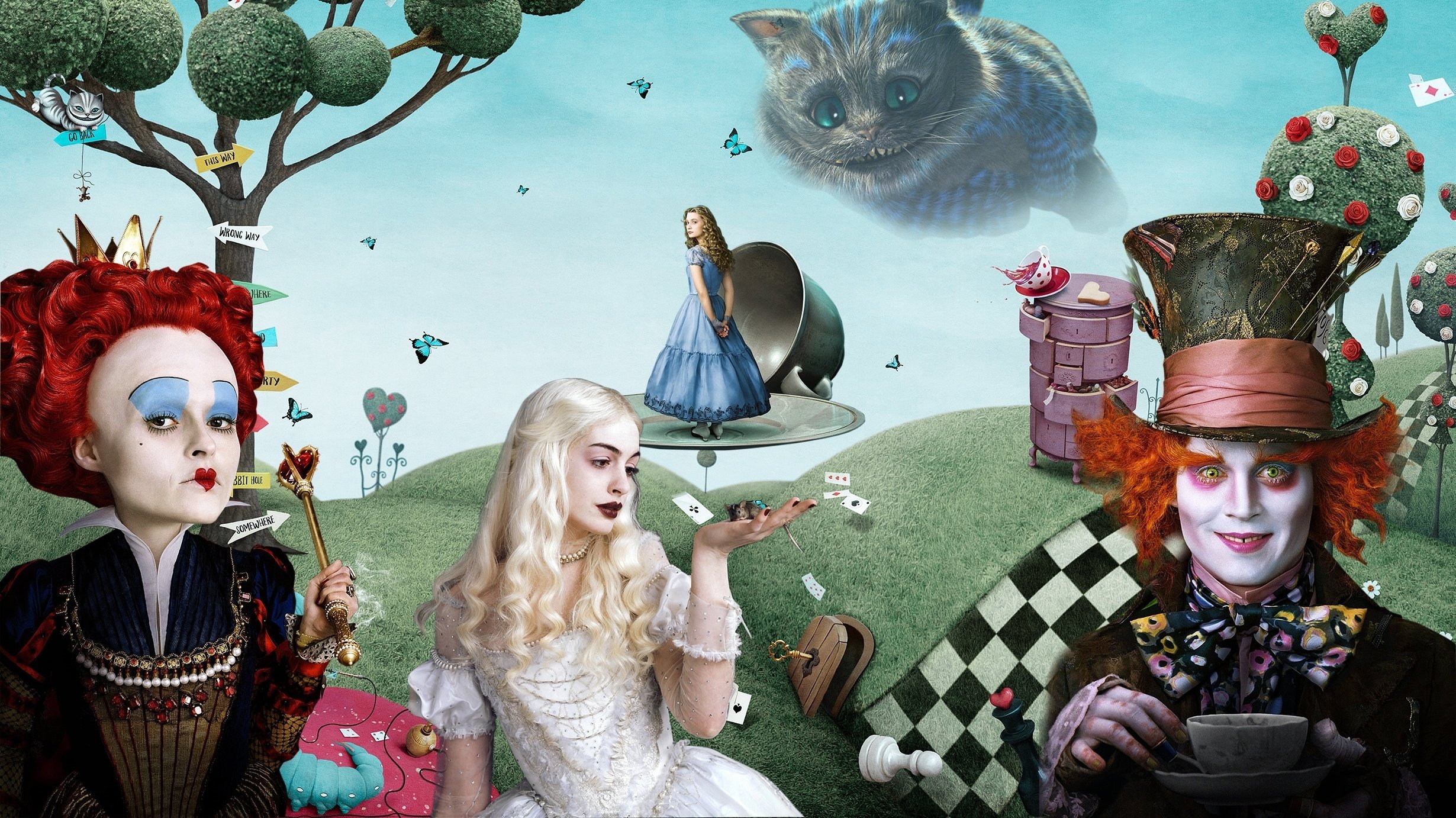
When audiences search for "Alice in Wonderland actors" in 2026, the discussion is often dominated by the ensemble cast of the 2010 live-action reimagining and its 2016 sequel. These films redefined the aesthetic of Wonderland, moving away from the whimsical primary colors of the 1951 animation toward a more gothic, surrealist landscape.
Mia Wasikowska as Alice Kingsleigh
Mia Wasikowska was cast as a 19-year-old Alice, a departure from the traditional child version of the character. Her portrayal focused on Alice’s internal struggle with societal expectations in Victorian London and her eventual realization of her own agency. Wasikowska’s performance was noted for its grounded, subtle nature, which served as a necessary foil to the heightened eccentricities of the surrounding characters. To prepare for the role, Wasikowska studied the original illustrations by John Tenniel rather than previous film performances, seeking to capture the "gravity" of Alice’s curiosity.
Johnny Depp as Tarrant Hightopp (The Mad Hatter)
Johnny Depp’s portrayal of the Mad Hatter remains one of the most recognizable iterations of the character. Depp collaborated closely with Tim Burton to develop a backstory for the Hatter, suggesting that the character’s "madness" was actually a form of mercury poisoning—a real-world occupational hazard for 19th-century milliners. His performance was characterized by shifting accents and mercurial moods, ranging from childlike joy to dark, suppressed rage. From a technical standpoint, Depp’s eyes were digitally enlarged in post-production to enhance the character's otherworldly appearance.
Helena Bonham Carter as Iracebeth of Crims (The Red Queen)
Helena Bonham Carter provided a transformative performance as the Red Queen, blending the "Off with their heads!" volatility of Carroll's character with a deep-seated insecurity. A major technical aspect of her role involved the digital enlargement of her head, which required her to film her scenes in front of a green screen while the rest of the cast interacted with her using specific eyelines. Bonham Carter has often described the physical toll of the role, noting that the heavy makeup and the "shouting" nature of the character were exhausting but creatively rewarding.
Anne Hathaway as Mirana of Marmoreal (The White Queen)
Anne Hathaway’s White Queen was designed to be a "punk-rock" version of a traditional fairytale princess. Hathaway intentionally gave the character a floating, ethereal gait and a perpetual state of being "slightly off," suggesting that the White Queen shared the same streak of madness as her sister, the Red Queen, but chose to mask it in grace. Her aesthetic—platinum hair, dark lips, and a dramatic white gown—became a popular visual reference for the franchise.
Iconic Voice Talent: The 1951 Disney Animated Classic
For many, the definitive versions of these characters remain the voice actors from the 1951 Walt Disney production. This film utilized a technique where actors performed the scenes in live-action as a reference for the animators, meaning their physical movements were just as important as their vocal delivery.
Kathryn Beaumont: The Voice of Alice
Kathryn Beaumont was only 10 years old when she was cast as the voice and live-action model for Alice. Her polite, crisp British accent became the blueprint for Alice’s voice in nearly all subsequent Disney media. Beaumont’s contribution to the role was so significant that she continued to voice Alice in theme park attractions and video games (such as Kingdom Hearts) for over 50 years. Her work exemplifies the "Disney Legend" status, as she also provided the voice and modeling for Wendy Darling in Peter Pan.
Sterling Holloway and the Supporting Cast
The 1951 film featured a roster of character actors who brought a distinct vaudevillian energy to Wonderland:
- Sterling Holloway (Cheshire Cat): Known for his unique, raspy voice, Holloway gave the Cheshire Cat a mischievous but non-threatening persona that became an animation staple.
- Ed Wynn (The Mad Hatter): A famous comedian of the era, Wynn’s improvisational style led to some of the most memorable dialogue in the tea party scene.
- Verna Felton (Queen of Hearts): Her booming, authoritative voice created a villain that was both terrifying to children and hilariously over-the-top for adults.
Comparison of Major Alice in Wonderland Portrayals
The following table compares the primary actors across the most significant film and television adaptations of the story.
| Year | Format | Alice Actor | Mad Hatter Actor | Red/Heart Queen Actor |
|---|---|---|---|---|
| 1933 | Film | Charlotte Henry | Edward Everett Horton | Alison Skipworth |
| 1951 | Animation | Kathryn Beaumont | Ed Wynn | Verna Felton |
| 1985 | TV Movie | Natalie Gregory | Anthony Newley | Anne Ramsey |
| 1999 | TV Movie | Tina Majorino | Martin Short | Miranda Richardson |
| 2010 | Film | Mia Wasikowska | Johnny Depp | Helena Bonham Carter |
| 2013 | TV Series | Sophie Lowe | Peter Gadiot (Cyrus*) | Emma Rigby |
*Note: The 2013 "Once Upon a Time in Wonderland" reimagined many characters, using different archetypes for the male lead.
The 1999 TV Movie: An All-Star Ensemble
The NBC television movie released in 1999 is often cited by film scholars for its incredible casting density. At the time, it was one of the most expensive television movies ever made, utilizing cutting-edge (for the time) CGI from Jim Henson’s Creature Shop.
The cast featured Tina Majorino as Alice, who had previously gained fame in Waterworld and would later star in Napoleon Dynamite. The supporting cast was a "who's who" of 1990s talent:
- Whoopi Goldberg as the Cheshire Cat, appearing as a floating, live-action head.
- Ben Kingsley as the Major Caterpillar, delivering a philosophical and stoic performance.
- Martin Short as the Mad Hatter, leaning heavily into the character's manic physical comedy.
- Gene Wilder as the Mock Turtle, providing a melancholy and musical performance that remains a fan favorite.
- Christopher Lloyd as the White Knight, bringing a bumbling, inventive charm to the role.
This version is particularly noted for adhering closely to the original episodic structure of Lewis Carroll’s books, allowing each celebrity cameo to represent a distinct "chapter" of Alice’s journey.
Supporting Cast and Performance Capture in Live-Action
In the 2010 and 2016 films, several actors appeared in "voice-only" or performance-capture roles, which were essential for creating the surreal residents of Underland (the films' name for Wonderland).
Alan Rickman as Absolem the Blue Caterpillar
Alan Rickman provided the voice for the Blue Caterpillar in both 2010 and 2016. His distinctive, deep resonance was perfectly suited for the character's condescending yet wise demeanor. Notably, his work on Alice Through the Looking Glass (2016) was his final film role before his death. The film was dedicated to his memory, and his portrayal of Absolem’s transformation into a butterfly remains a poignant cinematic moment for fans.
Stephen Fry as the Cheshire Cat
Stephen Fry’s Cheshire Cat moved away from the raspy tone of Sterling Holloway, opting instead for a silky, sophisticated, and slightly sinister British accent. Fry’s version of the character was designed to be "the most intelligent person in the room," often appearing and disappearing in wisps of blue smoke. The character's design in the Burton films was inspired by traditional British shorthair cats, but with the exaggerated, wide-mouthed grin that defines the character.
Michael Sheen and Timothy Spall
- Michael Sheen voiced the White Rabbit (Nivens McTwisp), portraying him as a high-strung, nervous bureaucrat.
- Timothy Spall provided the voice for Bayard the Bloodhound, a character created for the film to give Alice a loyal ally in the Red Queen’s court. Spall's weary, gravelly voice grounded the character's tragic backstory.
Technical Depth: The Challenges for Actors in Wonderland
Acting in an Alice in Wonderland production—particularly the modern live-action versions—presents unique technical challenges that differ from traditional filmmaking.
Green Screen and "Sunderland"
During the filming of the 2010 movie, Tim Burton utilized a massive green-screen environment. Mia Wasikowska and Johnny Depp often had to interact with "stuffies" (green-screen-colored props) or tennis balls on sticks instead of other actors. This required a high degree of imagination and focus. For instance, when Alice interacts with the Cheshire Cat, Wasikowska was often looking at a fixed point in the air while a script supervisor read the Cat’s lines from off-camera.
Scaling and Proportion
Because Alice changes size frequently, the actors were often filmed on different scales. To make Mia Wasikowska look small next to the Mad Hatter, she might be filmed on a separate part of the soundstage, with her movements later digitally composited into the scene. This "forced perspective" through digital means meant that actors rarely had direct physical contact, making the chemistry between characters like Alice and the Hatter even more impressive from a technical standpoint.
Career Impact: How Playing Alice Shapes Trajectories
For many actresses, playing Alice is a "rite of passage" similar to playing Peter Pan or Dorothy Gale.
- Mia Wasikowska: Her role in Alice in Wonderland catapulted her into the A-list, allowing her to pursue more auteur-driven projects like Jane Eyre and Crimson Peak.
- Tina Majorino: The 1999 role helped transition her from a child star to a versatile adult actress.
- Kathryn Beaumont: Her career was forever defined by Alice, leading to a lifelong partnership with the Walt Disney Company that saw her named a Disney Legend in 1998.
For established actors like Johnny Depp or Helena Bonham Carter, these roles allowed them to lean into their "character actor" roots within a high-budget franchise, further cementing their reputations for transformative, eccentric performances.
Frequently Asked Questions
Who played Alice in the original 1951 Disney movie?
Kathryn Beaumont voiced Alice in the 1951 animated classic. She was also the live-action reference model for the character, meaning the animators watched her perform the scenes to capture her movements and expressions.
Is Johnny Depp’s Mad Hatter based on a real person?
While the character is from Lewis Carroll’s book, Johnny Depp and Tim Burton based the "madness" on real 19th-century hatters who suffered from mercury poisoning. The symptoms included tremors and personality changes, which Depp incorporated into his performance through erratic mood swings and physical tics.
Which actor played the Red Queen with the giant head?
Helena Bonham Carter played the Red Queen (Iracebeth) in the 2010 and 2016 films. Her head was digitally enlarged by about three times its actual size using special effects, while her waist was digitally thinned to create a distorted, "playing card" silhouette.
Was Alan Rickman in Alice in Wonderland?
Yes, Alan Rickman provided the voice of Absolem the Caterpillar in both the 2010 and 2016 films. His role in Alice Through the Looking Glass was the final film role of his career.
Who is the most recent actor to play Alice?
As of 2026, while there have been various stage and small-scale adaptations, Mia Wasikowska remains the most recent actor to play Alice in a major global theatrical franchise. However, new interpretations continue to emerge in streaming and indie cinema.
Practical Recommendation for Viewers
If you are interested in exploring the evolution of "Alice in Wonderland actors," start by watching the 1951 animated film to understand the character archetypes, followed by the 1999 TV movie for a masterclass in ensemble character acting. Finally, watch the 2010 Tim Burton film to see how modern technology allows actors to blend physical performance with digital transformation. This progression provides a comprehensive look at how different generations of actors have tackled one of literature's most enduring stories.