An AI blogger is a content creator who leverages artificial intelligence tools to augment, accelerate, or automate the production of blog posts, imagery, and SEO strategy. By integrating Large Language Models (LLMs) and generative media tools into their editorial workflow, these creators focus on high-volume output and data-driven optimization while maintaining human oversight for accuracy, brand voice, and fact-checking.
Understanding the AI Blogger Ecosystem
The term "AI blogger" does not refer to a fully autonomous software agent that operates a website in total isolation. Rather, it defines a modern editorial role where the human functions as an architect, editor, and final validator. In 2026, the technology behind AI blogging has shifted from simple text generation to complex multi-agent workflows.
To operate as an AI blogger, one must manage a stack of technologies. This typically includes:
- Generative Text Models: Tools like OpenAI’s GPT-4o, Anthropic’s Claude 3.5, or Google’s Gemini that draft articles, organize outlines, and perform sentiment analysis.
- SEO Automation Suites: Platforms that use AI to predict intent gaps, suggest keyword clusters, and optimize headers based on real-time SERP (Search Engine Results Page) analysis.
- Media Generation: Specialized models for creating original diagrams, infographics, or featured images that avoid the licensing pitfalls associated with generic stock photography.
The primary value proposition of an AI blogger is efficiency. By offloading the initial drafting and research synthesis to AI, a creator can focus on high-level strategy, niche authority building, and long-term audience engagement.
Prerequisites for AI-Augmented Content Creation
Before integrating AI into a blogging workflow, you must establish a baseline for quality and compliance. AI-generated content is not inherently problematic for search engines, but it is evaluated on the same criteria as human-written content: Expertise, Experience, Authoritativeness, and Trustworthiness (E-E-A-T).
- Editorial Governance: Before deploying AI, define your "brand voice" guidelines. AI models often default to generic, overly optimistic, or robotic tones. You must have a style manual—including preferred sentence structure, vocabulary, and forbidden phrases—to ensure consistency.
- The Fact-Checking Infrastructure: Never publish AI output without verification. Use tools like specialized research databases or direct access to primary source documentation to verify statistics, historical dates, and technical claims.
- Legal Awareness: Understand that copyright laws regarding AI-generated text and imagery vary by jurisdiction. In many regions, fully AI-generated work cannot be copyrighted. By providing substantial human editorial input, you secure the legal standing of your publication.
Step-by-Step Workflow: The AI-Powered Editorial Process
Successful AI blogging follows a structured pipeline. Treating it as a "push-button" solution often leads to low-quality content that fails to rank or resonate with readers.
1. Intent-Based Ideation
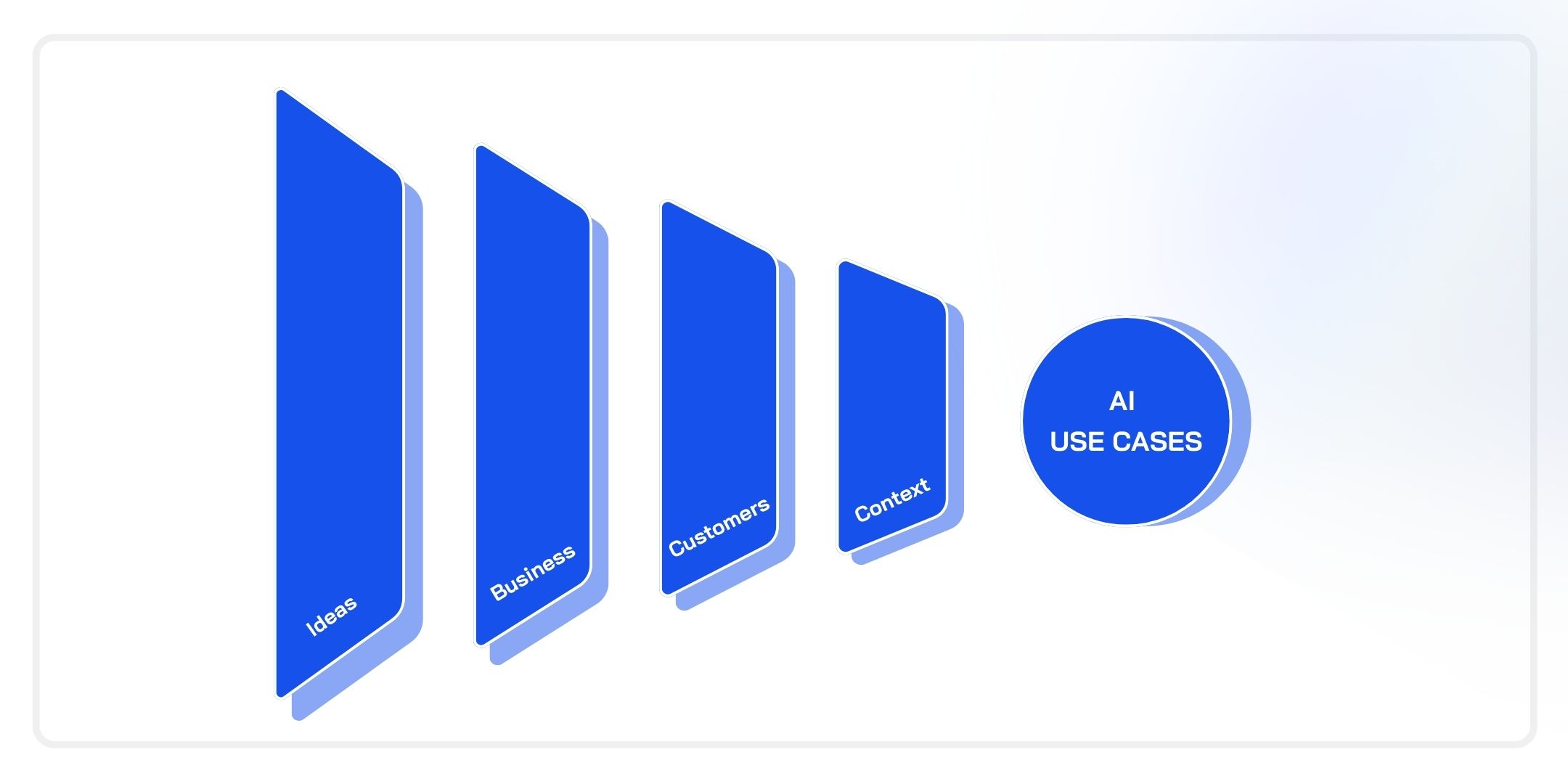
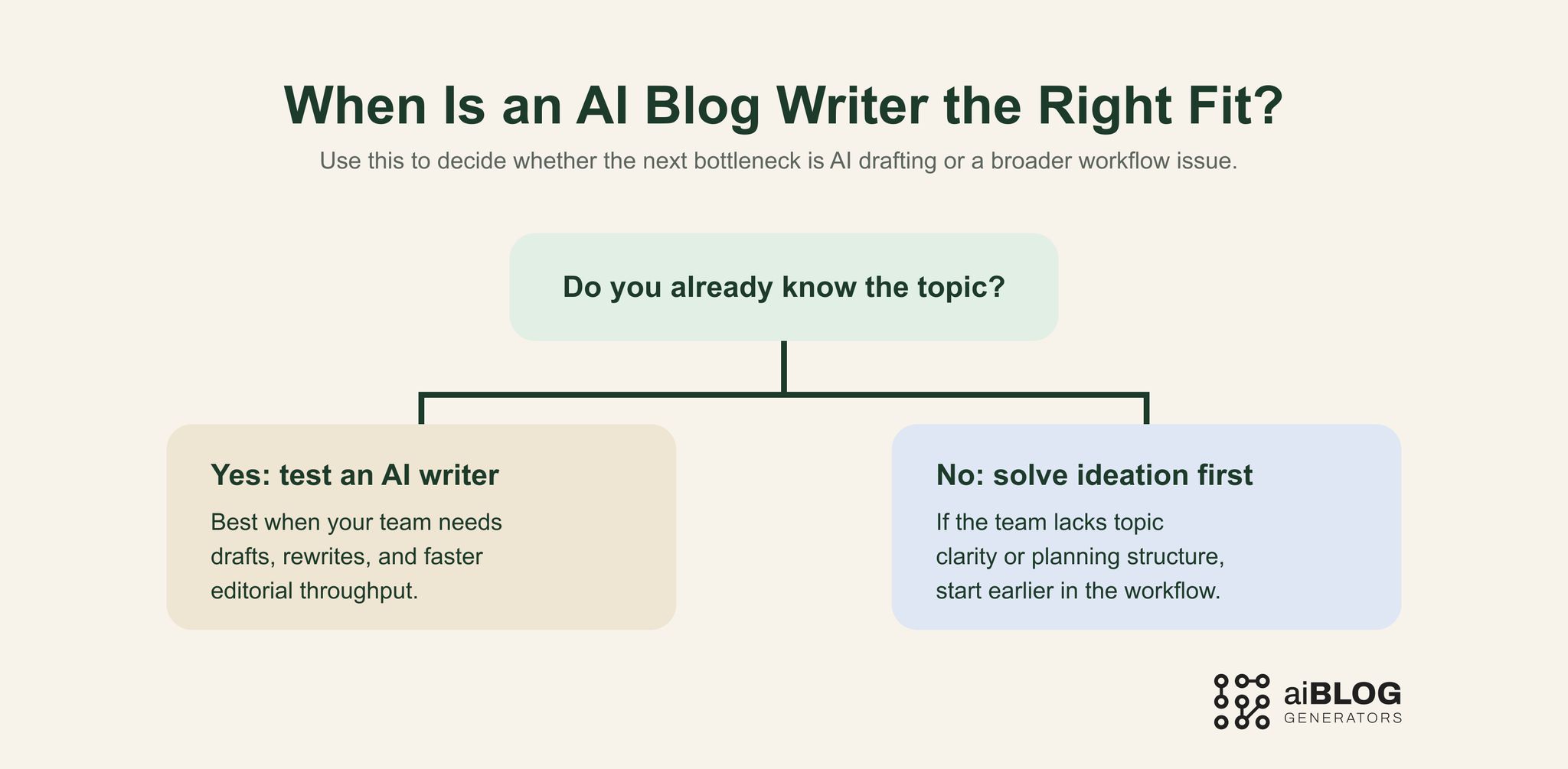
Instead of asking an AI to "write a post about X," start by feeding the AI current, verified data. Use an SEO research tool to identify a specific question or problem the target audience is experiencing. Provide the AI with your specific constraints, such as the target length, the desired level of technicality, and the intended takeaway.
2. Structured Prompt Engineering
The quality of your output is directly tied to the precision of your input. Use a "chain-of-thought" prompting approach:
- Role definition: "Act as a senior technical editor with expertise in [Niche]."
- Contextual constraints: "Provide a 2,000-word guide focusing on [Topic]. Use active voice and avoid [Specific Buzzwords]."
- Formatting requirements: "Use H2 and H3 headings, include a comparison table, and ensure the tone is objective and analytical."
3. Human-in-the-Loop Verification
Once the draft is generated, the AI blogger must perform a "technical scrub." This involves checking every citation, confirming that technical specifications match current standards, and removing "hallucinations"—instances where the AI confidently states incorrect information.
4. Semantic SEO Optimization
AI is excellent at identifying latent semantic indexing (LSI) keywords and related concepts that a human might overlook. Use AI to analyze the "information gain" of your post—does your content provide unique value, or is it merely repeating existing internet consensus?
Comparative Overview of Content Creation Methods
| Feature | Manual Content Creation | Fully Automated AI | AI-Augmented Blogging |
|---|---|---|---|
| Drafting Speed | Slow | Instant | Rapid |
| Accuracy | High (Human Verified) | Low (Risk of Hallucination) | High (Human Verified) |
| Cost | High (Time/Labor) | Very Low | Moderate (Software/Time) |
| Tone Consistency | Variable | Monotone/Repetitive | Controlled/On-Brand |
| Search Engine Risk | Minimal | High (Spam Flags) | Minimal (High Quality) |
Common Challenges and Troubleshooting
The most frequent issue facing AI bloggers is the "generic content trap." When AI is trained on vast amounts of internet text, its statistical "average" is often uninspired.
Overcoming Generic Content
If your drafts feel repetitive, shift your strategy. Use AI to create outlines, analyze data, and summarize complex source material, but write the narrative, personal anecdotes, and professional insights yourself. The goal is to use AI for the "heavy lifting" of organization and formatting, not for the "value-add" of your unique industry perspective.
Handling Technical Hallucinations
If an AI provides a technical specification, do not verify it by searching for that specification in other AI tools. Go to the primary source—official documentation, government reports, or manufacturer technical manuals. If you cannot find a primary source to verify a claim, do not include it.
SEO Penalties
Search engines are proficient at identifying low-value, mass-produced content. Avoid "programmatic" blogging where thousands of pages are generated without human intervention. Your SEO strategy should focus on quality over volume; Google’s ranking systems in 2026 prioritize helpful, human-centric content, regardless of whether a machine assisted in the assembly.
Frequently Asked Questions
Is using an AI blogger considered plagiarism?
AI generators do not typically "copy" text in the traditional sense; they predict patterns based on large datasets. However, if an AI outputs a direct, verbatim quote from a copyrighted source, you are responsible for attribution. Always perform a plagiarism scan before publication.
Do I need to disclose the use of AI on my blog?
Transparency policies vary by platform and jurisdiction. Some ethical guidelines and professional associations in 2026 recommend clear disclosure when AI is used to produce substantive portions of a post. Check the specific guidelines of your hosting platform and your target audience’s expectations regarding AI transparency.
Can an AI blogger handle complex technical topics?
Yes, but with strict oversight. AI is excellent at translating complex concepts into simpler language, but it struggles with original research or interpreting very recent, unpublished industry data. Use AI for structuring your technical explanations and use your own domain expertise to verify the accuracy of those explanations.
How much does it cost to set up an AI blogging stack?
The cost is variable. You can spend as little as $20–$50 per month on subscription models for premium LLMs, or several hundred dollars for advanced enterprise-grade SEO suites. Start with a minimal stack—one reliable LLM and a manual SEO research process—and scale only as your revenue and workflow requirements grow.
Does Google penalize AI-generated content?
Google has stated that it focuses on the quality of content rather than how it was produced. If your AI-augmented content is helpful, authoritative, and provides value to the user, it is treated the same as human-written content. If it is low-effort or spam-like, it will be penalized.
Next Actions for Aspiring AI Bloggers
To transition into a professional AI blogger, begin by documenting your current workflow. Identify which parts of your process are repetitive or analytical—these are the prime candidates for AI automation. Select one task, such as creating content outlines or generating meta-descriptions, and implement an AI tool to handle it for 30 days. During this period, measure your time savings and the quality of the output. Once you have a proven, verified workflow for a single task, expand the integration to the next phase of your editorial process.