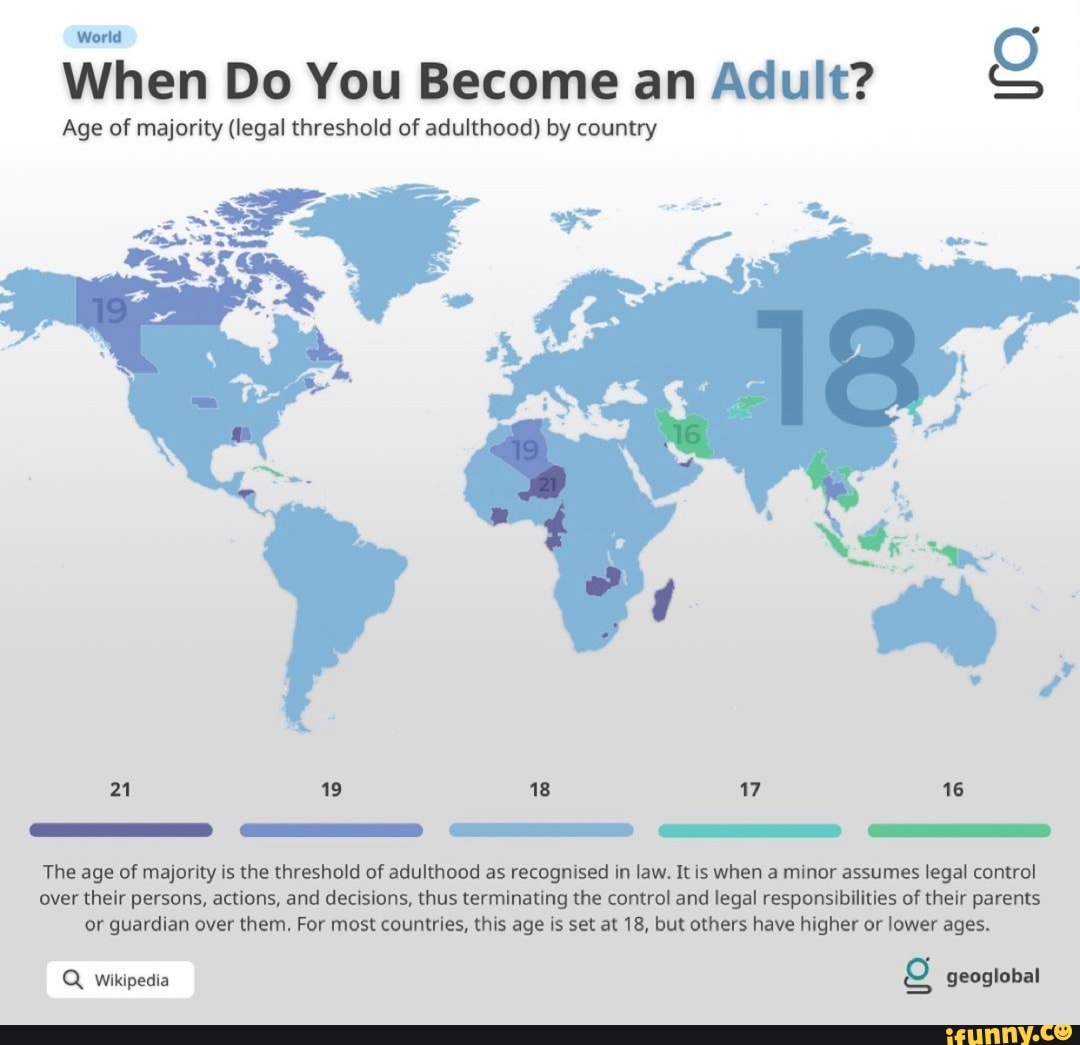
The age of legal adulthood, commonly referred to as the age of majority, is the threshold at which a minor ceases to be under the legal authority of their parents or guardians and assumes full civil and criminal responsibility for their actions. While 18 is the prevailing standard in most modern jurisdictions, the legal definition of maturity varies based on specific contexts, including contractual capacity, voting rights, and criminal liability.
Defining the Age of Majority
The age of majority is a legal construct established by statute in almost every jurisdiction worldwide. It marks the transition from "infancy" or "minority" to "adulthood" in the eyes of the law. Upon reaching this age, an individual gains the right to enter into legally binding contracts, sue and be sued in their own name, and typically assume full control over their financial assets and medical decisions.
It is vital to distinguish the age of majority from other age-based thresholds. For instance, the age at which an individual may vote, obtain a driver's license, purchase alcohol, or consent to sexual activity may differ significantly from the general age of majority. These "age of consent" or "statutory age" milestones are often codified in separate legislative frameworks, such as penal codes or election laws, rather than general civil law.
Historical and Jurisprudential Evolution
Historically, the age of majority was not always tied to a specific numeric birthday. In early common law systems, maturity was often linked to "capacity"—the physical ability to bear arms or manage landed estates. Over centuries, legal systems moved toward a chronological standard to provide administrative clarity and prevent litigation regarding whether an individual was "mature enough" to manage their affairs.
The shift toward age 18 as the universal benchmark for adulthood gained significant momentum in the mid-20th century. In the United States, for example, the ratification of the 26th Amendment in 1971, which lowered the voting age to 18, influenced many states to align their civil age of majority with this standard. Before this shift, many jurisdictions considered 21 to be the age of majority, reflecting older English common law traditions.
Legal Impacts of Reaching Adulthood
When an individual crosses the age of majority, the legal relationship between them and their parents undergoes a fundamental change. The obligation of parents to provide financial support generally ends, and the individual gains the legal standing to act as an independent agent.
Contractual Capacity
Minors are generally protected from being bound by contracts, as the law recognizes they may lack the judgment required to engage in complex financial obligations. Once a person reaches the age of majority, they gain full capacity to sign leases, take out loans, and enter into employment contracts. Contracts signed before reaching the age of majority are often "voidable," meaning the minor can choose to cancel them, but this right typically expires once the individual reaches the age of adulthood.
Criminal and Civil Liability
In the eyes of the law, an adult is fully accountable for their conduct. This includes both criminal acts and torts—civil wrongs that cause harm to others. While juvenile justice systems focus on rehabilitation, the adult criminal justice system is designed for punitive and correctional purposes. Once an individual reaches the age of majority, they are tried as an adult, which can result in significantly harsher sentencing guidelines and fewer procedural protections.
Medical Consent
The right to make medical decisions independently is a hallmark of adulthood. Most healthcare providers require a patient to be at the age of majority to consent to invasive procedures, surgery, or specialized treatments. While there are exceptions for "emancipated minors" or specific categories of care (such as reproductive health in certain jurisdictions), the general rule is that medical autonomy is a privilege of the adult.
Global Variations in Legal Adulthood
While the age of 18 is the global mode, it is not universal. Some jurisdictions maintain higher thresholds for specific activities, and a few countries retain older standards for general civil status.
Table: Comparative Thresholds for Adulthood
| Country / Region | General Age of Majority | Notable Age-Related Differences |
|---|---|---|
| United States | 18 | Varies by state for certain contracts/statutes. |
| United Kingdom | 18 | Generally 18 for civil capacity. |
| Japan | 18 | Lowered from 20 to 18 in 2022. |
| South Korea | 19 | Recently lowered from 20 to 19. |
| Scotland | 16 | Lowered from 18 for many civil matters. |
Note: This table represents general standards; specific local statutes may impose exceptions for activities such as gambling or tobacco purchase.
Exceptions: Emancipation and Special Status
In many legal systems, a minor can be declared an adult before they reach the official age of majority through a process known as emancipation. This is a judicial declaration that permanently severs the legal ties between a minor and their parents.
Grounds for emancipation often include:
- Marriage: In jurisdictions where marriage under the age of 18 is permitted, it usually grants the minor adult status automatically.
- Military Service: Joining the armed forces often triggers legal adulthood to facilitate the signing of enlistment contracts.
- Financial Independence: A court may grant emancipation if a minor can prove they are fully self-supporting, live apart from their parents, and have the capacity to manage their own affairs.
Emancipation is not merely about independence; it carries the heavy burden of losing the protections granted to minors, such as the right to parental support and the special considerations of the juvenile court system.
The Intersection of Age and Financial Responsibility
The transition to adulthood is perhaps most visible in the financial sphere. Upon turning 18, individuals are legally permitted to open bank accounts, apply for credit cards, and participate in the stock market without a co-signer. However, this transition frequently lacks a corresponding formal education component in many societies, leading to a "financial maturity gap."
Financial institutions require adults to manage debt responsibly. Mistakes made at this stage, such as defaulting on student loans or credit card debt, can have long-lasting effects on an individual's credit report—a record that follows them for years. Consequently, reaching the age of legal adulthood requires not only the acquisition of rights but also the adoption of sound financial literacy practices to avoid systemic debt traps.
Common Misconceptions
There is a frequent confusion between the "age of majority" and the "age of consent." The age of majority is a legal status; the age of consent is a protection against sexual exploitation. Reaching the age of majority does not automatically imply that all restrictions on behavior are lifted. For instance, in many countries, one may be a legal adult at 18 but unable to purchase alcohol until 21.
Another common myth is that parents lose all rights to their children’s information upon the child’s 18th birthday. In many regions, this is true regarding medical and academic records due to privacy laws like the Family Educational Rights and Privacy Act (FERPA) in the United States or HIPAA regulations. Unless the young adult provides explicit written consent, parents no longer have a legal right to access these sensitive records.
Troubleshooting Legal Status Challenges
Individuals approaching or having just passed the age of majority often face logistical hurdles regarding documentation. Verification of age is necessary for everything from voter registration to opening a bank account.
- Documentation: Ensure you have a valid, government-issued photo ID (driver’s license, passport, or national ID).
- Proof of Residency: Many legal actions require proof of address, which should be updated immediately upon moving or reaching majority status if living independently.
- Legal Representation: If an individual is involved in a legal dispute that originated during their minority, it is essential to consult with counsel to determine how the shift in legal status affects the pending case.
If you are an adult under the age of 21 and encounter difficulty accessing services, verify the specific statute in your jurisdiction. Some services define "adult" as 18 for general civil purposes but retain higher age requirements for specific institutional products, such as certain insurance policies or professional certifications.
Next Steps for New Adults
Reaching the age of legal adulthood is a significant milestone that requires proactive management. The first step for anyone turning 18 is to familiarize themselves with the laws of their specific state or country. Understanding the difference between civil and criminal capacity, maintaining clear records of identification, and seeking financial guidance are critical components of a successful transition.
If you find yourself in a position where legal status is being contested—such as in inheritance disputes, medical decision-making, or contract validity—consult with a qualified attorney. The laws regarding the age of majority are deeply rooted in jurisdiction-specific statutes; generic advice is often insufficient for resolving complex legal conflicts.