Securing life insurance without a medical exam, often referred to as "no-exam" or "simplified issue" insurance, allows applicants to obtain coverage by answering health questions rather than undergoing blood work or physicals. While these policies are typically more expensive than fully underwritten plans, they provide a fast, accessible pathway for individuals who need coverage quickly or have minor health concerns that might trigger delays in traditional underwriting.
Understanding the Shift Toward Simplified Underwriting
In the life insurance industry, the traditional underwriting process has long required a "paramedical exam." This involves a mobile examiner visiting your home or office to collect blood and urine samples, measure blood pressure, and record height and weight. However, as of 2026, the industry has shifted significantly toward digital-first solutions.
When you seek affordable life insurance rates without a medical exam, you are essentially opting into a process where the insurer uses alternative data sources to verify your eligibility. These sources include the Medical Information Bureau (MIB) reports, prescription drug histories, motor vehicle records, and sometimes even public digital footprints. By relying on these databases, insurers can approve policies in days—or sometimes minutes—rather than the weeks required for full medical underwriting.
Types of No-Exam Life Insurance
Not all policies that skip the medical exam are identical. It is crucial to distinguish between the three primary categories available in the current market to ensure you choose the one that aligns with your financial goals.
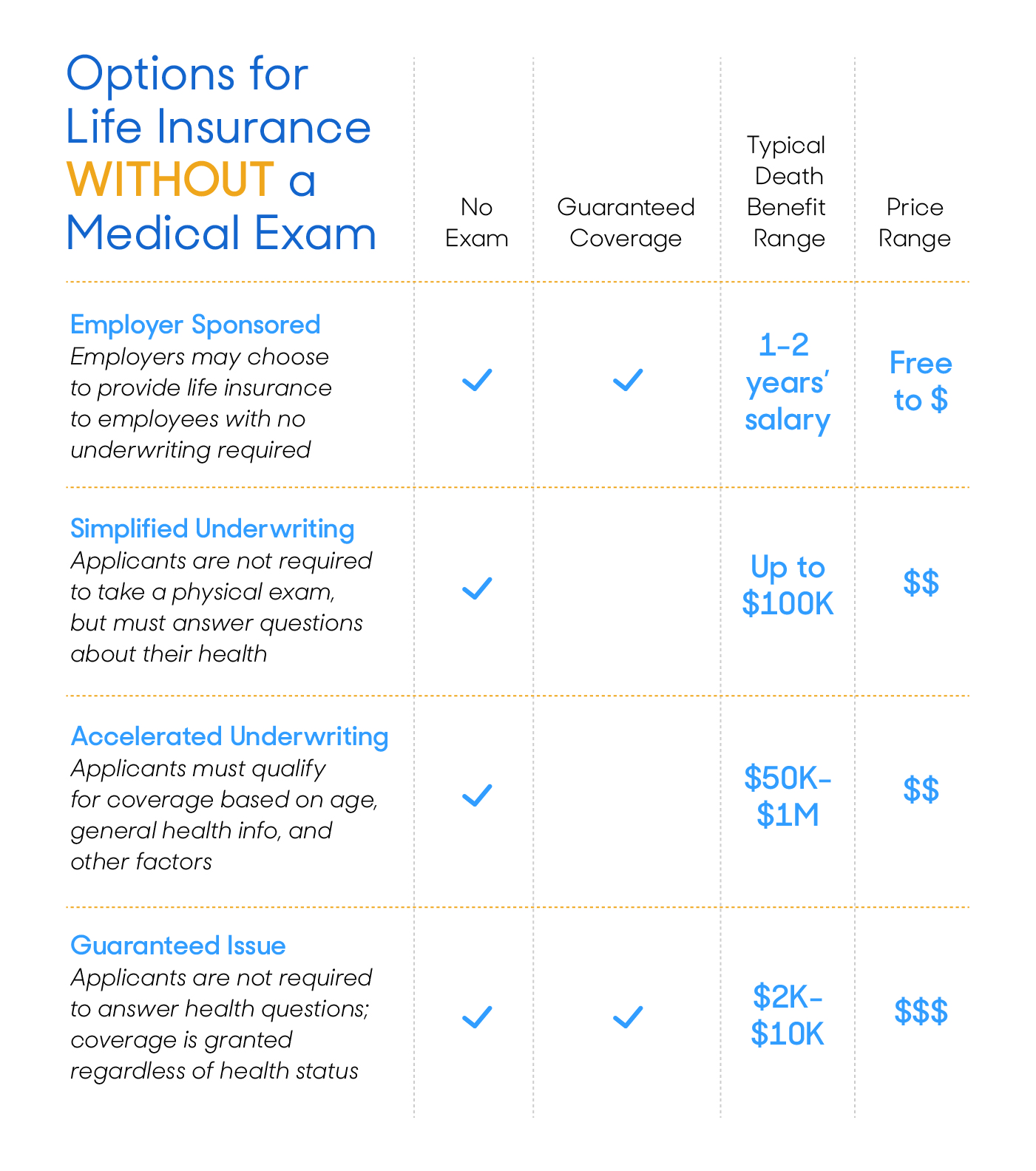
- Simplified Issue Term Life: This is the most common form of "no-exam" coverage. You complete a health questionnaire, and the company performs a background check via electronic databases. These policies usually offer coverage amounts between $50,000 and $500,000.
- Guaranteed Issue Life Insurance: This is a "last resort" policy. There are no health questions and no medical exams. Because the insurer takes on high risk, these policies have lower coverage caps (often $25,000 or less) and usually include a "graded death benefit," meaning the full payout is not available until you have held the policy for two or three years.
- Accelerated Underwriting: Many major insurers now offer policies where the exam is optional based on your health profile. If you are generally healthy, the insurer may "waive" the exam automatically. This is often the most cost-effective way to get no-exam coverage because you receive standard pricing rather than the higher premiums associated with true simplified issue products.
Factors Influencing Your Premium Costs
"Affordable" is a relative term in the insurance world. Because you are not providing the insurer with a comprehensive, verified medical picture, they must account for the "uncertainty risk." This means that for the same amount of coverage, a no-exam policy will almost always cost more than a fully underwritten policy if you are in excellent health.
Several factors will dictate your final rate:
- Age: As you grow older, the statistical likelihood of health issues increases. No-exam policies for applicants over 60 often see significant price hikes compared to those for applicants in their 30s or 40s.
- Smoking Status: Regardless of the exam status, tobacco usage remains the single largest driver of premium increases. Even without an exam, admitting to tobacco use will place you in a much higher risk bracket.
- Coverage Amount: Higher death benefits require more stringent verification. If you request a $1 million policy without an exam, expect more in-depth automated underwriting than if you requested $100,000.
- Health History Disclosures: Be honest on your application. Modern underwriting tools can flag discrepancies between your stated health and your prescription records, which can lead to a denial of claims later.
Comparison Table: Underwriting Methods
| Feature | Fully Underwritten | Simplified Issue (No-Exam) | Guaranteed Issue |
|---|---|---|---|
| Medical Exam | Required | No | No |
| Approval Speed | 4–8 Weeks | 24–72 Hours | Immediate |
| Health Questions | Extensive | Minimal | None |
| Premium Cost | Lowest | Moderate to High | Highest |
| Max Coverage | High ($1M+) | Moderate ($500k) | Low ($25k) |
Pros and Cons of Skipping the Exam
The Advantages
- Convenience: You avoid the hassle of scheduling an appointment, fasting, or having a stranger visit your home.
- Speed: If you are a young family needing immediate protection for a mortgage or a business loan, the rapid approval cycle is a major benefit.
- Anxiety-Free: For those who suffer from "white coat hypertension" or fear needles, the elimination of the clinical environment is a significant relief.
The Disadvantages
- Higher Premiums: You are paying a "convenience premium." Over the life of a 20-year term policy, the cumulative difference can reach thousands of dollars.
- Limited Options: Not all life insurance products are available without an exam. You may find it difficult to secure specialized riders, such as disability waiver of premium, on simplified issue plans.
- Lower Coverage Ceilings: If your financial planning requires a multi-million dollar death benefit for estate tax liquidity, no-exam policies will not suffice.
How to Apply and Verify Coverage
Applying for no-exam life insurance in 2026 is largely a digital process. You will typically access an online portal, provide your personal identification, enter your beneficiary information, and complete the health questionnaire.
- Gather Documentation: Have your Social Security number, primary care physician's contact information, and a list of current prescriptions ready.
- The Digital Questionnaire: Answer questions regarding your recent medical visits, surgeries, and family history. Do not guess; if you are unsure of a date, state that you are approximating.
- Electronic Signature: Most carriers now use secure digital signature platforms that are legally binding.
- Policy Delivery: Once approved, your policy document will arrive via an email portal or physical mail. Review the "Free Look Period"—a standard clause that allows you to cancel the policy within 10 to 30 days of receipt for a full refund if you find the terms or costs are not to your liking.
Common Mistakes to Avoid
The most frequent error applicants make is failing to understand the distinction between "simplified issue" and "guaranteed issue." Some consumers purchase a guaranteed issue policy assuming it is standard term life insurance, only to realize later that it is a small final-expense policy with a graded death benefit.
Another common mistake is omitting information on the health questionnaire. While the application does not include a physical exam, the insurer will run a background check. If the report shows a prescription for a condition you claimed not to have, your application will be denied, and your name may be added to the MIB database, making it harder to get coverage elsewhere.
Frequently Asked Questions
1. Is "no-exam" life insurance legitimate? Yes. It is a standard product offered by major, regulated insurance carriers. While the underwriting is faster, the legal requirement to pay out a death benefit upon a valid claim remains identical to traditional policies.
2. Can I get a no-exam policy if I have pre-existing conditions? It depends on the condition. Some simplified issue policies are designed specifically for people with manageable conditions like controlled diabetes or high blood pressure. However, severe conditions often disqualify you from these products, and you may need to look at policies that do not require health questions at all.
3. Will the insurance company check my medical records if there is no exam? Yes. Even without an physical exam, carriers access the MIB (Medical Information Bureau) database, which contains your medical history from previous insurance applications, as well as pharmacy prescription databases to verify your medication use.
4. Can I upgrade to a standard policy later? Yes. Many people purchase a no-exam policy to secure immediate coverage and subsequently apply for a fully underwritten policy. Once the new, cheaper, fully underwritten policy is in force, you can cancel the original no-exam plan.
5. How much does a no-exam policy actually cost? Costs vary based on your age and the death benefit amount. On average, you should expect to pay 15% to 30% more than you would for a fully underwritten policy. Always request a quote for both types to see if the price difference justifies the convenience.
Final Recommendation for Applicants
If your health is excellent, you should first apply for a fully underwritten policy to see if you qualify for "preferred" or "super-preferred" rates. If your goal is to secure coverage in under a week, or if you have minor health issues that would require a lengthy review process, look for an "accelerated underwriting" program from a reputable carrier. These programs often allow you to skip the physical exam while still accessing the lower pricing tiers of standard underwriting. Always compare at least three quotes from different carriers before finalizing your decision.