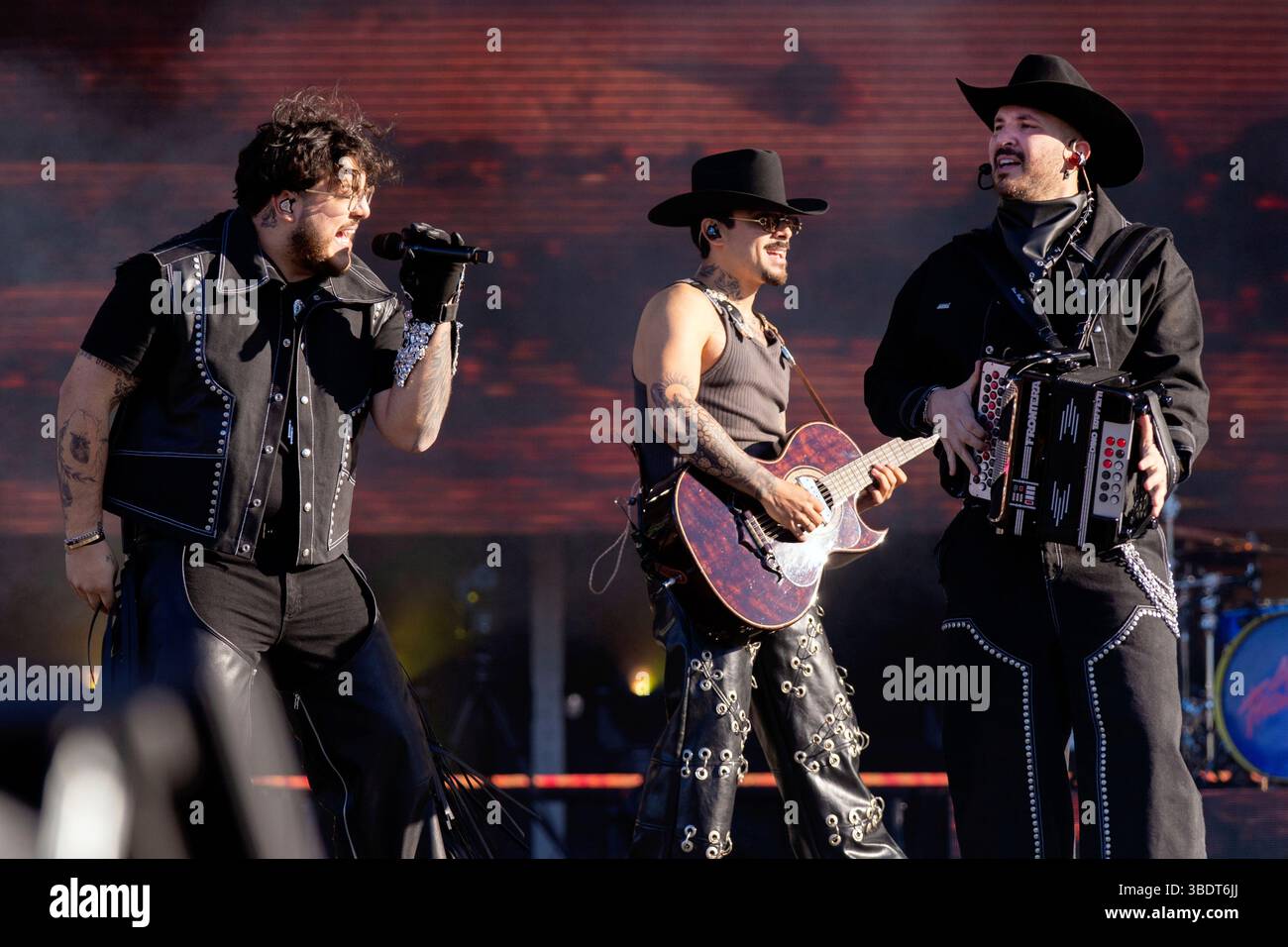
Adelaido "Payo" Solis III is the lead vocalist of Grupo Frontera, the Edinburg, Texas-based powerhouse that has redefined the Regional Mexican genre. By blending traditional Norteño and Cumbia foundations with contemporary pop sensibilities, Solis has spearheaded a "new wave" that has transitioned from viral internet success to sustained global superstardom as of 2026.
The Genesis of a Vocal Powerhouse: Adelaido "Payo" Solis III
To understand the current trajectory of the Regional Mexican "new wave," one must examine the specific impact of Adelaido "Payo" Solis III. Joining Grupo Frontera in 2022, Solis was the final piece of a puzzle that included founding members Julian Peña Jr., Alberto "Beto" Acosta, Carlos Guerrero, Carlos Zamora, and Juan Javier Cantú. While the band had already established a local presence in the Rio Grande Valley, it was the addition of Solis’s youthful energy and soulful, raspy vocal timbre that catalyzed their international breakthrough.
Solis represents a shift in the archetype of the Regional Mexican frontman. Historically, the genre was dominated by older figures or those adhering strictly to the "charro" or "norteño" aesthetic. Solis, born in 2003, brought a Gen Z perspective to the music. His ability to convey deep vulnerability through traditional romantic lyrics allowed the band to resonate with a demographic that previously felt disconnected from the music of their parents. In 2026, Solis is recognized not just as a singer, but as a cultural bridge, maintaining the heritage of the Bajo Quinto and accordion while embracing the aesthetics and distribution methods of the streaming era.
His vocal technique is characterized by a "natural grit"—a slight rasp that adds emotional weight to ballads. Unlike the operatic clarity found in traditional Mariachi, Solis’s voice is conversational and intimate. This technical choice is deliberate, allowing the listener to feel a personal connection to the stories of heartbreak and resilience that define the band’s discography.
Defining the "New Wave": How the Sound Changed
The "new wave" led by Grupo Frontera is often categorized as Norteño-Pop or Cumbia-Norteña, but its technical composition is more complex. Before their rise, the Regional Mexican scene was largely bifurcated between traditional bandas/norteños and the aggressive, urban-influenced Corridos Tumbados. Grupo Frontera carved out a middle ground that prioritized melody, romanticism, and a "cleaner" production style that appealed to pop radio without losing its cultural soul.
A key technical element of this new wave is the rhythmic crossover. By taking the 2/4 or 3/4 time signatures typical of Norteño and infusing them with the swinging 4/4 of Cumbia, the band created a sound that is inherently danceable across different Latin American regions. This wasn't a new invention, but the precision with which they executed it—led by Juan Javier Cantú’s accordion work and Solis’s phrasing—made it feel fresh for a global audience.
Furthermore, the new wave is defined by its collaborative nature. Historically, Regional Mexican artists stayed within their lane. Grupo Frontera broke this mold by collaborating with artists like Bad Bunny, Shakira, and Christian Nodal. These weren't just marketing gimmicks; they were technical integrations where the accordion and Bajo Quinto were treated with the same production reverence as a trap beat or a synth-pop bassline. As of 2026, this "Frontera sound" has become a blueprint for emerging artists in the Rio Grande Valley and beyond.
Technical Brilliance: Instrumentation and Production Excellence
The success of Adelaido Payo Solis III and the band is rooted in a sophisticated understanding of their instruments. While the public focuses on the melodies, the technical backbone of their "new wave" sound relies on two primary instruments:
- The Bajo Quinto: This ten-string instrument provides the harmonic and rhythmic foundation. In Grupo Frontera’s arrangements, the Bajo Quinto is often mixed "forward," giving their tracks a percussive string quality that distinguishes them from synth-heavy Latin pop.
- The Accordion: Specifically the diatonic button accordion. Instead of long, complex solos, the band uses the accordion for "hooks" and melodic punctuation, much like a lead guitar in rock music.
The production, spearheaded by industry titan Edgar Barrera, has played a massive role in this evolution. In 2026, the "Frontera mix" is a recognized industry standard. It involves a specific way of EQing the kick drum and the bass (often a Tololoche or an electric bass) to ensure the low end is tight and punchy, suitable for club sound systems, while leaving enough "air" in the mid-frequencies for Solis’s vocals to sit comfortably.
This technical approach has allowed the band to maintain high-fidelity audio even when performing in unconventional venues. Their transition from backyard parties in Texas to headlining major festivals like Coachella and various international arenas is a testament to the scalability of their technical setup.
The Cultural Impact of the Rio Grande Valley Scene
The rise of Adelaido Payo Solis III is inseparable from the geography of the Rio Grande Valley (RGV). This border region has long been a melting pot of American and Mexican influences. The "new wave" is essentially the sound of the border—a hybrid identity that refuses to choose between English and Spanish sensibilities.
By 2026, the "Edinburg Sound" (as some critics have dubbed it) has spurred a localized economic boom. Young musicians in South Texas now see a viable path to global success that doesn't require moving to Los Angeles or Mexico City initially. Grupo Frontera has invested back into this community, supporting local music programs and ensuring that the technical skills required to play the accordion and Bajo Quinto are passed down to the next generation.
This cultural movement has also challenged the "machismo" often associated with Regional Mexican music. Solis’s lyrics and public persona emphasize emotional intelligence and sensitivity. This shift has broadened the target audience significantly, making the music as popular among suburban teenagers in the Midwest as it is in the rural towns of Nuevo León.
Comparative Evolution: 2022 vs. 2026
The following table outlines the progression of Grupo Frontera’s career and technical standing from their initial viral success to their current status in 2026.
| Feature | Early Stage (2022-2023) | Mature Stage (2025-2026) |
|---|---|---|
| Lead Vocalist Role | Payo as a "breakout" newcomer | Payo as an established industry icon |
| Primary Genre | Viral Cumbia/Norteño covers | Genre-fluid "Norteño-Pop" originals |
| Production Value | Lo-fi, authentic "live" feel | High-definition studio perfection (Barrera-led) |
| Touring Scale | Regional clubs and small theaters | Global arena tours and stadium residencies |
| Collaboration Scope | Genre-specific (Carin Leon, etc.) | Global icons (Bad Bunny, Shakira, EDM producers) |
| Instrumentation | Traditional acoustic focus | Hybrid acoustic-electronic integration |
| Market Reach | Primarily US/Mexico | Global (Europe, Asia, South America) |
Operational Success: Tour Logistics and Brand Management
In 2026, maintaining the momentum of a "new wave" requires more than just good music; it requires meticulous operational and brand management. Adelaido Payo Solis III and the band have transitioned into a massive enterprise. Their 2025-2026 world tour, for example, utilized state-of-the-art stage design that incorporated 3D-mapped visuals depicting the Texas-Mexico landscape, bringing a piece of their home to international audiences.
From a business perspective, the group has been savvy about ownership. By retaining significant control over their masters and publishing—often a pitfall for young artists in this genre—they have ensured long-term financial stability. This independence allows them to take creative risks, such as releasing experimental EPs that explore the boundaries of the "Frontera sound."
The band’s management also prioritizes digital-first engagement. Despite being a live-performance-heavy act, their presence on platforms like TikTok and Instagram remains the primary driver of their "new wave" status. They understand that for Gen Z fans, the behind-the-scenes content and Payo’s personal connection with followers are just as important as the music itself.
Strategic Collaborations and Milestones
A pivotal moment in the lead-up to 2026 was the release of their second and third studio albums. While El Comienzo established their presence, subsequent projects like Jugando A Que No Pasa Nada demonstrated their range. In these works, Solis pushed his vocal limits, experimenting with higher registers and more intricate phrasing.
Key collaborations that defined this era include:
- "un x100to" (with Bad Bunny): This track remains the gold standard for crossover success, proving that Norteño instruments could dominate the global charts.
- The "Borderless" Sessions: A series of 2025 collaborations with non-Latin artists that saw the accordion integrated into alternative rock and R&B frameworks.
- Tribute Projects: Solis’s participation in tributes to icons like Selena and Vicente Fernández has solidified his standing as a respectful yet innovative steward of the culture.
These milestones have not only increased their streaming numbers but have also earned them multiple Latin Grammys and Billboard Music Awards, providing the industry validation necessary to sustain a "wave" long after the initial hype fades.
FAQ
Who is Adelaido Payo Solis III?
Adelaido "Payo" Solis III is the lead singer of the American Regional Mexican band Grupo Frontera. He joined the group in 2022 and quickly became the face of the band due to his unique vocal style and youthful appeal. He is credited with helping the group achieve international fame through hits like "No Se Va" and "un x100to."
What makes Grupo Frontera’s music a "new wave"?
The "new wave" refers to the band’s ability to modernize Regional Mexican music. They achieve this by mixing traditional Norteño and Cumbia sounds with contemporary pop, urban, and rock influences. This approach has made the genre more accessible to a global, younger audience that previously may not have listened to traditional Mexican music.
Where is Grupo Frontera from?
The band is based in Edinburg, Texas, located in the Rio Grande Valley. This border-town upbringing is central to their identity and their "borderless" sound, which reflects a mix of both Mexican and American cultural influences.
What is Payo Solis III’s vocal style?
Payo is known for a raspy, emotive, and conversational vocal style. Unlike the high-pitched or strictly traditional vocalists of older Norteño generations, his voice carries a modern "pop-soul" quality that works well for both romantic ballads and upbeat dance tracks.
Is Grupo Frontera still popular in 2026?
Yes, as of 2026, Grupo Frontera has moved beyond their viral origins to become a staple of the global music scene. They continue to headline major festivals, release chart-topping albums, and collaborate with some of the biggest names in the international music industry.
What instruments are essential to the Grupo Frontera sound?
The core of their sound is built around the accordion and the Bajo Quinto. These are supplemented by the drum kit, bass, and percussion (like the congas), creating a rhythm that is a signature blend of Norteño and Cumbia.
Next Steps for Fans and Industry Observers
For those looking to fully appreciate the impact of Adelaido Payo Solis III and Grupo Frontera, the following actions are recommended:
- Explore the Early Discography: Listen to El Comienzo to understand the foundation of their sound.
- Follow Live Performance Updates: The band’s technical setup in a live environment is where the "new wave" energy is most palpable. Check official sources for 2026 tour dates.
- Study the Producers: Look into the work of Edgar Barrera to see how the technical production of Regional Mexican music is evolving.
- Monitor the RGV Scene: Keep an eye on other emerging artists from the Rio Grande Valley who are following the trail blazed by Solis and his bandmates.
By staying engaged with both the music and the technical evolution behind it, fans can better understand how a local band from Texas changed the face of global music in the mid-2020s.