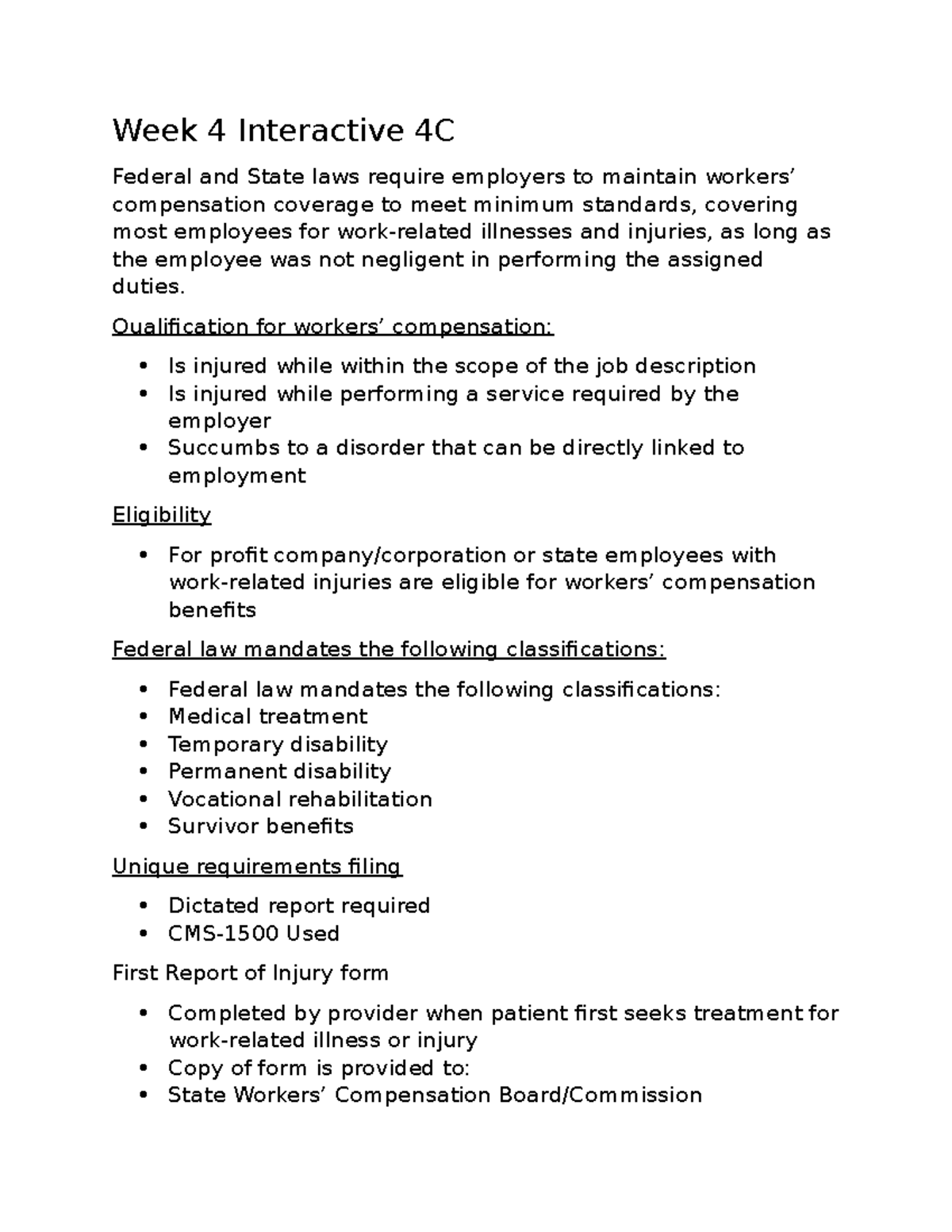
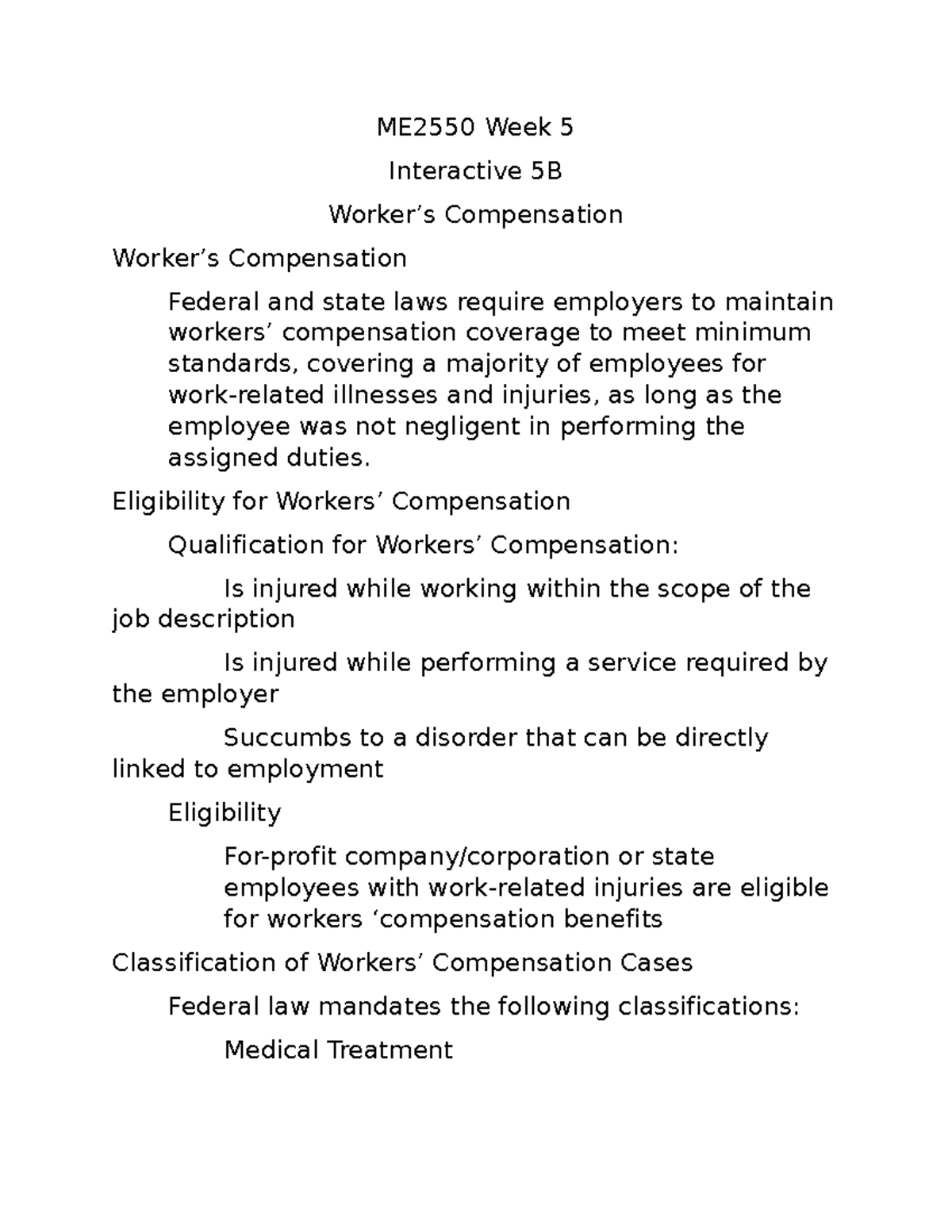
Active duty military personnel are not covered by state-level workers' compensation systems, as they are federal employees governed by the Department of Defense. Instead, members who sustain injuries or illnesses during their service are supported through the military’s integrated healthcare system, transition programs, and, upon separation, the Veterans Affairs (VA) disability compensation process.
The Distinction Between Workers' Compensation and Military Coverage
In the civilian sector, workers' compensation is a state-mandated insurance program that provides medical care and wage replacement to employees injured on the job. These policies are typically employer-funded and operate under a "no-fault" framework. However, the Department of Defense (DoD) operates under a fundamentally different legal and structural framework.
Active duty service members are not considered employees in the sense that they can file for a traditional workers' compensation claim. Their relationship with the federal government is defined by their status in the Armed Forces, governed by statutes in Title 10 of the United States Code. Because the government assumes full responsibility for the health and welfare of service members, they are provided with comprehensive medical care throughout their period of enlistment or commission.
If a service member is injured or becomes ill while on active duty, the military provides medical treatment at military treatment facilities (MTFs) or through TRICARE-contracted providers at no cost to the member. Because the military is already tasked with the responsibility of ensuring the medical readiness of its force, a "workers' compensation" claim—which is designed to compel a private employer to pay for medical bills and lost wages—is legally inapplicable.
Understanding the Integrated Disability Evaluation System (IDES)
While active duty members do not access workers' compensation, they do participate in the Integrated Disability Evaluation System (IDES) if their injury or illness prevents them from continuing their military service. The IDES is the formal mechanism used to determine whether a service member is fit for duty or requires medical separation or retirement.
The IDES is a complex, multi-stage process involving both the DoD and the Department of Veterans Affairs (VA). It is designed to ensure that when a service member’s career is impacted by a service-connected condition, the transition to veteran status is managed with appropriate benefits.
- Medical Evaluation Board (MEB): If a service member’s condition is deemed to likely preclude them from performing their duties, a physician refers the case to an MEB. This board evaluates the medical history and determines if the service member meets retention standards.
- Physical Evaluation Board (PEB): If the MEB determines the member does not meet retention standards, the case moves to the PEB. The PEB evaluates the service member’s fitness for duty and, if found unfit, determines the appropriate compensation, which may include permanent retirement, temporary retirement, or separation with severance pay.
- VA Rating: Simultaneously, the VA performs a Compensation and Pension (C&P) exam. This assesses the severity of the service member’s disabilities to establish a disability rating, which will dictate the amount of monthly compensation the veteran receives once they have separated from the military.
Comparison: Civilian Workers' Compensation vs. Military Disability Support
Understanding the gaps and overlaps between civilian insurance models and military support is vital for service members approaching transition.
| Feature | Civilian Workers' Compensation | Military Disability Support |
|---|---|---|
| Primary System | State/Private Insurance | DoD/VA Integrated System |
| Healthcare Cost | Paid by Employer/Insurer | Provided via DoD/TRICARE/VA |
| Wage Replacement | Percentage of Salary | Active duty pay (if on duty) / VA Disability (post-separation) |
| Legal Basis | State Labor Laws | Title 10 USC / Title 38 USC |
| Fault Requirement | No-Fault | Service-connection (nexus) required |
The "Service-Connection" Requirement
For veterans seeking long-term support, the concept of "service-connection" is the most critical hurdle. Unlike workers' compensation, which typically only requires proof that an injury occurred "during the scope of employment," VA disability benefits require proof of a nexus.
A nexus is a medical link between a current disability and an event, injury, or disease that occurred during active duty service. To succeed in obtaining these benefits, service members must maintain meticulous medical records while on active duty. Every injury, regardless of how minor it seems at the time, should be documented in the service member’s medical record. If a condition is not documented, establishing a nexus years later becomes exponentially more difficult.
Common Misconceptions Regarding "Workers' Compensation"
A recurring point of confusion for service members is the belief that they can sue the military for negligence or "workers' compensation-style" damages for personal injury. Under the Feres Doctrine (established by the Supreme Court case Feres v. United States), service members generally cannot sue the federal government for injuries that arise out of or are in the course of activity incident to service.
This doctrine is broad. It bars most tort claims for medical malpractice, vehicle accidents, or training injuries sustained while on active duty. Therefore, attempting to seek "workers' compensation" through a civil lawsuit against the government is rarely, if ever, a viable path for an active duty member. The legislative intent behind this is that the military’s internal medical care and the VA’s disability pension system are intended to be the exclusive remedy for service-connected injury.
Steps for Documentation and Next Actions
Because the burden of proof rests on the individual during the transition to civilian life, proper record-keeping is the most effective form of insurance.
- Maintain Personal Records: Always keep a copy of your own medical records. When you move between duty stations, digital records may follow, but having personal physical or electronic copies acts as a safeguard.
- Report Every Incident: If you are injured in a training exercise, a deployment, or during daily duties, report it immediately to your supervisor and your medical unit. Do not "tough it out." Documented injuries are the foundation of future VA ratings.
- Understand the C&P Exam: When you reach the stage of leaving the service, participate fully in your Compensation and Pension (C&P) exam. This is not just a standard physical; it is a legal evaluation that will directly influence your post-service financial health.
- Engage with a Veterans Service Officer (VSO): VSOs are accredited individuals who can assist you in navigating the paperwork for VA disability benefits. They act as advocates to ensure that the injuries you sustained during active duty are correctly characterized in your claims.
Frequently Asked Questions
Can I collect civilian workers' compensation if I am an active duty National Guard member injured during civilian employment? Yes. If you are injured while performing your civilian job, you are entitled to the same workers' compensation benefits as any other civilian employee. The restriction on workers' compensation only applies to injuries sustained in the line of duty while acting in your official military capacity.
Does the VA pay for my medical bills after I leave the service? Once you leave the military, you are typically transitioned to the VA healthcare system. Eligibility depends on your service history and disability rating. If you have a service-connected disability, the VA provides medical care for that condition at no cost to you.
What happens if the military denies my medical separation? If you are found "fit for duty" by the Physical Evaluation Board but you believe your medical condition prevents you from performing your duties, you have the right to request a formal hearing. You may also appeal the decision through the Physical Disability Board of Review (PDBR) in certain circumstances.
Is there a time limit for filing a VA disability claim? There is no "statute of limitations" in the sense that you can file a claim at any point after leaving the service. However, filing sooner is highly recommended. The further you are from your service dates, the harder it becomes to track down the evidence required to prove a service connection.
If I am injured on active duty, will I receive my full salary? Yes. As long as you remain on active duty, you continue to receive your full military pay and allowances, even if you are medically unable to perform your full range of duties, provided you are in a limited duty or medical hold status.
Professional Guidance and Advocacy
Managing the transition from active duty to veteran status regarding health-related compensation is a high-stakes administrative task. It is strongly advised that active duty personnel seek professional assistance from accredited Veteran Service Organizations (VSOs) or specialized legal counsel if they encounter resistance during the IDES process. Do not rely solely on informal advice from peers; the nuances of federal administrative law, specifically regarding disability ratings, are subject to complex regulatory interpretation that requires expert oversight.