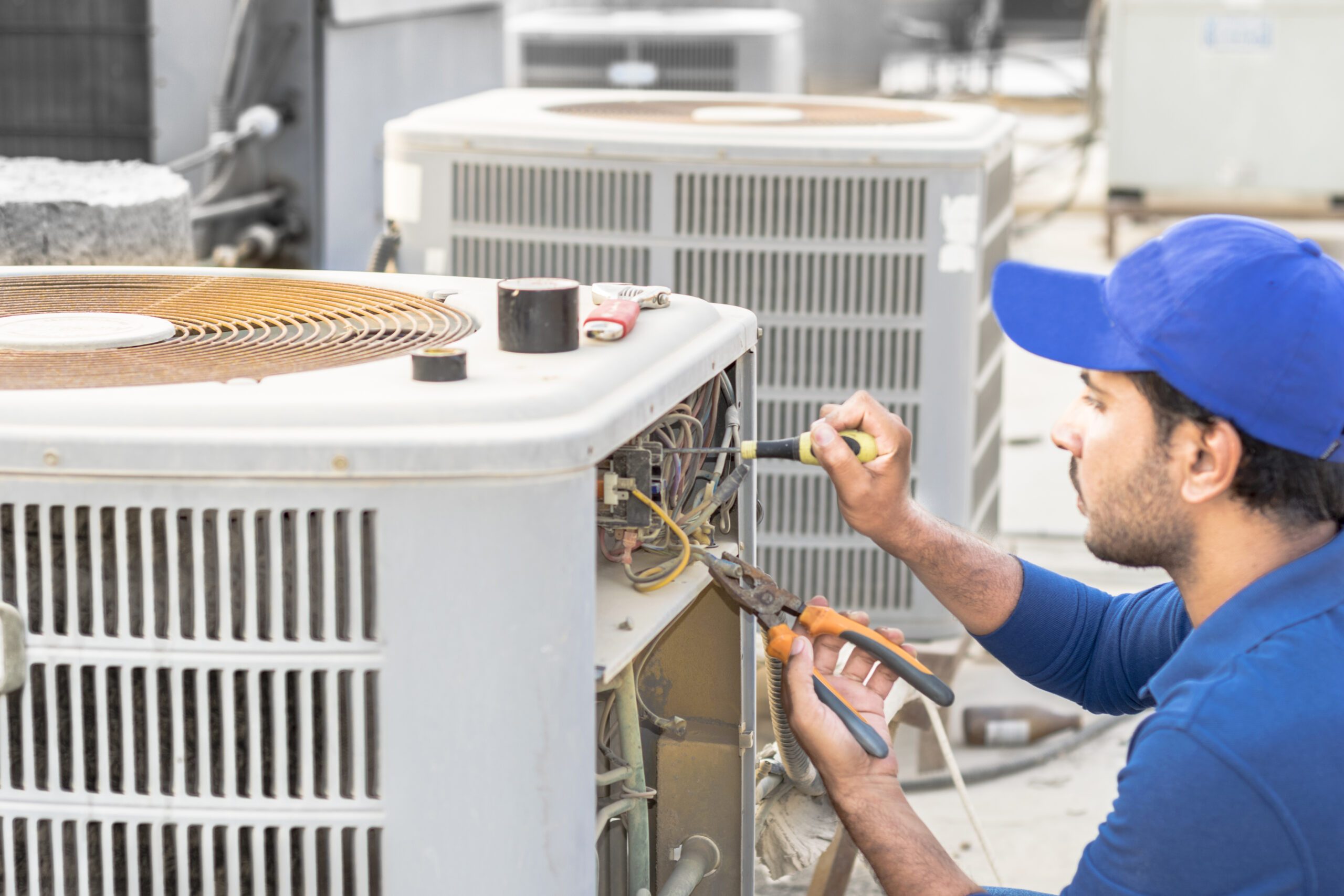
Action HVAC refers to the specialized application of high-efficiency mechanical engineering, advanced refrigeration cycles, and smart-grid integration within residential and commercial heating, ventilation, and air conditioning systems. This technical overview examines the architecture, fluid dynamics, and electronic control systems that define modern climate control standards in 2026, focusing on efficiency, sustainability, and operational reliability.
The Evolution of Technical Standards in 2026
By 2026, the HVAC industry has fully transitioned into a new era of regulatory compliance and mechanical sophistication. The primary driver of this evolution has been the mandatory shift toward higher efficiency ratings and the complete integration of low-Global Warming Potential (GWP) refrigerants. Technical performance is no longer measured simply by a system's ability to cool or heat a space, but by its "Total Energy Management" capability.
The "Action" in modern HVAC involves dynamic responses to indoor and outdoor environmental changes. Unlike legacy systems that operated on a binary on/off cycle, contemporary units utilize sophisticated sensors to modulate output in real-time. This requires a deep understanding of thermodynamics and electrical engineering to maintain the delicate balance between humidity control, air filtration, and thermal comfort.
The Role of SEER2 and HSPF2 Metrics
The technical baseline for any modern HVAC overview begins with SEER2 (Seasonal Energy Efficiency Ratio 2) and HSPF2 (Heating Seasonal Performance Factor 2). As of 2026, these metrics are the industry standard for measuring the efficiency of air conditioners and heat pumps, respectively.
The "2" in these designations represents a fundamental change in how systems are tested. Previous SEER ratings were calculated based on a static pressure of 0.1 inches of water column (in. w.c.), which did not accurately reflect the higher resistance found in real-world ductwork. The SEER2 and HSPF2 standards utilize a testing pressure of 0.5 in. w.c., providing a more rigorous and realistic technical profile of the system's performance under load. For a technician or engineer, this means that equipment must be sized and installed with much tighter tolerances to ensure the promised efficiency is actually achieved in the field.
Advanced Compressor Technology: Inverters and Modulation
The heart of an Action HVAC system is the compressor. In 2026, the industry has largely moved away from single-stage and even traditional two-stage compressors in favor of inverter-driven variable-speed technology.
Thermodynamic Precision through Inverters
An inverter-driven compressor operates by converting incoming AC power to DC, then back to a variable-frequency AC signal. This allows the system to control the motor's revolutions per minute (RPM) with extreme precision. Instead of "slamming" on at 100% capacity and shutting off once the thermostat is satisfied, an inverter system can modulate down to as low as 25% capacity.
This modulation offers several technical advantages:
- Dehumidification: By running for longer cycles at lower speeds, the evaporator coil stays at a consistent temperature, allowing for more effective moisture removal from the air.
- Electrical Longevity: By avoiding the high "inrush" current associated with starting a motor from a dead stop, internal components experience less thermal and mechanical stress.
- Acoustic Management: Variable-speed systems operate at significantly lower decibel levels because they rarely need to run at maximum velocity.
Electronic Expansion Valves (EEV)
To complement variable-speed compressors, modern systems utilize Electronic Expansion Valves (EEVs). While traditional Thermostatic Expansion Valves (TXVs) use a mechanical bulb to sense temperature, an EEV uses a microprocessor and a stepper motor to control refrigerant flow. This allows the system to maintain an ideal "superheat"—the temperature of the refrigerant vapor above its boiling point—across a much wider range of operating conditions. This precision prevents liquid refrigerant from "slugging" back into the compressor, which is a leading cause of mechanical failure.
The Transition to A2L Refrigerants
A critical technical component of HVAC systems in 2026 is the refrigerant chemistry. Following the phase-down of R-410A, the industry has standardized the use of A2L refrigerants, such as R-454B and R-32.
Chemical Properties and Safety Protocols
A2L refrigerants are classified as "mildly flammable" by ASHRAE. While this sounds daunting, the technical reality is that they are difficult to ignite and have a low flame speed. However, their inclusion in Action HVAC systems requires specific engineering safeguards:
- Leak Detection Sensors: Modern indoor air handlers are equipped with specialized sensors that can detect refrigerant concentrations. If a leak is detected, the system is engineered to automatically shut down the compressor and activate the indoor blower to dilute the refrigerant concentration below flammable limits.
- Material Compatibility: The chemical composition of A2L refrigerants requires specific lubricants (usually Polyolester or POE oils) and gasket materials that can withstand different pressures and temperatures without degrading.
- Tooling Requirements: Technicians must use spark-proof vacuum pumps and recovery machines specifically rated for A2L gases. This technical requirement ensures that during service or installation, no ignition sources are introduced to the refrigerant circuit.
Fluid Dynamics and Ductwork Engineering
A technical overview of HVAC is incomplete without discussing the delivery system: the ductwork. Even the most advanced heat pump will fail to perform if the fluid dynamics of the air distribution system are poorly designed.
Manual J, S, and D Calculations
To achieve "Action-ready" status, a system must be designed using the Air Conditioning Contractors of America (ACCA) protocols:
- Manual J (Load Calculation): This determines exactly how many BTUs of heating and cooling a specific structure requires, taking into account insulation values, window types, orientation to the sun, and local climate data.
- Manual S (Equipment Selection): Once the load is known, Manual S ensures the chosen equipment can meet both the sensible (temperature) and latent (humidity) loads of the building.
- Manual D (Duct Design): This is the blueprint for the air distribution system. It calculates the "External Static Pressure" (ESP) of the ductwork. If the ducts are too small, the blower motor must work harder, increasing energy consumption and noise while reducing the system's lifespan.
Modern systems increasingly utilize VAV (Variable Air Volume) boxes and smart dampers to redirect airflow to specific zones. This requires the HVAC controller to communicate with the blower motor to adjust the CFM (Cubic Feet per Minute) based on how many dampers are currently open, preventing excessive pressure buildup in the trunk lines.
Smart Integration and IoT Diagnostics
In 2026, the "brain" of the HVAC system is no longer a simple bimetallic strip or a basic digital thermostat. It is a sophisticated node within the Internet of Things (IoT) ecosystem.
Predictive Maintenance and Cloud Connectivity
Modern Action HVAC systems utilize "communicating" technology. Unlike legacy systems that use standard 24V wiring to signal "heat" or "cool," communicating systems use a serial data bus (often RS-485) to transmit complex data between the thermostat, the indoor unit, and the outdoor unit.
Technical benefits of this integration include:
- Real-time Diagnostics: The system monitors discharge line temperatures, outdoor ambient temperatures, and fan speeds. If a component operates outside of its programmed parameters, the system can send an alert to the homeowner and the service provider before a total breakdown occurs.
- Algorithm-Driven Comfort: AI-driven thermostats now analyze the "thermal lag" of a home—how long it takes to heat up or cool down—and adjust the start times of the HVAC cycles to meet the setpoint exactly when needed, minimizing energy waste.
- Grid Demand Response: Many systems are now programmed to communicate with utility providers. During periods of high grid strain, the system can subtly adjust its setpoint or limit compressor RPM to reduce electrical load, often in exchange for utility credits.
Technical Comparison of HVAC System Types
To understand which system architecture is appropriate for a given application, it is helpful to compare the technical specifications of the three primary categories available in 2026.
| Feature | Single-Stage (Legacy) | Two-Stage (Mid-Tier) | Variable-Speed (Advanced) |
|---|---|---|---|
| Capacity Control | 100% Only | 65% and 100% | 25% to 100% (Modulating) |
| Blower Motor Tech | PSC (Permanent Split Capacitor) | Constant Torque (ECM) | True Variable Speed (ECM) |
| Dehumidification | Minimal (Standard) | Moderate | Exceptional (Extended Cycles) |
| Energy Efficiency | Low (SEER2 13.4 - 14.3) | Moderate (SEER2 15 - 17) | High (SEER2 18 - 25+) |
| Sound Levels | 72 - 80 dB | 68 - 74 dB | 55 - 65 dB |
| Communication | 24V Analog | 24V Analog | Digital Serial Bus |
| Refrigerant Control | Fixed Orifice / TXV | Thermostatic Expansion Valve | Electronic Expansion Valve |
Indoor Air Quality (IAQ) and Ventilation Technicals
As building envelopes become tighter to save energy, the technical burden on the HVAC system to provide fresh air has increased. In 2026, Action HVAC incorporates sophisticated IAQ solutions directly into the mechanical stream.
Mechanical Ventilation: ERVs and HRVs
Energy Recovery Ventilators (ERV) and Heat Recovery Ventilators (HRV) are now standard in high-performance homes. These devices use a heat exchanger core to transfer thermal energy between the outgoing stale air and the incoming fresh air. This allows the building to "breathe" without losing the energy used to condition the air. Technically, an ERV also manages moisture transfer, making it ideal for humid climates, while an HRV is typically preferred in colder, drier regions.
Filtration and Purification
Modern air handlers are engineered to handle the static pressure drop associated with high-MERV (Minimum Efficiency Reporting Value) filters. MERV 13 to MERV 16 filters are now common, capable of capturing particles as small as 0.3 microns, including viruses and bacteria. Furthermore, the integration of UV-C germicidal lights and Needlepoint Bipolar Ionization (NPBI) provides active purification by neutralizing pathogens on the evaporator coil and in the airstream itself.
Maintenance and Operational Integrity
The technical lifespan of a modern HVAC system is heavily dependent on precise maintenance. Because tolerances are tighter and electronics are more sensitive, "Action" maintenance involves more than just changing a filter.
Combustion Analysis for Furnaces
For gas-fired heating components, technicians in 2026 perform digital combustion analysis. This involves measuring the O2, CO, and CO2 levels in the flue gas to ensure the burner is operating at peak efficiency. This technical step is vital for detecting cracked heat exchangers—a major safety hazard—which may not be visible to the naked eye.
Electrical Testing
Maintenance protocols now include testing the microfarad (µF) ratings of capacitors and the ohms of resistance in the compressor windings. As components age, their electrical signatures change. By tracking these metrics over time, technicians can predict failures before they occur, maintaining the "Action" status of the system's uptime.
Frequently Asked Questions
What is the most significant technical change in HVAC for 2026?
The most significant change is the universal adoption of A2L refrigerants (R-454B and R-32) and the integration of mandatory leak detection systems. This transition required a complete redesign of evaporator coils and electrical control boards to handle the mildly flammable properties of these new, more environmentally friendly gases.
Why does a variable-speed system save more money than a two-stage system?
While a two-stage system offers some relief, a variable-speed system uses an inverter to precisely match the cooling or heating load of the home. By running at 30% or 40% capacity for most of the day, it avoids the massive energy spikes associated with starting the compressor and utilizes the evaporator coil's surface area more efficiently, resulting in significantly lower kilowatt-hour consumption.
Can I use my old thermostat with a new 2026 HVAC system?
In most cases involving high-efficiency systems, the answer is no. High-end variable-speed units require a "communicating" thermostat that can speak the specific digital language of the outdoor and indoor units. While some adapters exist to allow standard 24V thermostats to work, they often strip away the most advanced features of the system, such as precise modulation and advanced diagnostics.
What is the technical difference between SEER and SEER2?
SEER2 is a more accurate representation of how a system performs in a real home. The testing protocol for SEER2 uses a much higher external static pressure (0.5 in. w.c. instead of 0.1 in. w.c.). Because modern homes have more complex ductwork and higher-efficiency filters, the SEER2 rating provides a more realistic expectation of energy use and system performance.
How often do the sensors in an Action HVAC system need calibration?
Most sensors in modern HVAC systems are solid-state and do not require manual calibration. However, their accuracy should be verified annually during a professional maintenance visit. Technicians use calibrated probes to ensure the system's internal sensors for temperature, pressure, and refrigerant concentration are reporting correct data to the control board.
Technical Recommendation for Homeowners and Operators
When investing in or maintaining an HVAC system in 2026, the primary objective should be system matching. Do not attempt to pair a new A2L-based outdoor unit with an older R-410A indoor coil. The difference in pressure profiles, oil compatibility, and electronic communication will lead to catastrophic system failure and void all warranties.
For optimal performance, prioritize a "matched system" that includes a variable-speed inverter compressor, an EEV-equipped indoor air handler, and a communicating smart thermostat. This configuration ensures that the engineering safeguards and efficiency algorithms can function as intended, providing the highest possible return on investment and long-term mechanical reliability.