Navigating AC repair in Palm Springs requires addressing the high-heat, high-dust environment unique to the Coachella Valley. Effective solutions involve timely professional diagnostics for common failures like blown capacitors or refrigerant leaks, coupled with aggressive preventative maintenance to handle the extreme thermal loads and fine desert sand that can compromise system efficiency and longevity.
The Unique Realities of Desert Cooling in Palm Springs
In 2026, the climate in Palm Springs remains one of the most demanding environments for residential and commercial HVAC systems. Unlike coastal regions where humidity is the primary concern, the Coachella Valley presents a "critical design temperature" challenge. When outdoor temperatures routinely exceed 115°F, air conditioning systems are pushed to their physical limits. The temperature differential (Delta T) between the scorching outdoor air and the desired 75°F indoor environment creates immense pressure within the refrigerant lines and places significant strain on the compressor.
Navigating these challenges requires more than just standard mechanical knowledge; it requires an understanding of how extreme heat affects electrical resistance and mechanical friction. In this high-heat environment, even a minor inefficiency—such as a slightly dirty filter or a marginally low refrigerant charge—can lead to a total system lockout during a heatwave. Furthermore, the local geography contributes to high levels of fine particulate matter and wind-blown sand, which act as abrasives on outdoor condenser coils and fan bearings.
Common Air Conditioning Failures in the Coachella Valley
Understanding the specific failure points of AC units in Palm Springs is the first step toward effective repair and management. Due to the relentless operation cycles during the summer months, certain components are prone to premature failure.
Capacitor Failures and Electrical Stress
The start and run capacitors are among the most frequently replaced parts in Palm Springs HVAC systems. These components act as temporary batteries that provide the "jolt" needed to start the compressor and fan motors. High ambient temperatures increase internal resistance and cause the electrolytic fluid inside capacitors to degrade or leak. In 2026, most technicians use high-temperature rated capacitors to combat this, but the sheer thermal load of a 120-degree July afternoon still claims thousands of units annually.
Refrigerant Leaks and the Transition to New Standards
By 2026, the industry has largely transitioned away from R-410A toward more environmentally friendly refrigerants like R-454B and R-32. However, many Palm Springs homes still operate older systems. The extreme heat causes copper lines to expand and contract significantly, which can lead to vibration-induced leaks at solder joints or within the evaporator coil. Because refrigerant serves as the medium for heat transfer, even a 10% loss in charge can cause the system to run 24/7 without ever reaching the setpoint, eventually leading to a catastrophic compressor burn-out.
Condenser Coil Fouling
The outdoor unit (the condenser) is responsible for releasing the heat collected from inside the home. In Palm Springs, sand and dust accumulate between the thin aluminum fins of the coil. This creates an insulating layer that prevents heat exchange. When heat cannot escape, the internal pressure of the system rises, forcing the compressor to work harder and consume more electricity. Regular professional "coil washes" are a staple of desert AC repair, often requiring specialized biodegradable foaming cleaners to penetrate the deep layers of desert silt.
The 2026 Regulatory and Technical Landscape
As of 2026, navigating AC repair also involves compliance with California’s stringent energy codes. The California Energy Commission (CEC) has implemented updated Title 24 standards that affect how repairs and replacements are handled in the Coachella Valley.
- SEER2 Requirements: All new installations must meet the SEER2 (Seasonal Energy Efficiency Ratio 2) standards, which use a higher external static pressure testing environment to more accurately reflect real-world desert conditions.
- Smart Thermostat Integration: Many Palm Springs utility providers now offer incentives for "demand response" programs. Repairs often involve recalibrating smart thermostats to ensure they communicate correctly with the local grid during peak load events.
- Variable Speed Technology: Modern repairs in Palm Springs frequently involve high-end variable-speed compressors. Unlike traditional "on/off" systems, these units modulate their output, which is far more effective at maintaining a constant temperature in 110-degree weather.
Diagnostic Steps: What to Expect During a Repair Call
When a technician arrives for an AC repair in Palm Springs, they follow a systematic protocol designed to identify both the immediate failure and any underlying stressors caused by the desert climate.
- Thermostat and Control Verification: The technician first ensures the communication path between the home and the unit is intact. In the desert, sun-damaged exterior wiring is a common culprit.
- Electrical Component Testing: Using a multimeter, the technician checks the "microfarad" readings of capacitors and the "ohms" of the motor windings.
- Static Pressure Analysis: This involves measuring the airflow resistance within the ductwork. In Palm Springs, many older homes have undersized ducts that cause the system to "choke" in high heat.
- Refrigerant Subcooling and Superheat: These measurements tell the technician exactly how the refrigerant is performing. It is the only way to accurately diagnose a system's health in extreme temperatures.
Cost Comparison of Common AC Repairs in Palm Springs (2026 Estimates)
The following table provides a breakdown of estimated costs for common repairs in the Palm Springs area. Note that prices include labor, which is often higher in the desert due to the specialized skills required for high-ambient-temperature diagnostics.
| Repair Service | Estimated Cost (2026) | Typical Symptom | Priority Level |
|---|---|---|---|
| Capacitor Replacement | $250 – $450 | Humming sound, fan won't start | High |
| Contactor Replacement | $200 – $400 | System won't turn on or won't turn off | High |
| Refrigerant Recharge (per lb) | $150 – $300 | Air is lukewarm, ice on copper lines | Critical |
| Condenser Fan Motor | $600 – $1,200 | Outdoor fan is stationary or noisy | Critical |
| Evaporator Coil Cleaning | $400 – $800 | Weak airflow, musty smell | Moderate |
| Drain Line Clearing | $150 – $300 | Water leaking from ceiling or closet | Moderate |
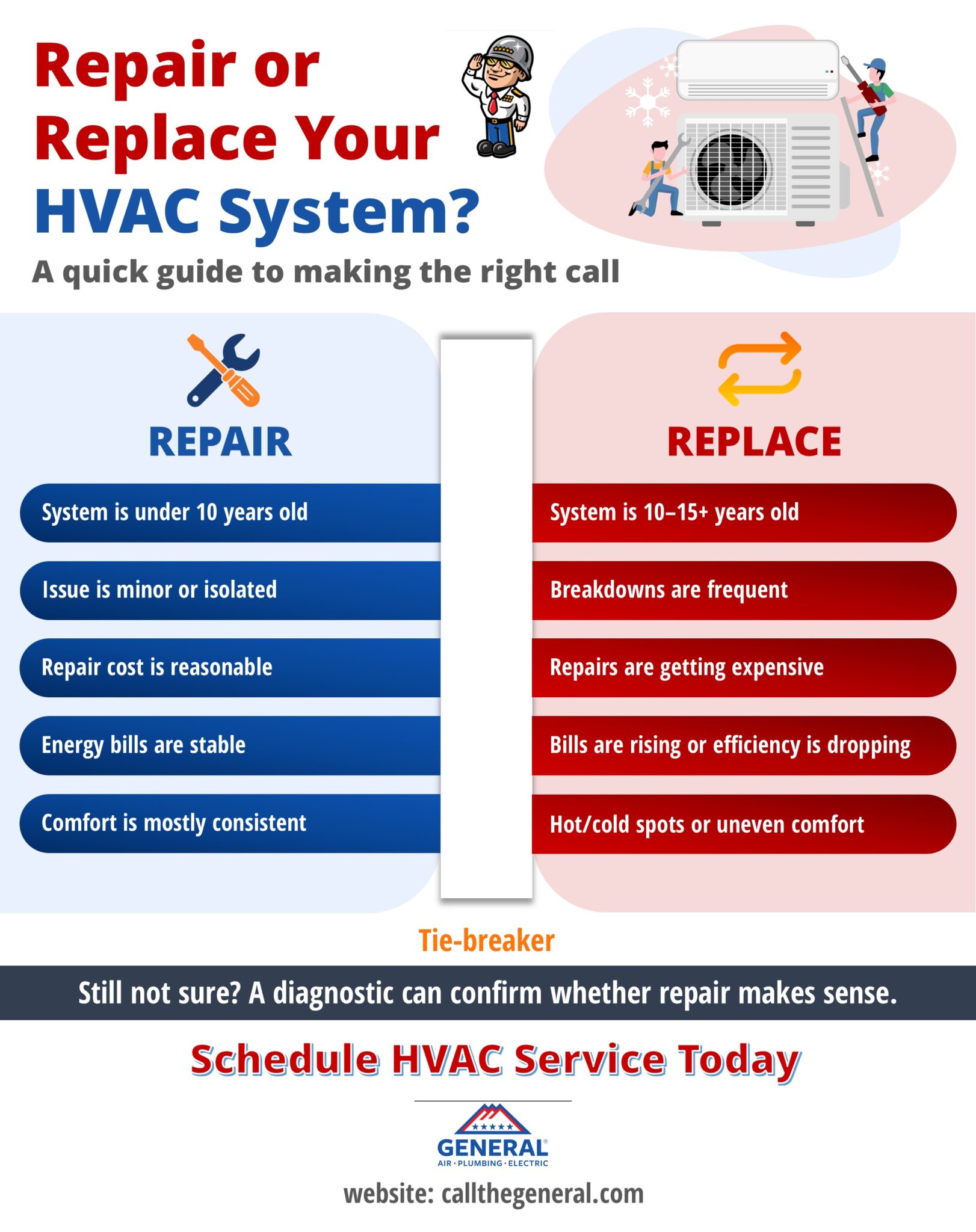
Navigating the Decision: Repair vs. Replace
One of the most difficult challenges for Palm Springs homeowners is deciding when to stop repairing an aging unit. In a climate where a system failure can be life-threatening during a summer power outage, reliability is paramount.
The "5,000 Rule"
A common industry standard used in 2026 is the 5,000 rule: multiply the age of the unit by the cost of the repair. If the result exceeds $5,000, replacement is usually the more economical long-term choice. For example, a 12-year-old unit needing an $800 compressor repair ($9,600) should be replaced. In Palm Springs, the "age" of a unit is effectively doubled because it runs twice as many hours as a unit in a temperate climate.
Efficiency Gains
Replacing an old 10 SEER unit with a modern 18 SEER2 variable-speed system can reduce monthly cooling costs by 40% or more in the Coachella Valley. Given the high electricity rates in Southern California, the "payback period" for a new installation is significantly shorter in Palm Springs than in almost any other part of the country.
Preventative Strategies for Desert Homeowners
To minimize the need for emergency AC repair, residents must adopt a proactive maintenance stance. The "set it and forget it" mentality leads to catastrophic failure when the thermometer hits 120°F.
High-Frequency Filter Changes
In the desert, filters should be checked every 30 days. Fine dust from local wind events can clog a standard pleated filter in weeks. A clogged filter restricts airflow, causing the evaporator coil to drop below freezing, which leads to a "frozen" system and potential liquid slugging of the compressor.
Clearance and Shade
Ensure the outdoor condenser has at least two feet of clear space around it. While it might be tempting to hide the unit behind dense desert landscaping or "privacy fences," these obstructions trap hot air around the unit, forcing it to recycle its own heat. Providing a "shade " (without obstructing airflow) can reduce the ambient temperature around the unit by several degrees, significantly increasing efficiency.
Professional Bi-Annual Tune-ups
A spring tune-up is mandatory in Palm Springs. This service should include a "tighten and brighten" of electrical connections, as the thermal expansion mentioned earlier can loosen wire nuts and terminals, leading to arcing and fire hazards.
Troubleshooting Common Issues Before Calling a Pro
Before requesting an emergency AC repair in Palm Springs, homeowners can perform a few basic checks to ensure the problem isn't a simple oversight.
- Check the Breaker: The high amperage draw during a desert startup can sometimes trip the HVAC breaker. Check both the main electrical panel and the outdoor "disconnect" box.
- Inspect the Condensate Drain: Most modern systems have a "float switch" that shuts the AC down if the drain line is clogged. If you see water in the secondary drain pan, the line needs to be cleared.
- Verify Thermostat Batteries: A blank screen on a thermostat is often just a sign of dead batteries, not a broken air conditioner.
- Reset the System: Sometimes, the onboard computer in a modern AC unit can "glitch" due to power surges. Turning the system off at the breaker for 10 minutes can occasionally reset the logic board.
Frequently Asked Questions
Why does my AC run constantly but the house stays at 80 degrees?
In Palm Springs, this is often a sign of "heat gain" outstripping the system's "heat removal" capacity. This can be caused by low refrigerant, dirty coils, or poor home insulation. If the air coming out of the vents is 15-20 degrees cooler than the air going into the intake, the AC is technically working, but your home may have significant air leaks or window heat gain.
Is it normal for my AC to make a loud "thump" when it starts?
While some noise is normal, a loud thump or "hard start" often indicates that the compressor is struggling to overcome the high internal pressures of a hot desert afternoon. Installing a "Hard Start Kit" (a specialized capacitor and relay) can help protect the compressor from this mechanical stress.
How often should I wash my outdoor unit with a hose?
In the Coachella Valley, lightly rinsing your outdoor coils once a month during the summer can help remove dust. However, you must be careful not to use high pressure, as this can bend the delicate aluminum fins and permanently restrict airflow. Avoid spraying water directly into the electrical compartment or the fan motor.
What is the average lifespan of an AC unit in Palm Springs?
While the national average is 15-20 years, a system in Palm Springs typically lasts 10-12 years. The extreme operating hours and thermal stress accelerate the wear on the compressor and fan motors. Units that receive professional bi-annual maintenance can sometimes push toward 15 years, but they often become prohibitively expensive to run due to declining efficiency.
Why is my AC blowing warm air after a dust storm?
Dust storms in the Palm Springs area can instantly "impact" a condenser coil with a layer of silt. This prevents the unit from releasing heat, causing the compressor to overheat and shut down on a "thermal overload" safety. If this happens, the unit will blow warm air because only the indoor fan is running while the outdoor compressor is cooling off.
Practical Recommendation for Residents
For residents navigating the complexities of AC repair in Palm Springs, the most effective strategy is the adoption of a comprehensive annual service agreement with a licensed local HVAC provider. In 2026, these agreements typically include two deep-cleans per year, priority emergency service during heatwaves, and discounts on parts like capacitors and motors. Given that an emergency Saturday repair in August can carry significant "after-hours" premiums, the cost of a maintenance plan is usually recovered in a single avoided service call. Always verify that your technician is NATE-certified (North American Technician Excellence) and familiar with the specific high-ambient-temperature charging charts required for desert performance.