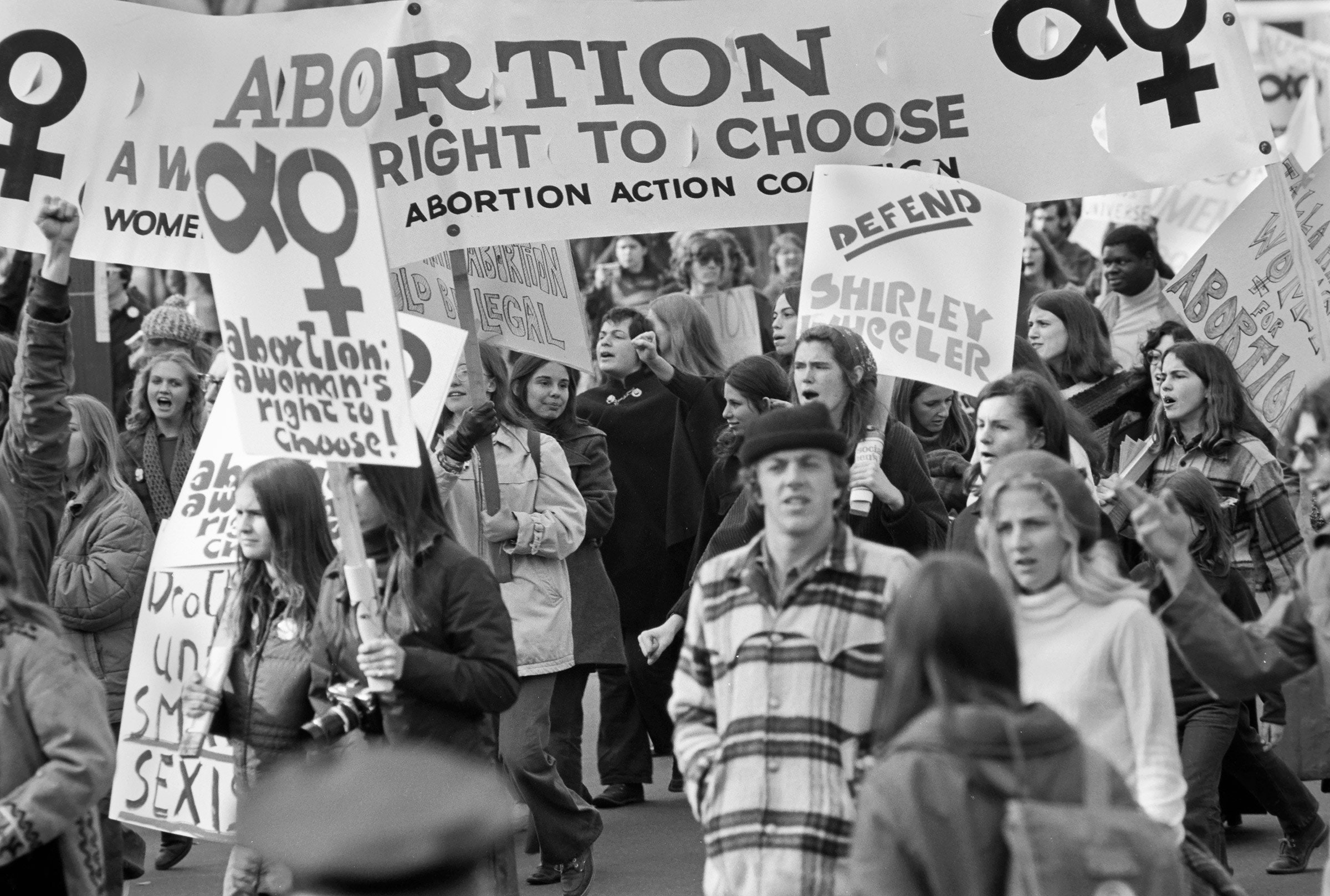
Abortion policy during the George W. Bush administration (2001–2009) was characterized by a concerted conservative effort to restrict reproductive rights through federal legislation, executive branch appointments, international funding conditions, and judicial nominations. Operating under the influence of the socially conservative Christian right, the Bush administration systematically advanced a pro-life agenda that reshaped federal healthcare priorities, judicial landscapes, and global family planning aid.
The Historical and Political Context of the Bush Presidency
When George W. Bush assumed the presidency in January 2001, the legal landscape of abortion rights was anchored by the Supreme Court’s landmark 1973 ruling in Roe v. Wade, as well as subsequent modifications established in Planned Parenthood v. Casey (1992). These precedents established a constitutional right to abortion prior to fetal viability while allowing states to enact various regulations, provided they did not impose an "undue burden" on the woman seeking the procedure.
The political climate of the early 2000s, however, provided a receptive environment for anti-abortion advocacy. The Republican Party platform heavily emphasized the protection of the unborn, and Bush himself campaigned on a explicitly pro-life platform. He promised to sign a federal ban on partial-birth abortion, appoint conservative federal judges, and restrict taxpayer funding for organizations that promoted or performed abortions globally.
Unlike his father, George H.W. Bush, whose administration occasionally navigated more moderate positions within the Republican coalition, the 43rd president aligned his domestic and foreign policy directives closely with religious conservative organizations. This alignment set the stage for eight years of executive actions designed to narrow abortion access incrementally without directly overturning Roe v. Wade, recognizing the political and judicial limitations of doing so immediately.
International Policy: The Global Gag Rule
One of the most consequential executive actions taken during the early days of the Bush administration occurred on January 22, 2001—the 28th anniversary of Roe v. Wade. President Bush issued a presidential memorandum reinstating the Mexico City Policy, commonly referred to by critics as the "Global Gag Rule."
Mechanics and Impact of the Mexico City Policy
Originally instituted by the Reagan administration in 1984 and rescinded by President Bill Clinton in 1993, the policy prohibited foreign non-governmental organizations (NGOs) that received U.S. Agency for International Development (USAID) family planning assistance from using non-U.S. funds to perform, counsel, refer, or lobby for abortion services as a method of family planning.
- Funding Restrictions: NGOs were forced to choose between accepting U.S. federal assistance and continuing their independent advocacy, legal lobbying, or medical services related to abortion.
- Service Disruptions: Major international health organizations reported that the policy disrupted healthcare delivery in developing nations, leading to closures of clinics that provided maternal health services, contraception, and treatment for sexually transmitted infections alongside abortion counseling.
- Advocacy Responses: Proponents argued that the policy ensured taxpayer dollars did not indirectly subsidize abortion overseas, aligning foreign aid with domestic restrictions like the Hyde Amendment. Critics countered that restricting comprehensive reproductive health counseling increased unintended pregnancies and unsafe abortions in regions with fragile healthcare infrastructure.
Domestic Legislative Battles and Federal Regulations
On the domestic front, the Bush administration utilized federal statutory measures and regulatory agencies to restrict access to abortion and reproductive healthcare technologies.
The Partial-Birth Abortion Ban Act of 2003
For several years, congressional Republicans had attempted to pass legislation criminalizing intact dilation and evacuation—a procedure opponents termed "partial-birth abortion." President Bill Clinton had vetoed similar bills in 1996 and 1997.
Under the Bush administration, with Republican majorities in both the House and Senate, the Partial-Birth Abortion Ban Act passed comfortably and was signed into law by President Bush on November 5, 2003.
- The Statute: The law prohibited any physician from knowingly performing an intact dilation and extraction procedure, carrying criminal penalties of up to two years in prison for violators.
- The Exemption Debate: A central point of contention was the absence of a health exception for the pregnant woman. Proponents argued the procedure was never medically necessary; medical associations testified that the procedure could be vital for protecting a woman's health or fertility in specific complex pregnancies.
- Judicial Challenge: The statute immediately faced legal challenges. Lower federal courts struck it down as unconstitutional under Stenberg v. Carhart (2000), a Supreme Court case that had invalidated a similar Nebraska statute because it lacked a health exception. However, the composition of the Supreme Court shifted following subsequent appointments, leading to a landmark ruling in 2007.
Regulatory Actions via the Department of Health and Human Services
The Bush administration also leveraged executive agencies, particularly the Department of Health and Human Services (HHS) and the Food and Drug Administration (FDA), to implement socially conservative policies:
- The Unborn Victims of Violence Act (2004): Signed by President Bush, this law recognized a fetus as a legal victim if injured or killed during the commission of a federal crime, establishing separate criminal charges for harm done to an unborn child.
- Conscience Clause Regulations: In the final weeks of the Bush administration in December 2008, HHS issued a sweeping federal regulation protecting healthcare providers who refused to participate in abortion or sterilization procedures based on religious or moral objections. This rule threatened to withhold federal funding from hospitals, clinics, and universities that failed to accommodate objecting medical personnel.
Judicial Appointments and the Supreme Court Shift
Perhaps the most enduring legacy of the Bush administration regarding abortion policy was its reshaping of the federal judiciary, particularly the Supreme Court of the United States. President Bush appointed two conservative justices who would prove pivotal in future jurisprudence regarding reproductive rights.
| Appointee | Position | Appointment Year | Impact on Abortion Policy |
|---|---|---|---|
| John G. Roberts Jr. | Chief Justice of the United States | 2005 | Succeeded William Rehnquist; voted to uphold the federal Partial-Birth Abortion Ban Act in Gonzales v. Carhart (2007). |
| Samuel A. Alito Jr. | Associate Justice of the Supreme Court | 2006 | Replaced moderate conservative Sandra Day O'Connor; established a reliably anti-abortion vote, eventually authoring the majority opinion in Dobbs v. Jackson Women's Health Organization (2022). |
Gonzales v. Carhart (2007)
The reconfiguration of the Supreme Court bore immediate fruit in Gonzales v. Carhart (2007). In a 5–4 decision written by Justice Anthony Kennedy—with newly appointed Justices Roberts and Alito joining the majority—the Supreme Court upheld the Partial-Birth Abortion Ban Act of 2003.
This ruling marked a significant departure from Stenberg v. Carhart (2000). The Court held that the government's interest in protecting fetal life and maintaining the integrity of the medical profession outweighed the lack of a explicit health exception, provided the ban did not impose an unconstitutional undue burden. Legal scholars noted that Gonzales signaled a willingness by the Court to defer more broadly to legislative determinations regarding medical necessity, laying groundwork for future restrictions.
Comparison of Abortion Policy Eras
To understand the specific impact of the Bush administration, it is helpful to examine how abortion policy evolved across successive presidential terms surrounding the turn of the 21st century.
| Presidential Administration | Mexico City Policy (Global Gag Rule) | Key Legislation / Regulation | Supreme Court Appointments |
|---|---|---|---|
| Clinton Administration (1993–2001) | Rescinded | Vetoed Partial-Birth Abortion Ban Acts; expanded access to emergency contraception research. | Ruth Bader Ginsburg (1993), Stephen Breyer (1994) |
| Bush Administration (2001–2009) | Reinstated and enforced | Partial-Birth Abortion Ban Act (2003); 2008 HHS Conscience Rule. | John G. Roberts Jr. (2005), Samuel A. Alito Jr. (2006) |
| Obama Administration (2009–2017) | Rescinded via executive order | Affordable Care Act implementation debates regarding contraceptive mandates. | Sonia Sotomayor (2009), Elena Kagan (2010) |
Common Misconceptions Regarding Bush-Era Abortion Policy
Public discussion surrounding the Bush era often gives rise to certain inaccuracies regarding executive power and legislative scope.
- Did President Bush make abortion entirely illegal? No. The president does not have the constitutional authority to ban abortion nationwide via executive order. Roe v. Wade remained the law of the land throughout the Bush presidency. The administration focused on regulating methods, restricting federal funding, and appointing conservative judges.
- Was the federal abortion ban a total prohibition? The Partial-Birth Abortion Ban Act of 2003 targeted one specific late-term procedure (intact dilation and extraction). It did not ban all abortions, nor did it restrict standard first- or second-trimester surgical or medical abortions.
- Did the Global Gag Rule ban all foreign aid for health? The Mexico City Policy restricted family planning funds specifically. Humanitarian aid, HIV/AIDS funding (such as PEPFAR, established under Bush in 2003), and basic maternal-child health funding operated under separate statutory frameworks, though organizations intertwined with abortion advocacy still faced complex compliance hurdles.
Practical Takeaways and Long-Term Legacy
The legacy of abortion policy in the Bush era extended far beyond the terminal date of the administration in January 2009. By systematically advancing a pro-life agenda through judicial nominations, federal regulations, and international aid restrictions, the administration institutionalized conservative legal strategies that influenced reproductive rights debates for the next two decades.
- Judicial Realignment: The appointment of Justices Roberts and Alito shifted the ideological balance of the Supreme Court, ensuring a reliable conservative majority that eventually overturned Roe v. Wade in 2022.
- Precedent on Legislative Deference: Gonzales v. Carhart established a precedent wherein the judiciary afforded greater deference to congressional findings on medical procedures, altering how future abortion restrictions were litigated.
- The Executive Funding Template: The utilization of executive memorandums and administrative rules (such as the Mexico City Policy and HHS conscience protections) established a playbook for subsequent presidential administrations to alter reproductive health policy without congressional approval.
For researchers, legal analysts, and policymakers, examining the Bush era provides essential insight into the mechanics of American culture-war politics, federal-state jurisdictional boundaries, and the long-term impact of the appointment power on constitutional rights.