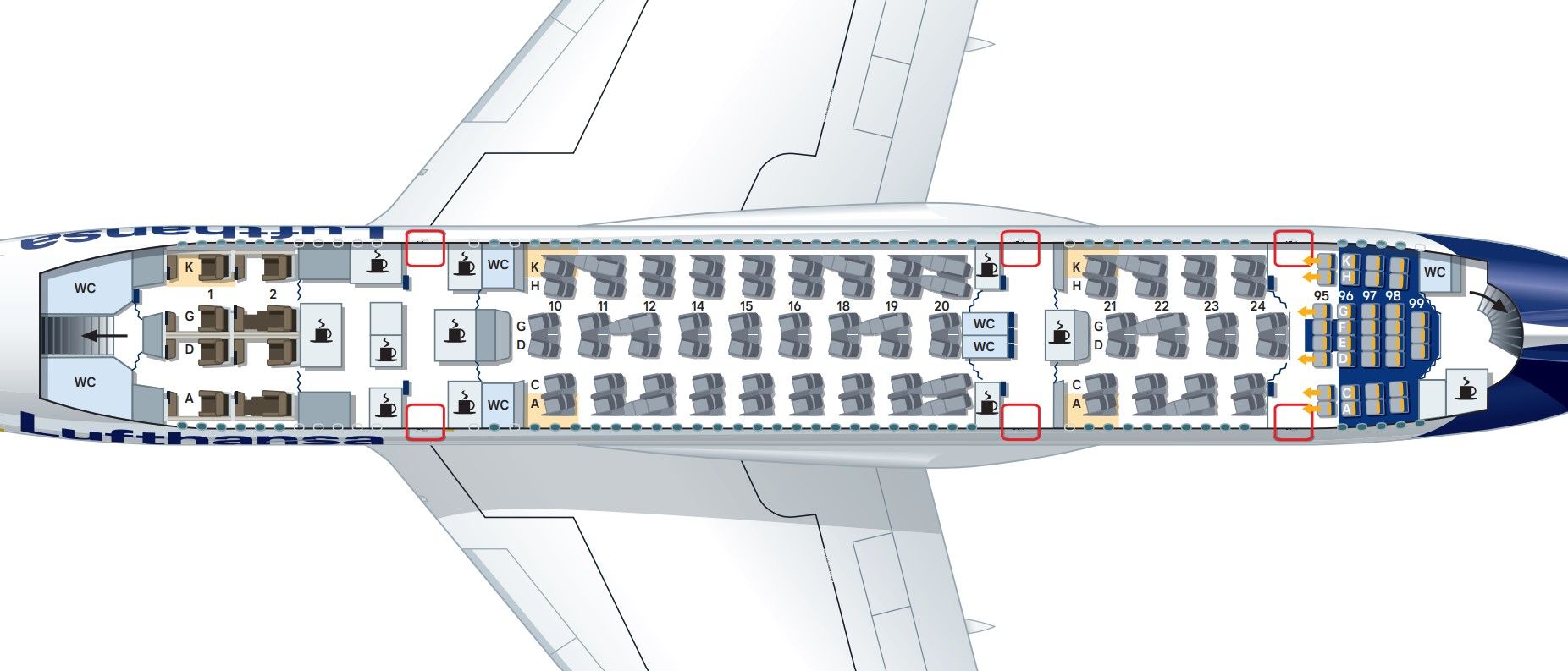
Navigating the Qantas A380 seating chart requires understanding the specific 485-seat refurbished configuration, which divides the aircraft into seven distinct cabin zones across two decks. By 2026, the majority of the active Qantas A380 fleet has transitioned to this updated layout, prioritizing direct aisle access in Business Class and an expanded Premium Economy cabin to meet modern long-haul travel standards.
The Airbus A380-800 remains the flagship of the Qantas fleet, a double-decker behemoth designed for ultra-long-haul routes connecting Australia to hubs like Los Angeles, London, and Singapore. However, not all seats on this massive aircraft are created equal. Since the mid-life refurbishment program began, the interior logic of the Qantas A380 has shifted significantly. To choose the best seat, passengers must look beyond the four classes of service and analyze the seven specific layout zones that define the passenger experience.
The Evolution of the Qantas A380 Configuration
When Qantas first introduced the A380 in 2008, the layout was revolutionary but eventually aged as competitors moved toward all-aisle access in Business Class. The "Version 2" refurbishment, which is the standard operational model in 2026, represents a complete overhaul of the upper deck and a refinement of the lower deck.
The primary change in the seating chart was the removal of the old 2-2-2 "Skybed" seats in Business Class, replaced by the 1-2-1 "Business Suite." Furthermore, the airline recognized the soaring demand for Premium Economy, doubling the size of that cabin. This reconfiguration altered the weight and balance of the aircraft and necessitated a new approach to seat numbering and zone management.
The Logic of the 7 Distinct Seating Zones
To understand the seating chart "insights" mentioned in technical manuals, one must view the aircraft as seven distinct modules. These modules are separated by galleys, exit rows, or staircases, each offering a different acoustic and vibration profile.
- First Class (Lower Deck Front): The "Sanctuary" zone with 14 open suites.
- Business Class Front (Upper Deck): A large, prestigious cabin located ahead of the mid-galley.
- Business Class Rear (Upper Deck): A smaller, more intimate Business cabin located behind the second exit.
- Upper Deck Lounge: A social zone for premium passengers that influences the noise levels of nearby seats.
- Premium Economy (Upper Deck Rear): A dedicated, high-density premium zone.
- Economy Front (Lower Deck Mid): Located directly behind First Class and under the wings.
- Economy Rear (Lower Deck Aft): The largest zone, extending to the rear pressure bulkhead.
First Class: The Lower Deck Suites (Zone 1)
The Qantas First Class cabin on the A380 consists of 14 individual suites in a 1-1-1 configuration (Rows 1–5). Because the A380 fuselage is widest on the lower deck, these suites offer significantly more lateral space than the Business Class seats upstairs.
Each suite features a seat that rotates from a forward-facing takeoff position to a multi-angled dining and lounging position. In 2026, these suites remain highly sought after because they provide a "bed-to-seat" transition that does not require the passenger to fold away their table.
Insights for First Class Selection:
- Rows 1 and 2: These are furthest from the galley and engine noise, making them the quietest.
- Row 5: This row is closest to the First Class galley and the stairs to the upper deck. While it offers more privacy from other passengers, it can experience more light and noise "leakage" from the crew prep areas.
- The "A" Seats: In a 1-1-1 layout, the 'A' seats offer the most privacy as they share an aisle only with the middle 'F' seats, whereas 'K' seats have their own dedicated aisle on the starboard side.
Business Class: The Upper Deck Revolution (Zones 2 & 3)
The most dramatic change in the A380 seating chart is found on the upper deck. Qantas replaced the legacy layout with 70 Business Suites. These seats use a staggered 1-2-1 configuration, ensuring that every passenger has direct access to the aisle.
Zone 2: The Forward Business Cabin
This cabin spans from Row 11 to Row 22. It is the most stable part of the upper deck during turbulence because it is positioned closer to the aircraft’s center of gravity.
Zone 3: The Rear Business Cabin
A smaller cabin (Rows 23–28) located behind the main galley. Frequent flyers often prefer this zone because it feels more like a private jet and sees less foot traffic from passengers moving toward the lounge.
Seat Map Specifications:
- Pitch: 46 inches (converts to an 80-inch fully flat bed).
- Width: 23–24 inches.
- Storage: Large side consoles are a hallmark of the A380 upper deck due to the curvature of the fuselage creating "bins" under the windows.
| Seat Feature | First Class | Business Class | Premium Economy | Economy Class |
|---|---|---|---|---|
| Configuration | 1-1-1 | 1-2-1 | 2-3-2 | 3-4-3 |
| Seat Width | 22 in (swivel) | 24 in | 20.5 in | 17.5 in |
| Bed Length | 83 in | 80 in | N/A (Recline) | N/A |
| Screen Size | 18 in | 16 in | 13.3 in | 12 in |
| Total Seats | 14 | 70 | 60 | 341 |
Premium Economy: The Growth Sector (Zone 5)
As of 2026, Qantas has solidified its A380 layout to include 60 Premium Economy seats, located at the rear of the upper deck. This is a significant increase from the original 35-seat layout. The seats are arranged in a 2-3-2 pattern (Rows 31–40).
The Qantas Premium Economy seat on the A380 is a bespoke design that features a "cradle" recline. When you recline, the seat base moves upward and forward, supporting the legs without requiring a massive pitch that would eat into the cabin's capacity.
Strategic Insights for Premium Economy:
- The Bulkhead (Row 31): Offers the most legroom but has fixed armrests containing the tray tables, which can slightly restrict seat width.
- Window Seats (A and K): Unlike the lower deck, the upper deck window seats have a storage locker between the seat and the window. This provides an excellent armrest and extra space for pillows and tablets.
- The "Middle" Seat (Row E): In a 2-3-2 layout, the 'E' seat is the only middle seat. While less desirable for solo travelers, it is often wider than standard economy middle seats.
Economy Class: The Main Deck Giants (Zones 6 & 7)
The lower deck of the Qantas A380 is primarily dedicated to Economy Class, with 341 seats in a 3-4-3 configuration. Despite the high density, the A380 is widely considered the most comfortable aircraft for economy travel due to the cabin’s vertical walls and high ceilings.
Zone 6: Front Economy (Rows 48–66)
This zone starts behind First Class. It is generally quieter than the rear because it is located ahead of the massive Rolls-Royce Trent 900 engines.
Zone 7: Rear Economy (Rows 71–88)
This section is located behind the wings. While it can be noisier, it is often the last section to fill up on flights that are not at 100% capacity, meaning there is a slightly higher chance of having an empty seat next to you.
Crucial Seat Selection Tips:
- Row 48 (Bulkhead): These seats offer immense legroom but are frequently reserved for passengers with infants (bassinet positions).
- Row 71 (Exit Row): These are the "golden" seats of Economy. Because they are at the emergency exit, there is no seat in front, allowing passengers to stand up and move without disturbing neighbors. However, they are located near the toilets and galleys.
- Avoid Rows 80–88: These seats are at the very back of the plane. They are the last to receive meal service and are closest to the rear engines and galleys, which can be noisy during the "rest" phases of the flight.
Technical Seating Chart Insights: Noise and Vibration
When analyzing the "7 seat layouts," one must consider the environmental factors that seating charts don't show.
- Engine Noise: On the A380, the quietest seats are those forward of the wings (First Class and Front Business). In Economy, rows 48 through 55 are significantly quieter than rows 75 through 88.
- The "Curse" of the Galley: In the refurbished A380, the galley between the two Business Class cabins (near Row 22/23) is a hub of activity. Light sleepers should avoid the last row of the forward cabin and the first row of the rear cabin.
- Upper Deck Stability: Because the upper deck is narrower and further from the center of gravity vertically, some passengers report feeling a more pronounced "sway" during turbulence compared to the lower deck.
Access and Requirements for Premium Seats
By 2026, Qantas has streamlined its seat selection process via the Qantas App and website. Understanding the requirements for specific seats is essential:
- Status Blocking: Qantas frequently "blocks" the first few rows of every cabin for Platinum and Platinum One frequent flyers. These seats usually open to the general public 80 hours before departure (the "T-80" rule).
- Paid Seat Selection: For those without high-tier status, exit row seats (like Row 71) are available for a fee. This fee varies based on the route length but is often considered a high-value investment for a 14-hour flight.
- Bassinet Requirements: If you are traveling with an infant, you must select specific bulkhead seats marked with a "baby" icon. If you are a solo traveler in one of these seats, be aware that you may be moved to accommodate a family.
Troubleshooting Common Seating Issues
Even with a perfect seating chart, issues can arise. Here is how to handle common A380 seating discrepancies:
- Inoperative Recline/IFE: If your seat or screen is broken, the A380’s high capacity can make it difficult to move. However, the crew often holds "crew rest" seats or "blocked" seats for such emergencies. Always ask the cabin manager early.
- Temperature Variance: The A380 is divided into many climate zones. The upper deck tends to run warmer than the lower deck. If you are sensitive to heat, the lower deck Economy or First Class cabins are generally kept at a slightly lower ambient temperature.
- Seat Misalignment: Not every window seat actually aligns with a window. On the A380, some rows (particularly near the exit doors) have blank wall segments. Check specific "seat map" websites to ensure your "window" seat actually has a view.
FAQ: Qantas A380 Seating
Which deck is better on the Qantas A380?
The Upper Deck is generally considered "better" because it is exclusively for premium cabins (Business and Premium Economy), resulting in a quieter atmosphere and faster boarding/deplaning. However, the Lower Deck offers the unmatched luxury of First Class and a wider fuselage for Economy passengers.
How many Business Class seats are on the refurbished Qantas A380?
There are 70 Business Class seats on the refurbished A380. These are all located on the upper deck and are arranged in a 1-2-1 configuration, providing direct aisle access to every passenger.
Is the Premium Economy on the Qantas A380 worth the upgrade?
In the 2026 configuration, the upgrade is highly recommended for long-haul flights. With 60 seats and a 2-3-2 layout, it offers significantly more space and a much deeper recline than Economy. The dedicated cabin also means faster service and a more exclusive environment.
Where is the lounge on the Qantas A380?
The lounge is located at the front of the upper deck, to the left of the stairs. It was significantly expanded during the refurbishment and features a communal table and "booth" seating for Business and First Class passengers to socialize or work away from their seats.
Are there any "hidden" seats to avoid?
Yes. Avoid seat 66K and 66A in Economy if you want a window, as the alignment is poor. In Business Class, Row 11 is very close to the lounge, which can be noisy if other passengers are socializing late into the night.
Recommendation for 2026 Travelers
If you are booking a flight on the Qantas A380 in 2026, your priority should be securing a seat in the refurbished zones. For Business Class, aim for the Rear Cabin (Rows 23–28) for a more private experience. For Premium Economy, Row 31 is the gold standard for legroom. For Economy travelers, the Forward Zone (Rows 48–60) offers the best balance of engine noise reduction and proximity to the exits. Always check your booking 80 hours before departure to see if "blocked" premium seats have become available for selection.