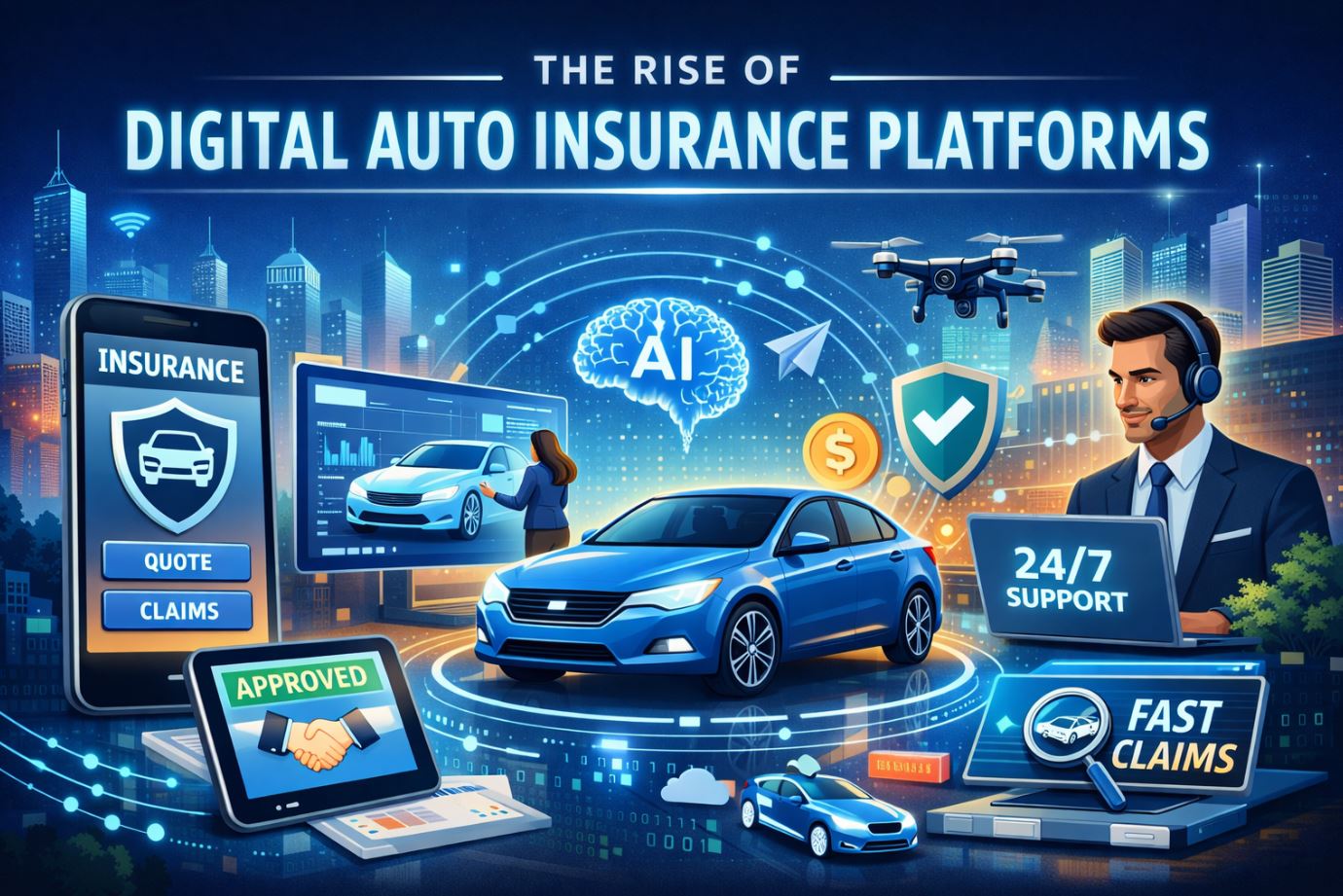
The shift toward fully digital-first auto insurance has accelerated, allowing drivers to manage policies, file claims, and adjust coverage entirely through mobile applications and web portals without visiting a physical office or speaking to an agent. When evaluating the top digital auto insurance companies, providers like GEICO, Progressive, State Farm, Allstate, and Lemonade stand out for their robust mobile infrastructure, automated claims processing, and user-friendly policy management tools.
Choosing the right digital auto insurance provider requires looking beyond flashy marketing apps and examining the underlying technology, claims satisfaction metrics, pricing transparency, and the availability of telematics tracking programs. As drivers increasingly demand friction-free digital experiences, traditional carriers and pure-play insurtech startups alike have transformed their platforms to offer instant quotes, AI-driven damage appraisals, and flexible, usage-based pricing models. Understanding how these digital ecosystems operate helps consumers balance technological convenience against traditional customer service availability.
The Evolution of Digital Auto Insurance
The landscape of personal auto insurance has undergone a significant structural transformation over the past decade. Historically, purchasing an auto insurance policy involved lengthy phone calls, physical paperwork, and reliance on local captive agents to navigate coverage options. Today, the modern digital insurance consumer expects an end-to-end online journey—from initial underwriting and quote comparison to policy issuance and digital ID card generation—all completed within minutes via a smartphone or web browser.
This evolution is driven by advances in data analytics, telematics, and artificial intelligence (AI). Insurers now utilize real-time data feeds, credit-based scoring models (where permitted by law), and driving behavior metrics gathered via mobile apps to price risk more dynamically. For policyholders, this means greater customization, immediate policy modifications, and streamlined claims processing. However, it also introduces new considerations regarding data privacy, app reliability, and the distinction between fully digital startups and legacy carriers with robust digital appendages.
Key Features of a Modern Digital Insurer
A truly digital auto insurance company goes beyond merely offering a website to pay bills. To qualify as a modern digital insurer, platforms typically integrate several core technological pillars:
- Instant Quote and Binding: The ability to pull driving records, vehicle identification numbers (VINs), and historical insurance data instantaneously to generate an accurate quote and bind coverage immediately.
- Self-Service Policy Management: Robust mobile apps that allow users to change vehicles, add drivers, alter liability limits, and download proof of insurance without human intervention.
- AI-Powered Claims Filing: The capability to upload photos of vehicle damage, receive automated preliminary estimates, and track repair status through the app.
- Telematics Integration: Embedded software or plug-in devices that track driving habits—such as speed, braking, acceleration, and phone usage—to calculate behavioral discounts.
Criteria for Evaluating Digital Auto Insurers
When assessing the top digital auto insurance companies, industry analysts and consumers look at specific operational and technological metrics. A high-ranking digital insurer must balance digital convenience with financial stability, claims efficiency, and overall value.
Financial strength ratings, provided by independent agencies such as AM Best, remain critical; a sleek app is of little use if an insurer lacks the capital reserves to pay out major claims. Additionally, user interface (UI) and user experience (UX) design dictate how effortlessly a policyholder can navigate stressful situations, such as managing a roadside breakdown or reporting an accident.
Pricing Transparency and Customization
Digital platforms excel at making pricing transparent. Top-tier apps feature interactive sliders that allow users to instantly see how adjusting comprehensive and collision deductibles or liability limits impacts their monthly premium. Furthermore, digital-first architectures enable micro-insurance and usage-based products that traditional paper-based systems struggle to support efficiently.
Customer Support and Hybrid Models
While pure digital experiences are desirable, the option for human intervention remains essential. The best digital insurers successfully bridge the gap between automated self-service and accessible live customer support via in-app chat, secure messaging, or dedicated phone lines when complex claims or coverage questions arise.
| Provider | Primary Digital Strength | Telematics Program | Claims Technology | AM Best Financial Strength |
|---|---|---|---|---|
| GEICO | Comprehensive self-service app & virtual assistant | DriveEasy | AI-assisted photo estimating | A++ (Superior) |
| Progressive | Seamless quote-to-bind & comparison tools | Snapshot | Online dashboard & mobile claims tracker | A+ (Superior) |
| State Farm | Blend of agent support & robust mobile ecosystem | Drive Safe & Save | Digital claim submission & progress updates | A++ (Superior) |
| Allstate | Advanced mobile tools & accident forgiveness tracking | Drivewise | Quick Foto Claim app integration | A+ (Superior) |
| Lemonade | AI-driven onboarding & instant payout automation | Lemonade Car (Behavior-based) | AI bot-driven claims processing | A (Excellent) |
Detailed Reviews of the Top 5 Digital Auto Insurance Companies
1. GEICO: Best Overall Digital Ecosystem
GEICO maintains a dominant position in the digital insurance space due to its mature, highly polished mobile application and comprehensive web portal. The company has invested heavily in digital infrastructure, enabling policyholders to handle nearly every aspect of their policy without picking up the phone.
The GEICO mobile app features an intuitive dashboard where users can access digital insurance ID cards, pay bills, request roadside assistance, and review policy documents. Its virtual assistant, "Kate," handles routine inquiries 24/7, while the DriveEasy telematics program tracks driving habits to reward safe motorists with potential premium reductions. GEICO's digital claims process allows users to upload photos of minor damage and receive quick repair estimates, making it an efficient choice for drivers seeking a seamless, reliable digital experience backed by industry-leading financial stability.
2. Progressive: Best for Comparison and Customization Tools
Progressive is widely recognized for pioneering digital insurance shopping tools, most notably its "Name Your Price" tool, which helps users find coverage options that fit specific budgetary constraints. The company's web and mobile interfaces are engineered for extreme flexibility, allowing customers to build customized policies with precise coverage limits.
The Progressive mobile app integrates policy management, vehicle service tracking, and the Snapshot telematics program, which monitors driving behavior over a test period to determine personalized rates. Progressive also offers robust online comparison tools that show how its rates stack up against competitors, promoting transparency in the digital marketplace. For tech-savvy drivers who want granular control over their policy structures and pricing inputs, Progressive delivers a powerful digital toolkit.
3. State Farm: Best Hybrid Digital and Agent Experience
While State Farm is traditionally known for its expansive network of local, brick-and-mortar agents, the company has successfully modernized its digital offerings to create a robust hybrid model. Policyholders get the best of both worlds: advanced mobile app capabilities combined with the security of dedicated human representation when complex issues arise.
The State Farm mobile app allows users to manage billing, file and track claims, submit photos for damage estimates, and access the Drive Safe & Save telematics program. This program monitors driving characteristics via a smartphone app or a Bluetooth beacon, offering substantial discounts for safe driving habits. State Farm suits drivers who want the speed and convenience of digital self-service but prefer having a designated local agent available for personalized financial and insurance advice.
4. Allstate: Best for Safe Driving Rewards and Tools
Allstate leverages advanced mobile technology to incentivize safe driving through its Drivewise program, which is seamlessly integrated into the Allstate mobile application. Drivewise tracks speed, hard braking, and driving times, providing real-time feedback to help users improve their driving habits and lower their insurance costs.
The Allstate app also features the Quick Foto Claim system, which enables policyholders to snap pictures of vehicle damage after an accident and upload them directly for automated review, significantly reducing the time required to receive an initial repair estimate. With tools like digital ID cards, easy policy customization, and rewards for accident-free driving, Allstate appeals to motorists looking for active digital coaching and financial incentives tied to their daily driving behavior.
5. Lemonade: Best Pure-Play Insurtech Experience
Lemonade represents the cutting edge of insurtech, offering a completely digital, AI-driven insurance experience designed from the ground up to eliminate traditional bureaucracy. While initially famous for renters and homeowners insurance, Lemonade Car applies the same technological philosophy to auto insurance, tailoring its platform specifically for electric and eco-friendly vehicles as well as traditional gas-powered cars.
The Lemonade onboarding process is handled almost entirely by an AI bot named Maya, which can generate a customized quote in a matter of minutes. The mobile app utilizes telematics to measure driving behavior, offering discounts based on mileage and safety habits. Furthermore, Lemonade utilizes proprietary technology to pay out certain straightforward claims instantaneously. For drivers who despise legacy paperwork and prefer a minimalist, app-centric insurance model, Lemonade provides a refreshing alternative.
Practical Considerations When Switching to Digital Auto Insurance
Transitioning to a digital-first auto insurance provider involves more than simply downloading an app and purchasing the lowest premium. Policyholders must evaluate how digital-first infrastructure impacts critical operational moments, particularly during the claims lifecycle or when dealing with policy modifications.
Technical Prerequisites and App Reliability
To maximize the benefits of digital auto insurance, policyholders must ensure their mobile devices meet basic operating system requirements and maintain stable internet connectivity. Regular app updates are essential for maintaining security protocols, accessing digital insurance ID cards offline, and ensuring telematics tracking software runs accurately in the background without draining excessive battery life.
Understanding Telematics Privacy and Data Usage
Most digital auto insurance apps rely on telematics to offer behavioral discounts. Users should carefully review privacy policies to understand what specific data is being collected—such as GPS location, speed, acceleration, and smartphone interaction—and how that data is stored, utilized, or shared with third parties. While telematics programs offer significant savings for safe drivers, policyholders who prioritize strict location privacy may prefer traditional rating models.
Common Mistakes to Avoid
- Ignoring Coverage Limits for App Price: Choosing a policy solely based on the lowest digital quote without verifying that liability limits, comprehensive coverage, and uninsured motorist protection match personal risk exposure.
- Failing to Verify Offline Access: Not downloading or saving digital ID cards directly to the phone's local wallet, which can cause complications if stopped by law enforcement in an area with poor cellular coverage.
- Overlooking Telematics Requirements: Enrolling in a usage-based program without understanding the criteria, such as maintaining a minimum mileage threshold or avoiding nighttime driving.
Frequently Asked Questions
Can I completely replace a physical insurance card with a digital one?
Yes. Nearly all U.S. states legally accept digital auto insurance ID cards displayed on a smartphone via an insurer's mobile app or saved in a digital wallet. However, verifying specific state regulations before traveling across state lines is recommended, as enforcement acceptance can vary.
How do digital auto insurers handle complex accident claims?
While initial claim reports, photo uploads, and damage appraisals are handled digitally through mobile apps or automated AI bots, complex claims involving severe injuries, multiple vehicles, or disputed liability are automatically routed to human adjusters and specialized investigators for manual resolution.
Are digital auto insurance companies financially stable?
Major digital-first insurers and legacy carriers with advanced digital platforms maintain strong financial strength ratings from independent evaluators like AM Best, indicating a high capacity to meet ongoing policyholder obligations and pay out major claims.
Do digital auto insurance policies cost less than traditional policies?
Digital insurers often feature lower administrative overhead, which can translate into competitive pricing. However, premium costs are ultimately determined by standard risk factors such as driving record, vehicle type, location, and coverage selections rather than the digital nature of the platform alone.
What happens if my smartphone dies or breaks after an accident?
Most digital insurers maintain 24/7 web portals accessible from any computer or alternative device, as well as dedicated telephone customer service lines where policyholders can report claims, request roadside assistance, or retrieve policy information without relying on their primary mobile app.
Conclusion and Next Actions
Selecting the best digital auto insurance company for 2026 depends on balancing technological convenience with comprehensive coverage and financial reliability. Review your current auto insurance policy, assess whether your current provider offers the self-service tools and telematics discounts you require, and compare quotes across leading digital platforms like GEICO, Progressive, State Farm, Allstate, and Lemonade to find the optimal fit for your driving habits and budget.