When examining 21st auto insurance general coverage, policyholders gain access to standard protections—such as liability, comprehensive, collision, uninsured motorist, and medical payments—tailored to protect drivers financially against vehicle damage, bodily injury, and legal liabilities resulting from road accidents.
Navigating the landscape of automotive insurance requires a solid understanding of how policies function, what standard protection options include, and how various coverage tiers safeguard your financial assets. For customers insured through 21st Century Insurance (a brand historically recognized for direct-to-consumer auto policies and now integrated under broader corporate umbrellas depending on the jurisdiction), grasping the foundational mechanics of general coverage ensures you select the right policy limits for your driving habits and state legal requirements.
This guide breaks down the core components of 21st auto insurance general coverage, outlining what standard policies protect, how optional endorsements expand your safety net, and what steps policyholders should take to maintain optimal financial protection on the road.
Understanding the Foundations of Auto Insurance Coverage
Auto insurance is fundamentally a risk-management contract between you and the insurance provider. In exchange for regular premium payments, the insurer agrees to pay for specified financial losses incurred during covered auto accidents, vehicle thefts, or weather-related property damage.
When reviewing general coverage options, policies are typically split into two broad categories: mandatory state-minimum coverages and optional or lender-required protections. Understanding these categories prevents gaps in your financial security. While state laws dictate the bare minimum legal requirement to operate a motor vehicle, relying solely on minimums frequently leaves drivers exposed to substantial out-of-pocket expenses following a severe collision.
Insurance contracts rely heavily on definitions like deductibles (the amount you pay out-of-pocket before insurance kicks in) and policy limits (the maximum dollar amount the insurer will pay for a covered claim). Balancing these variables dictates your monthly premium and your exposure to risk.
Core Components of General Auto Insurance Protection
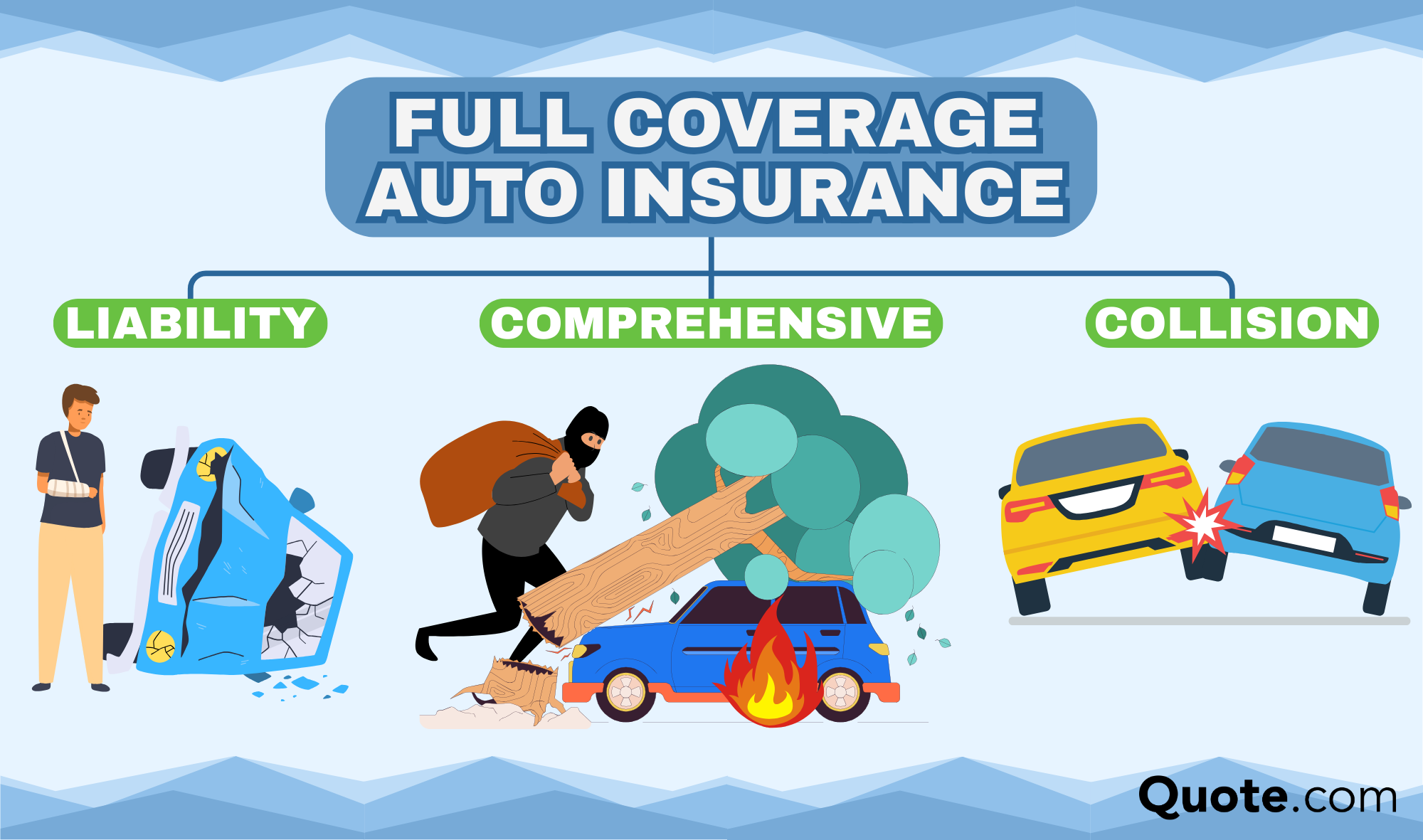
A standard auto insurance policy comprises several distinct coverage types, each designed to address a specific category of risk or financial exposure. Reviewing how these components interact provides clarity on how a policy functions in practice.
- STANDARD AUTO POLICY
- Liability Coverage
- Bodily Injury
- Property Damage
- First-Party Protections
- Collision
- Comprehensive
- Additional Safeguards
- Uninsured / Underinsured Motorist
- Medical Payments / Personal Injury Protection (PIP)
- Liability Coverage
Liability Coverage (Bodily Injury and Property Damage)
Liability coverage is the bedrock of virtually every auto insurance policy and is legally mandated in almost all states. It protects you when you are at fault for an accident that injures another person or damages someone else's property.
- Bodily Injury Liability: Helps pay for medical bills, rehabilitation costs, lost wages, and legal defense fees if you injure someone in a crash. It is typically expressed as two split limits (e.g., $50,000 per person / $100,000 per accident).
- Property Damage Liability: Covers the cost to repair or replace other people's property damaged in an accident you cause, such as another vehicle, utility poles, fences, or buildings.
Physical Damage Coverage (Collision and Comprehensive)
Unlike liability, which pays for damage caused to others, physical damage coverages protect your vehicle. These are typically required if you finance or lease your car.
- Collision Coverage: Pays to repair or replace your vehicle if it collides with another vehicle or object, such as a guardrail, tree, or building, regardless of fault.
- Comprehensive Coverage: Often referred to as "other than collision," this covers damage to your car caused by events outside your control. This includes theft, vandalism, fire, hitting an animal, windshield cracks from flying debris, and weather events like hail, floods, or hurricanes.
Uninsured and Underinsured Motorist Protection
Despite legal requirements, a significant percentage of drivers operate vehicles without insurance.
- Uninsured Motorist (UM) Coverage: Protects you if you are hit by a driver who carries no insurance at all.
- Underinsured Motorist (UIM) Coverage: Steps in if the at-fault driver has insurance, but their policy limits are too low to cover the full extent of your medical bills or property repairs.
Medical Payments (MedPay) and Personal Injury Protection (PIP)
These coverages pay for medical expenses for you and your passengers following an accident, regardless of who caused the crash.
- MedPay: Focuses strictly on medical, surgical, and hospital expenses.
- PIP: Offers broader coverage that may also compensate for lost wages, childcare costs, and funeral expenses, depending on state regulations.
Summary of General Coverage Types
| Coverage Type | What It Protects | Mandatory Status | Key Consideration |
|---|---|---|---|
| Bodily Injury Liability | Other people's medical/legal costs | Mandatory in almost all states | Protects personal assets from lawsuits. |
| Property Damage Liability | Other people's property/vehicles | Mandatory in almost all states | Covers damage to other cars and structures. |
| Collision | Your vehicle from impact damage | Optional (Required by lenders) | Subject to a deductible (e.g., $500, $1,000). |
| Comprehensive | Your vehicle from non-collision events | Optional (Required by lenders) | Covers theft, weather, fire, and animal strikes. |
| Uninsured Motorist | Your injuries/damage from uninsured drivers | Varies by state | Critical safety net against illegal drivers. |
| Medical Payments / PIP | Medical expenses for you and passengers | Varies by state | Supplements health insurance for auto-related injuries. |
Evaluating Policy Limits and Deductibles
Choosing the correct limits and deductibles is where policyholders customize their general coverage to fit their budgetary and risk tolerance needs.
The Impact of Deductibles on Premiums
A deductible is the predetermined out-of-pocket amount you agree to pay before your insurance provider covers the remainder of a physical damage claim.
- Higher Deductibles: Choosing a higher deductible (such as $1,000 instead of $500) significantly lowers your monthly or semi-annual insurance premium. However, it requires you to have cash reserves available to pay that higher amount if you file a claim.
- Lower Deductibles: Choosing a lower deductible increases your premium but reduces your immediate out-of-pocket burden following an accident.
Selecting Appropriate Liability Limits
Opting only for state-minimum liability limits is a common financial trap. If you cause a serious accident resulting in extensive medical bills or multiple totaled vehicles, state minimum limits will exhaust rapidly. Once the policy limit is reached, you become personally liable for the remaining balance, putting your home, savings, and future earnings at risk. Financial experts frequently recommend higher liability limits (such as $100,000/$300,000 or more) to ensure robust asset protection.
Optional Endorsements and Specialized Protections
Standard general coverage can often be enhanced with optional add-ons or endorsements to cover specialized scenarios:
- Roadside Assistance: Provides 24/7 help for towing, flat tire changes, jump-starts, fuel delivery, and lockout services.
- Rental Car Reimbursement: Covers the daily cost of a rental vehicle while your car is in the repair shop due to a covered claim.
- Gap Insurance: Essential for financed or leased vehicles, gap insurance covers the difference ("the gap") between what your car is currently worth (its actual cash value) and the remaining balance on your loan or lease.
Managing Your Policy, Claims, and Verification
Maintaining an auto insurance policy requires ongoing management, periodic reviews, and understanding administrative procedures.
When to Review and Update Your Coverage
Your insurance needs change over time. You should evaluate your general coverage policy during key life milestones:
- Purchasing a new vehicle or paying off an existing car loan.
- Moving to a new residential zip code or state with different legal requirements.
- Adding a teen driver or another household member to your policy.
- Experiencing major shifts in commuting distance or vehicle usage.
Steps to Take After an Accident
Knowing how to handle a claim ensures smooth processing with your insurance provider:
- Ensure Safety: Move to a safe location if possible and check for injuries. Call emergency services immediately if medical attention is required.
- Contact Authorities: File an official police report, which provides an objective record for the claims adjuster.
- Exchange Information: Collect names, contact details, insurance information, and license plate numbers from all involved parties.
- Document the Scene: Take clear photographs of vehicle damage, road conditions, traffic signs, and surrounding property.
- Report the Claim: Notify your insurance provider promptly to initiate the claims investigation and repair process.
Frequently Asked Questions
Does general auto coverage protect me when driving someone else’s car?
Generally, auto insurance follows the vehicle rather than the driver. If you drive a friend's car with their permission, their insurance policy typically acts as the primary coverage if an accident occurs. Your own auto policy may act as secondary coverage to help pay for remaining costs if the vehicle owner's limits are exceeded.
What factors influence the cost of my auto insurance general coverage?
Insurance providers calculate premiums based on multiple risk factors. These include your driving record, age, driving experience, vehicle make and model, annual mileage, credit history (in states where permitted), and your chosen coverage limits and deductibles.
Is comprehensive coverage required by law?
No state government legally requires comprehensive or collision coverage. However, if you finance your vehicle through a bank, credit union, or dealership, the lender will almost always mandate physical damage coverage to protect their financial interest in the vehicle until the loan is fully paid off.
What is the difference between Actual Cash Value and Replacement Cost?
Actual Cash Value (ACV) takes depreciation into account, paying you what the vehicle was worth immediately before the accident. Replacement Cost coverage (often available as an endorsement for newer vehicles) pays what it costs to buy a brand-new vehicle of the same make and model without factoring in depreciation.
How can I lower my auto insurance premiums without reducing coverage?
You can lower your premium by maintaining a clean driving record, bundling your auto policy with homeowners or renters insurance, inquiring about defensive driving course discounts, installing anti-theft devices, and opting for paperless billing or automatic payments.
Conclusion and Next Actions
Understanding 21st auto insurance general coverage empowers you to build a resilient safety net that protects both your physical well-being and your personal financial assets. Begin by reviewing your current policy declarations page to verify your liability limits, deductibles, and optional endorsements. If your limits match outdated state minimums or fail to reflect your current asset level, contact your insurance provider or agent to adjust your policy for comprehensive financial protection.