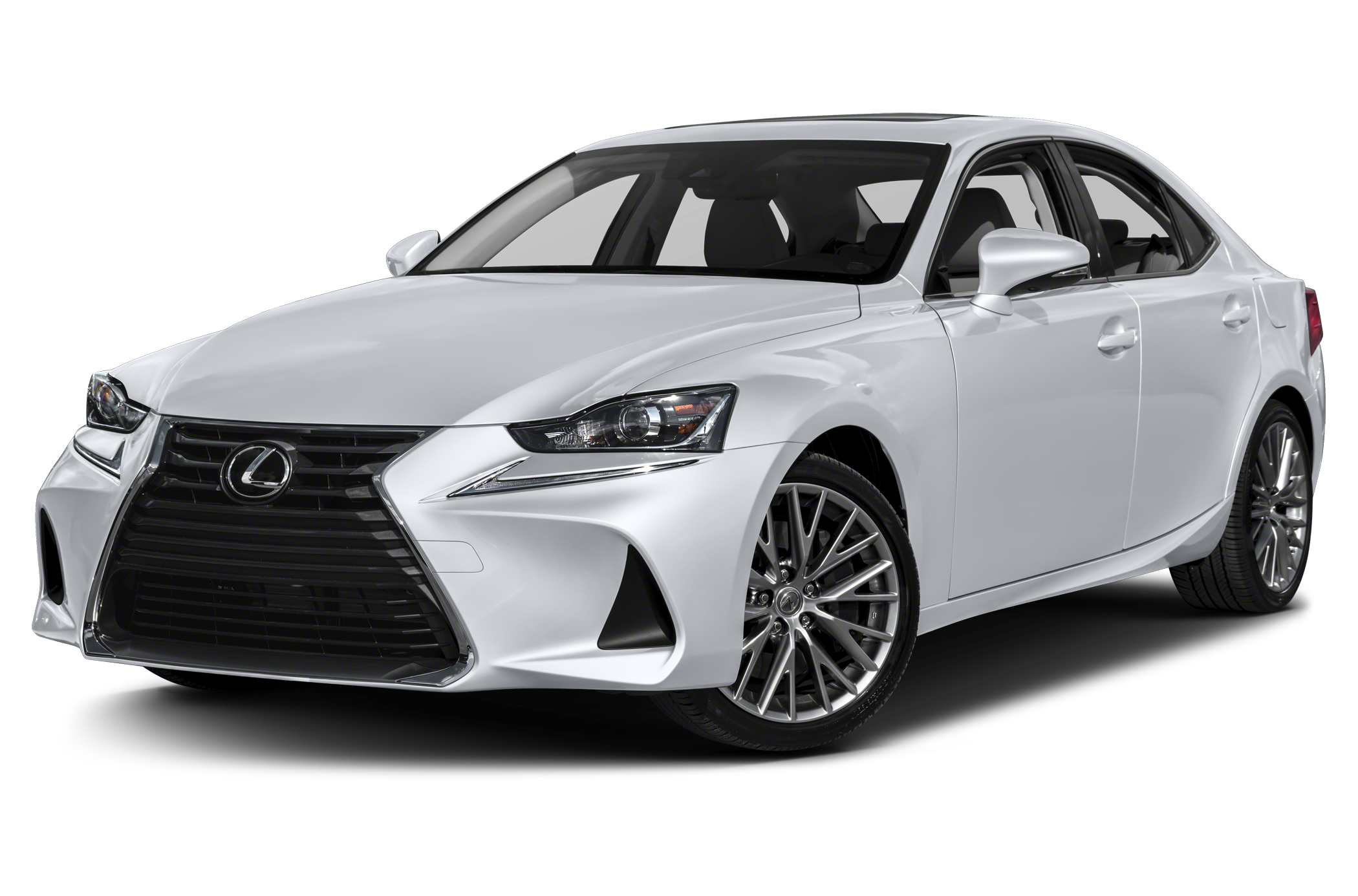
The 2017 Lexus IS 200t F Sport is a rear-wheel-drive compact luxury sports sedan powered by a 2.0-liter turbocharged four-cylinder engine generating 241 horsepower and 258 lb-ft of torque. Featuring aggressive F Sport styling, an LFA-inspired digital gauge cluster, and a sport-tuned chassis, it combines Japanese long-term reliability with refined daily performance.
Overview & The 2017 Model Year Refresh
The 2017 Lexus IS lineup marked a significant mid-cycle refresh for the third-generation (XE30) chassis, which originally debuted for the 2014 model year. Lexus revamped the front and rear styling while upgrading cabin technology and safety equipment. The 2017 model year is particularly notable because it represents the final year Lexus used the IS 200t moniker. For the 2018 model year onward, Lexus rebadged the rear-wheel-drive 2.0-liter turbo model as the "IS 300 RWD," despite maintaining the identical mechanical engine architecture.
- 8AR-FTS 2.0L Turbo Engine
- 8-Speed Sport Direct-Shift
- Rear-Wheel Drive (RWD) Chassis
- F Sport Tuned Suspension & Brakes
Key updates introduced for the 2017 refresh include:
- Revised Exterior Styling: A more aggressive front bumper design with enlarged air intakes, updated dynamic LED headlights, and a refined execution of the signature Lexus spindle grille.
- Updated Rear End: Reshaped LED taillights with a sharper light signature and rectangular chrome exhaust tips integrated into the rear diffuser.
- Lexus Safety System+ (LSS+) as Standard: Inclusion of active safety technology, including Pre-Collision System with Pedestrian Detection, Lane Departure Alert with Steering Assist, Automatic High Beams, and High-Speed Dynamic Radar Cruise Control.
- Enhanced Navigation Screen: Models equipped with the optional Navigation Package received a 10.3-inch high-resolution widescreen display, replacing the older 7-inch screen.
Choosing the F Sport trim transforms the mild-mannered base IS 200t into an eye-catching executive sport sedan. It bridges the gap between basic luxury commuting and enthusiast-oriented styling, offering distinct dynamic enhancements without sacrificing daily usability.
Technical Specifications & Powertrain Engineering
At the heart of the 2017 IS 200t F Sport is Toyota's 8AR-FTS engine, a 2.0-liter inline four-cylinder engine equipped with a twin-scroll turbocharger. Developed in-house, this engine incorporates advanced combustion technology to strike a balance between low-end responsiveness and high-speed efficiency.
Engine and Performance Metrics
- Engine Code: Toyota 8AR-FTS
- Configuration: Inline-4, aluminum block and cylinder head
- Displacement: 1,998 cc (2.0 Liters)
- Induction: Twin-Scroll Turbocharger with air-to-liquid intercooler
- Horsepower: 241 hp @ 5,800 RPM
- Torque: 258 lb-ft @ 1,650–4,400 RPM
- Compression Ratio: 10.0:1
- Drivetrain: Rear-Wheel Drive (RWD only)
- Transmission: 8-speed Sport Direct-Shift automatic (AA81E)
- 0–60 MPH Acceleration: ~6.9 seconds
- Quarter-Mile Time: ~15.3 seconds
- Top Speed: Electronically limited to 143 mph
- EPA Fuel Economy Rating: 22 MPG City / 32 MPG Highway / 26 MPG Combined
Engine RPM Range:
- 1,650 RPM – 4,400 RPM: Peak Torque (258 lb-ft)
- 5,800 RPM: Peak Power (241 HP)
Advanced Engine Technologies
D-4ST Fuel Injection System
The 8AR-FTS uses Lexus’s D-4ST (Direct-injection 4-stroke gasoline engine Superior Version with Turbo) system. This system combines both high-pressure direct fuel injection and low-pressure port fuel injection.
Under heavy acceleration, direct injection sprays fuel straight into the combustion chamber to cool the intake charge and prevent engine knock under boost. Under light loads and idling, port injection handles fuel delivery.
Crucially for long-term ownership, port injection continually washes the backs of the intake valves with gasoline. This completely eliminates the severe carbon buildup on intake valves that plagues direct-injection-only engines found in many European competitors.
VVT-iW (Variable Valve Timing-intelligent Wide)
The engine utilizes VVT-iW on the intake camshaft, allowing it to switch between the traditional Otto combustion cycle and the fuel-efficient Atkinson combustion cycle. During highway cruising, the engine delays intake valve closing to simulate a longer expansion stroke relative to compression, minimizing pumping losses and maximizing fuel economy. When the driver demands rapid acceleration, the system instantly switches back to the Otto cycle to produce full power.
Integrated Exhaust Manifold and Twin-Scroll Turbo
The 8AR-FTS features a cylinder head with an integrated, water-cooled exhaust manifold. This design lowers exhaust gas temperatures before entering the twin-scroll turbocharger, prolonging turbo life and allowing the engine to run optimal air-fuel ratios over a wider operating range.
F Sport Package Equipment & Ergonomics
The F Sport package is not merely an appearance package; it introduces targeted mechanical upgrades and unique cabin elements inspired by the Lexus LFA supercar.
Exterior Styling & Chassis Enhancements
F Sport Front Fascia: A distinctive mesh grille pattern with functional brake cooling air ducts integrated into the lower outer bumper edges.
Staggered 18-Inch Wheels: Dark metallic 10-spoke 18-inch alloy wheels fitted with performance summer or all-season tires (225/40R18 front, 255/35R18 rear).
F Sport Suspension Tuning: Stiffer spring rates, revised shock absorber damping, and unique electric power steering (EPS) tuning for increased steering feedback.
Upgraded Front Brakes: High-friction brake pads paired with 13.1-inch ventilated front rotors for improved heat dissipation during spirited driving.
Badging: F Sport badging on the front fenders and lower steering wheel emblem.
Front Tires: 225/40R18
Rear Tires: 255/35R18
Brake Rotors: 13.1" Ventilated
Suspension: Sport-Tuned Springs/Shocks
Cabin Ergonomics & Instrument Cluster
Inside, the F Sport cabin prioritizes driver engagement. The standout feature is the LFA-inspired digital instrument cluster. Featuring a physical chrome ring that motorized-slides to the right at the press of a steering wheel button, it reveals an expanded digital menu for trip data, audio, navigation settings, and boost pressure.
- Standard Meter Layout:
- [ Info ]
- (( 7,000 )) (( RPM Tach ))
- Expanded Menu Layout:
- [ Detailed Setup ]
- [ Tire Pressures ]
- (( 7,000 )) (( RPM Tach ))
Other cabin features include:
- F Sport Bolstered Seats: Deeply contoured front seats designed to hold occupants firmly in place during aggressive cornering. Standard with heating and ventilation functions.
- Perforated Leather Controls: Dimpled leather covers the thick-rimmed steering wheel and shift knob.
- Aluminum Pedals & Trim: Drilled aluminum pedals, footrest, and metallic interior trim accents along the door panels and center console.
- Black Headliner: A dark headliner creates a focused, cockpit-like environment.
Common Mechanical Issues & Maintenance Considerations
While Lexus consistently ranks at the top of vehicle reliability charts, the 2017 IS 200t F Sport has specific mechanical quirks and maintenance requirements that owners and prospective buyers must track.
1. Excessive Inner Front Tire Wear (Lower Control Arm Bushings)
- Symptom: The inside edge of the front tires wears down to the steel belts rapidly, often within 15,000 to 20,000 miles, even when alignment specs appear within factory tolerances.
- Cause: The factory rear lower control arm (LCA) bushings use very soft rubber to reduce noise, vibration, and harshness (NVH). Under dynamic braking forces, these bushings deflect significantly, causing the front tires to toe out temporarily and drag along their inner edges.
- Solution: Owners routinely replace the soft factory bushings with stiffer rubber bushings from the Lexus RC F / GS F models, or aftermarket polyurethane bushings (such as those from FIGS Engineering or RR-Racing). This eliminates excessive dynamic toe movement and dramatically extends front tire lifespan without noticeably ruining ride quality.
2. Turbocharger Vacuum Switching Valve (VSV) Failure
- Symptom: Sudden loss of turbo boost, sluggish acceleration, a check engine light, or diagnostic trouble code P0299 (Engine Underboost).
- Cause: The Vacuum Switching Valve (VSV) that controls the wastegate actuator on the 8AR-FTS engine can stick closed or fail electronically over time due to heat cycling.
- Solution: Replacing the VSV solenoid is a relatively straightforward repair. Genuine OEM valves cost around $100–$200, making it an affordable fix compared to complete turbo replacement.
3. Water Pump Seepage
- Symptom: Low coolant levels in the expansion tank, dried pink crusty residue around the engine front cover, or a faint sweet smell of coolant after parking.
- Cause: The engine water pump shaft seal can wear out prematurely, typically between 60,000 and 90,000 miles.
- Solution: Replace the water pump, serpentine belt, and fresh Toyota Super Long Life Coolant.
4. Remote Touch Interface (RTI) Joystick Wear
- Symptom: Haptic feedback on the infotainment controller feels loose, or the cursor jumps around erratically on the 10.3-inch screen.
- Cause: Physical wear inside the joystick mechanism located on the center console.
- Solution: Cleaning the mechanical contacts underneath the controller boot or replacing the controller assembly unit.
Technical & Performance Comparison
To evaluate where the 2017 IS 200t F Sport stands in the luxury compact market, compare its specifications against key period competitors and its V6-powered sibling, the IS 350 F Sport.
| Specification / Feature | 2017 Lexus IS 200t F Sport | 2017 Lexus IS 350 F Sport | 2017 BMW 330i M Sport (F30) | 2017 Audi A4 2.0T S Line (B9) |
|---|---|---|---|---|
| Engine Type | 2.0L Turbo Inline-4 | 3.5L Naturally Aspirated V6 | 2.0L Turbo Inline-4 | 2.0L Turbo Inline-4 |
| Engine Code | 8AR-FTS | 2GR-FSE | B48B20 | EA888 Gen 3 |
| Horsepower | 241 hp @ 5,800 RPM | 306 hp @ 6,400 RPM | 248 hp @ 5,200 RPM | 252 hp @ 5,000 RPM |
| Torque | 258 lb-ft @ 1,650 RPM | 277 lb-ft @ 4,800 RPM | 258 lb-ft @ 1,450 RPM | 273 lb-ft @ 1,600 RPM |
| Drivetrain | RWD | RWD / AWD | RWD (xDrive optional) | FWD (Quattro optional) |
| Transmission | 8-Speed Automatic | 8-Speed Auto (RWD) | 8-Speed Automatic | 7-Speed Dual-Clutch (DSG) |
| 0–60 MPH Time | 6.9 seconds | 5.6 seconds | 5.5 seconds | 5.7 seconds |
| Fuel System | Direct + Port Injection | Direct + Port Injection | Direct Injection Only | Direct + Port (EU) / Direct (US) |
| Curb Weight | 3,583 lbs | 3,593 lbs | 3,541 lbs | 3,627 lbs (Quattro) |
| EPA Fuel Economy | 22 / 32 / 26 MPG | 19 / 28 / 22 MPG | 23 / 34 / 27 MPG | 24 / 31 / 27 MPG |
Performance Analysis
While the IS 200t F Sport lags behind the BMW 330i and Audi A4 in raw 0–60 mph acceleration due to its heavier chassis curb weight and conservative transmission tuning, it holds significant operational advantages:
- Powertrain Longevity: The D-4ST fuel injection setup ensures long-term valve cleanliness without needing costly walnut-blasting carbon removal services.
- Chassis Rigidity: The IS platform offers a stiff, communicative chassis with superior steering feedback compared to the light, isolated feel of the F30-generation 3-Series.
- Maintenance Expenses: Component costs and long-term upkeep are substantially lower than German alternatives over high-mileage lifespans.
2026 Used Market & Buyer's Guide
Evaluating a 2017 Lexus IS 200t F Sport requires inspecting specific high-wear areas and understanding modern aftermarket upgrade options.
- Step 1: Confirm F Sport Package Authenticity
- Step 2: Check Front Inner Tire Wear Patterns
- Step 3: Inspect Engine Bay for Coolant & VSV Faults
- Step 4: Verify Transmission Shift Smoothness
- Step 5: Test Joystick Infotainment Response
What to Inspect During a Pre-Purchase Inspection (PPI)
- Front Tire Condition: Turn the front wheels outward completely and run your hand along the inside tread block. Uneven, cord-thinning wear indicates the vehicle is still running stock lower control arm bushings and needs immediate alignment or bushing replacement.
- Coolant Leak Points: Use a flashlight to inspect around the front engine cover beneath the water pump pulley. Look for dried, bright-pink fluid crust.
- Boost Delivery Under Load: Perform a test drive with wide-open throttle acceleration. Acceleration should feel continuous without flat spots or sudden power cuts. A sudden hesitation under boost points directly to a failing VSV solenoid.
- Service History Records: Verify that spark plug replacements occurred at the recommended 60,000-mile interval. The 8AR-FTS engine is sensitive to worn spark plug gaps, which can cause subtle cylinder misfires under boost.
- Transmission Shifts: Ensure the 8-speed automatic shifts smoothly in both normal mode and Sport mode. Delayed engagement or harsh clunks may indicate degraded automatic transmission fluid (ATF) that needs servicing.
Popular Upgrades & Retrofits
Because the 2017 model year lacks native Apple CarPlay and Android Auto compatibility, adding modern smartphone integration is one of the most common upgrades requested by owners.
- CarPlay/Android Auto Integration Modules: Modern aftermarket standalone interface boxes (such as Grom VLine VL2, Carlinkit, or Beat-Sonic) plug directly into the factory Lexus harness behind the dashboard. These systems utilize the factory 10.3-inch screen and center console joystick controller while preserving all OEM backup camera and climate control displays.
- Suspension Bushings: Swapping out the stock front lower control arm bushings for Lexus RC F bushings (OEM Part Number 48075-24010 & 48076-24010) is a factory-like upgrade that cures inner tire wear while tightening turn-in feel.
- Engine Tuning: Flash tunes are available from companies like DTE Systems or RR-Racing. These tunes safely increase turbo boost levels to yield an extra 20–30 horsepower and sharpen accelerator pedal response, closing the acceleration gap between the IS 200t and its European rivals.
Frequently Asked Questions
Is the 2017 Lexus IS 200t F Sport fast?
The IS 200t F Sport is adequately quick for daily driving, with a 0–60 mph time of roughly 6.9 seconds, but it is not built as a drag-strip performer. Its strength lies in mid-range torque delivery (258 lb-ft available starting at 1,650 RPM) and balanced cornering dynamics rather than outright straight-line speed.
What is the exact difference between the IS 200t and the IS 300 RWD?
For the 2017 model year, the 2.0-liter turbocharged rear-wheel-drive model was badged as the IS 200t. For 2018, Lexus simplified its naming structure and rebranded this exact same engine-and-drivetrain setup as the IS 300 RWD. Mechanically, the 2017 IS 200t RWD engine (8AR-FTS) and the 2018 IS 300 RWD engine are identical. Note that an IS 300 AWD utilizes a detuned 3.5-liter V6 engine instead of the 2.0-liter turbo engine.
Does the 2017 Lexus IS 200t require premium fuel?
Yes. Lexus specifies 91-octane unleaded premium fuel or higher for the 8AR-FTS turbocharged engine. Running lower-octane gasoline forces the engine's ECU to retard ignition timing to prevent knock, resulting in reduced power output, sluggish acceleration, and degraded fuel efficiency.
Does the 2017 IS 200t F Sport come with All-Wheel Drive (AWD)?
No. The IS 200t with the 2.0-liter turbocharged four-cylinder engine was produced exclusively in Rear-Wheel Drive (RWD) configuration. Drivers requiring All-Wheel Drive must look for the IS 300 AWD or IS 350 AWD models, which utilize the 3.5-liter V6 engine paired with a 6-speed automatic transmission.
How reliable is the 2.0-liter turbo engine in the IS 200t over high mileages?
The 8AR-FTS engine is structurally robust and easily capable of exceeding 150,000–200,000 miles with routine maintenance. Thanks to the dual D-4ST fuel injection system, it does not suffer from intake valve carbon contamination. The main failure points are external engine accessories—such as the water pump and turbo vacuum switching valve—which are straightforward to replace.
Practical Recommendation & Next Steps
The 2017 Lexus IS 200t F Sport remains one of the smartest pre-owned compact luxury choices available on the market. It provides sharp styling, exceptional build quality, and minimal long-term repair costs compared to equivalent German alternatives.
Who Should Buy It:
- Drivers seeking a striking, sports-styled commuter sedan with low long-term maintenance costs.
- Enthusiasts who value precise hydraulic-feeling chassis control over pure drag-racing acceleration.
- Buyers wanting modern safety suites (LSS+ standard) combined with proven mechanical durability.
Who Should Skip It:
- Buyers living in snowbelt regions who require All-Wheel Drive (look for an IS 300 AWD or IS 350 AWD instead).
- Enthusiasts demanding rapid acceleration out of the box (consider the naturally aspirated 306 hp IS 350 F Sport).
If you are currently inspecting a 2017 IS 200t F Sport, prioritize vehicles with complete oil-change service records, budget roughly $150 to install stiffened RC F lower control arm bushings to save your front tires, and consider adding an aftermarket CarPlay/Android Auto interface module to modernize the dashboard tech setup.