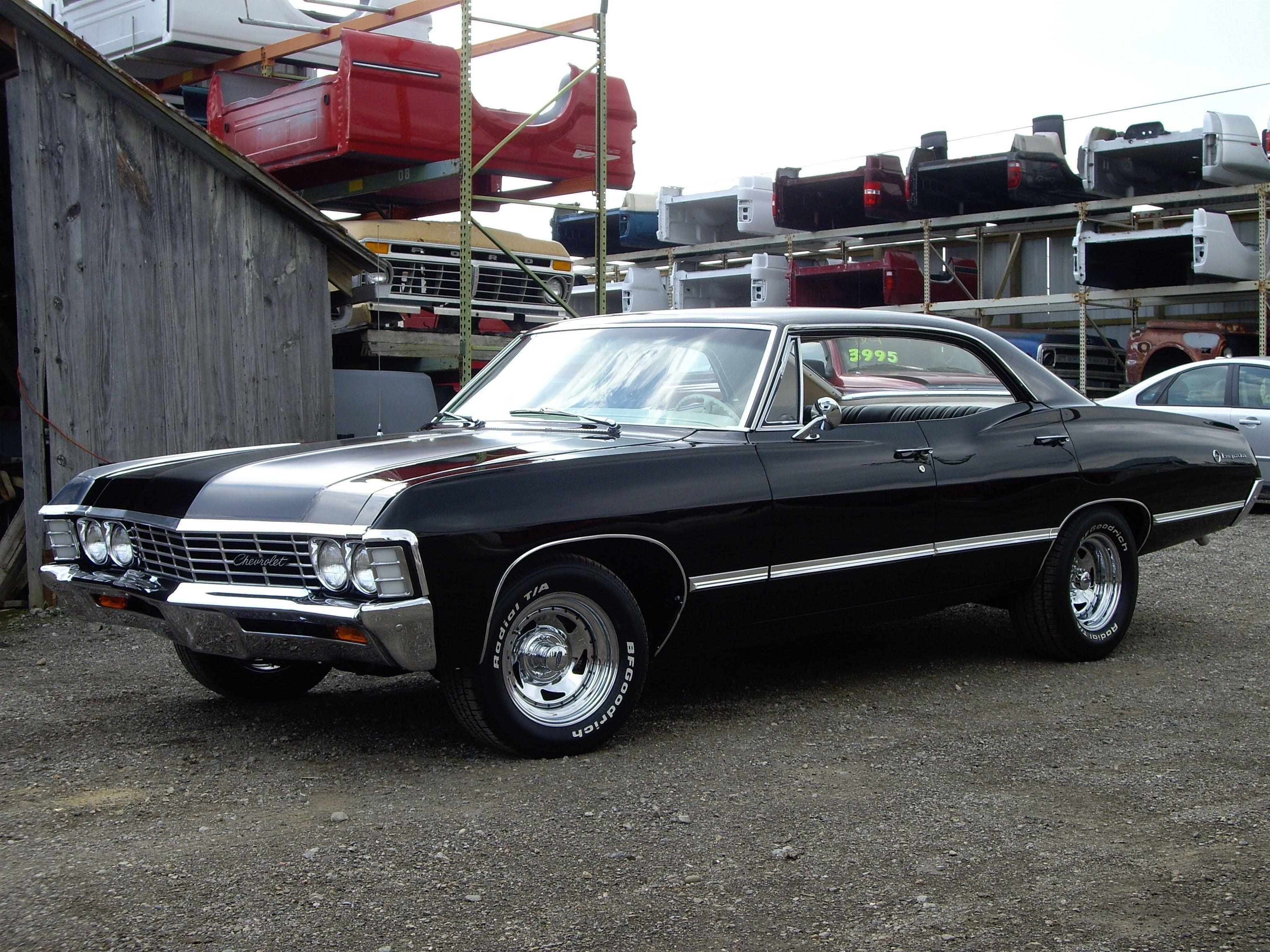
The 1967 Chevrolet Impala offered a diverse lineup of powerplants, with horsepower ratings ranging from a modest 155 horsepower for the base inline-six up to a roaring 425 horsepower for the highest-output Turbo-Jet V8. Power output depended entirely on the specific engine option chosen, including various two-barrel and four-barrel carbureted small-block and big-block configurations.
Introduction to the 1967 Chevrolet Impala Powertrain Lineup
The 1967 model year marked a significant milestone for the Chevrolet Impala. As one of America's best-selling full-size automobiles, the Impala needed to appeal to a broad spectrum of drivers. Buyers ranged from families seeking comfortable, reliable daily transportation to performance enthusiasts demanding raw muscle-car acceleration. To satisfy this diverse audience, Chevrolet engineered a sprawling powertrain lineup. This lineup featured economical inline-six cylinders, smooth small-block V8s, and muscular big-block V8 engines.
Understanding the horsepower figures of the 1967 Chevrolet Impala requires looking past a single number. Unlike modern vehicles that often feature one or two engine choices with standardized output ratings, the 1967 Impala could be ordered with more than half a dozen different engines. Each engine changed the vehicle's driving dynamics, weight distribution, fuel consumption, and acceleration capabilities. Whether examining a base model designed for cruising or a high-performance SS (Super Sport) variant built for the drag strip, the historical engineering choices tell a fascinating story of American automotive history during the height of the muscle car era.
Historical Context and Rating Standards
When researching the horsepower of a 1967 Chevrolet Impala, it is vital to understand how horsepower was measured during that era. In 1967, American automotive manufacturers used the gross horsepower rating system established by the Society of Automotive Engineers (SAE). Gross horsepower measurements were taken with a stripped engine running on an engine dynamometer. These tests typically omitted accessories such as the alternator, power steering pump, water pump, and full exhaust systems, utilizing open headers and optimal tuning instead.
This contrasts sharply with the net horsepower standards introduced by the SAE in the early 1970s. Net ratings measure power with all factory accessories, air cleaners, and complete exhaust systems installed, mimicking real-world conditions. Consequently, a 1967 engine rated at 325 gross horsepower would likely produce a significantly lower number if tested under modern net horsepower protocols. Keeping this historical testing standard in mind ensures an accurate comparison when evaluating the muscle and capability of these classic full-size cruisers.
Base and Small-Block V8 Engine Options
For buyers prioritizing economy and affordability, the 1967 Chevrolet Impala started with a dependable inline-six engine before moving into the versatile world of small-block V8s. These engines formed the backbone of production volume, offering a balanced blend of reliability, maintenance ease, and respectable street performance.
The Inline-Six Engine
- 250 cubic-inch Turbo-Thrift Inline-6: Rated at 155 horsepower at 4,200 rpm and 235 lb-ft of torque.
The inline-six served as the standard entry-level powerplant for the Impala, appealing primarily to fleet buyers, budget-conscious consumers, and those who prioritized fuel economy over straight-line speed. While it lacked the thrilling acceleration of its V8 siblings, it provided smooth operation and adequate power for daily commuting.
The Small-Block V8 Engines
- 283 cubic-inch Turbo-Fire V8: Rated at 195 horsepower at 4,800 rpm with a two-barrel carburetor.
- 327 cubic-inch Turbo-Fire V8 (Two-Barrel): Rated at 275 horsepower at 4,800 rpm.
- 327 cubic-inch Turbo-Fire V8 (Four-Barrel): Rated at 325 horsepower at 4,800 rpm (known as the L30 option).
The small-block V8 family provided the sweet spot for many Impala owners. The 283 cubic-inch engine offered an affordable step up from the six-cylinder, while the 327 variants provided lively acceleration without adding the substantial front-end weight associated with the larger big-block options. The 325-horsepower version of the 327 was particularly popular among drivers who wanted spirited performance while maintaining reasonable handling characteristics on winding roads.
Big-Block V8 Engine Options and Super Sport Performance
Drivers seeking maximum performance turned to Chevrolet's legendary big-block V8 engines. Displacing 396 and 427 cubic inches, these massive powerplants transformed the full-size Impala into a formidable straight-line performer, particularly when paired with the Super Sport (SS) package.
The 396 Cubic-Inch Turbo-Jet V8
- 396 cubic-inch Turbo-Jet V8 (L35): Rated at 325 horsepower at 4,800 rpm with a single four-barrel carburetor.
- 396 cubic-inch Turbo-Jet V8 (L34): Rated at 360 horsepower at 5,400 rpm with a performance four-barrel carburetor and upgraded camshaft.
The 396 big-block served as the entry point into heavy-duty performance for the Impala. It offered massive low-end torque, making the heavy full-size body feel remarkably quick off the line. The 360-horsepower L34 variant pushed performance further, offering increased breathing capability at higher RPMs.
The 427 Cubic-Inch Turbo-Jet V8
- 427 cubic-inch Turbo-Jet V8 (L36): Rated at 385 horsepower at 5,200 rpm.
- 427 cubic-inch Turbo-Jet V8 (L72): Rated at 425 horsepower at 5,600 rpm, featuring solid lifters, a high-performance aluminum intake manifold, and a massive Holley four-barrel carburetor.
At the absolute peak of the 1967 Impala horsepower hierarchy sat the 427 cubic-inch engines. The 425-horsepower L72 engine represented the ultimate factory muscle configuration for the full-size Chevrolet lineup. While rare and expensive to order, cars equipped with the L72 delivered blistering acceleration that could surprise drivers of smaller, dedicated muscle cars.
1967 Chevrolet Impala Engine Specifications Summary
| Engine Displacement | Carburetor Type | Compression Ratio | Horsepower (Gross) | Torque (lb-ft) |
|---|---|---|---|---|
| 250 ci Inline-6 | 1-Barrel | 8.5:1 | 155 @ 4,200 rpm | 235 @ 1,600 rpm |
| 283 ci V8 | 2-Barrel | 9.25:1 | 195 @ 4,800 rpm | 285 @ 2,400 rpm |
| 327 ci V8 | 2-Barrel | 9.0:1 | 275 @ 4,800 rpm | 355 @ 3,200 rpm |
| 327 ci V8 | 4-Barrel | 10.25:1 | 325 @ 4,800 rpm | 360 @ 3,600 rpm |
| 396 ci V8 | 4-Barrel | 10.25:1 | 325 @ 4,800 rpm | 410 @ 3,200 rpm |
| 396 ci V8 | 4-Barrel | 10.25:1 | 360 @ 5,400 rpm | 415 @ 3,600 rpm |
| 427 ci V8 | 4-Barrel | 10.25:1 | 385 @ 5,200 rpm | 460 @ 3,400 rpm |
| 427 ci V8 | 4-Barrel | 11.0:1 | 425 @ 5,600 rpm | 460 @ 4,000 rpm |
Transmission Pairings and Rear-Axle Ratios
An engine's horsepower rating only tells part of the performance story; the transmission and rear-axle ratio dictate how effectively that power reaches the rear wheels. In 1967, Chevrolet offered several transmission choices depending on the engine selected:
- 3-Speed Manual: Standard equipment for base inline-six and smaller V8 engines, offering simple column-shift operation.
- 4-Speed Manual: Available for performance-minded buyers ordering small-block and big-block V8 engines, featuring floor-mounted Hurst shifters.
- 2-Speed Powerglide Automatic: A durable two-speed automatic transmission available across most engine options, prioritizing smooth shifting over aggressive acceleration.
- 3-Speed Turbo Hydra-Matic 400 (TH400): Introduced for heavy-duty applications and high-output big-block V8s, providing a much better gear spread for acceleration and highway cruising than the Powerglide.
Rear-axle ratios also varied wildly. Economy builds featured tall gears (such as 3.08:1) for relaxed highway cruising, while high-performance big-block cars could be ordered with short performance gears (such as 3.31:1, 3.55:1, or even 4.10:1) to maximize launch traction and acceleration at the expense of fuel economy and top cruising speed.
Frequently Asked Questions
What was the most powerful engine available in a 1967 Chevrolet Impala?
The most powerful factory engine available was the 427 cubic-inch L72 Turbo-Jet V8, which produced an impressive 425 gross horsepower. This solid-lifter big-block engine was restricted to specialized performance orders and transformed the full-size Impala into a formidable straight-line muscle car.
Did all 1967 Impala SS models come with a big-block engine?
No. Despite popular belief, the Super Sport (SS) badge in 1967 could be ordered with smaller engines, including the 327 cubic-inch small-block V8. While many SS models featured the 396 or 427 big-block engines, the appearance and trim package could be paired with lesser V8 powerplants.
How does 1967 gross horsepower compare to modern horsepower ratings?
Gross horsepower measurements used in 1967 did not account for engine accessories like water pumps, alternators, or factory exhaust systems. Modern net horsepower ratings, established in 1972, measure power with all accessories attached. A 1967 engine's gross rating is generally 15 to 25 percent higher than what it would produce under modern net testing standards.
Which 1967 Impala engine offers the best balance of performance and fuel economy?
The 327 cubic-inch V8 with a four-barrel carburetor, rated at 325 horsepower, is widely considered the best all-around performer for street driving. It provides significantly more power than the base six-cylinder or 283 V8 while avoiding the heavy front-end weight penalty and thirsty fuel consumption of the 396 and 427 big-block engines.
Practical Guidance for Classic Car Buyers and Restorers
For enthusiasts looking to purchase or restore a 1967 Chevrolet Impala, verifying the original engine configuration is critical for determining value and authenticity. Because these vehicles are over half a century old, many have undergone engine swaps, modifications, or complete rebuilds.
Always inspect the engine block casting numbers, stamping codes on the front passenger-side pad of the engine block, and the trim tag located on the firewall. The trim tag and engine stamps reveal whether the car left the factory with an economical inline-six or a high-performance big-block V8. Matching-numbers big-block cars—especially those equipped with the 425-horsepower 427—command a substantial premium in the collector car market compared to standard small-block or modified cruisers. Ensure that any potential purchase is thoroughly inspected by a marque specialist to verify drivetrain integrity and structural condition before finalizing an acquisition.